
Short Description
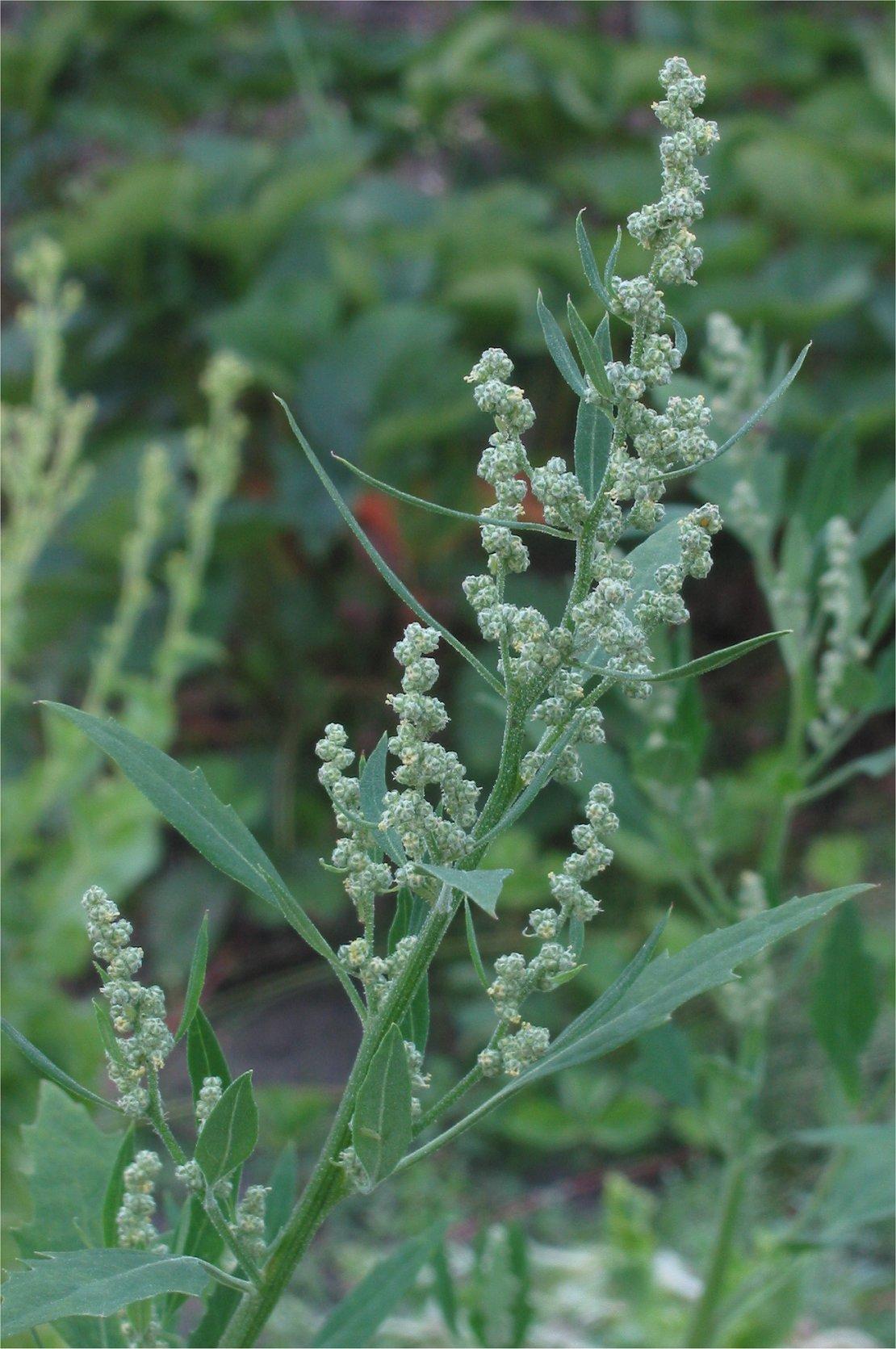
The common lamb's-quarters can grow up to 1.5 metres high.
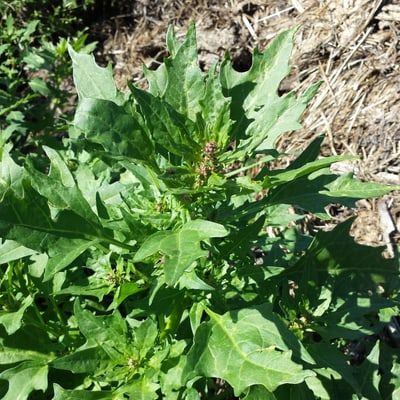
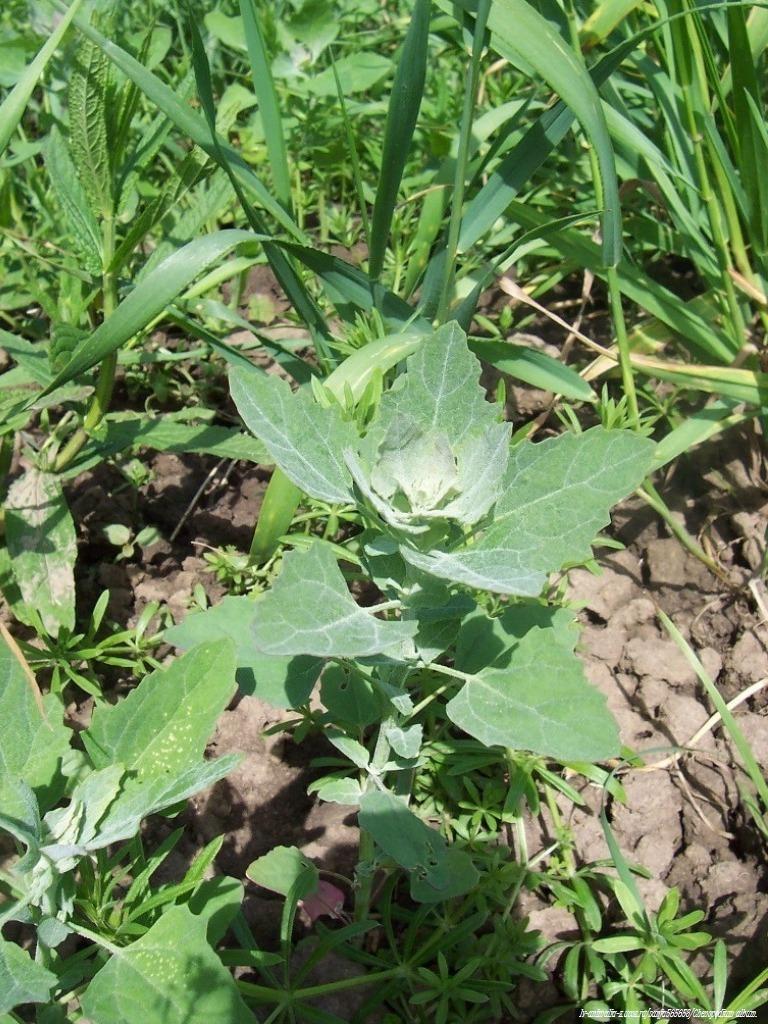
The leaves are very variable and can be oval, elongated or arrow-shaped. They usually have a toothed margin. The upper leaves are often narrower and have entire margins. All leaves are densely mealy-powdered and appear grey-green. They grow singly and alternately on the stem.
The upright stem is yellowish-green, striped and often reddish overlaid. It is mealy powdered.
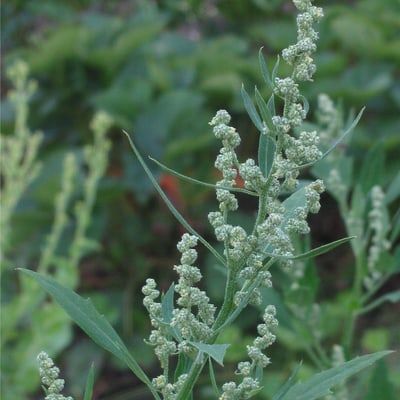
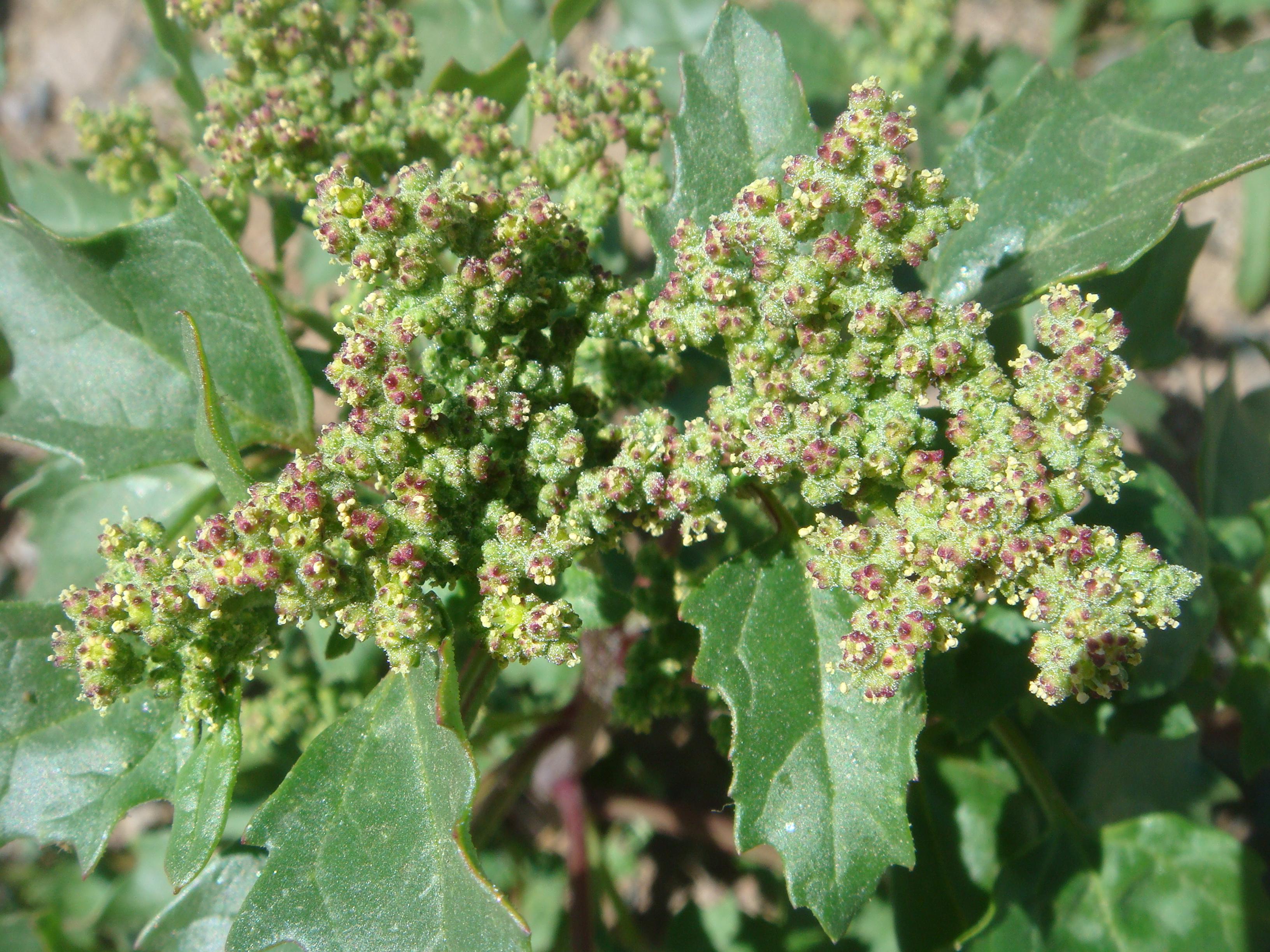
The inconspicuous flowers sit in clusters at the top of the stem. They are heavily mealy powdered.
The lentil-shaped fruits are black and shiny.
Features
Common lamb's-quarters
Chenopodium album
dense mealy powdered
often reddish coloured stems
In the city
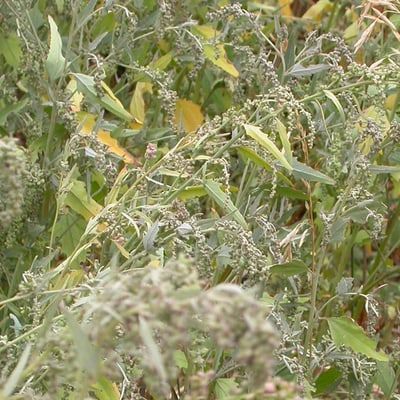
It is an undemanding plant and is often found in weedy areas. In the city, it grows as a coloniser on rubble, roadsides and paths. However, it can also be found in fields and gardens.
Fun Facts
It is cultivated in India and is an important vegetable plant.
The seeds can rest in the soil for up to 1700 years.
The flowering period is from July to September.
It is an annual plant. This means the plant dies after the seeds have ripened.
The flowers are pollinated by the wind.
- Endangerment level Germany: not endangered
- Usage:
The leaves can be used raw or cooked like spinach. However, they should only be eaten raw in small quantities. The seeds are processed into flour.
The origin is unclear. It is assumed that it originated in the Himalayan region. Today it is found almost all over the world.
The pollen is highly allergenic and triggers hay fever.
Sources
Habitus, Rasbak, CC BY-SA 3.0, https://commons.wikimedia.org/wiki/File:Melganzenvoet_bloeiwijze_Chenopodium_album.jpg

Blütenstand, Miwasatoshi, CC BY-SA 4.0, https://commons.wikimedia.org/wiki/File:Chenopodium-album-20080320.JPG

Blätter, Sanja565658, CC BY-SA 3.0, https://commons.wikimedia.org/wiki/File:Chenopodium_album_01.JPG

Kammer, P. M. (2016) Pflanzen einfach bestimmen. Schritt für Schritt einheimische Arten kennenlernen, Bern: Haupt Verlag.
Schauer, T., Caspari, C. & Caspari, S. (2015) Der illustrierte BLV-Pflanzenführer für unterwegs. 1150 Blumen, Gräser, Bäume und Sträucher, München: BLV.
Spohn, M., Golte-Bechtle, M. & Spohn, R. (2015) Was blüht denn da? Stuttgart: Franckh Kosmos Verlag.
Page „Weißer Gänsefuß“. : Wikipedia, The Free Encyclopedia. Date of last revision: 14.09.2017, 00:52 UTC. URL: https://de.wikipedia.org/w/index.php?title=Wei%C3%9Fer_G%C3%A4nsefu%C3%9F&oldid=169067081 (Accessed: 09.01.2018).