
Short Description
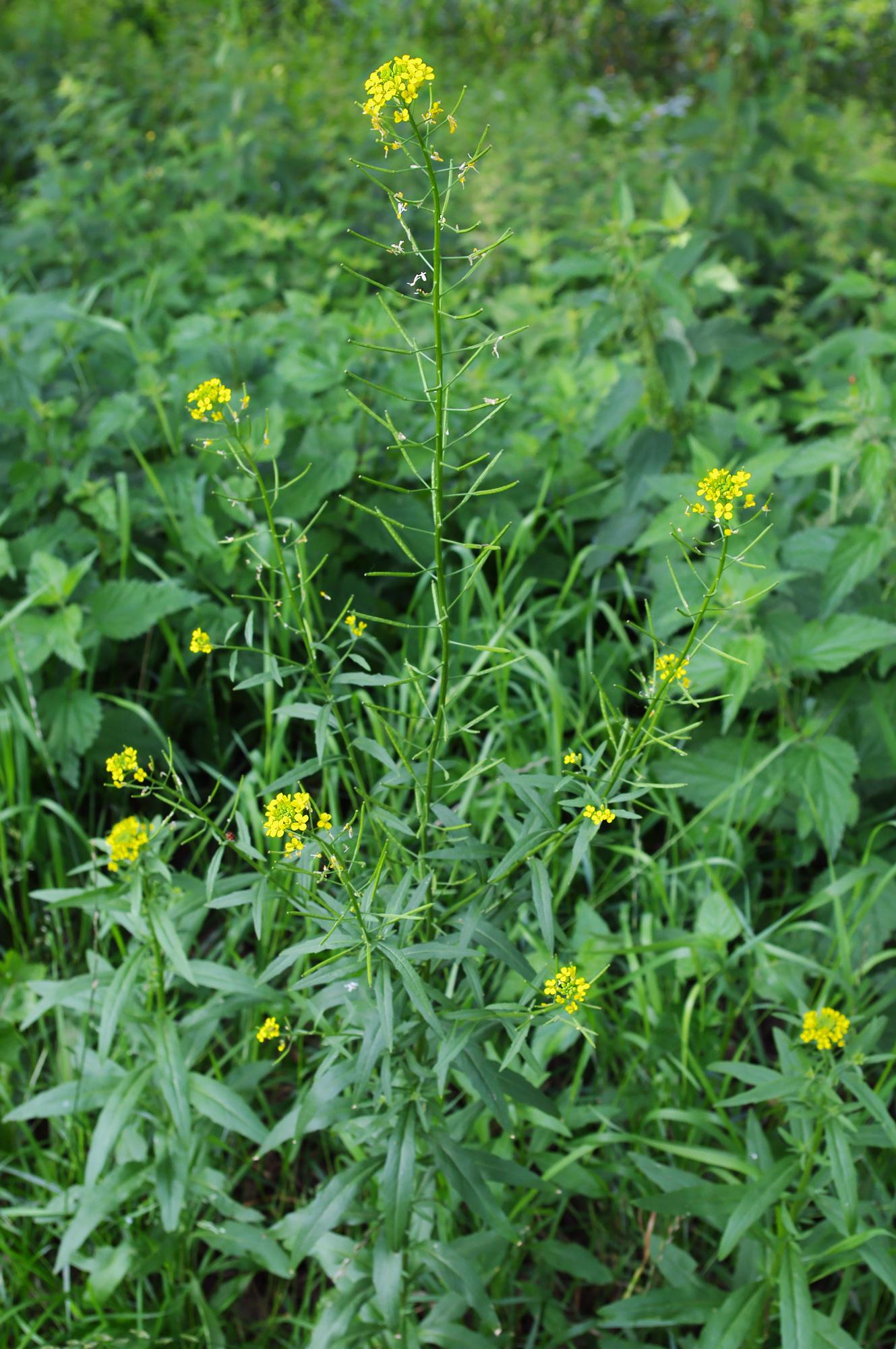
The wormseed wallflower can grow up to 60 centimetres high.
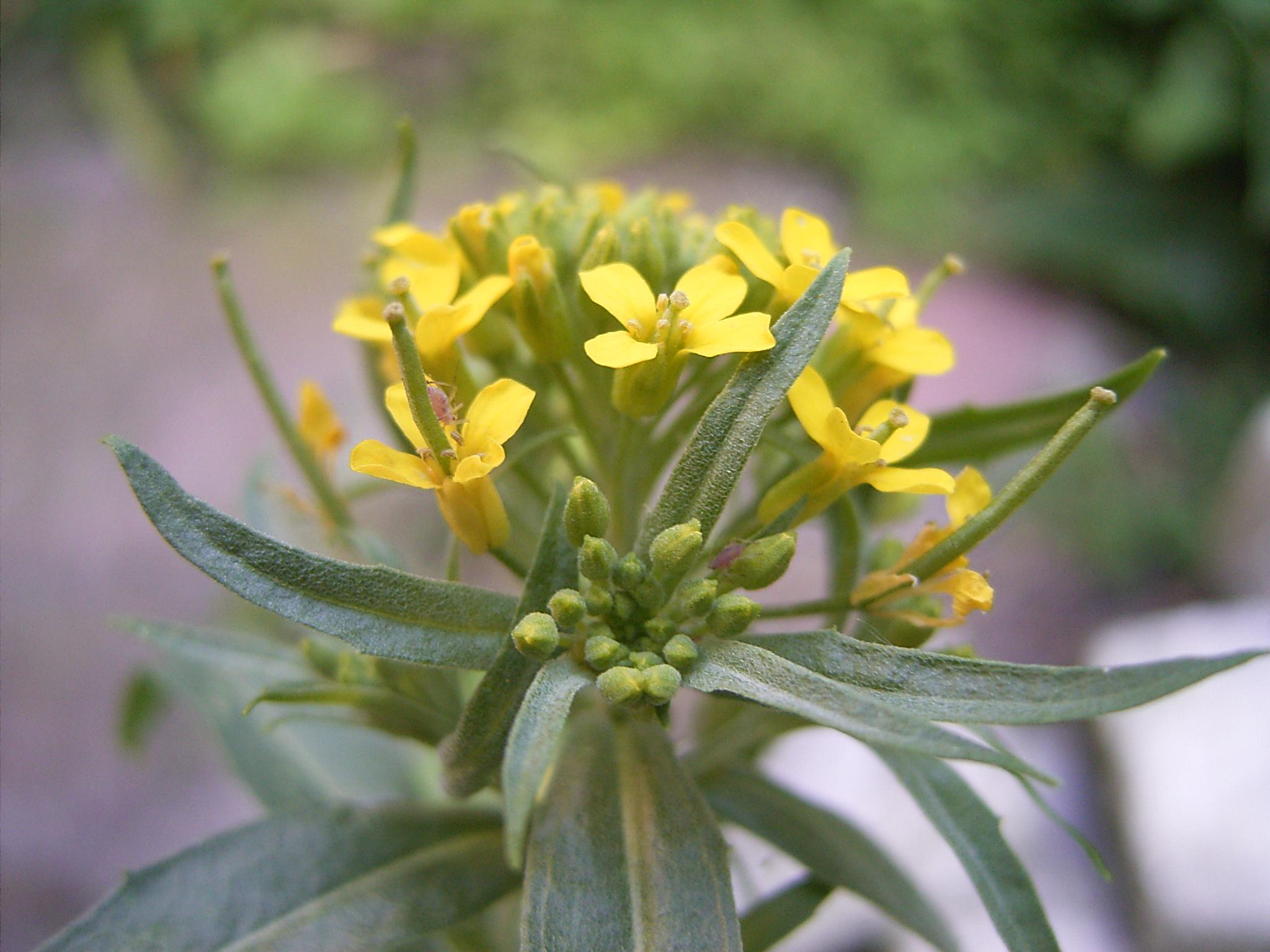
The dark green leaves are lanceolate, with entire margins to slightly toothed. They have dense hairs and therefore feel rough. The leaves always sit singly and alternately on the stem.
The stem grows erect and mostly branched. It is angular.
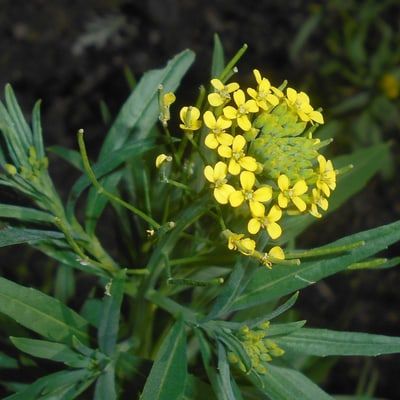
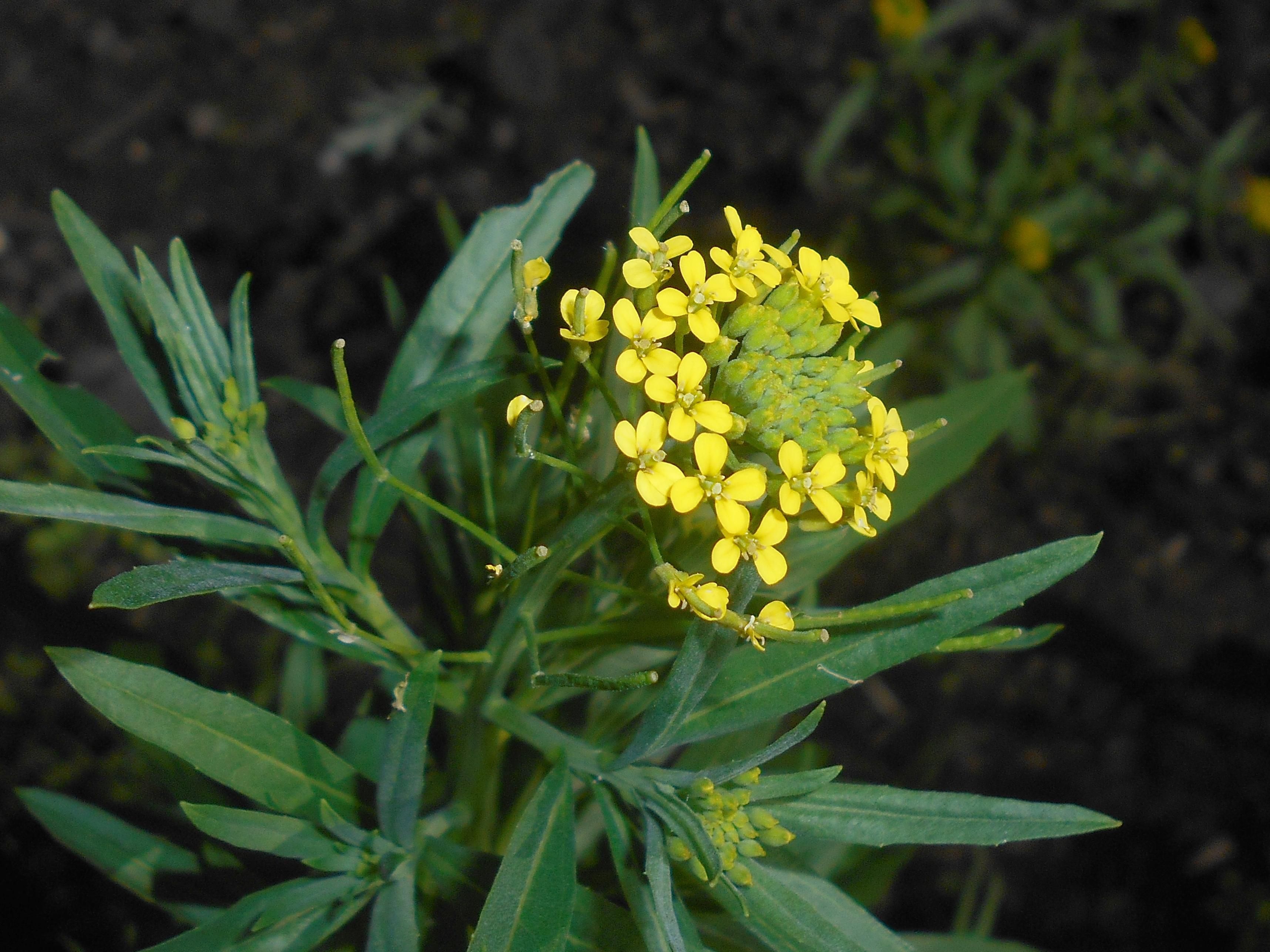
The rather small flowers have four yellow petals. They are in racemes at the top of the stem. While the old flowers are already turning into fruit, new flowers keep emerging at the top.
The fruits are long, narrow pods. They are four-sided.
Features
Wormseed wallflower
Erysimum cheiranthoides
poisonous
small flowers
angular stem
Similar species
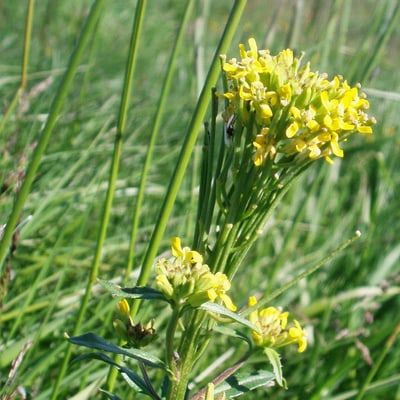
Hawkweed-leaved treacle-mustard
Erysimum hieraciifolium
In the city
The wormseed wallflower is a common representative of wild herb stands and grows in the city preferably on fields, fallow land, banks and roadsides. It grows mainly on loose, moist soils and tolerates shade. It is a indicator of a high nitrogen content in the soil.
Because of its long flowering period, it is also occasionally planted as an ornamental plant in gardens.
Fun Facts
The flowering period is from May to September.
It is an annual plant, i.e. it only flowers for one summer and dies after the seeds have ripened.
Pollination is achieved by insect and self-pollination.
It is spread by self-propagation and wind dispersal.
- Endangerment level Germany: not endangered
The wormseed wallflower is native to Europe.
The wormseed wallflower is poisonous. The seeds contain heart-active glycosides, which are used in naturopathy against cardiac insufficiency, spasmodic cough and skin rashes.
Sources
Habitus, Christian Fischer, CC BY-SA 3.0, https://commons.wikimedia.org/wiki/File:ErysimumCheiranthoides2.jpg

Habitus, Salicyna, CC BY-SA 4.0, https://commons.wikimedia.org/wiki/File:Erysimum_cheiranthoides_2016-08-26_3622.jpg

Blütenstand, TeunSpaans, CC BY-SA 3.0, https://commons.wikimedia.org/wiki/File:Gewone_steenraket_bloemen.jpg

Kammer, P. M. (2016) Pflanzen einfach bestimmen. Schritt für Schritt einheimische Arten kennenlernen, Bern: Haupt Verlag.
Schauer, T., Caspari, C. & Caspari, S. (2015) Der illustrierte BLV-Pflanzenführer für unterwegs. 1150 Blumen, Gräser, Bäume und Sträucher, München: BLV.
Spohn, M., Golte-Bechtle, M. & Spohn, R. (2015) Was blüht denn da? Stuttgart: Franckh Kosmos Verlag.
Page „Acker-Schöterich“. : Wikipedia, The Free Encyclopedia. Date of last revision: 26.07.2017, 19:47 UTC. URL: https://de.wikipedia.org/w/index.php?title=Acker-Sch%C3%B6terich&oldid=167622676 (Accessed: 10.02.2018).