
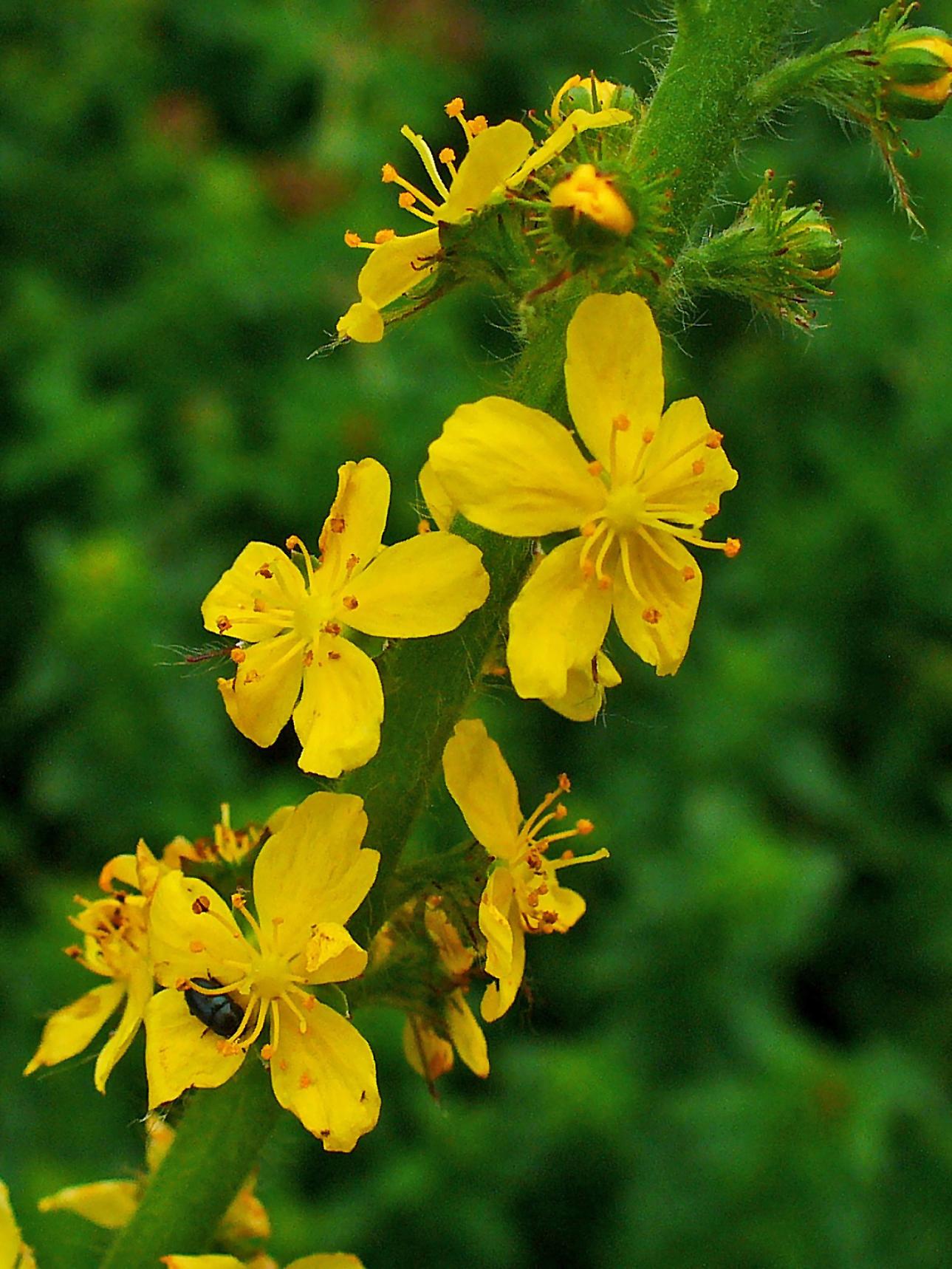
Short Description
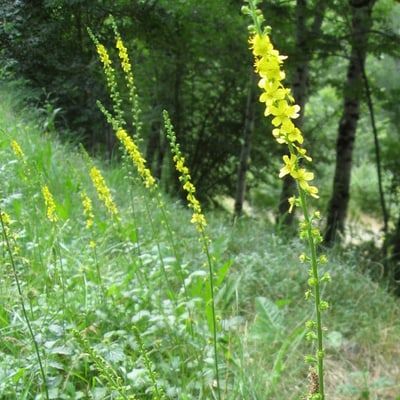
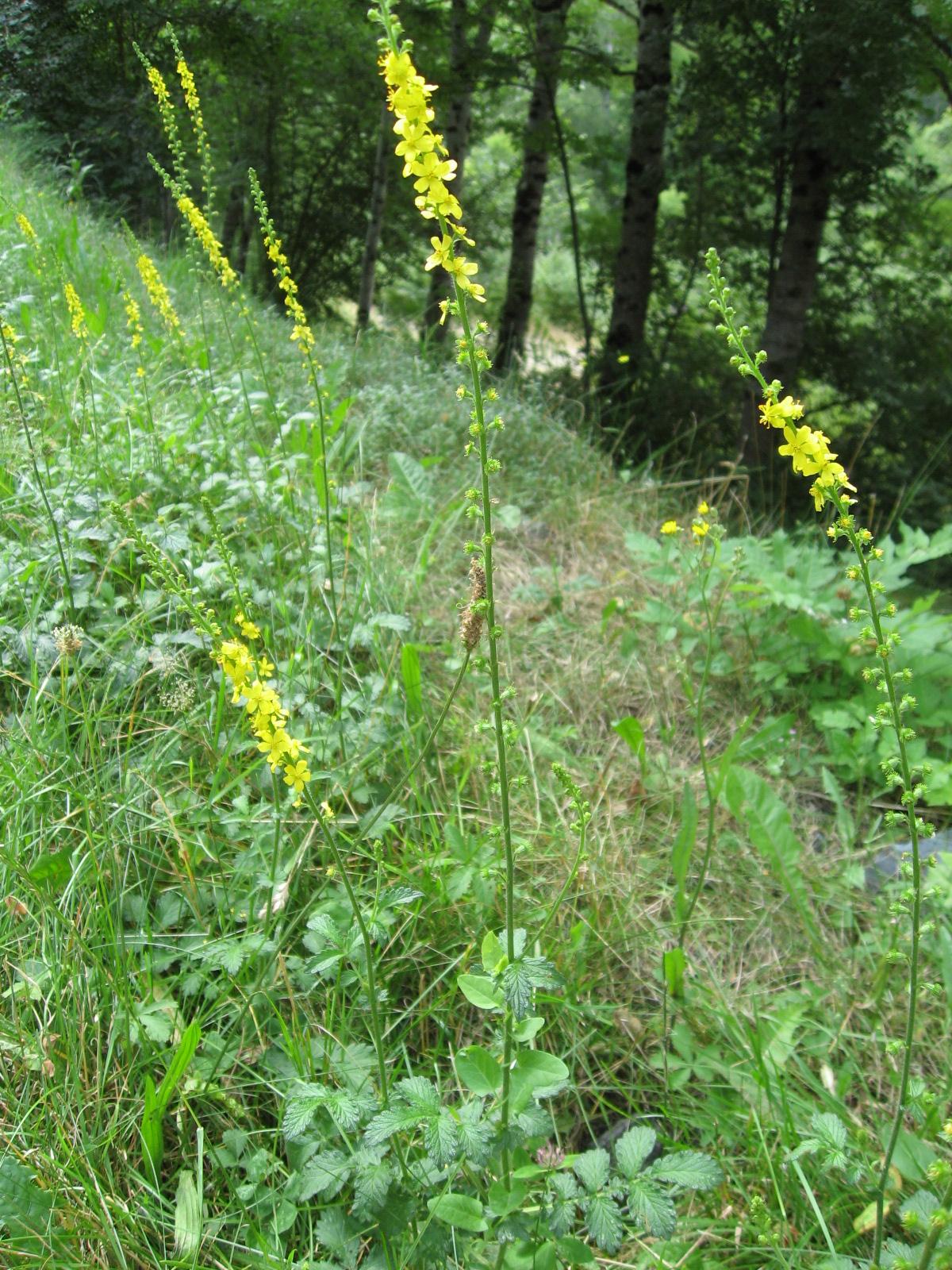
The common agrimony can grow up to one metre high.
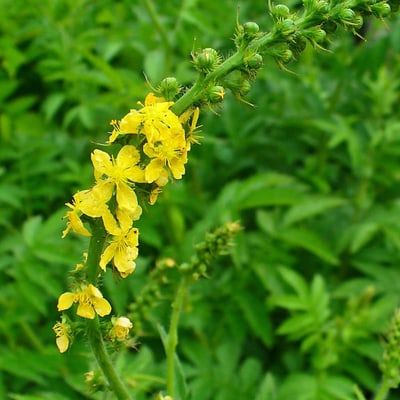
The deciduous leaves are arranged singly and alternately on the stem. They form a rosette at the base. Each leaf is divided into five to nine partial leaves (pinnate). The partial leaves have a coarsely toothed margin and are hairy on the underside.
The stem is round and densely hairy. It is usually branched at the top.
The flowers have five round, yellow petals. They are arranged at the tip of the stem in an elongated, leafless inflorescence (raceme).
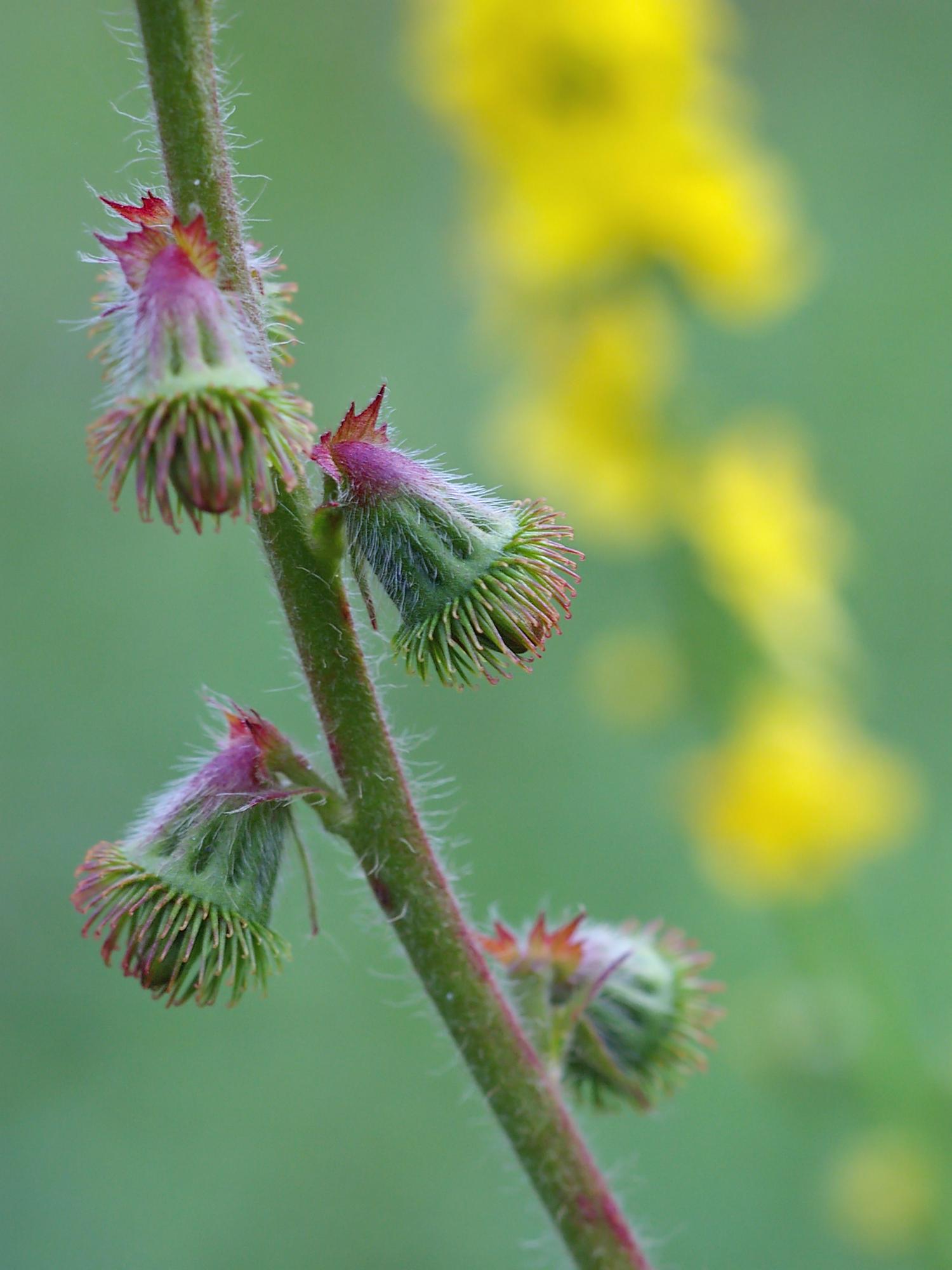
The fruit is an schizocarp enclosed in a calyx. The calyx is furrowed and has numerous hooked, protruding bristles on the edge.
Features
Common agrimony
Agrimonia eupatoria
furrowed aggregate fruits
densely hairy undersides of leaves
In the city
The common agrimony does not tolerate shade and acidic soils. It also is sensitive to mowing and trampling. In the city, it therefore prefers sparsely used dry and rough grasslands, but also hedges and forest edges.
Fun Facts
The flowering period is from June to September.
Because of their hooks, the fruits get caught on animal fur or on clothing and are thus spread. As the common agrimony grows rather tall, the burdocks get caught on large animals such as sheep, cows or, in the city, even dogs, and can thus be transported over long distances.
It lives for several years and generally flowers and fruits annually (perennial plant).
- Endangerment level Germany: not endangered
The common agrimony is native and widespread in almost all of Europe.
Tea made from flowering and dried common agrimony can help with stomach and intestinal complaints and as a bath for mild skin inflammations.
Sources
Blüten, H.Zell, CC BY-SA 3.0, https://commons.wikimedia.org/wiki/File:Agrimonia_eupatoria_002.JPG

Früchte, Christian Fischer, CC BY-SA 3.0, https://commons.wikimedia.org/wiki/File:AgrimoniaEupatoriaFruits.jpg

Habitus, Joan Simon, CC BY-SA 2.0, https://commons.wikimedia.org/wiki/File:Agrimonia_eupatoria_01.jpg

Kammer, P. M. (2016) Pflanzen einfach bestimmen. Schritt für Schritt einheimische Arten kennenlernen, Bern: Haupt Verlag.
Schauer, T., Caspari, C. & Caspari, S. (2015) Der illustrierte BLV-Pflanzenführer für unterwegs. 1150 Blumen, Gräser, Bäume und Sträucher, München: BLV.
Schönfelder, I. & Schönfelder, P. (2010) Der Kosmos-Heilpflanzenführer. Über 600 Heil- und Giftpflanzen Europas, Stuttgart: Franckh Kosmos Verlag.
Spohn, M., Golte-Bechtle, M. & Spohn, R. (2015) Was blüht denn da? Stuttgart: Franckh Kosmos Verlag.
Page „Gemeiner Odermennig“. : Wikipedia, The Free Encyclopedia. Date of last revision: 12.05.2017, 12:17 UTC. URL: https://de.wikipedia.org/w/index.php?title=Gemeiner_Odermennig&oldid=165437907 (Accessed: 05.12.2017).
Bundesamt für Naturschutz (n.d.) Artensteckbriefe, URL: http://floraweb.de/pflanzenarten/artenhome.xsql?suchnr=99& (Accessed: 05.12.2017).