
Short Description
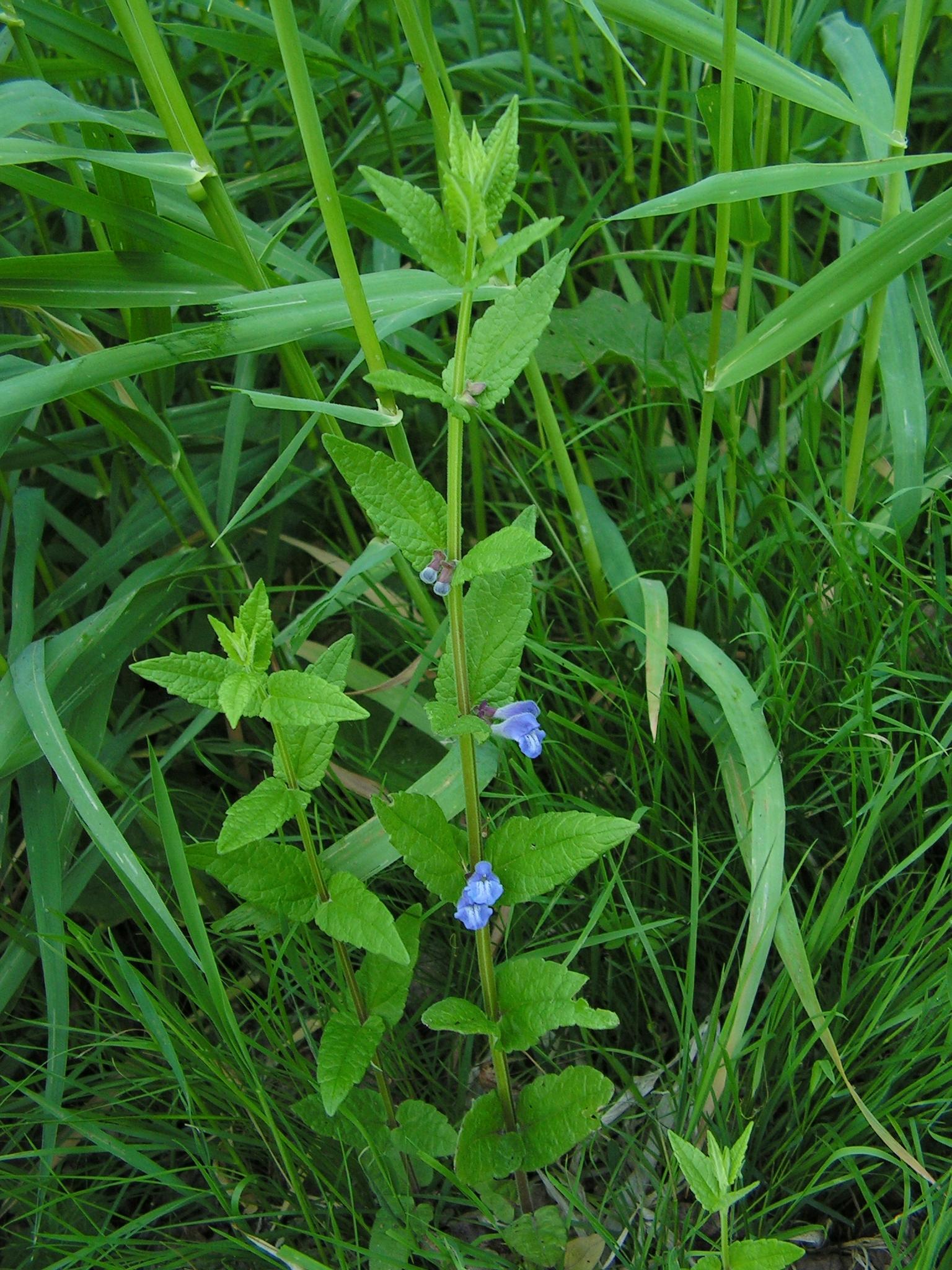
The marsh skullcap can grow up to 40 cm high.
The oval to elongated leaves have short stems. The leaf margin has few teeth. They grow opposite each other on the stem.
The stem grows upright. It is square and softly hairy. Especially in the lower part it often is reddish.
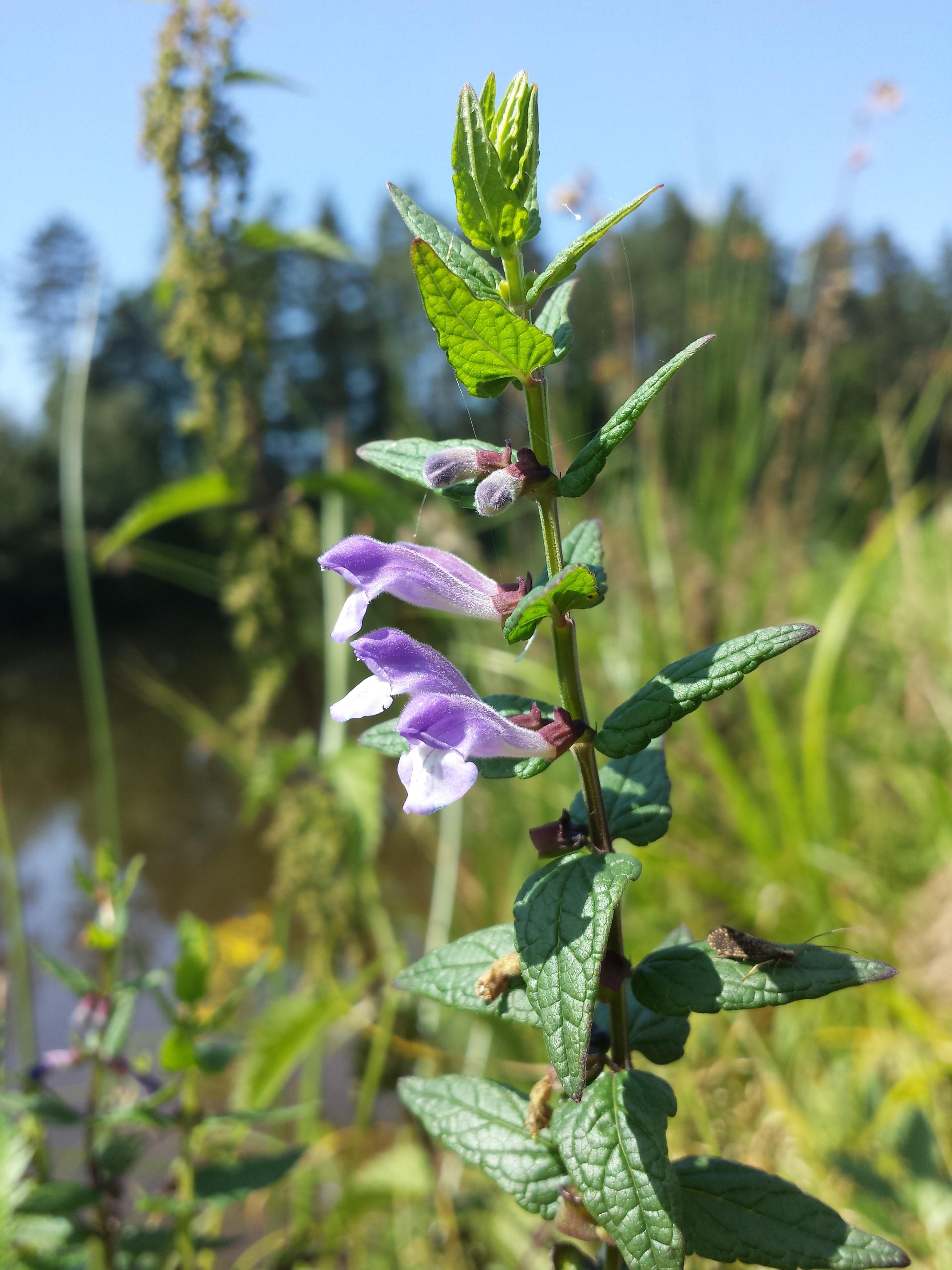
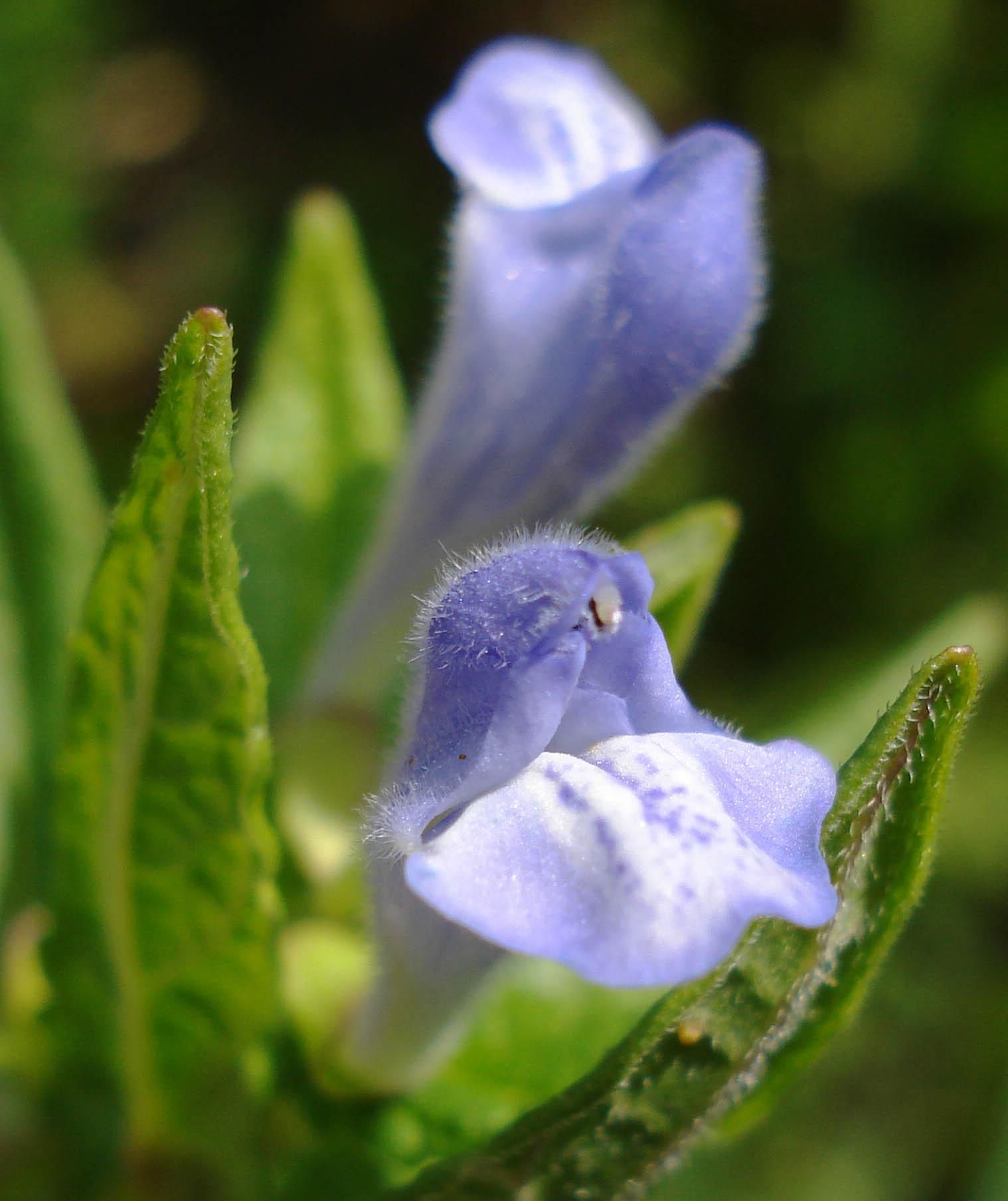
The flowers grow in pairs on one side of the stem. They are purple or blue. The corolla consists of two lips. The lower lip has a white patch with dark spots. The green calyx has a small, standing scale on the top.
The fruits are small, single-seeded nutlets. There are always four of them in the calyx of the flower.
Features
Marsh skullcap
Scutellaria galericulata
flowers always in pairs
square stem
In the city
It is adapted to wet sites such as wet meadows, graves, banks, woods and bogs. It prefers to grow in sunny places with nutrient-rich soil.
Fun Facts
Bumblebees steal nectar by biting the side of the corolla tube. They do not pollinate the flower.
The nut-like fruits are enclosed by the calyx. The scale on its upper side serves as a drop catcher. If a drop falls on it, the calyx is pressed down and then springs back like a catapult. In the process, the fruits are ejected.
The fruits are encased in an airy, non-wettable fabric. Their floating period is about 12 months.
The flowering period is from June to September.
It lives for several years and generally flowers and fruits annually (perennial plant).
The pollinators are mainly bees.
- Endangerment level Germany: not endangered
It is native to Europe.
Sources
Habitus, Bff, CC BY-SA 3.0, https://commons.wikimedia.org/wiki/File:Scutellaria_galericulata20140607_069.jpg

Blütenstand, Stefan.lefnaer, CC BY-SA 4.0, https://commons.wikimedia.org/wiki/File:Scutellaria_galericulata_sl7.jpg

Blüte, Fornax, CC BY-SA 3.0, https://commons.wikimedia.org/wiki/File:Scutellaria_galericulata_W.jpg

Kammer, P. M. (2016) Pflanzen einfach bestimmen. Schritt für Schritt einheimische Arten kennenlernen, Bern: Haupt Verlag.
Spohn, M., Golte-Bechtle, M. & Spohn, R. (2015) Was blüht denn da? Stuttgart: Franckh Kosmos Verlag.
Page „Sumpf-Helmkraut“. : Wikipedia, The Free Encyclopedia. Date of last revision: 21.01.2018, 20:47 UTC. URL: https://de.wikipedia.org/w/index.php?title=Sumpf-Helmkraut&oldid=173180053 (Accessed: 27.03.2018).