
Short Description
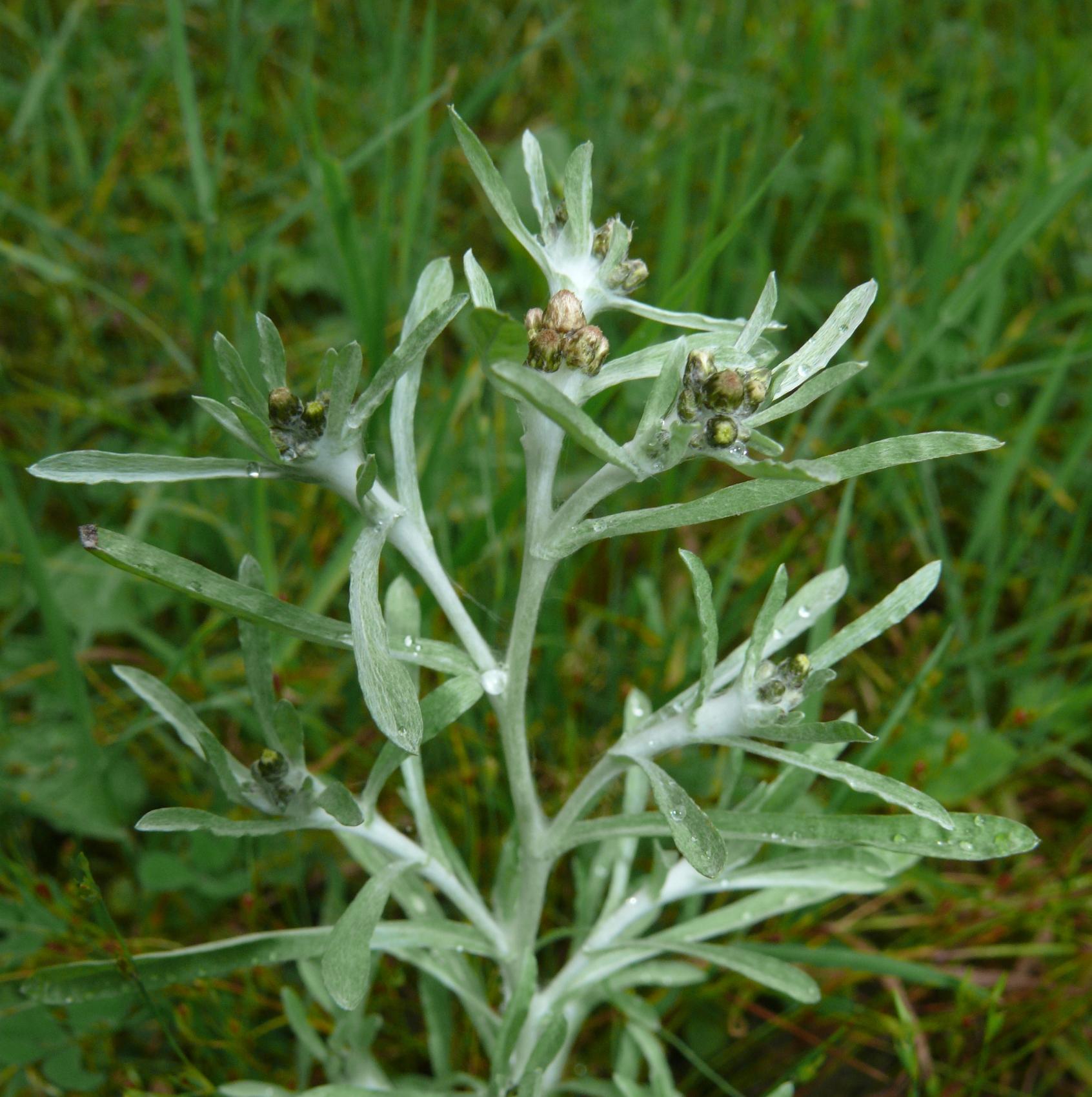
The marsh cudweed can grow up to 25 cm high.
The leaves are elongated and felt-like hairy. The upper leaves are often wavy. They grow singly and alternately on the stem.
The stem grows erect and branched. It is felt-like hairy.
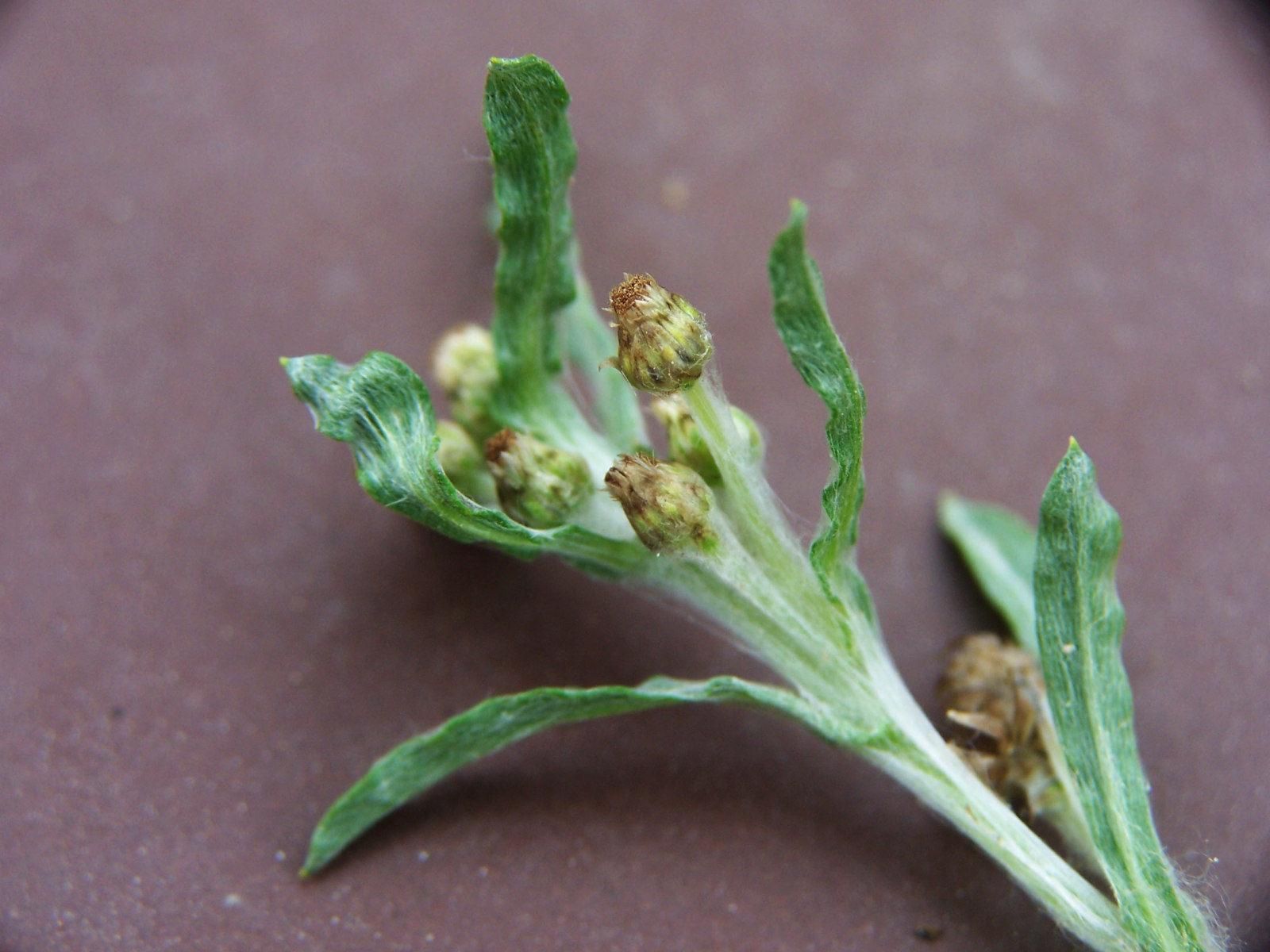
The flowers are small, inconspicuous, yellow tubular and ray florets that stand together in a flower head. The heads stand in dense clusters at the end of the branches. They are surmounted by the uppermost leaves.
The plant forms small, nut-like fruits. They have short, wreath-like hairs.
Features
Marsh cudweed
Gnaphalium uliginosum
filthy hair
inflorescences in dense clusters
In the city
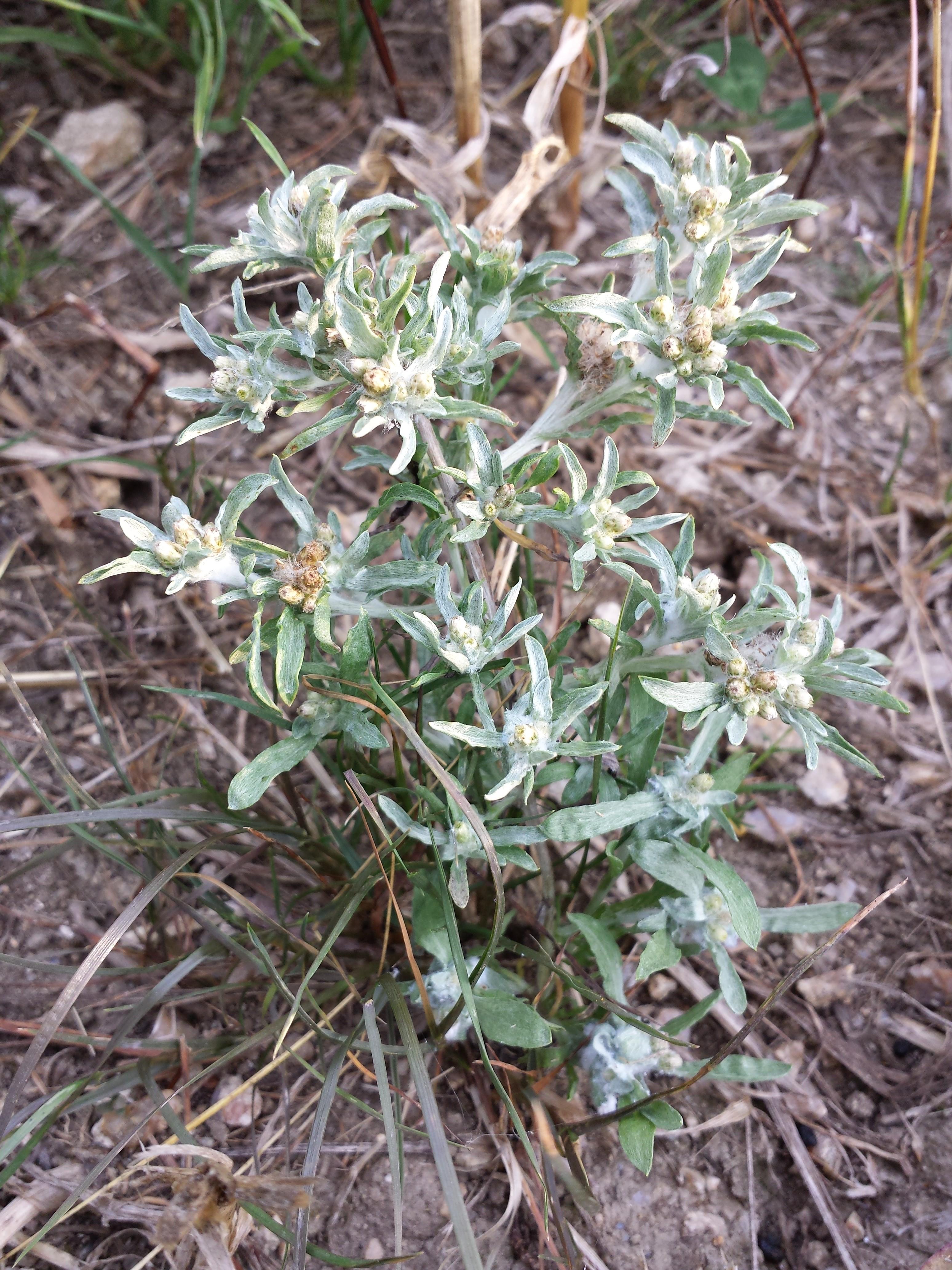
It originally grew mainly on open soils at the edge of water bodies. Nowadays, it is found much more frequently as a weed in fields, gardens or roadsides.
Fun Facts
When wet, sticky threads come out of the fruits so that they can be spread out as sticky.
The flowering period is from July to September.
It is an annual plant. This means the plant dies in the first year after the seeds have ripened.
- Endangerment level Germany: not endangered
- Usage:
In homeopathy it is used for sciatic pain and lumbago.
It is widespread throughout the temperate and cool regions of the Northern Hemisphere.
The plant contains tannins that are said to help with diarrhoea and inflammation of the mouth and throat.
Sources
Habitus, Bernd Haynold, CC BY-SA 3.0, https://commons.wikimedia.org/wiki/File:Gnaphalium_uliginosum_200807b.jpg

Blütenstand, Jerzy Opioła, CC BY-SA 3.0, https://commons.wikimedia.org/wiki/File:Gnaphalium_uliginosum_a1.jpg

Habitus, Stefan.lefnaer, CC BY-SA 4.0, https://commons.wikimedia.org/wiki/File:Gnaphalium_uliginosum_sl8.jpg

Kammer, P. M. (2016) Pflanzen einfach bestimmen. Schritt für Schritt einheimische Arten kennenlernen, Bern: Haupt Verlag.
Schönfelder, I. & Schönfelder, P. (2010) Der Kosmos-Heilpflanzenführer. Über 600 Heil- und Giftpflanzen Europas, Stuttgart: Franckh Kosmos Verlag.
Page „Sumpf-Ruhrkraut“. : Wikipedia, The Free Encyclopedia. Date of last revision: 28.02.2018, 21:46 UTC. URL: https://de.wikipedia.org/w/index.php?title=Sumpf-Ruhrkraut&oldid=174492424 (Accessed: 31.07.2018).