
Short Description
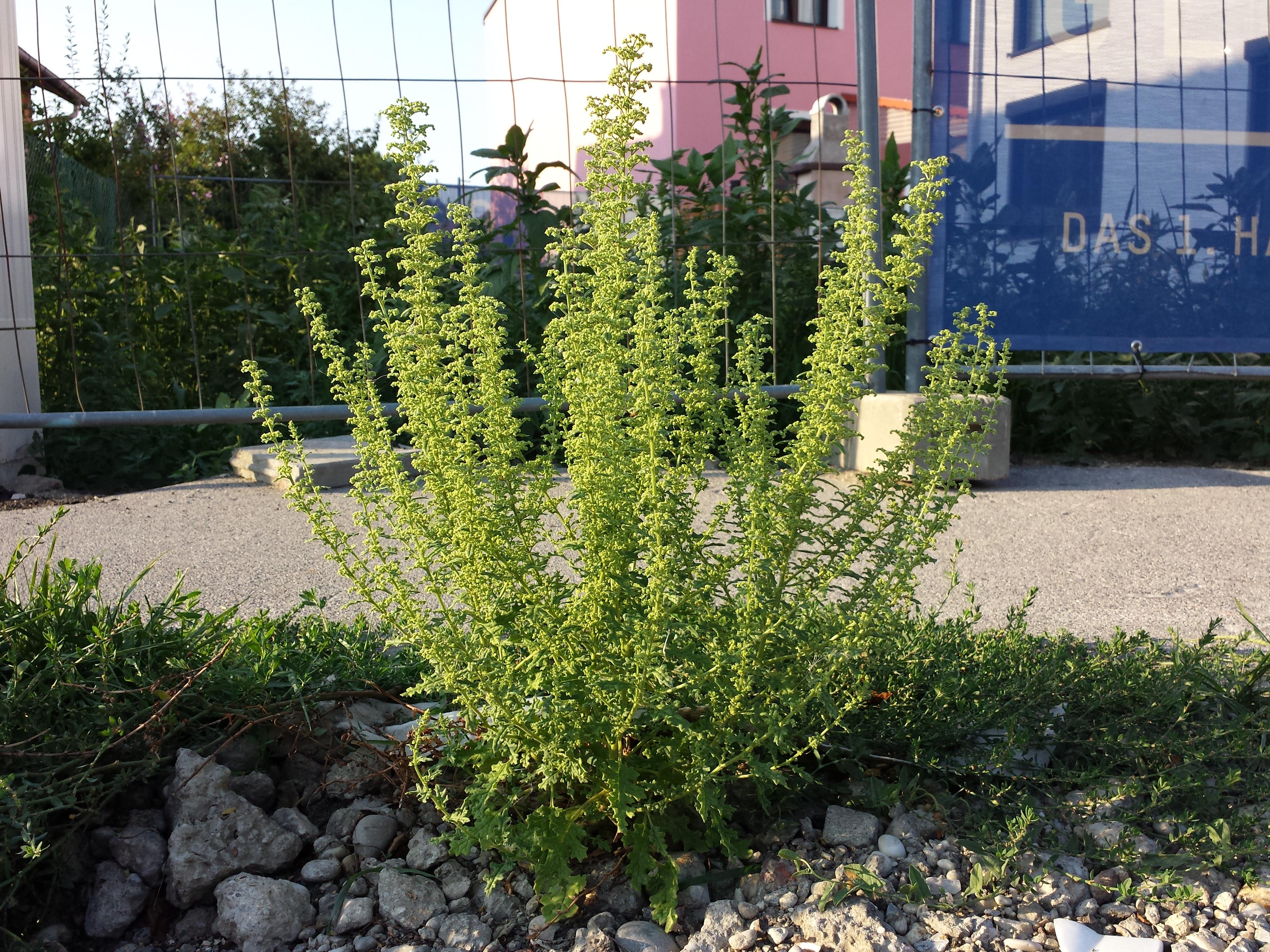
The jerusalem oak can grow up to one metre high. It is densely covered with short, sticky glandular hairs. The plant smells intensely aromatic of pine resin.
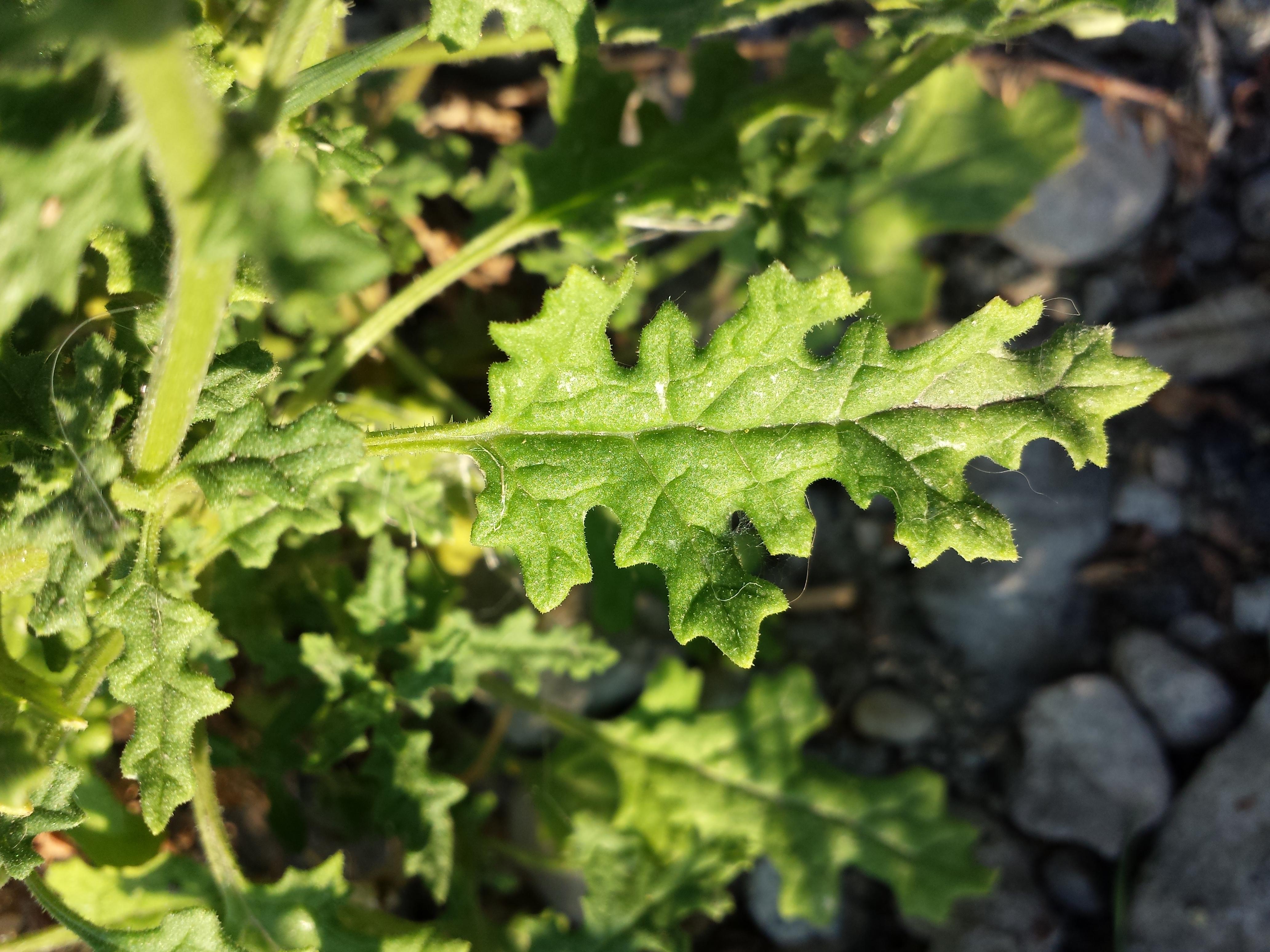
The leaves are yellow-green and incised (pinnate). They have a stalk. The upper leaves are smaller, elongated and have entire margins.
The stem is straight and more or less highly branched.
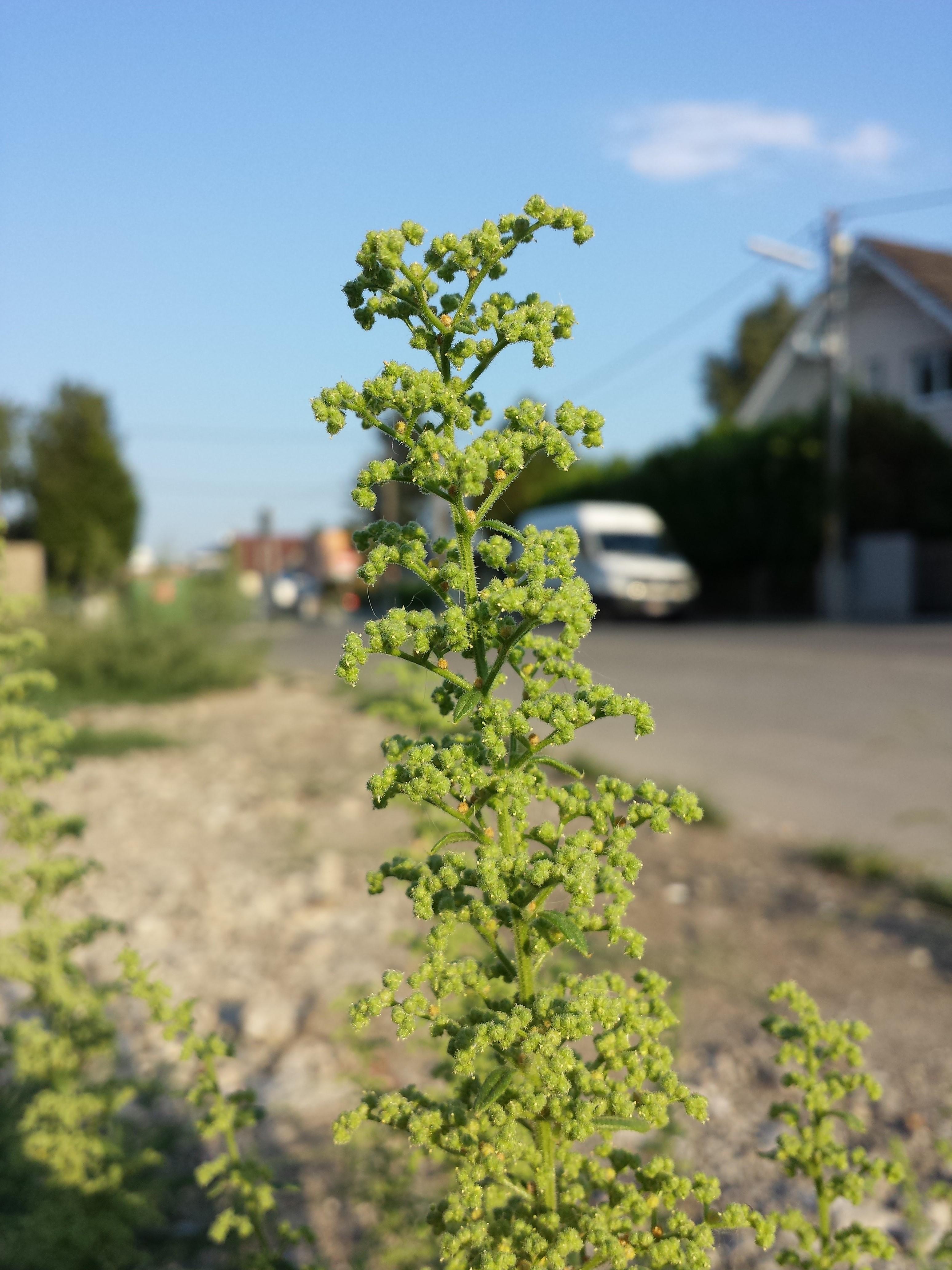
The flowers are very small, yellow-green and elliptical to ovoid-oblong. They stand together in spike-like, stalked and branched inflorescences.
The plant forms nut fruits. The seed coat is black and smooth to wrinkled. The seeds are globose and somewhat flattened (oblate).
Features
Jerusalem oak
Dysphania botrys
sticky glandular hairs
smell of pine resin
In the city
The jerusalem oak grows on dry, sandy or gravelly slopes, valleys, clay areas or river terraces. It also occurs on sites that have been profoundly affected by humans, such as fallow land or roadsides.
Fun Facts
The glands can be interpreted as drought adaptation and feeding protection. They also serve to spread the fruits.
The flowering period is from July to August.
The plant is considered an indicator of warmth or maritime climate.
It is used as a medicinal plant for asthma and catarrh.
It is an annual plant. This means the plant lives for one year, flowers and dies after the seeds have ripened.
- Endangerment level Germany: not evaluated
The leaves and seeds are edible.
Sources
Habitus, Stefan.lefnaer, CC BY-SA 4.0, https://commons.wikimedia.org/wiki/File:Dysphania_botrys_sl16.jpg

Blätter, Stefan.lefnaer, CC BY-SA 4.0, https://commons.wikimedia.org/wiki/File:Dysphania_botrys_sl13.jpg

Blütenstand, Stefan.lefnaer, CC BY-SA 4.0, https://commons.wikimedia.org/wiki/File:Dysphania_botrys_sl9.jpg

Page „Klebriger Drüsengänsefuß“. : Wikipedia, The Free Encyclopedia. Date of last revision: 11.04.2018, 19:27 UTC. URL: https://de.wikipedia.org/w/index.php?title=Klebriger_Dr%C3%BCseng%C3%A4nsefu%C3%9F&oldid=176389018 (Accessed: 23.07.2018).
Bundesamt für Naturschutz (n.d.) Artensteckbriefe, URL: http://floraweb.de/pflanzenarten/artenhome.xsql?suchnr=32119& (Accessed: 23.07.2018).
Seitz, B., Ristow, M., Meißner, J., Machatzi, B. & Sukopp, H. (2018) Rote Liste und Gesamtartenliste der etablierten Farn- und Blütenpflanzen von Berlin. : Der Landesbeauftragte für Naturschutz und Landschaftspflege / Senatsverwaltung für Umwelt, Klima und Verkehr (eds.) Rote Listen der gefährdeten Pflanzen, Pilze und Tiere von Berlin, URL: https://www.berlin.de/sen/uvk/natur-und-gruen/naturschutz/artenschutz/artenlisten-rote-listen/farn-und-bluetenpflanzen/ (Accessed: 26.03.2021).