
Short Description
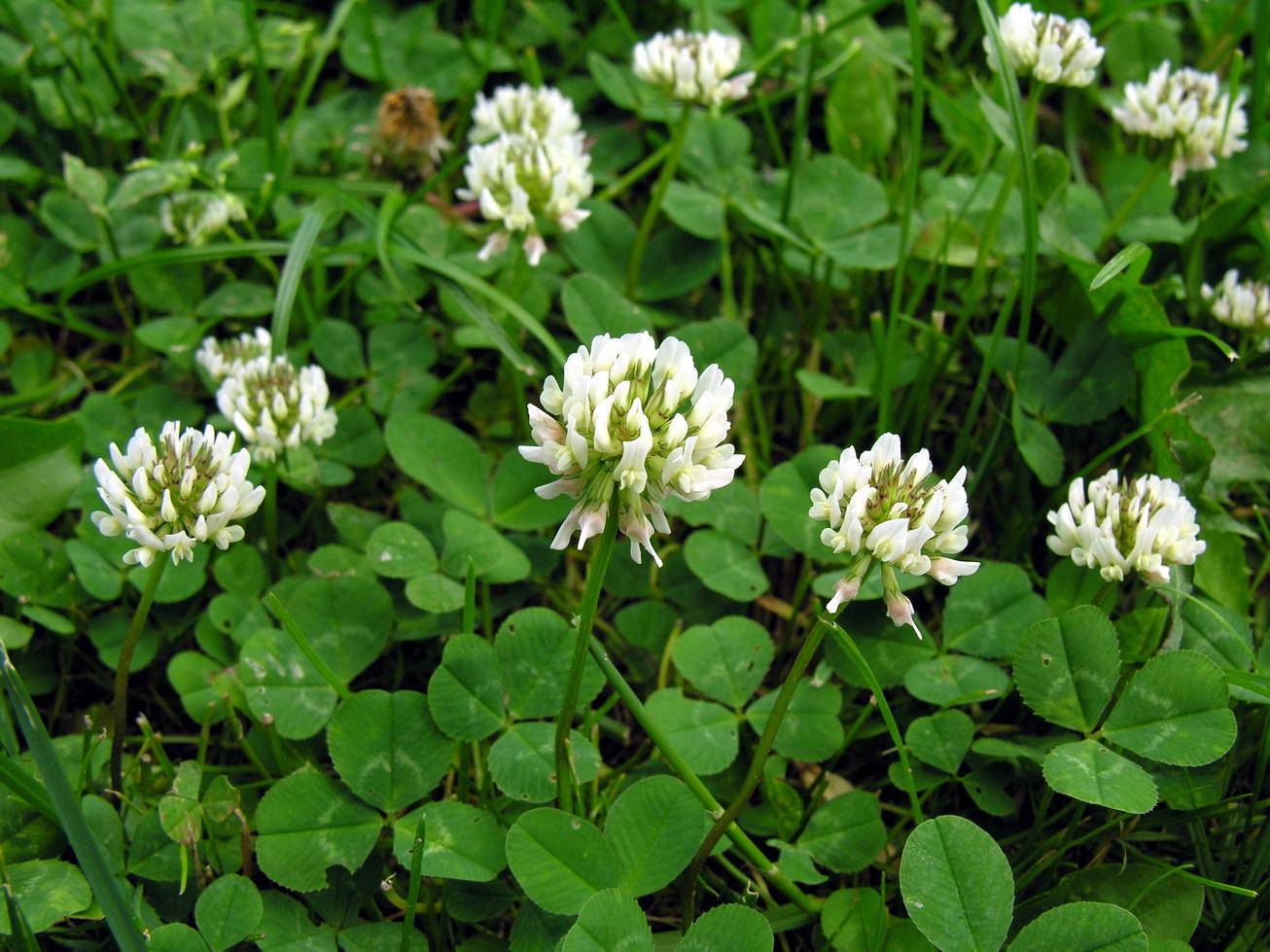
White clover can grow to a height of 25 cm.
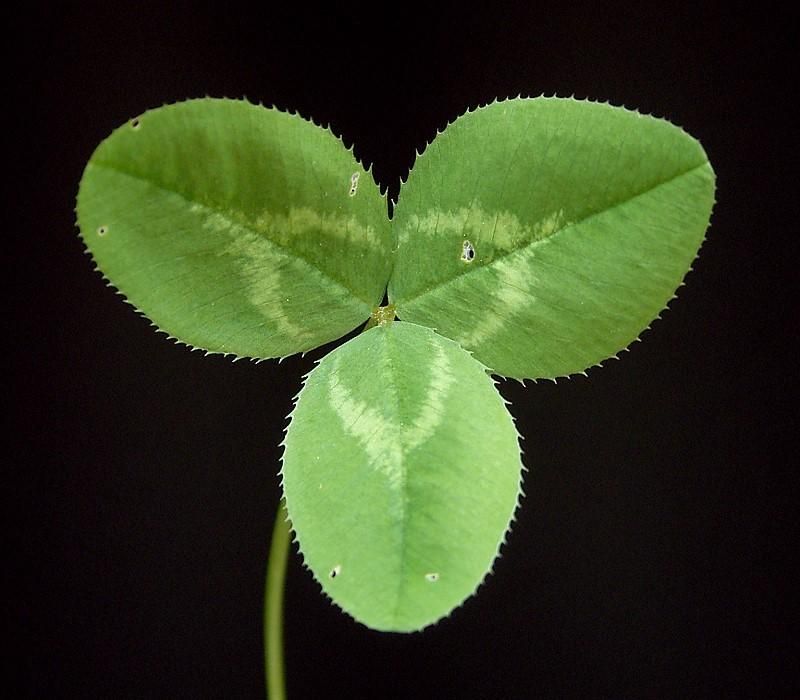
The leaves grow alternately on the stem and divided into three leaflets (trifoliate). The three individual leaflets are lance-shaped to elliptical. The leaf margins are finely serrated.
The stem is hairless, creeping and highly branched. Roots can develop from nodes.
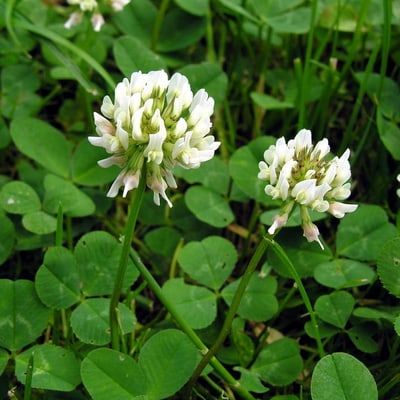
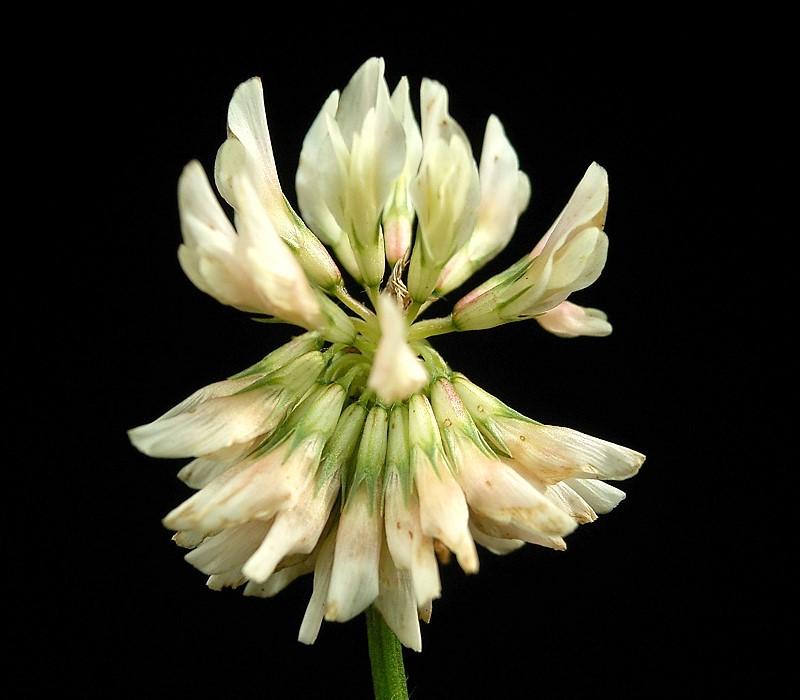
The small flowers are densely clustered in globular flower heads. Individual florets are white and have only a single mirror axis (mirror-symmetric). The flower consists of five petals. The large upper petal protrudes upwards. The two lower petals form a hollow boat that surrounds the anthers and pistil.
The fruit is a seed pod with three to four seeds.
Features
White clover
Trifolium repens
globular white flower heads
In the city
White clover frequently grows in lawns in parks and gardens. It is extremely resistant to trampling and often grows along paths. It prefers nutrient-rich, damp sites on loamy soil.
Fun Facts
A four-leafed cultivar is available commercially.
Symbiosis with root-nodulation bacteria is typical for members of the papilionaceae family. The bacteria supply the plant with nitrogen. As the bacteria require a plant to fix nitrogen, this biological interaction is beneficial to both species (symbiosis).
It flowers from May to October.
- Endangerment level Germany: not endangered
White clover is a good forage plant because of its high protein content.
Sources
Habitus, Algirdas, CC BY-SA 3.0, https://commons.wikimedia.org/wiki/File:Trifolium_repens1.jpg

Laubblatt, Frank Vincentz, CC BY-SA 3.0, https://commons.wikimedia.org/wiki/File:Trifolium_repens_07_ies.jpg

Blütenstand, Frank Vincentz, CC BY-SA 3.0, https://commons.wikimedia.org/wiki/File:Trifolium_repens_05_ies.jpg

Schauer, T., Caspari, C. & Caspari, S. (2015) Der illustrierte BLV-Pflanzenführer für unterwegs. 1150 Blumen, Gräser, Bäume und Sträucher, München: BLV.
Spohn, M., Golte-Bechtle, M. & Spohn, R. (2015) Was blüht denn da? Stuttgart: Franckh Kosmos Verlag.
Page „Weiß-Klee“. : Wikipedia, The Free Encyclopedia. Date of last revision: 15.07.2016, 17:12 UTC. URL: https://de.wikipedia.org/w/index.php?title=Wei%C3%9F-Klee&oldid=156171933 (Accessed: 17.11.2016).