
Short Description
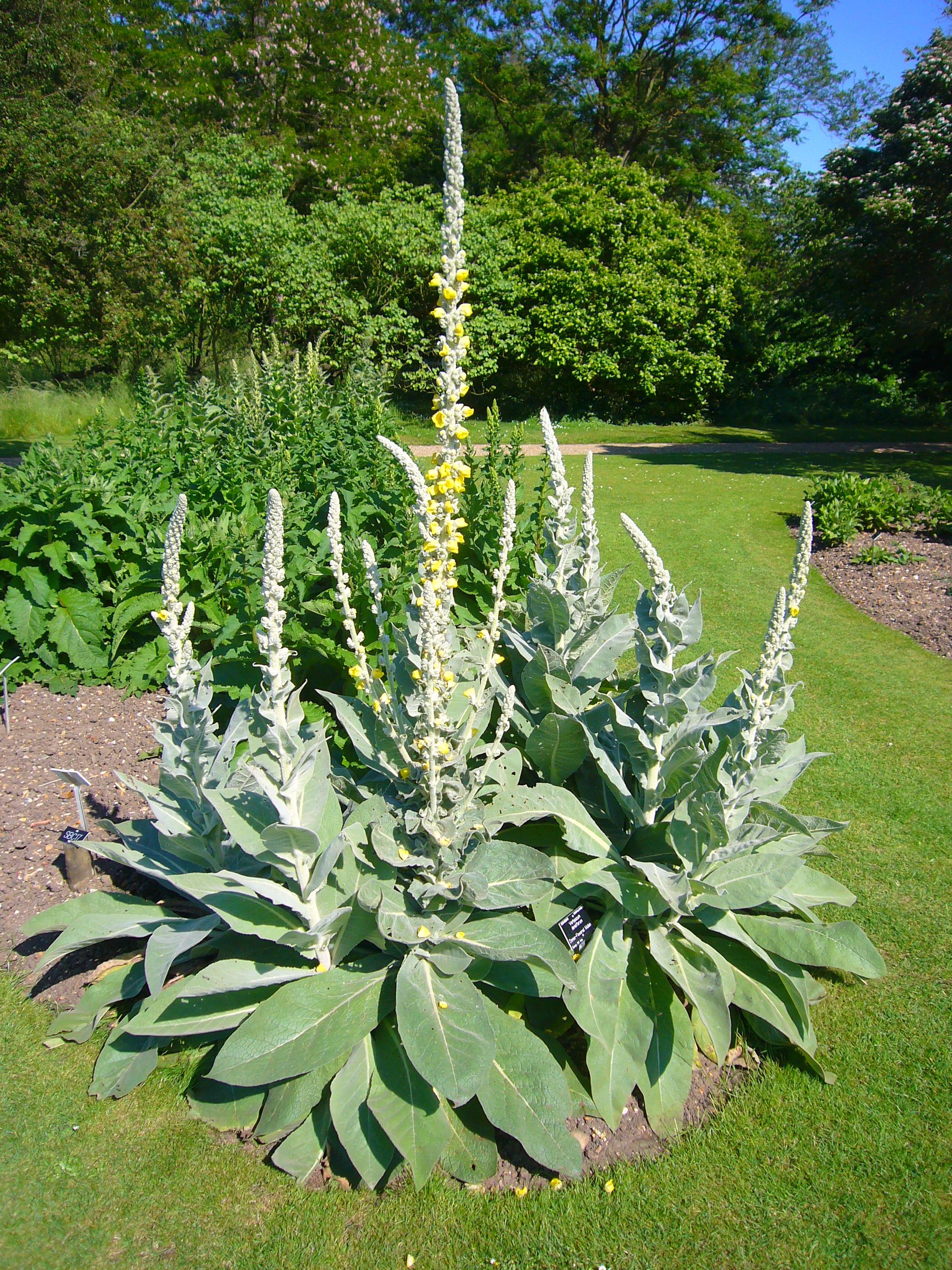
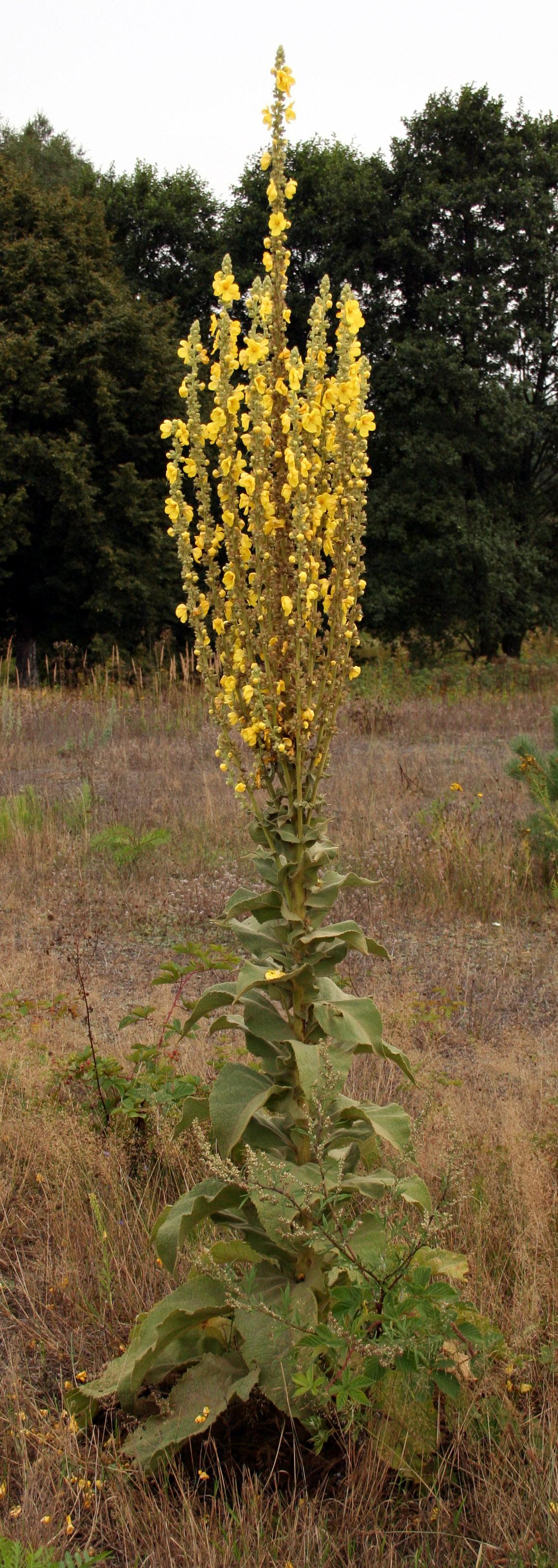
The dense-flowered mullein can grow to 2.5 metre high.
The leaves are alternately arranged on the stem. They are lance-shaped and covered with woolly hair.
The stem is upright and covered in woolly hair. It looks winged due to the leaf margins that run down.
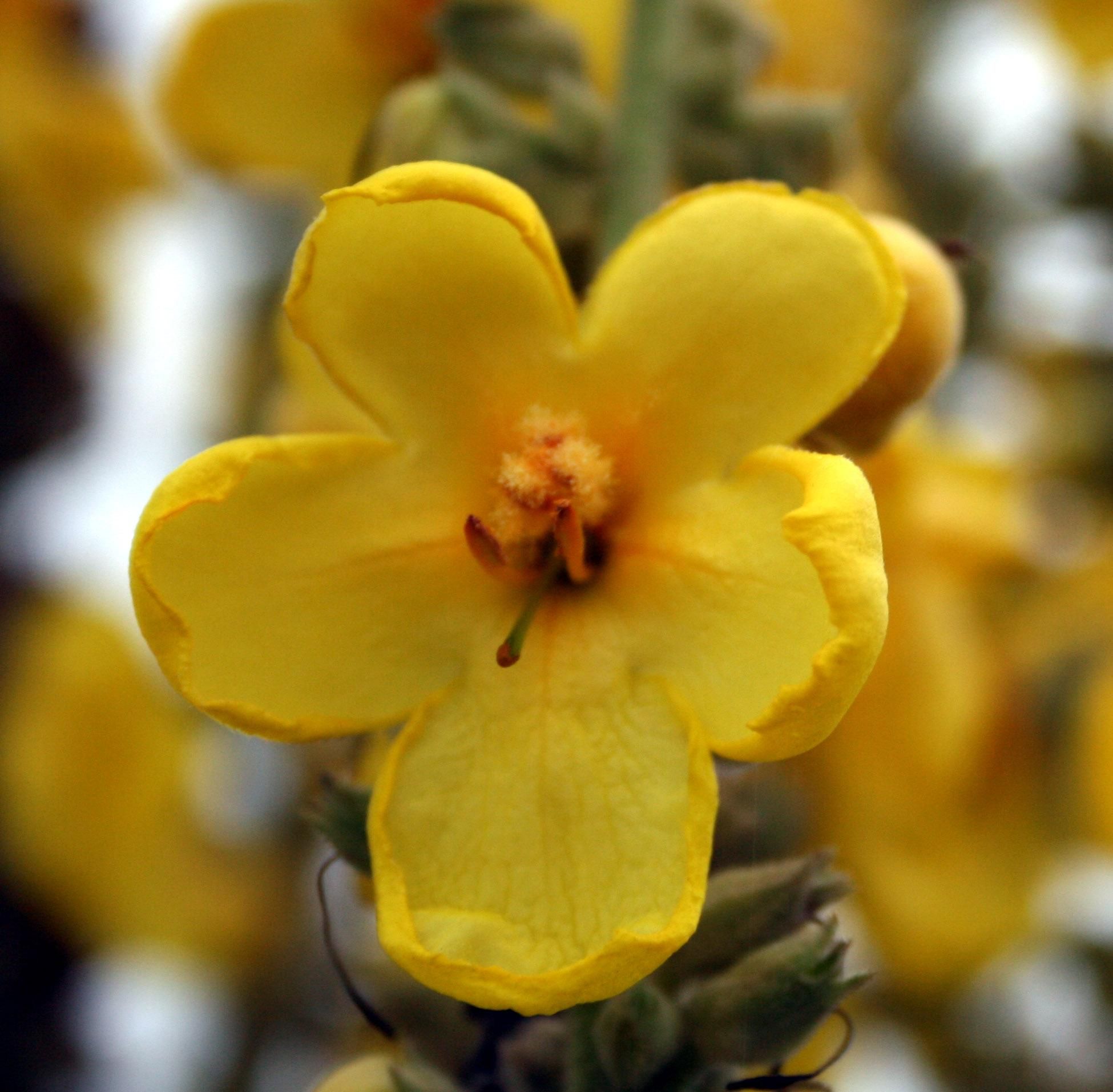
The yellow flowers with five petals are fused. They are clustered in a large flower head. Three of five stamens in the centre of the flower are densely haired.
The fruits are oval capsules.
Features
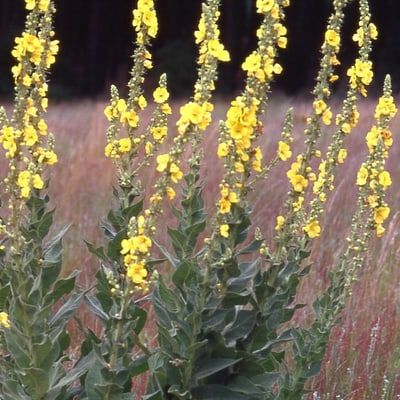
Dense-flowered mullein
Verbascum densiflorum
five petals
partially winged stem
three hairy stamens
Similar species
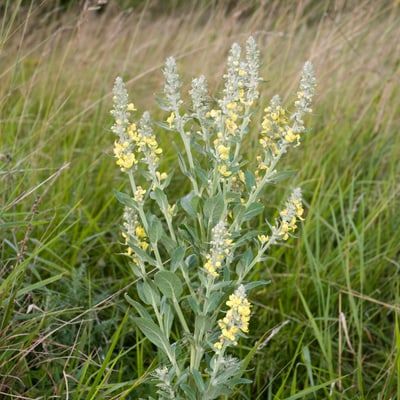
White mullein
Verbascum lychnitis
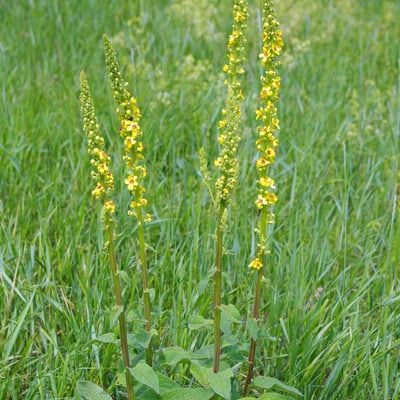
Dark mullein
Verbascum nigrum
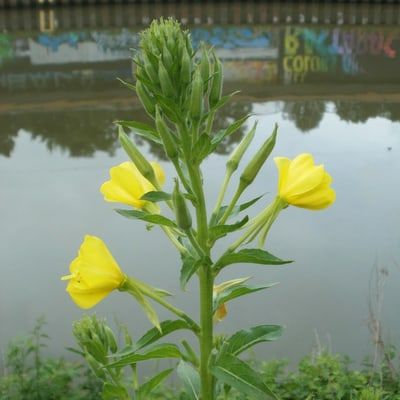
Common evening primrose
Oenothera biennis
In the city
The dense-flowered mullein prefers dry to fresh, light and nutrient-rich sites with calcareous soils. It benefits from the nutrient-rich soils in the city. Here it is often seen in weedy areas, rubble patches, roadsides and embankments.
Various types of mullein are offered in garden centres as perennials for the garden.
Fun Facts
In folk medicine, it is used as a remedy for inflammations, coughs and rheumatism.
It flowers from June to September.
Mulleins develop a rosette of leaves in the first year, flower in the second year and then normally die (biennial plant).
Caterpillars of the mullein moth are often found on dense-flowered mulleins. They are white with yellow and black spots.
The hairs on the stamens act like pollen dummies and thus attract pollen-collecting insects.
- Endangerment level Germany: not endangered
Its dried flowers and leaves are used in herbal teas.
Sources
Habitus, Magnus Manske, CC BY-SA 3.0, https://commons.wikimedia.org/wiki/File:Verbascum_densiflorum_%27dense-flowered_mullein%27_2007-06-02_(plant).jpg
.jpg)
Blüte, Pleple2000, CC BY-SA 3.0, https://commons.wikimedia.org/wiki/File:Verbascum_thapsiforme_315.jpg

Habitus, Pleple2000, CC BY-SA 3.0, https://commons.wikimedia.org/wiki/File:Verbascum_thapsiforme_309.jpg

Spohn, M., Golte-Bechtle, M. & Spohn, R. (2015) Was blüht denn da? Stuttgart: Franckh Kosmos Verlag.
Fleischhauer, S. G., Guthmann, J. & Spiegelberger, R. (2007) Essbare Wildpflanzen. 200 Arten bestimmen und verwenden, Baden und München: AT Verlag.
Lippert, W. & Podlech, D. (1993) GU Naturführer. Blumen: die wichtigen Blütenpflanzen Mitteleuropas erkennen und bestimmen, München: Gräfe und Unzer Verlag.
Schauer, T., Caspari, C. & Caspari, S. (2015) Der illustrierte BLV-Pflanzenführer für unterwegs. 1150 Blumen, Gräser, Bäume und Sträucher, München: BLV.
Page „Großblütige Königskerze“. : Wikipedia, The Free Encyclopedia. Date of last revision: 01.04.2016, 19:09 UTC. URL: https://de.wikipedia.org/w/index.php?title=Gro%C3%9Fbl%C3%BCtige_K%C3%B6nigskerze&oldid=153080780 (Accessed: 08.12.2016).
Bundesamt für Naturschutz (n.d.) Artensteckbriefe, URL: http://floraweb.de/pflanzenarten/artenhome.xsql?suchnr=6210& (Accessed: 08.12.2016).