
Short Description
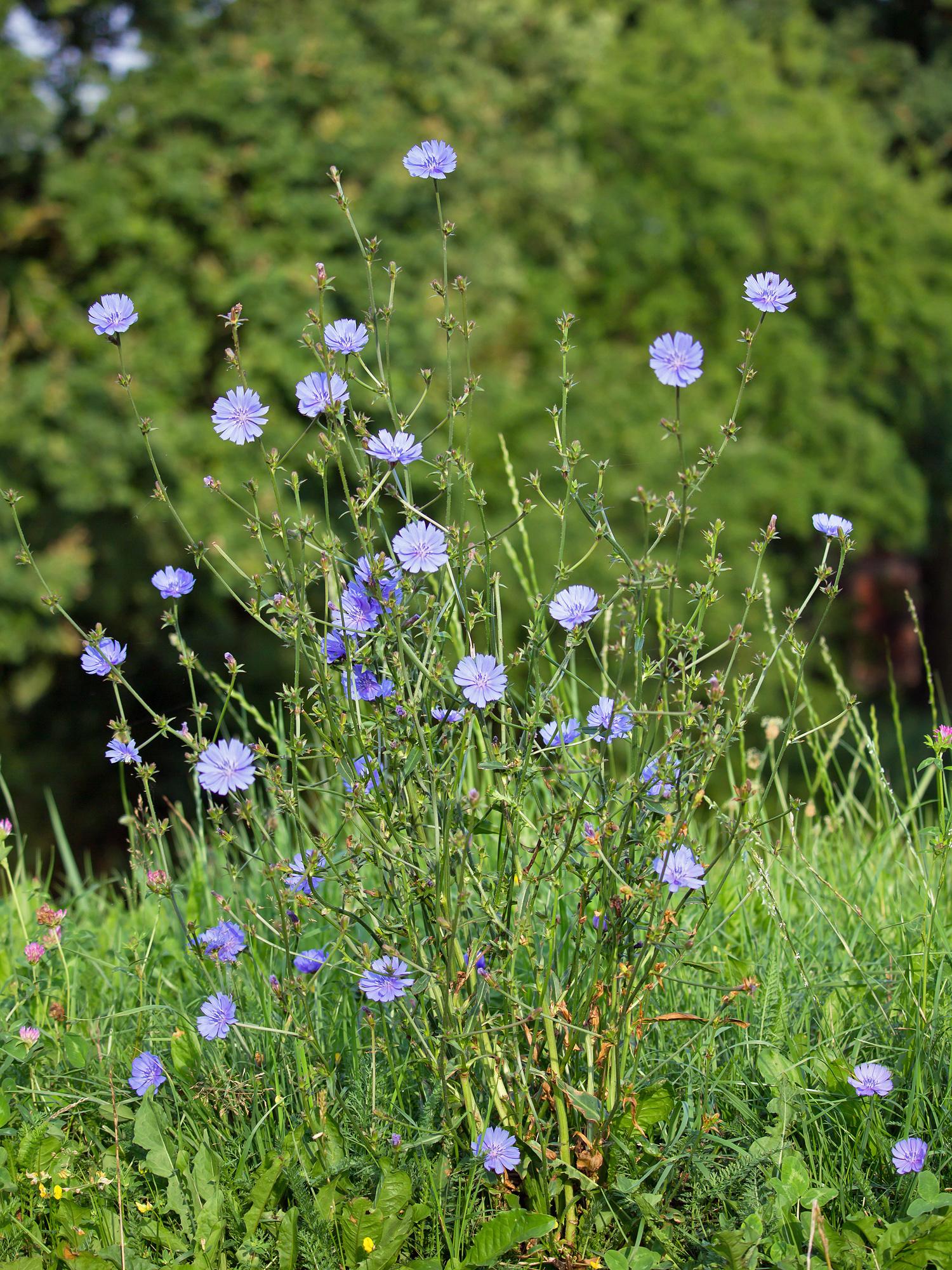
The common chicory is perennial and can reach a growth height of up to 1.5 m.
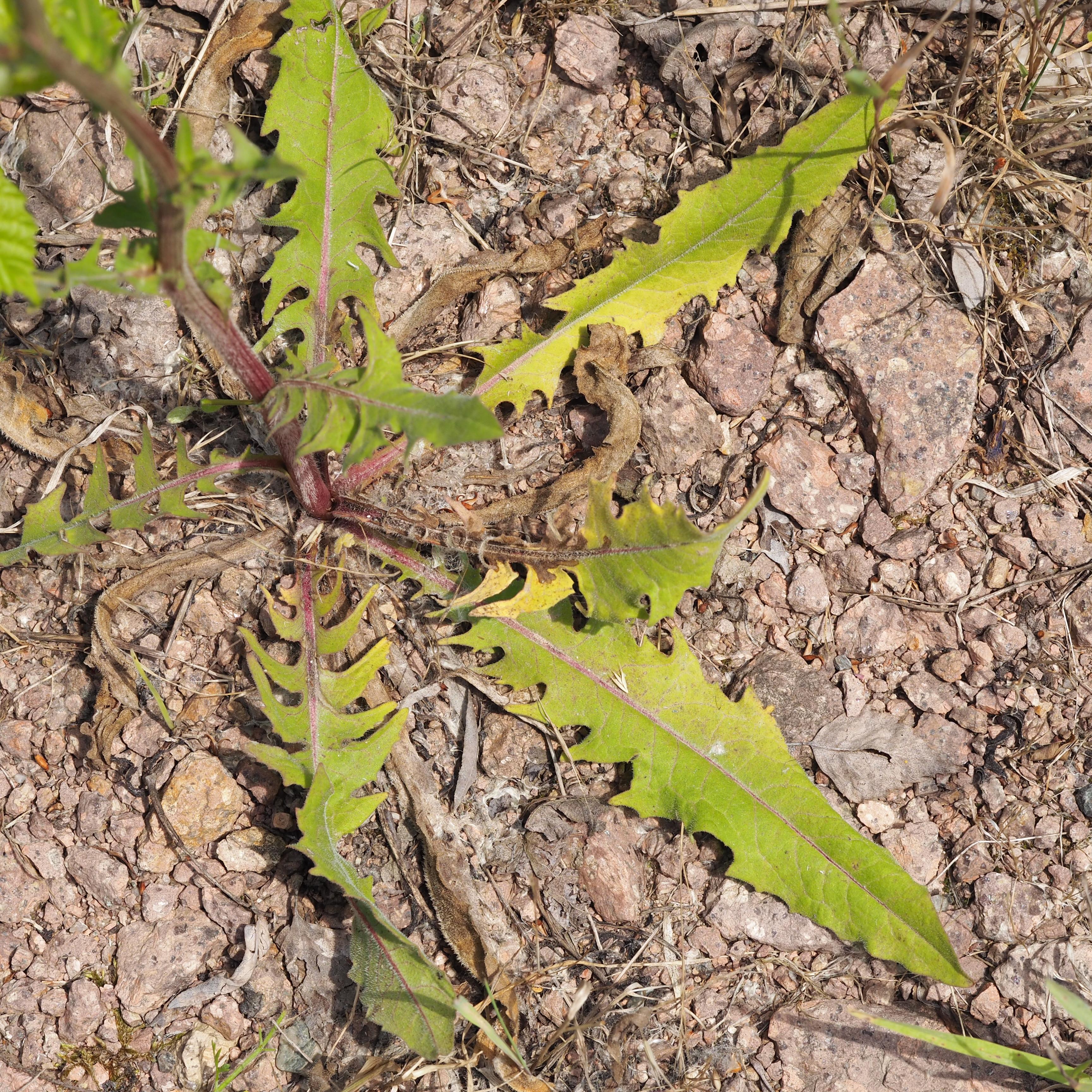
The lower leaves are generally deeply toothed and covered in rough hairs. The stem leaves are lance-shaped, can be slightly serrated and in some cases clasp the stem.
The plant is bushily branched with a hairy stem. It has a long taproot.
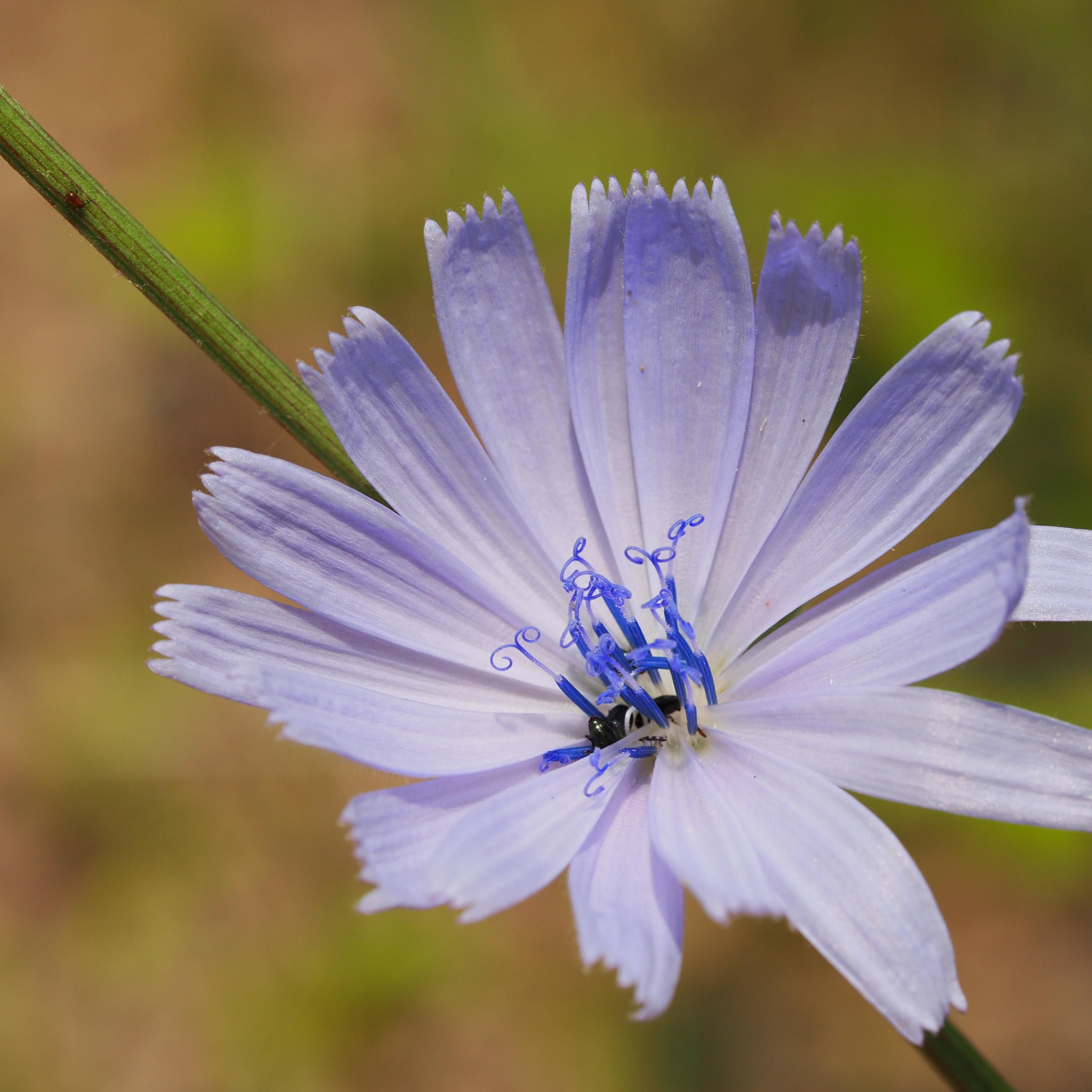
At first glance, the flower head can be mistaken for the flower itself. The pseudanthium (“false flower”) consists of numerous individual blue ray florets and can reach a diameter of up to 5 cm.
The fruits are small nutlets with a ring of short hairs.
Features
Common chicory
Cichorium intybus
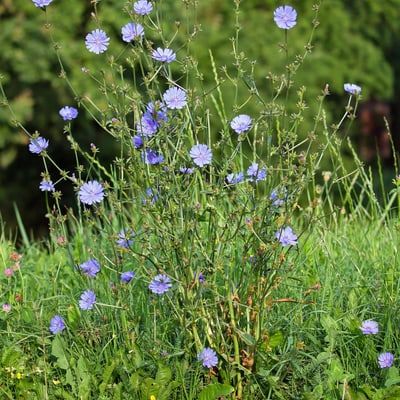
light-blue flower
milky sap
In the city
In an urban environment, chicory is often found on verges and is tolerant of trampling. It prefers nutrient-rich soils.
Fun Facts
Pollination is carried out by insects, mainly bees and hoverflies.
Cultivated forms of the common chicory include chicory (Belgian endive), sugarloaf, radicchio and root chicory.
It lives for several years and generally flowers and fruits annually (perennial plant).
There are also white- and pink-flowering varieties. However, they are much rarer.
The root of the cultivated form is used to make chicory coffee.
They flower from July to October.
- Endangerment level Germany: not endangered
- Usage:
Common chicory is used as a bitter agent for digestive complaints.
Young leaves and flowers can be used in salads. Dried chicory leaves were formerly used as a tobacco substitute.
Sources
Habitus, Christian Fischer, CC BY-SA 3.0, https://commons.wikimedia.org/wiki/File:Cichorium_Intybus.jpg

Blätter, Alice Kracht, CC BY-SA 4.0, https://offene-naturfuehrer.de/web/Datei:Cichorium_intybus_(4).JPG
.JPG)
Blütenkörbchen, Alice Kracht, CC BY-SA 4.0, https://offene-naturfuehrer.de/web/Datei:Cichorium_intybus_61.JPG

Page „Gemeine Wegwarte“. : Wikipedia, The Free Encyclopedia. Date of last revision: 29.06.2016, 20:21 UTC. URL: https://de.wikipedia.org/w/index.php?title=Gemeine_Wegwarte&oldid=155737888 (Accessed: 05.08.2016).
Fitter, R., Fitter, A. & Blamey, M. (1986) Pareys Blumenbuch. Wildblühende Pflanzen Deutschlands und Nordwesteuropas, London: Verlag Collins Publishers.
Fleischhauer, S. G., Guthmann, J. & Spiegelberger, R. (2007) Essbare Wildpflanzen. 200 Arten bestimmen und verwenden, Baden und München: AT Verlag.
Lippert, W. & Podlech, D. (1993) GU Naturführer. Blumen: die wichtigen Blütenpflanzen Mitteleuropas erkennen und bestimmen, München: Gräfe und Unzer Verlag.
Needon, C. & Petermann, J. (1991) Urania-Naturführer Pflanzen, Leipzig, Jena, Berlin: Urania-Verlag.
Schauer, T., Caspari, C. & Caspari, S. (2015) Der illustrierte BLV-Pflanzenführer für unterwegs. 1150 Blumen, Gräser, Bäume und Sträucher, München: BLV.
Scherf, G. (2006) Wildpflanzen neu entdecken, München: BLV.
Schönfelder, I. & Schönfelder, P. (2010) Der Kosmos-Heilpflanzenführer. Über 600 Heil- und Giftpflanzen Europas, Stuttgart: Franckh Kosmos Verlag.
Weymar, H. (1988) Lernt Pflanzen kennen, Leipzig, Radebeul: Neumann Verlag.
Bundesamt für Naturschutz (n.d.) Artensteckbriefe, URL: http://floraweb.de/pflanzenarten/artenhome.xsql?suchnr=1550& (Accessed: 05.08.2016).