
Short Description
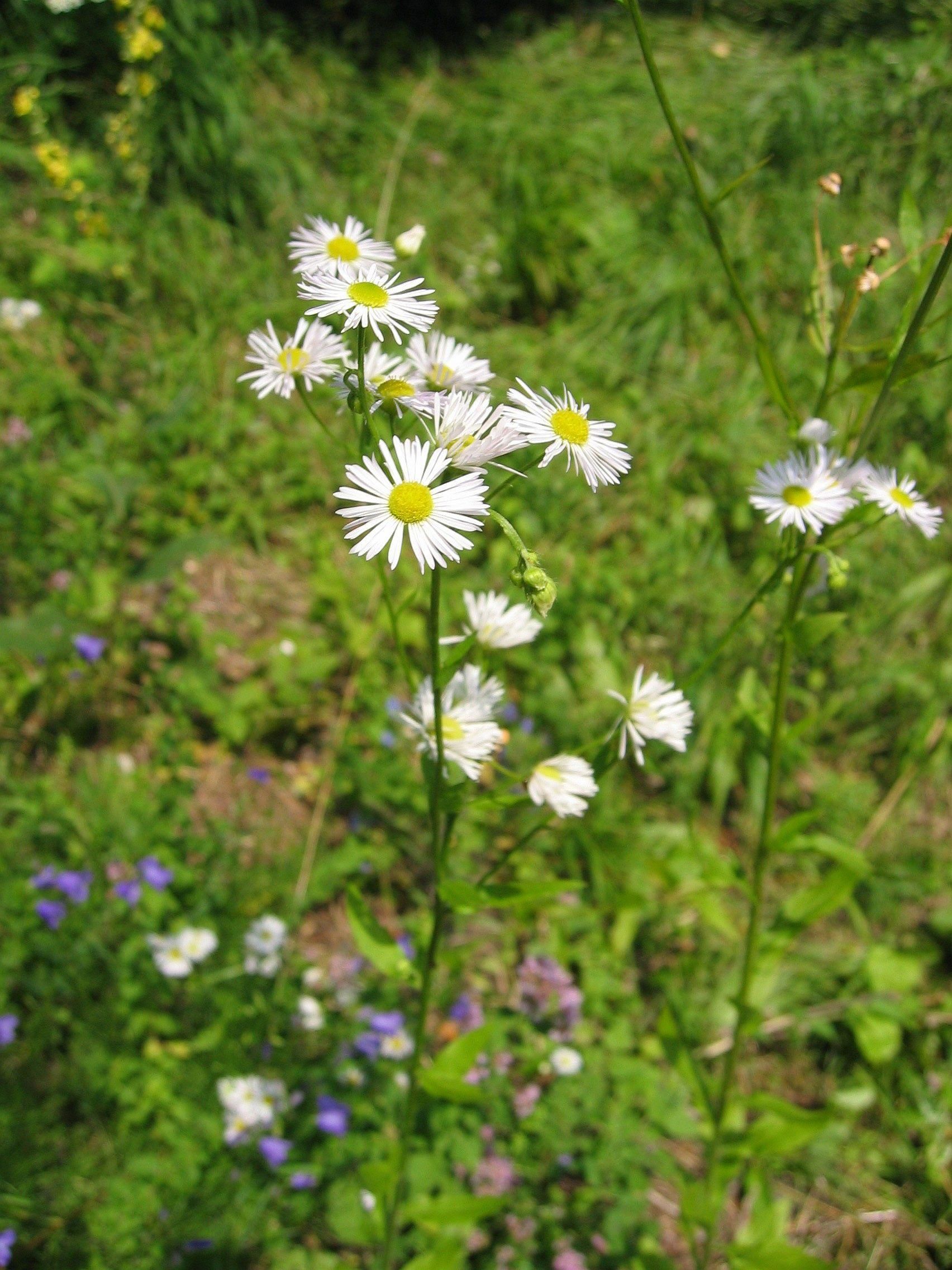
Annual fleabane can reach a height of up to one metre.
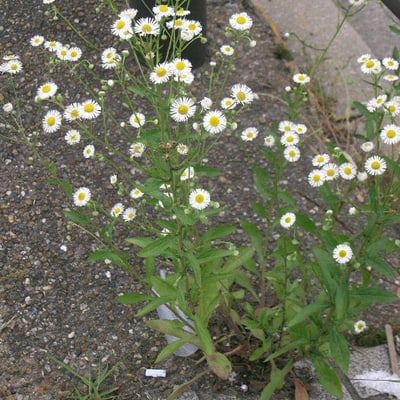
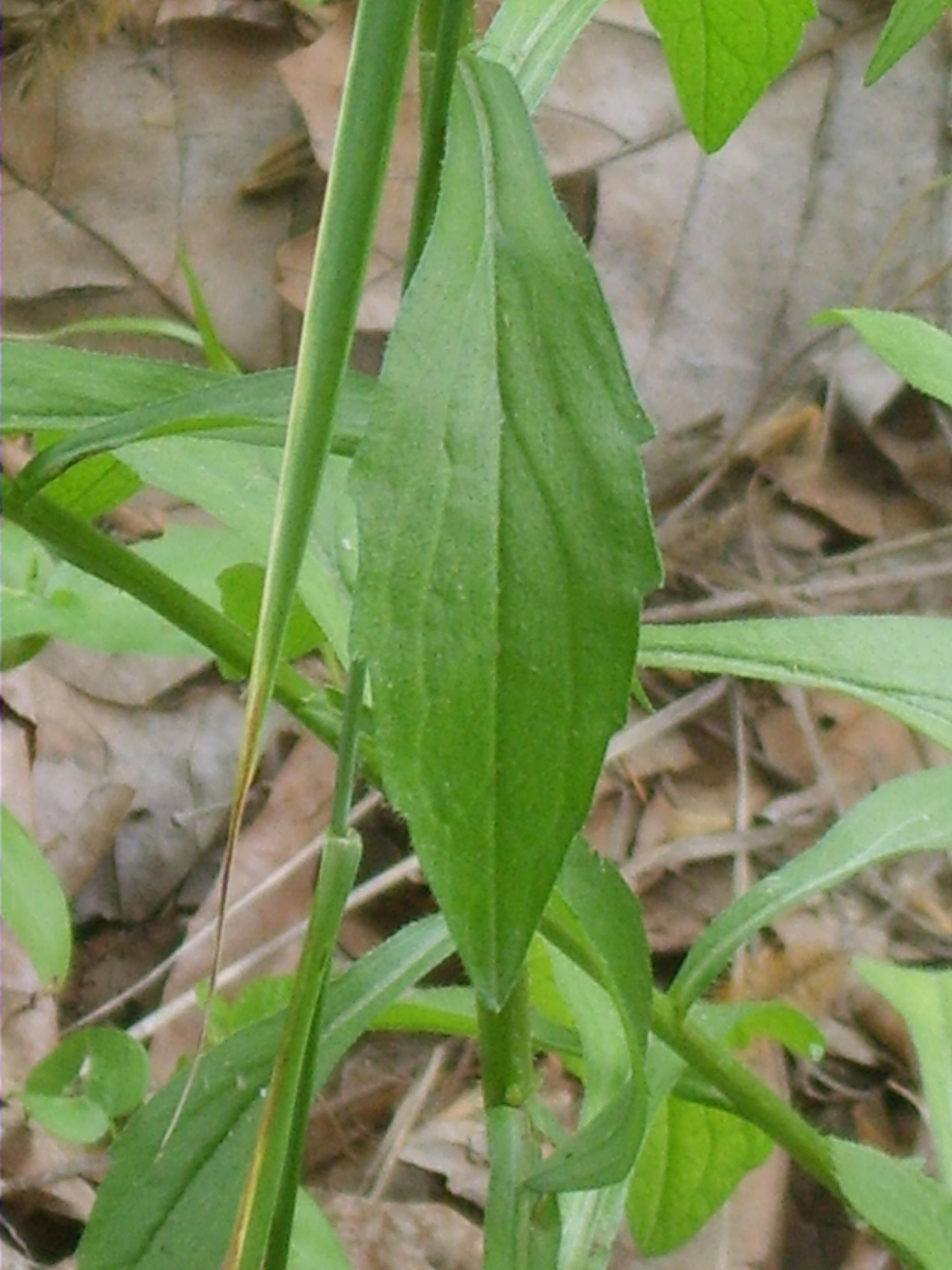
The lower leaves are roundish to lanceolate. The upper leaves are narrowly lanceolate. The leaf margin is coarsely toothed.
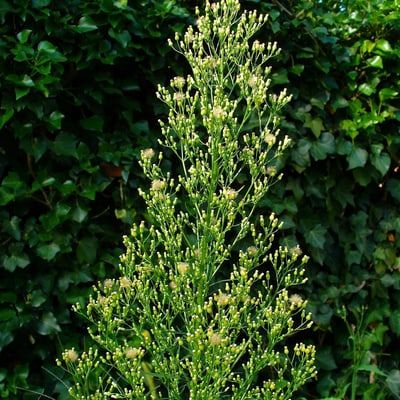
The stem is erect and usually sparsely covered with fine hairs. In the upper section it is usually richly branched.
At first glance, the flower head can be mistaken for the flower. The false flower consists of numerous individual white or pale lilac ray florets on the edge and yellow tubular florets in the centre.
It forms small, elongated, nut-like fruits (achenes) with a ring of hairs (pappus).
Features
Annual fleabane
Erigeron annuus
white to pale purple ray florets
Flower heads with yellow centre
In the city
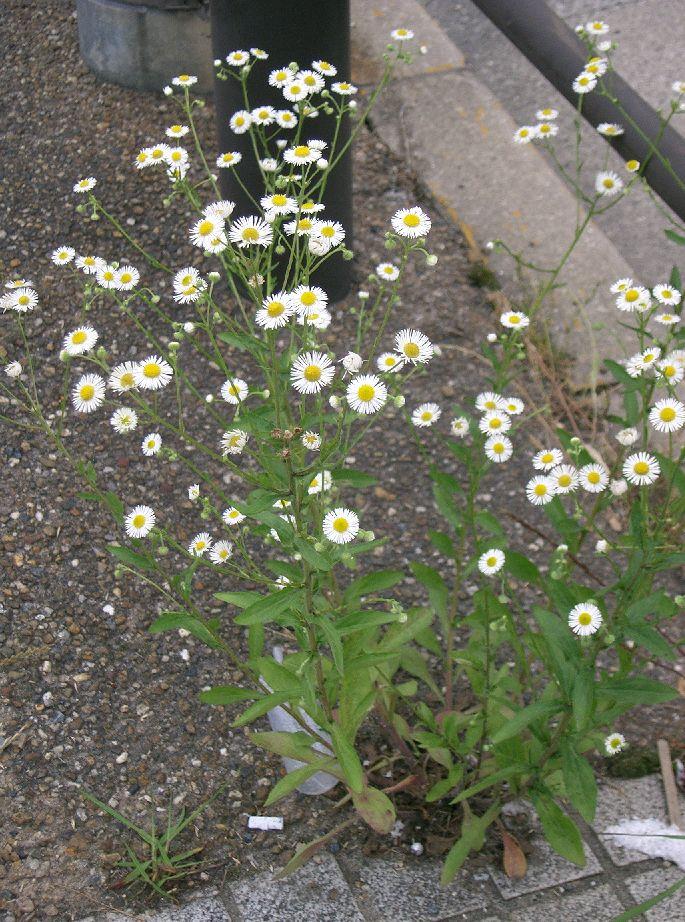
In the city, the annual fleabane is often found on meadows, railway ballast and in gravel pits. It prefers fresh to moist sites with nutrient-rich, stony soils.
Fun Facts
Annual fleabane was introduced to Europe in the 17th century as an ornamental plant and ran wild.
The flowering period is from June to September.
It is an annual plant, i.e. it flowers for only one summer and dies after the seeds have ripened.
- Endangerment level Germany: not evaluated
It originates from North America and belongs to the non-native plants (neophytes).
The genus name Erigeron can be derived from Greek words eri = early and geron = old man, and refers to the white hair crowns of the fruits that ripen early in the year.
Sources
Habitus, Tigerente, CC BY-SA 3.0, https://commons.wikimedia.org/wiki/File:Erigeron_annuus.jpg

Habitus, KENPEI, CC BY-SA 3.0, https://commons.wikimedia.org/wiki/File:Erigeron_annus6.jpg

Blätter, Dalgial, CC BY-SA 3.0, https://commons.wikimedia.org/wiki/File:Erigeron_annuus_in_Woninjae,_Korea_2.JPG

Eggenberg, S. & Möhl, A. (2007) Flora Vegetativa: Ein Bestimmungsbuch für Pflanzen der Schweiz im blütenlosen Zustand, Bern, Stuttgart, Wien: Haupt Verlag.
Spohn, M., Golte-Bechtle, M. & Spohn, R. (2015) Was blüht denn da? Stuttgart: Franckh Kosmos Verlag.
Jäger, E. J. (2011) Rothmaler - Exkursionsflora von Deutschland. Gefäßpflanzen: Grundband, Heidelberg: Spektrum Akademischer Verlag.
Kammer, P. M. (2016) Pflanzen einfach bestimmen. Schritt für Schritt einheimische Arten kennenlernen, Bern: Haupt Verlag.
Schauer, T., Caspari, C. & Caspari, S. (2015) Der illustrierte BLV-Pflanzenführer für unterwegs. 1150 Blumen, Gräser, Bäume und Sträucher, München: BLV.
Page „Feinstrahl“. : Wikipedia, The Free Encyclopedia. Date of last revision: 18.12.2016, 11:30 UTC. URL: https://de.wikipedia.org/w/index.php?title=Feinstrahl&oldid=160765522 (Accessed: 11.04.2017).
Bundesamt für Naturschutz (n.d.) Artensteckbriefe, URL: http://floraweb.de/pflanzenarten/artenhome.xsql?suchnr=6025& (Accessed: 11.04.2017).