
Short Description
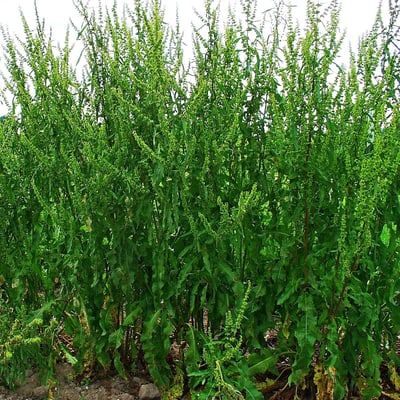
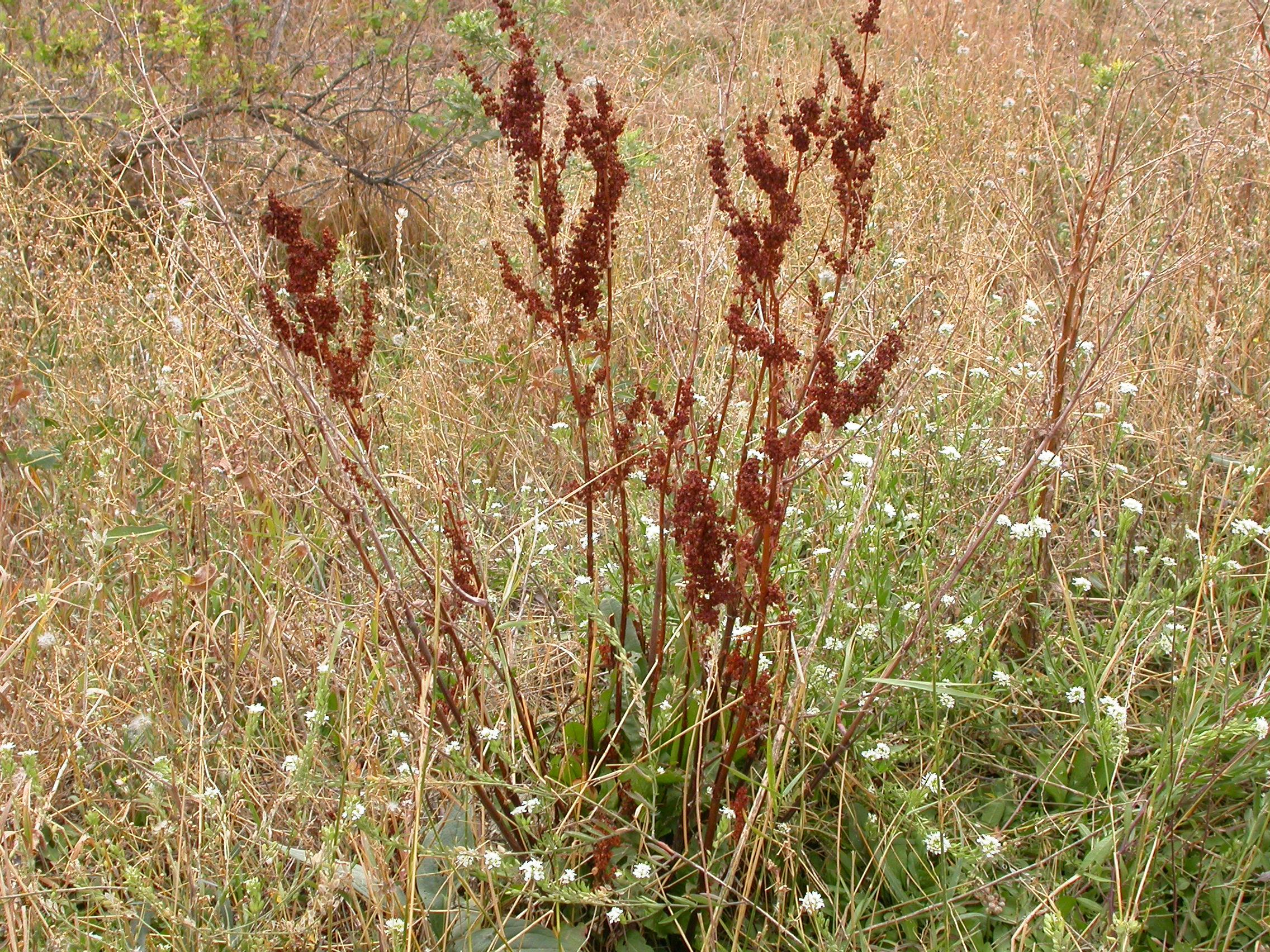
The curled dock is evergreen and can grow up to 1.5 metres high.
The dark grey-green leaves are elongated and narrow. They have a heart-shaped leaf base. The margin is curly.
The stem grows erect. It is grooved.
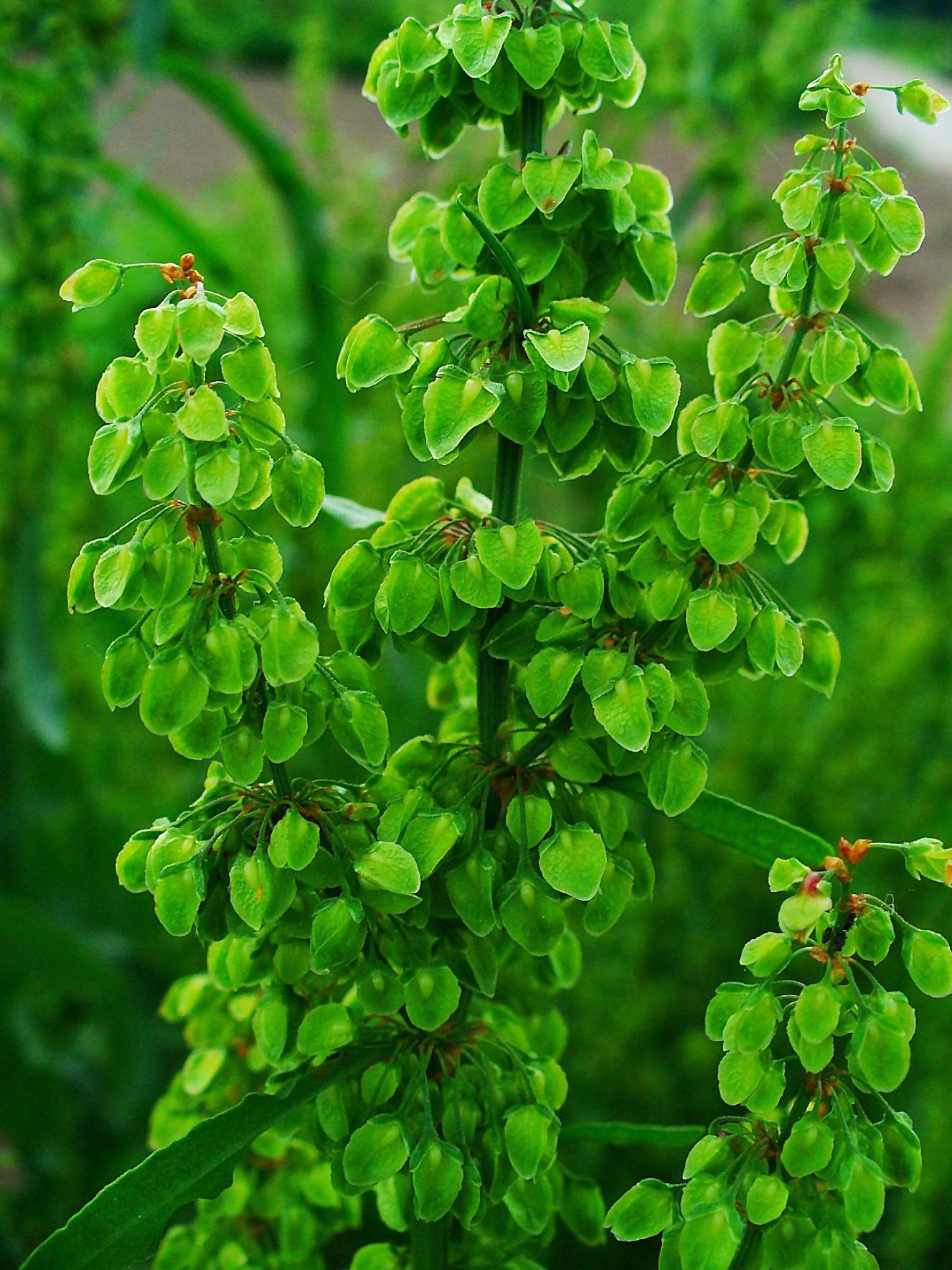
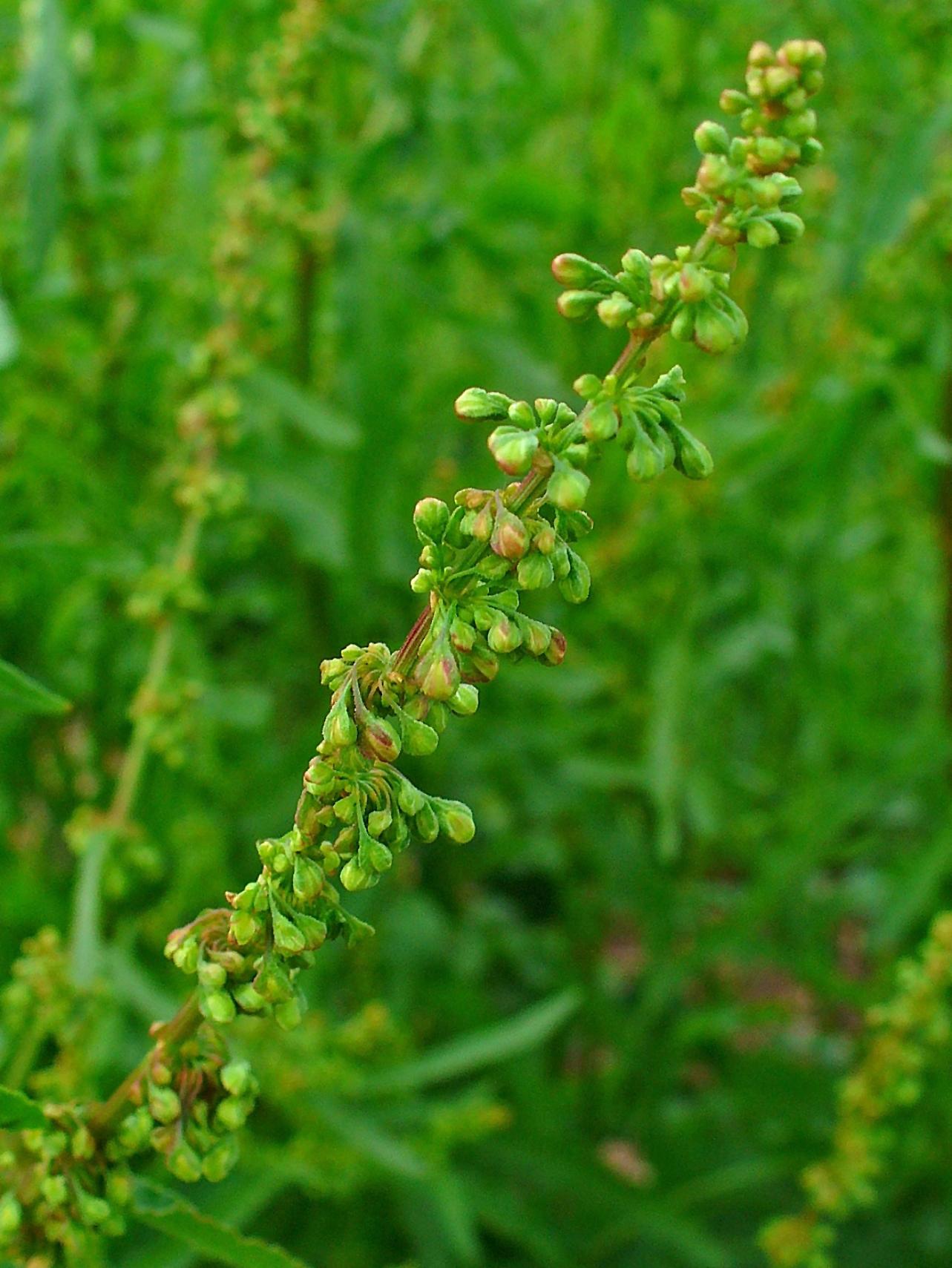
The flowers are inconspicuous and green or slightly reddish. They hang in dense clusters in elongated inflorescences.
The fruit is a triangular nut. It has three round or heart-shaped leaves.
Features
Curled dock
Rumex crispus
slightly poisonous
curly leaf margin
Similar species
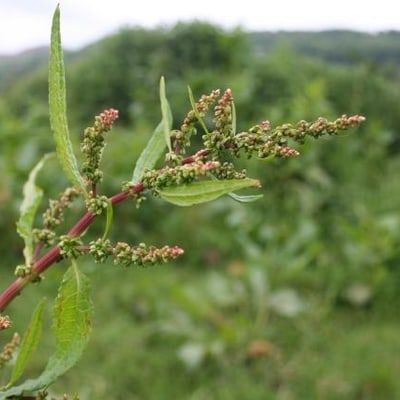
Rumex conglomeratus
In the city
The curled dock prefers moist, nitrogen-rich soils. It is an indicator of soil compaction. In the city it is found in wet pastures, fields, meadows, wastelands and on banks, ditches and roadsides.
Fun Facts
The pollen of all dock species is highly allergenic (hay fever).
The plant roots up to three metres deep.
The leaflets on the fruits serve as wings for dispersal by the wind.
The flowering period is from June to August.
It lives for several years and generally flowers and fruits annually (perennial plant).
The flowers are pollinated by the wind. The male flower features either sit alone on a plant or they mature before the female flower parts. The separate position of the two sexes makes self-pollination within a flower impossible.
- Endangerment level Germany: not endangered
- Usage:
In folk medicine, the roots are used against constipation and the tannin-rich fruits against diarrhoea.
The curled dock is native and widespread in Germany. As a non-native species (neophyte), it is widespread in areas with temperate climates worldwide.
The plant is slightly poisonous. Symptoms of poisoning include vomiting, diarrhoea, cardiac arrhythmia, tremors and paralysis.
Sources
Früchte, H. Zell, CC BY-SA 3.0, https://commons.wikimedia.org/wiki/File:Rumex_crispus_003.JPG

Blütenstand, H. Zell, CC BY-SA 3.0, https://commons.wikimedia.org/wiki/File:Rumex_crispus_002.JPG

Habitus, Matt Lavin, CC BY-SA 2.0, https://commons.wikimedia.org/wiki/File:Rumex_crispus_(5002466641).jpg
.jpg)
Kammer, P. M. (2016) Pflanzen einfach bestimmen. Schritt für Schritt einheimische Arten kennenlernen, Bern: Haupt Verlag.
Spohn, M., Golte-Bechtle, M. & Spohn, R. (2015) Was blüht denn da? Stuttgart: Franckh Kosmos Verlag.
Page „Krauser Ampfer“. : Wikipedia, The Free Encyclopedia. Date of last revision: 24.08.2018, 06:17 UTC. URL: https://de.wikipedia.org/w/index.php?title=Krauser_Ampfer&oldid=180281760 (Accessed: 27.08.2018).