
Short Description
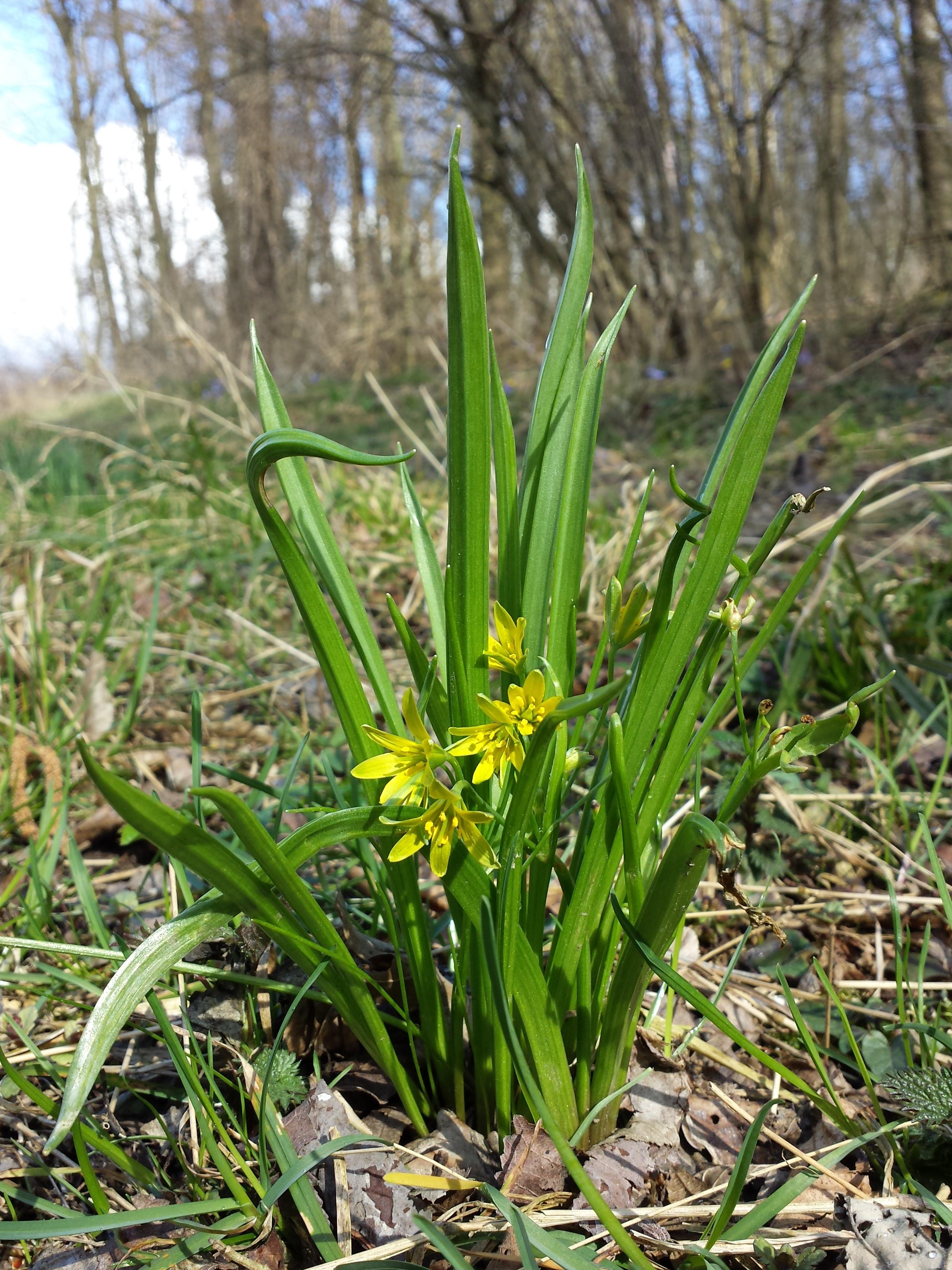
The yellow star-of-Bethlehem can grow up to 30 cm high.
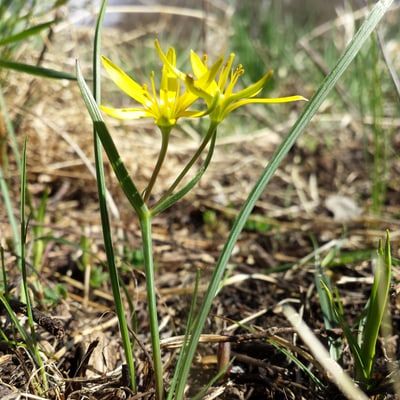
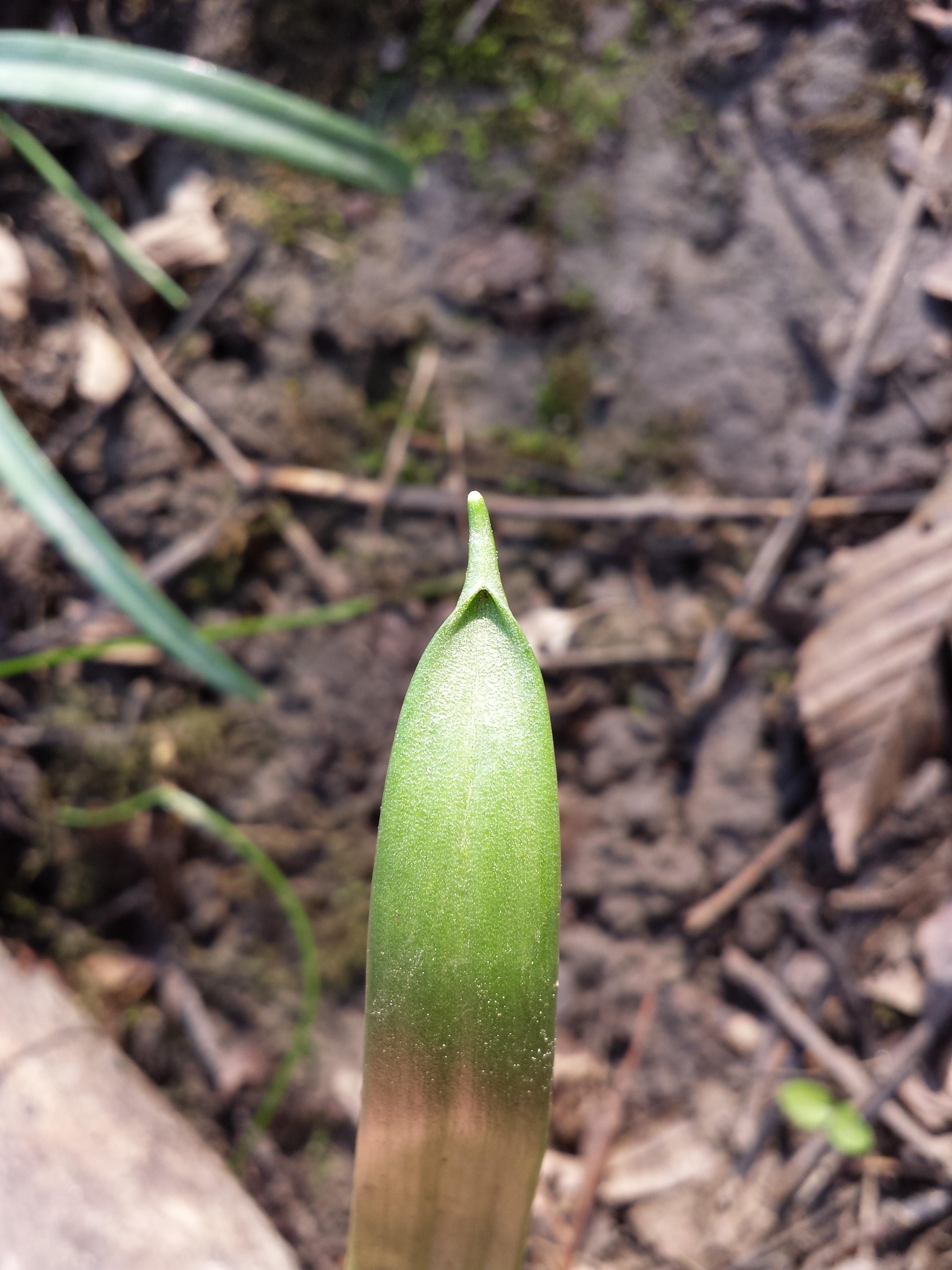
The single basal leaf is elongated and narrow. The tip of the leaf is folded in like a hood. It appears to come directly from the ground and arises from the bulb lying underground. One or two bracts grow directly under the flower head. They are clearly shorter than the basal leaf and ciliate at the edge.
The stem grows erect and is glabrous except for the bracts. It has only one bulb and no secondary bulbs.
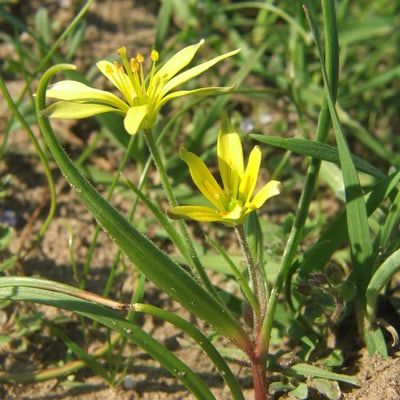
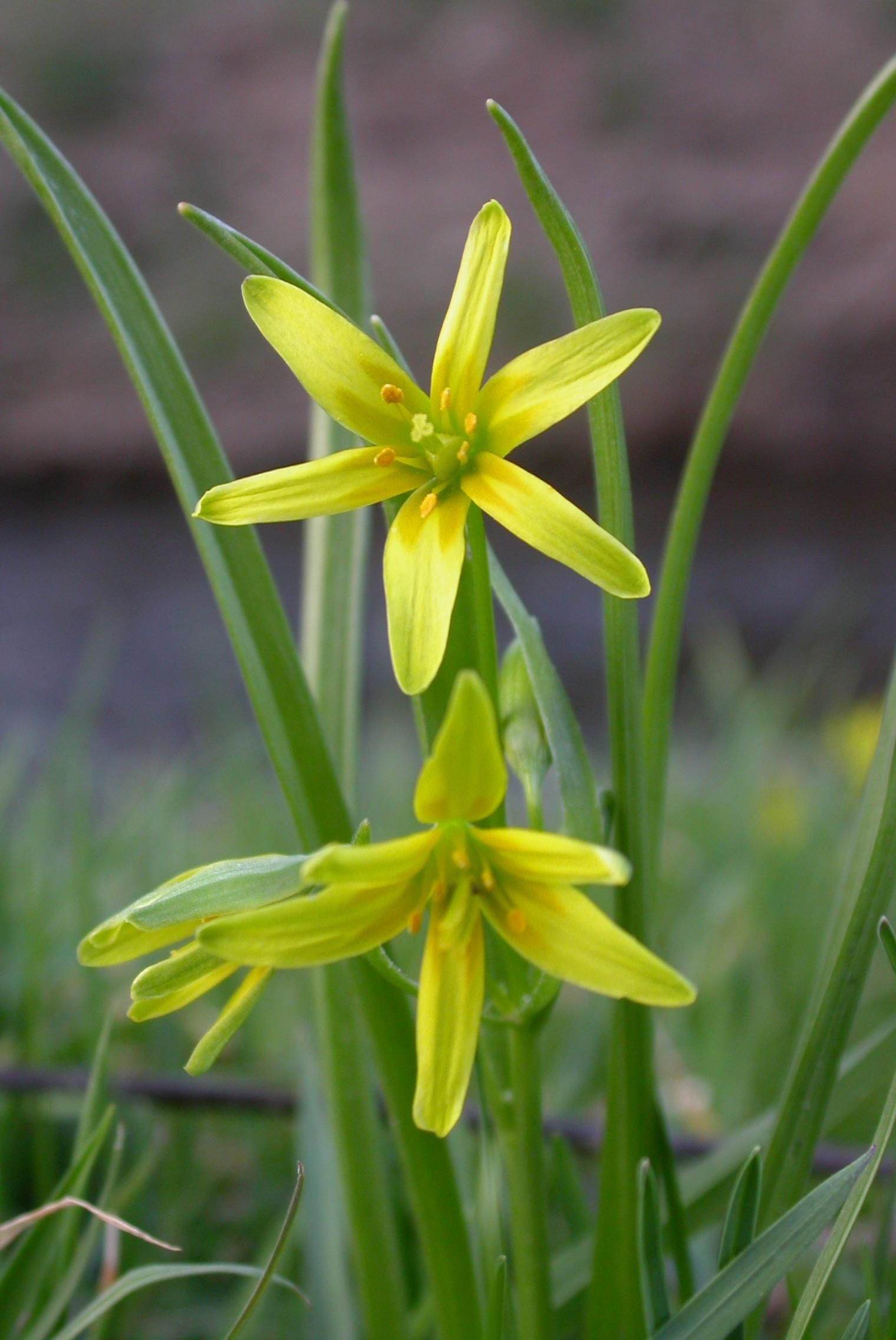
The flower has six petals arranged in a star shape. They are golden yellow or greenish yellow. Few flowers grow together in an inflorescence.
The fruits are three-part capsules.
Features
Yellow star-of-bethlehem
Gagea lutea
slightly poisonous
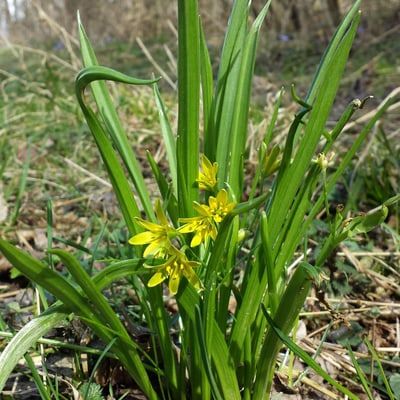
six yellow, star-shaped flowers
hooded leave tip
In the city
It often grows in floodplain and deciduous forests. It also occurs in orchard meadows near forests and under hedges. It prefers shady locations with moist, nutrient-rich soil.
Fun Facts
The seeds contain a nutritious appendage to attract ants.
The flowering period is from March to May.
It lives for several years and generally flowers and fruits annually (perennial plant).
The pollinators are small flies, beetles and bees. In humid weather and before flowering, self-pollination is also possible.
- Endangerment level Germany: not endangered
It is native to Central Europe and East Asia.
The whole plant is slightly poisonous.
Sources
Habitus, Stefan.lefnaer, CC BY-SA 4.0, https://commons.wikimedia.org/wiki/File:Gagea_lutea_sl1.jpg

Blüten, Gilles San Martin, CC BY-SA 2.0, https://commons.wikimedia.org/wiki/File:Gagea_lutea_(2320280657).jpg
.jpg)
Kapuzenartige Blattspitze, Stefan.lefnaer, CC BY-SA 4.0, https://commons.wikimedia.org/wiki/File:Gagea_lutea_sl7.jpg

Kammer, P. M. (2016) Pflanzen einfach bestimmen. Schritt für Schritt einheimische Arten kennenlernen, Bern: Haupt Verlag.
Schauer, T., Caspari, C. & Caspari, S. (2015) Der illustrierte BLV-Pflanzenführer für unterwegs. 1150 Blumen, Gräser, Bäume und Sträucher, München: BLV.
Spohn, M., Golte-Bechtle, M. & Spohn, R. (2015) Was blüht denn da? Stuttgart: Franckh Kosmos Verlag.
Page „Wald-Gelbstern“. : Wikipedia, The Free Encyclopedia. Date of last revision: 17.03.2017, 19:49 UTC. URL: https://de.wikipedia.org/w/index.php?title=Wald-Gelbstern&oldid=163676515 (Accessed: 06.02.2018).