
Short Description
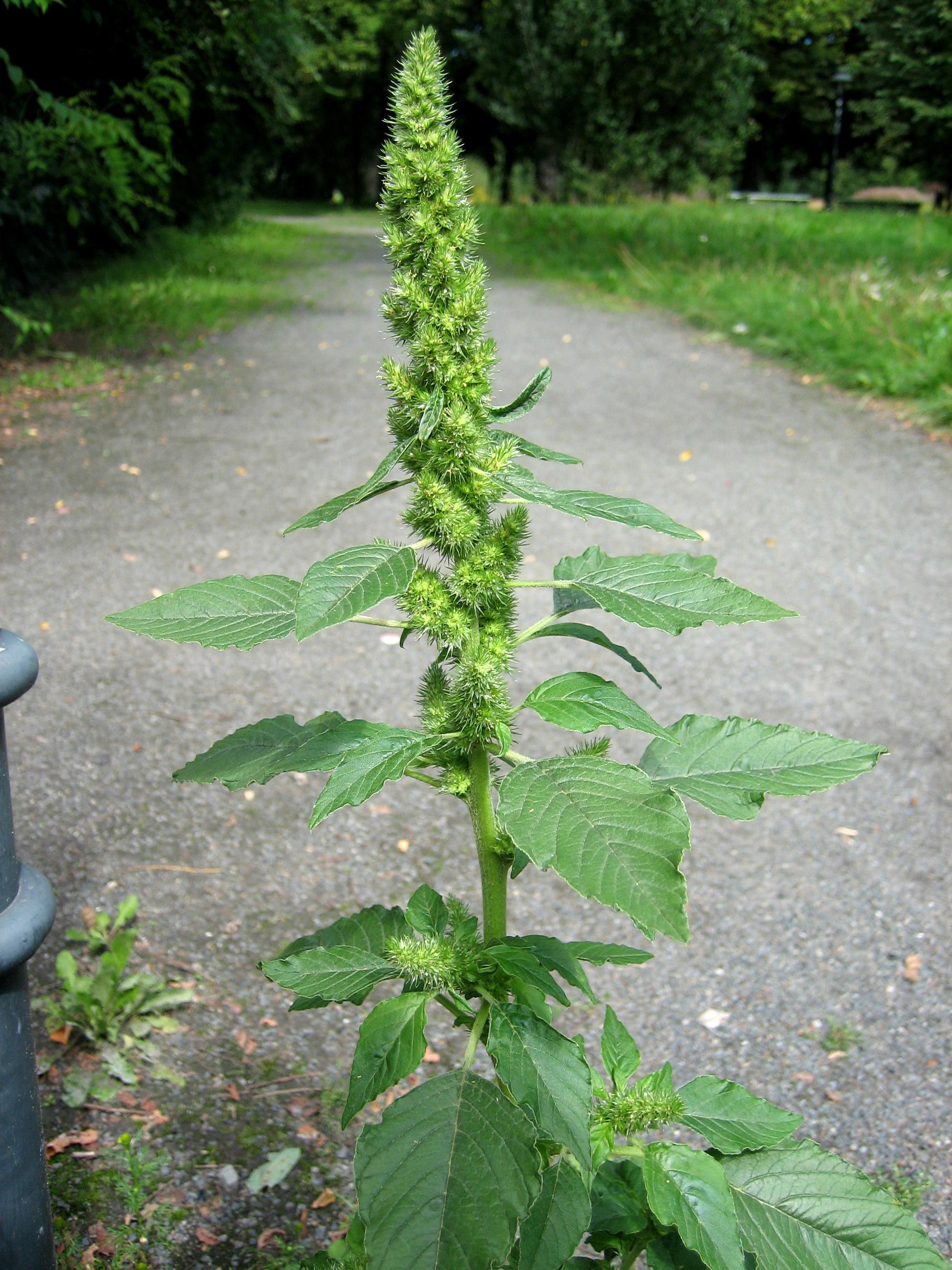
The redroot pigweed can grow up to one metre high.
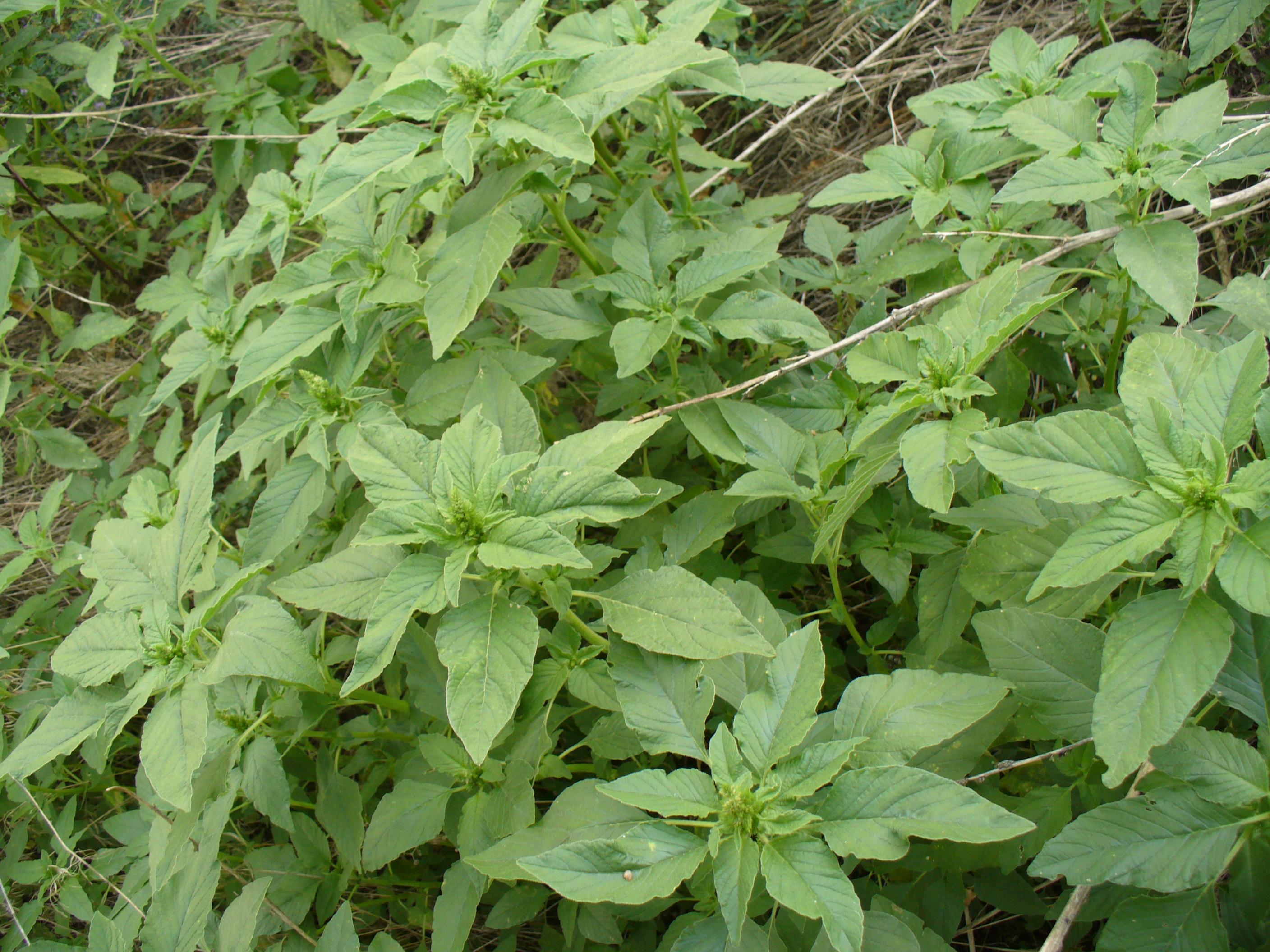
The leaves are diamond-shaped to ovate and slightly wavy at the edges. They grow singly and alternately on the stem.
The upright and mostly branched stem is hairy. It sometimes has reddish stripes, especially in the lower part.
The inconspicuous single flowers have five green petals, one of them longer and piercing. They sit in very dense, elongated and bushy flower clusters at the top of the stem.
The fruits are egg-shaped capsules containing a shiny, black seed.
Features
Redroot pigweed
Amaranthus retroflexus
very bristly flower head
inconspicuous, green flowers
In the city
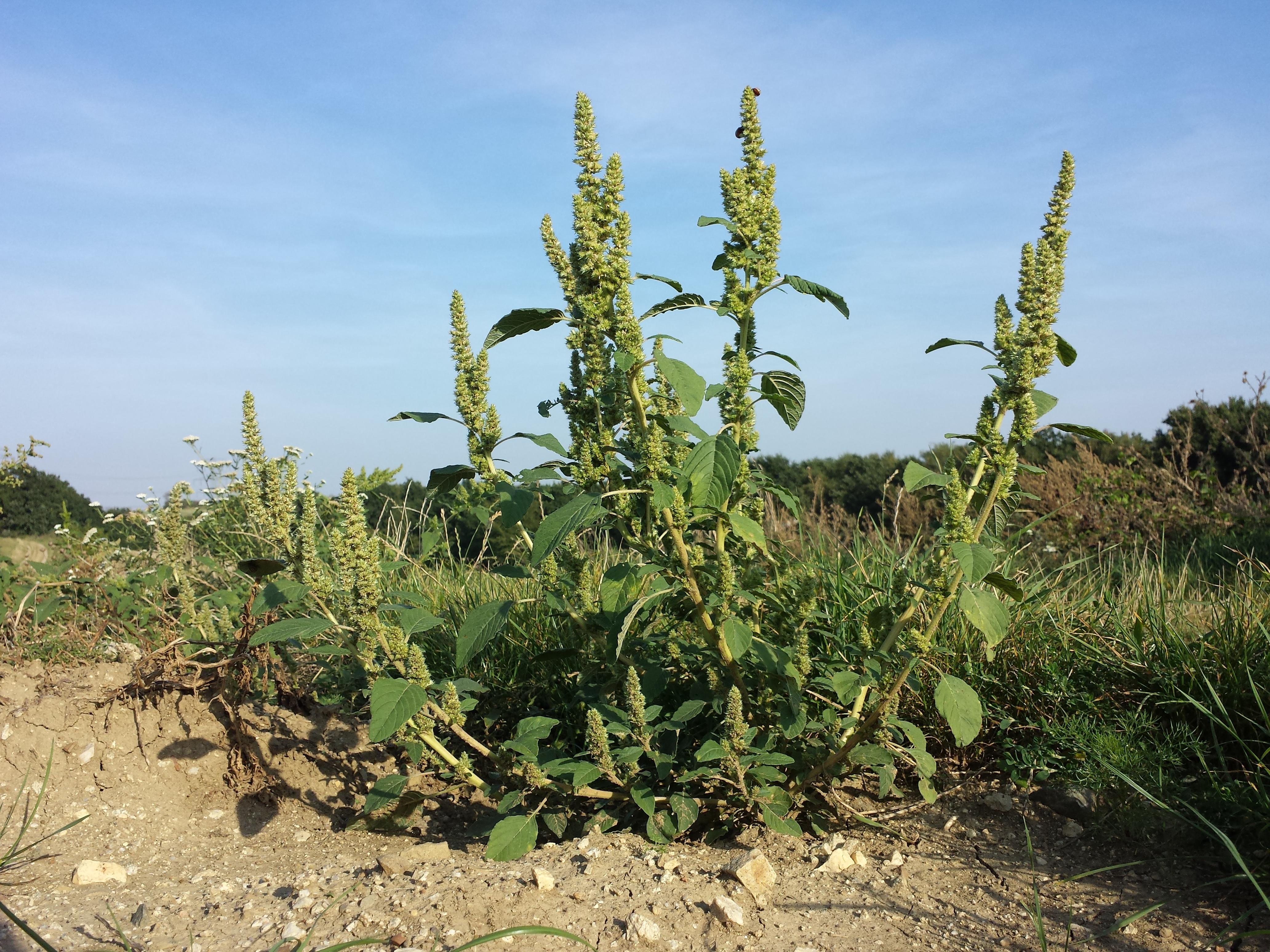
In the city, it is mainly found in rubbish dumps, fields, fallow land and along roadsides. It prefers nutrient- and nitrogen-rich soils. It is also found on the banks of rivers, as the seeds can easily spread through the water.
Fun Facts
The seeds are spread by wind, water and animals. In Central Europe, however, the main spread is by humans with garden soil.
The flowering period is from July to September.
It is an annual plant. This means the plant dies after the seeds have ripened.
- Endangerment level Germany: not evaluated
- Usage:
The leaves can be eaten like spinach.
It originates from North America and spread wild in Germany at the beginning of the 19th century. It belongs to the non-native plants (neophytes).
The seeds can be milled and used like flour.
Sources
Habitus, Lynk media, CC BY-SA 3.0, https://commons.wikimedia.org/wiki/File:Amaranthus_retroflexus_full1.jpg

Blätter, Szaga, CC0 1.0, https://commons.wikimedia.org/wiki/File:Amaranthus_retroflexus-szg.jpg

Habitus, Stefan.lefnaer, CC BY-SA 4.0, https://commons.wikimedia.org/wiki/File:Amaranthus_retroflexus_sl15.jpg

Kammer, P. M. (2016) Pflanzen einfach bestimmen. Schritt für Schritt einheimische Arten kennenlernen, Bern: Haupt Verlag.
Spohn, M., Golte-Bechtle, M. & Spohn, R. (2015) Was blüht denn da? Stuttgart: Franckh Kosmos Verlag.
Page „Zurückgebogener Amarant“. : Wikipedia, The Free Encyclopedia. Date of last revision: 25.01.2018, 11:33 UTC. URL: https://de.wikipedia.org/w/index.php?title=Zur%C3%BCckgebogener_Amarant&oldid=173310078 (Accessed: 24.04.2018).