
Short Description
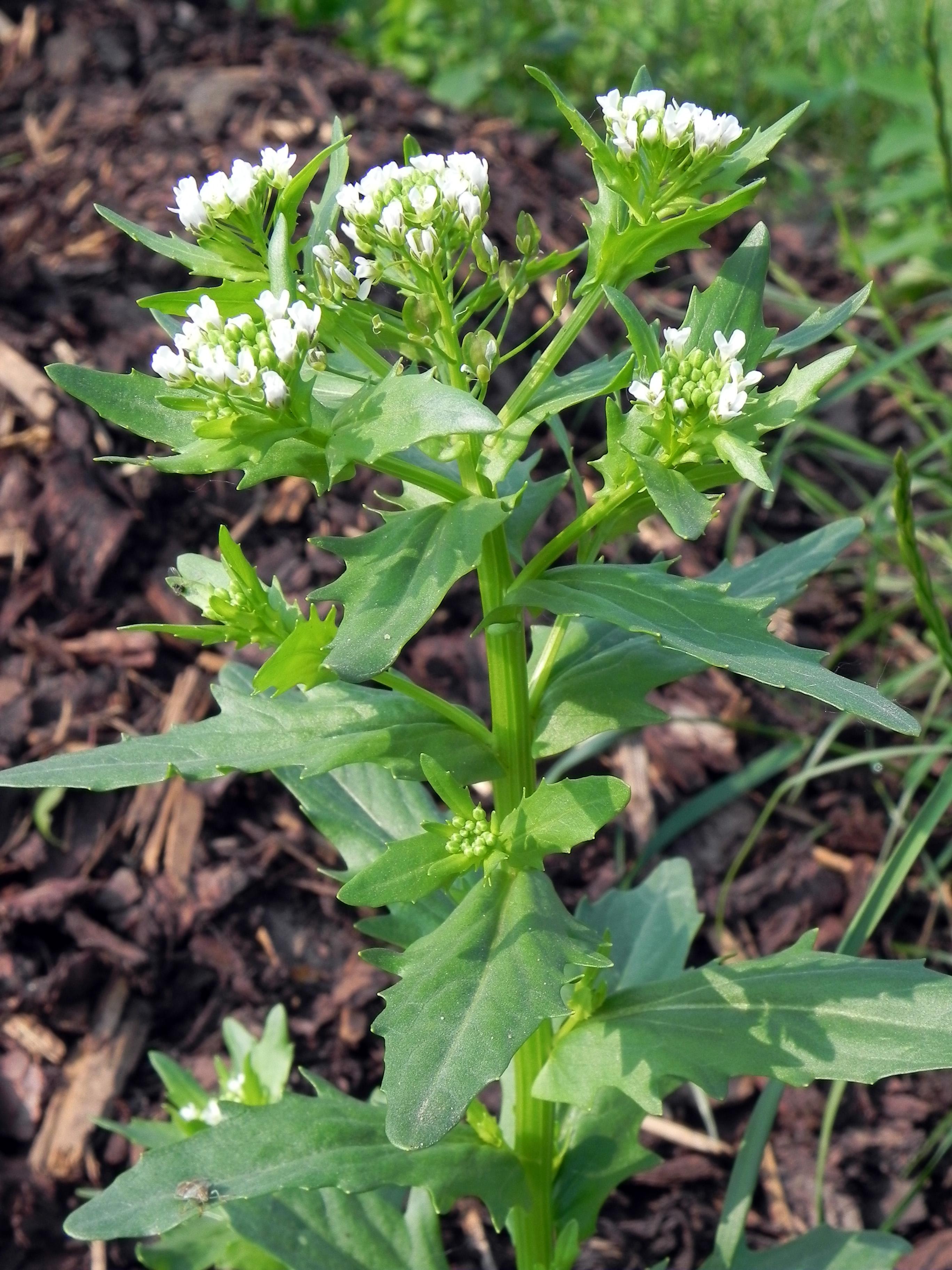
The field pennycress can grow up to 40 centimetres high.
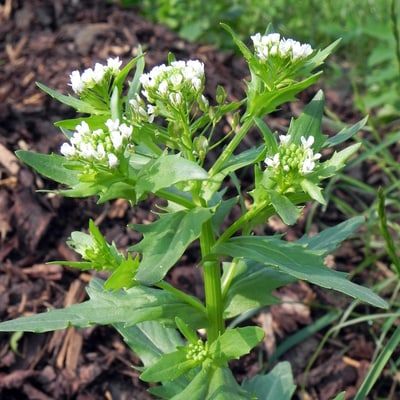
The leaves grow singly and alternately on the stem. They are mostly elongated to narrowly obovate. The leaf margin is roughly serrated or toothed. The upper leaves enclose the stem. The lower leaves have a stalk. Crushed leaves smell of garlic.
The stem is erect, mostly branched, glabrous and angular.
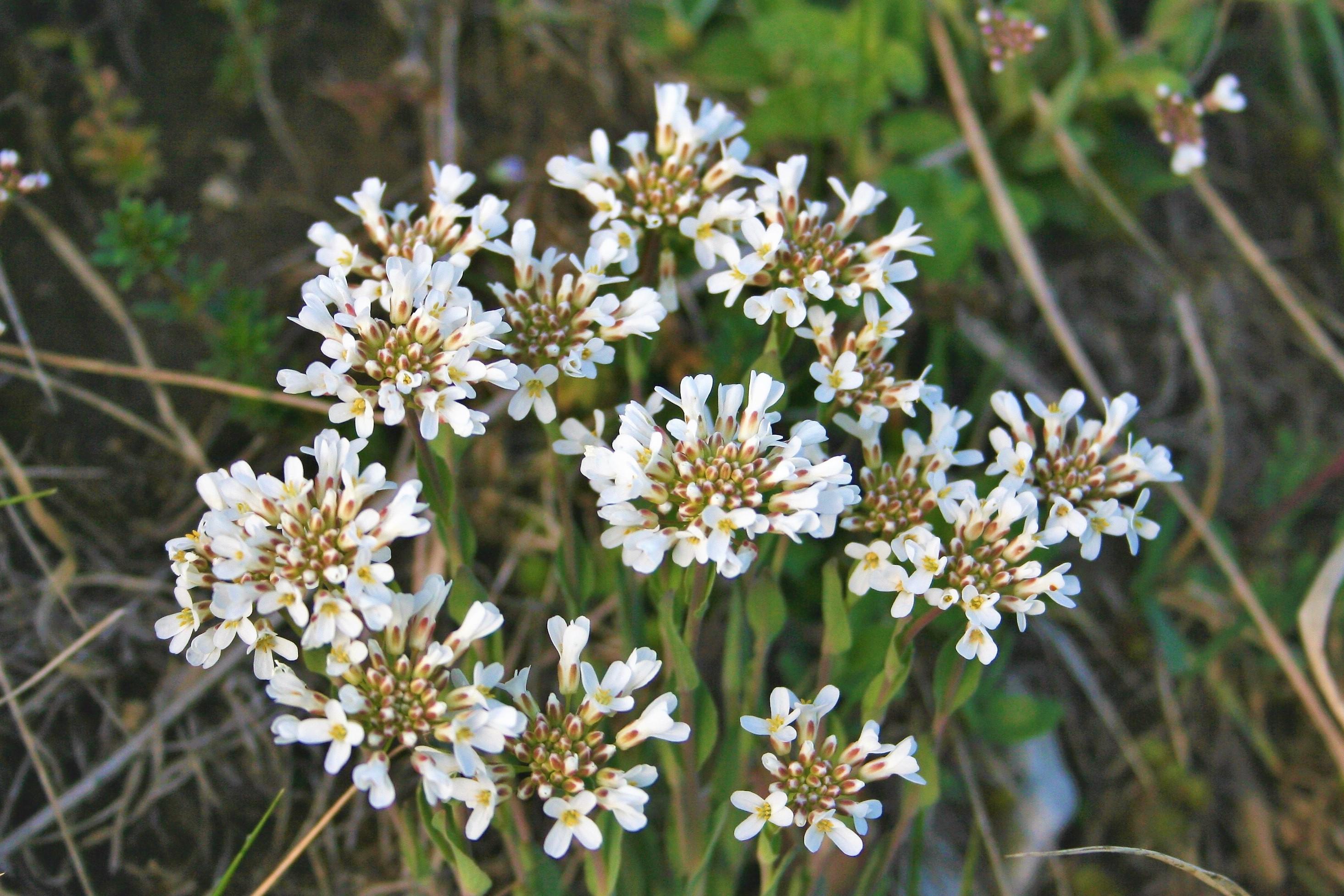
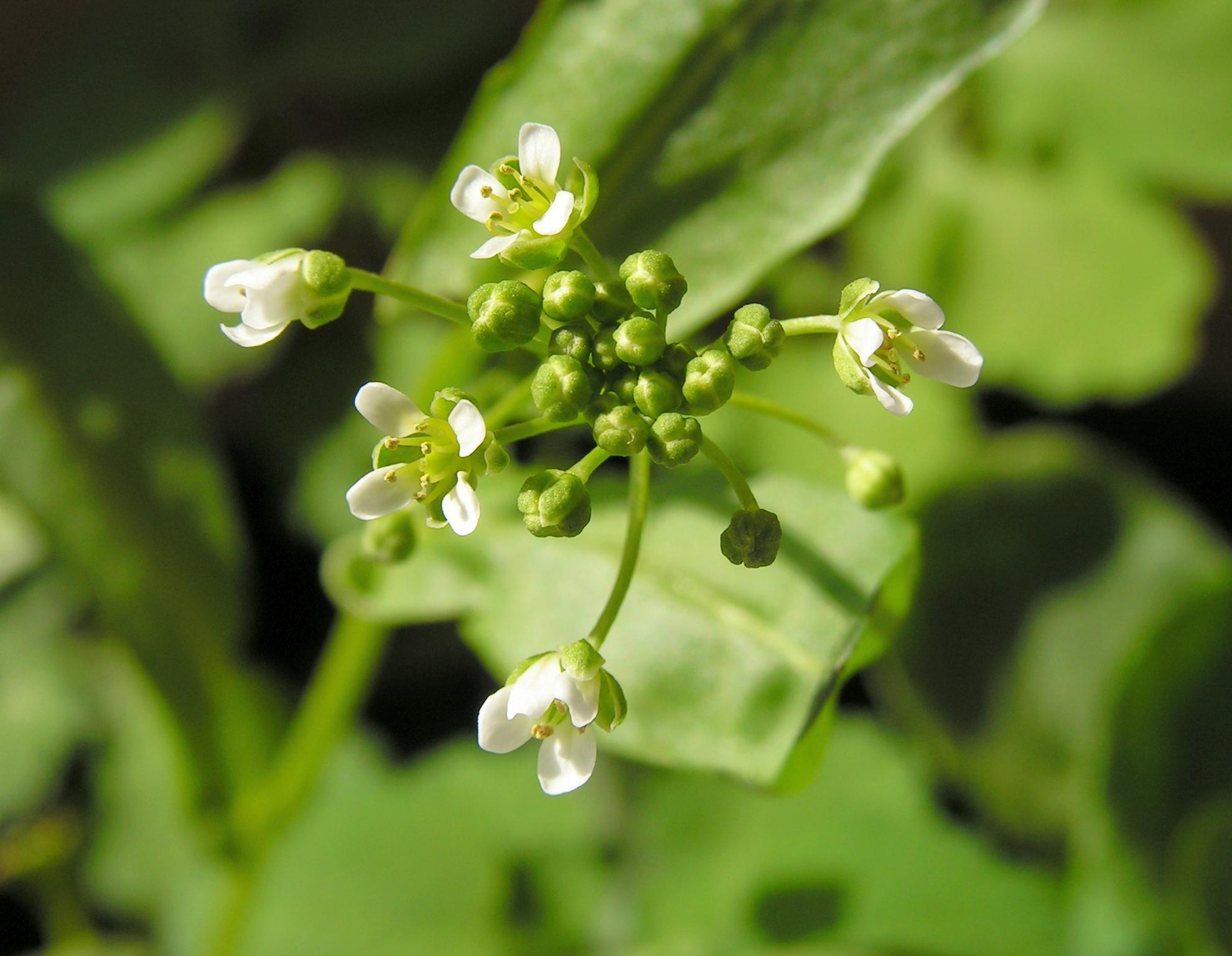
The flowers are numerous in a raceme. The individual flowers have four white petals. In the centre of the flower are four long and two shorter stamens.
The round, flat fruits (pods) have a broad wing edge that is incised at the tip.
Features
Field pennycress
Thlaspi arvense
fruits with winged edge
garlic odour
In the city
In the city, the field pennycress is mainly found on rubble sites or wasteland.
Fun Facts
The wide hem of the fruit serves as a windbreak. This allows the seeds to be spread very well with the wind.
The flowering period is from April to August.
The field pennycress is an annual, i.e. the plant flowers for only one summer and dies after the seeds have ripened.
- Endangerment level Germany: not endangered
Sources
Habitus, Hajotthu, CC BY-SA 3.0, https://commons.wikimedia.org/wiki/File:Acker-Hellerkraut_Thlaspi_arvense_5_11.jpg

Blütenstand, Enrico Blasutto, CC BY-SA 4.0, https://commons.wikimedia.org/wiki/File:Thlaspi_arvense_ENBLA12.jpg

Blütenstand, Bff, CC BY-SA 3.0, https://commons.wikimedia.org/wiki/File:Thlaspi_arvense20100426_08.jpg

Eggenberg, S. & Möhl, A. (2007) Flora Vegetativa: Ein Bestimmungsbuch für Pflanzen der Schweiz im blütenlosen Zustand, Bern, Stuttgart, Wien: Haupt Verlag.
Spohn, M., Golte-Bechtle, M. & Spohn, R. (2015) Was blüht denn da? Stuttgart: Franckh Kosmos Verlag.
Jäger, E. J. (2011) Rothmaler - Exkursionsflora von Deutschland. Gefäßpflanzen: Grundband, Heidelberg: Spektrum Akademischer Verlag.
Kammer, P. M. (2016) Pflanzen einfach bestimmen. Schritt für Schritt einheimische Arten kennenlernen, Bern: Haupt Verlag.
Schauer, T., Caspari, C. & Caspari, S. (2015) Der illustrierte BLV-Pflanzenführer für unterwegs. 1150 Blumen, Gräser, Bäume und Sträucher, München: BLV.