
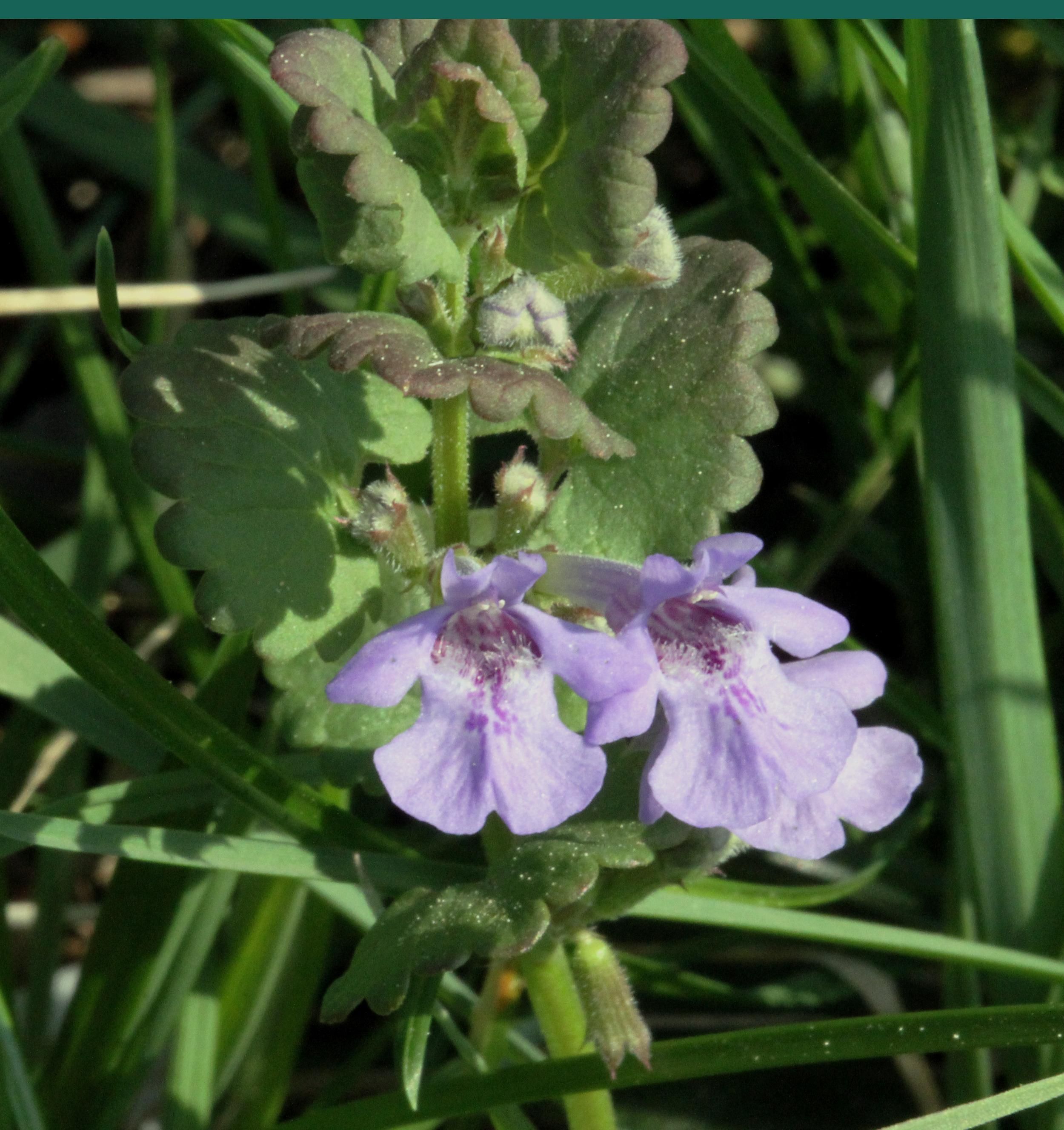
Short Description
Ground-ivy is an evergreen perennial plant.
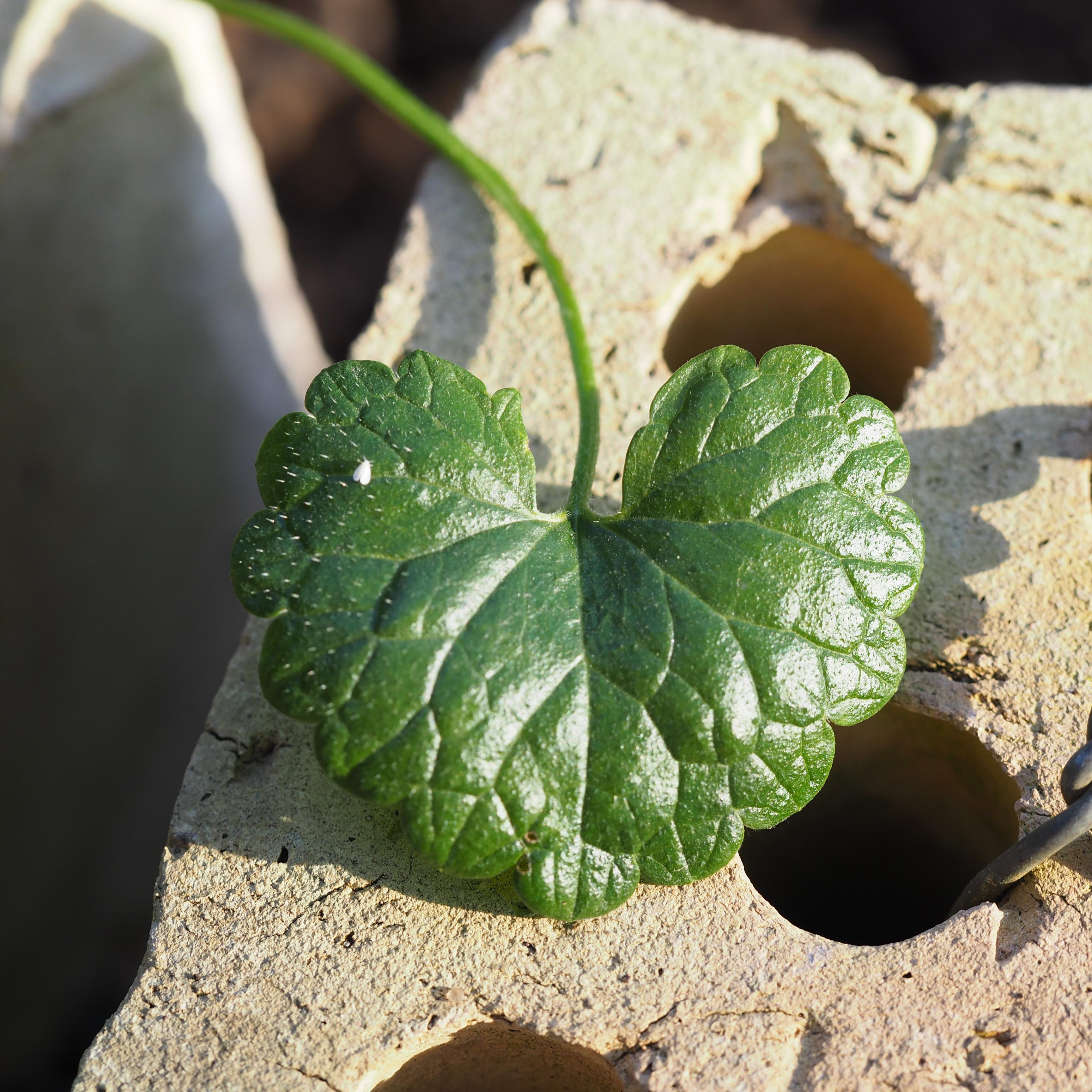
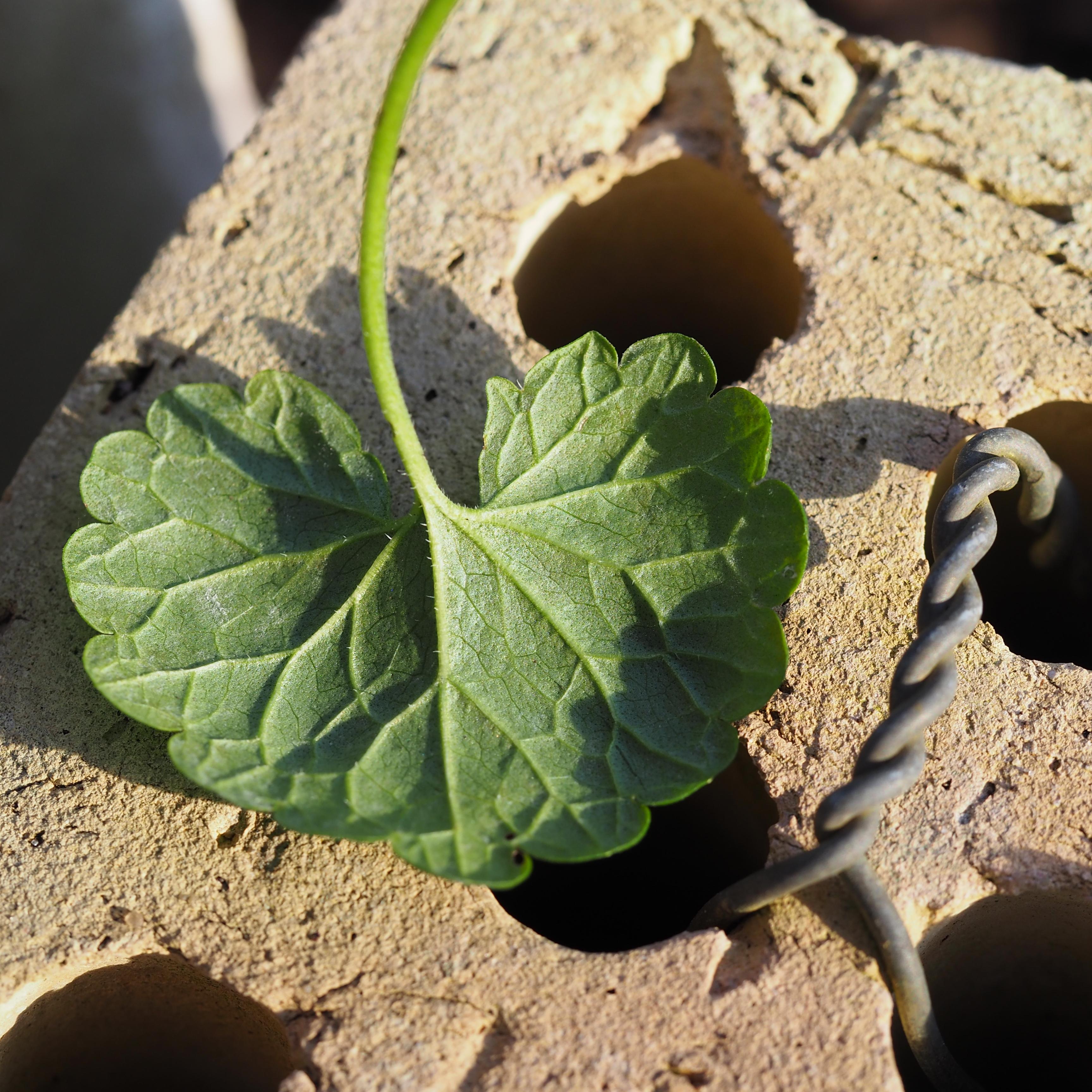
The leaves are roughly lobed and kidney-shaped (reniform) or roundish. They are quite frost-hardy.
The perennial plant hibernates as a rooted shoots. Its overground runners can grow to more than one metre long. The grow roots at the nodes, thus making a major contribution to the plant’s proliferation.
Flower stalks are generally upright and stand out for their numerous light-blue to purple flowers with dark-purple spots.
The fruit splits into four nut-like mericarps.
Features
Ground-ivy
Glechoma hederacea
leaves heart- to kidney-shaped
square stem
In the city
Ground-ivy grows in forest and under hedges in gardens. It is not very resistant to trampling. But as it is resistant to cutting, it can also spread in lawns. Ground-ivy is not picky as to soil quality, but requires moisture.
Fun Facts
Ground-ivy is edible. It has a rather strong taste and is thus often mixed with other herbs.
It flowers from April to July.
It lives for several years and generally flowers and fruits annually (perennial plant).
Pollination is mainly done by bees.
- Endangerment level Germany: not endangered
Due to the blue-violet flowers, this plant was often associated with the Germanic weather god Thor.
Ground-ivy was formerly used in the treatment of a number of diseases. It contains essential oils together with other substances.
Sources
Habitus, Karelj, PD, https://commons.wikimedia.org/wiki/File:Glechoma_hederacea_popenec_obecn%C3%BD_1.jpg

Blatt Oberseite, Alice Kracht, CC BY-SA 4.0, https://offene-naturfuehrer.de/web/Datei:Glechoma_hederacea(5).JPG
.JPG)
Blatt Unterseite, Alice Kracht, CC BY-SA 4.0, https://offene-naturfuehrer.de/web/Datei:Glechoma_hederacea(6).JPG
.JPG)
Wohlers, W. (2015) Glechoma hederacea – Gundermann (JKI-Pflanzenportraits), URL: https://offene-naturfuehrer.de/web/Glechoma_hederacea_%E2%80%93_Gundermann_(JKI-Pflanzenportraits) (Accessed: 13.07.2016).
Page „Gundermann“. : Wikipedia, The Free Encyclopedia. Date of last revision: 10.06.2016, 09:45 UTC. URL: https://de.wikipedia.org/w/index.php?title=Gundermann&oldid=155153911 (Accessed: 13.07.2016).
Fleischhauer, S. G., Guthmann, J. & Spiegelberger, R. (2007) Essbare Wildpflanzen. 200 Arten bestimmen und verwenden, Baden und München: AT Verlag.
Lippert, W. & Podlech, D. (1993) GU Naturführer. Blumen: die wichtigen Blütenpflanzen Mitteleuropas erkennen und bestimmen, München: Gräfe und Unzer Verlag.
Needon, C. & Petermann, J. (1991) Urania-Naturführer Pflanzen, Leipzig, Jena, Berlin: Urania-Verlag.
Scherf, G. (2006) Wildpflanzen neu entdecken, München: BLV.
Bundesamt für Naturschutz (n.d.) Artensteckbriefe, URL: http://floraweb.de/pflanzenarten/artenhome.xsql?suchnr=2711& (Accessed: 13.07.2016).