
Short Description
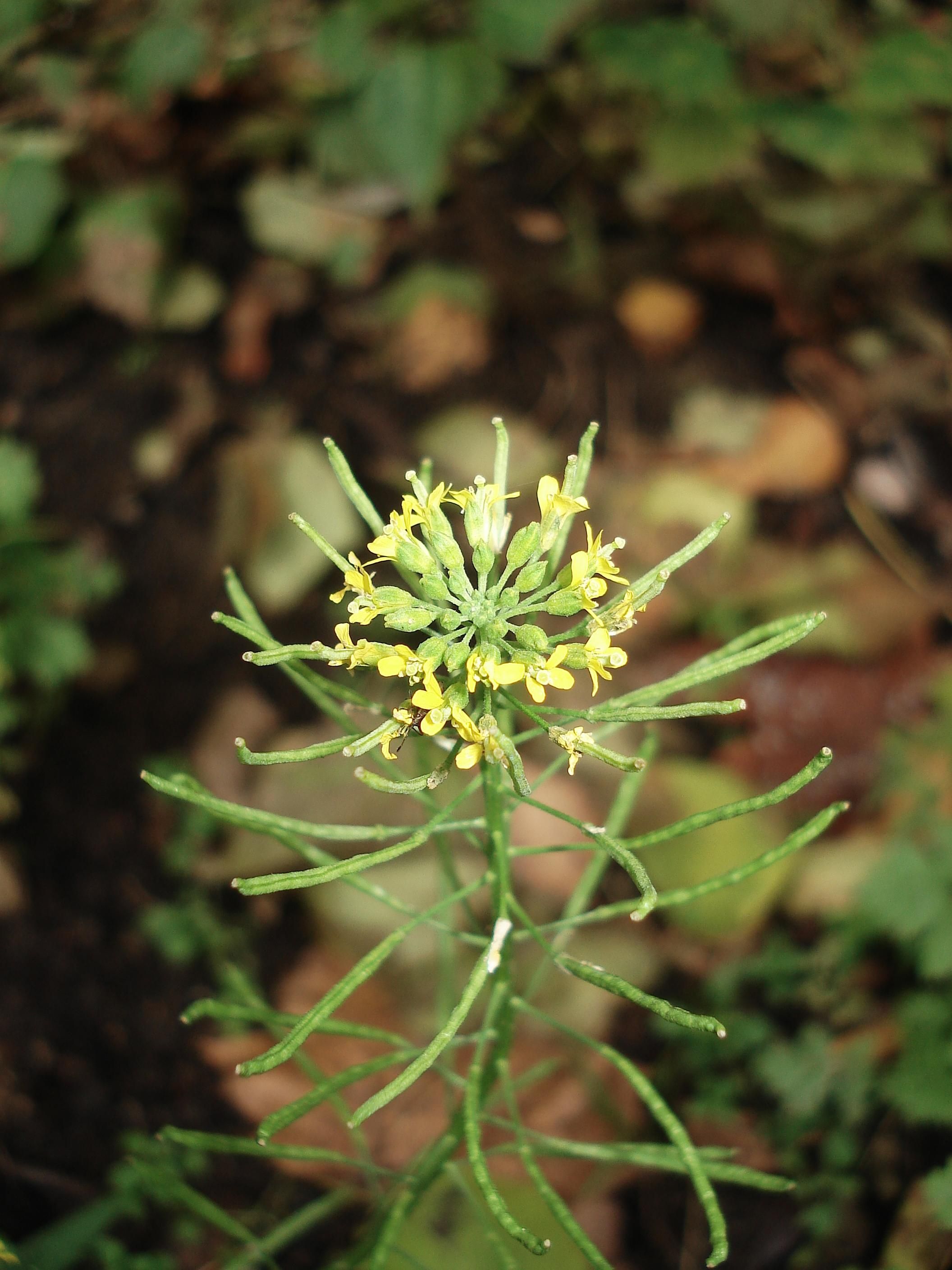
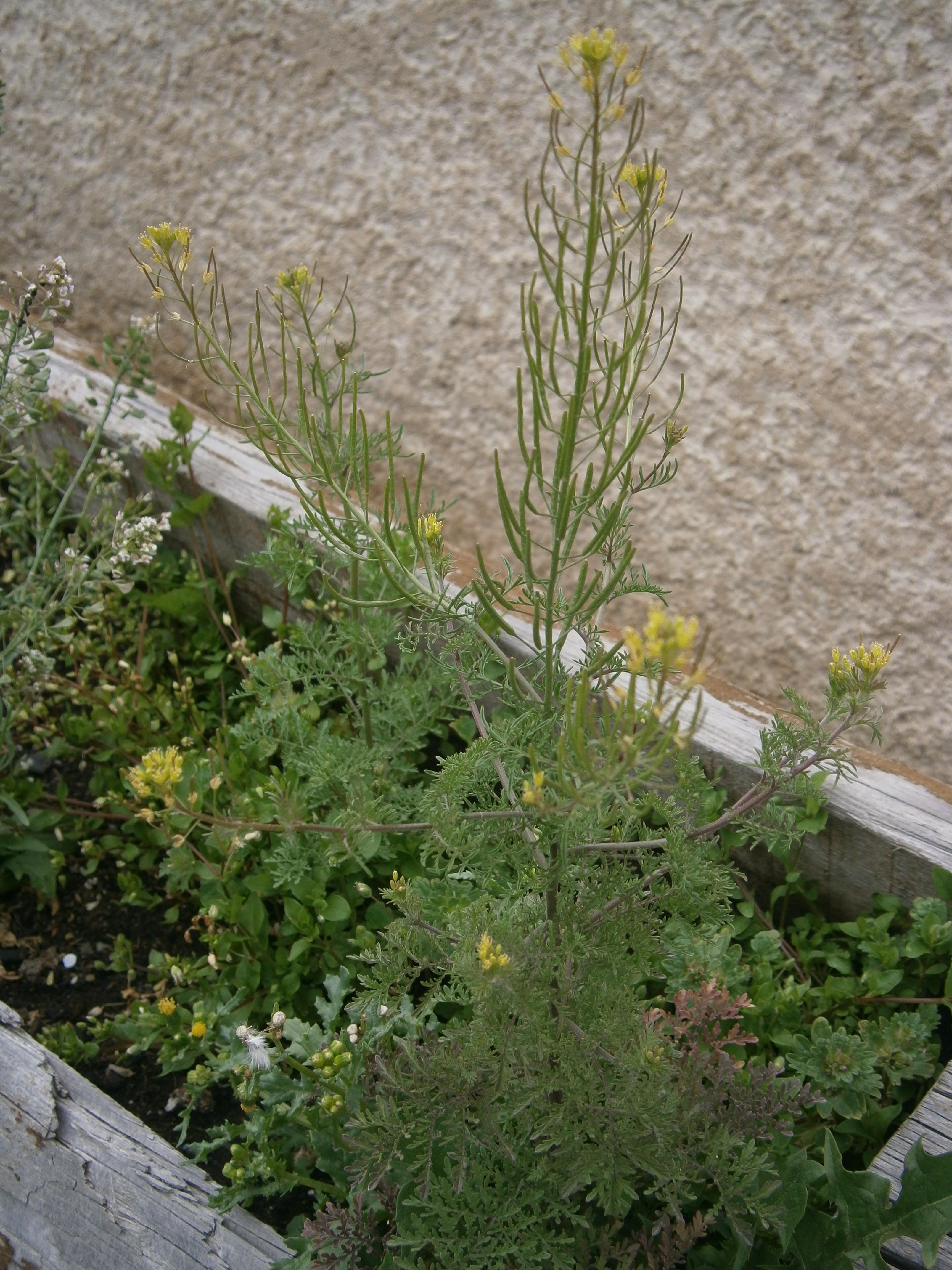
Flixweed can grow up to one metre high.
The leaves are divided into two to three parts (pinnate). They have narrow, linear segments. They are grey-green.
The stem grows upright and is also grey-green.
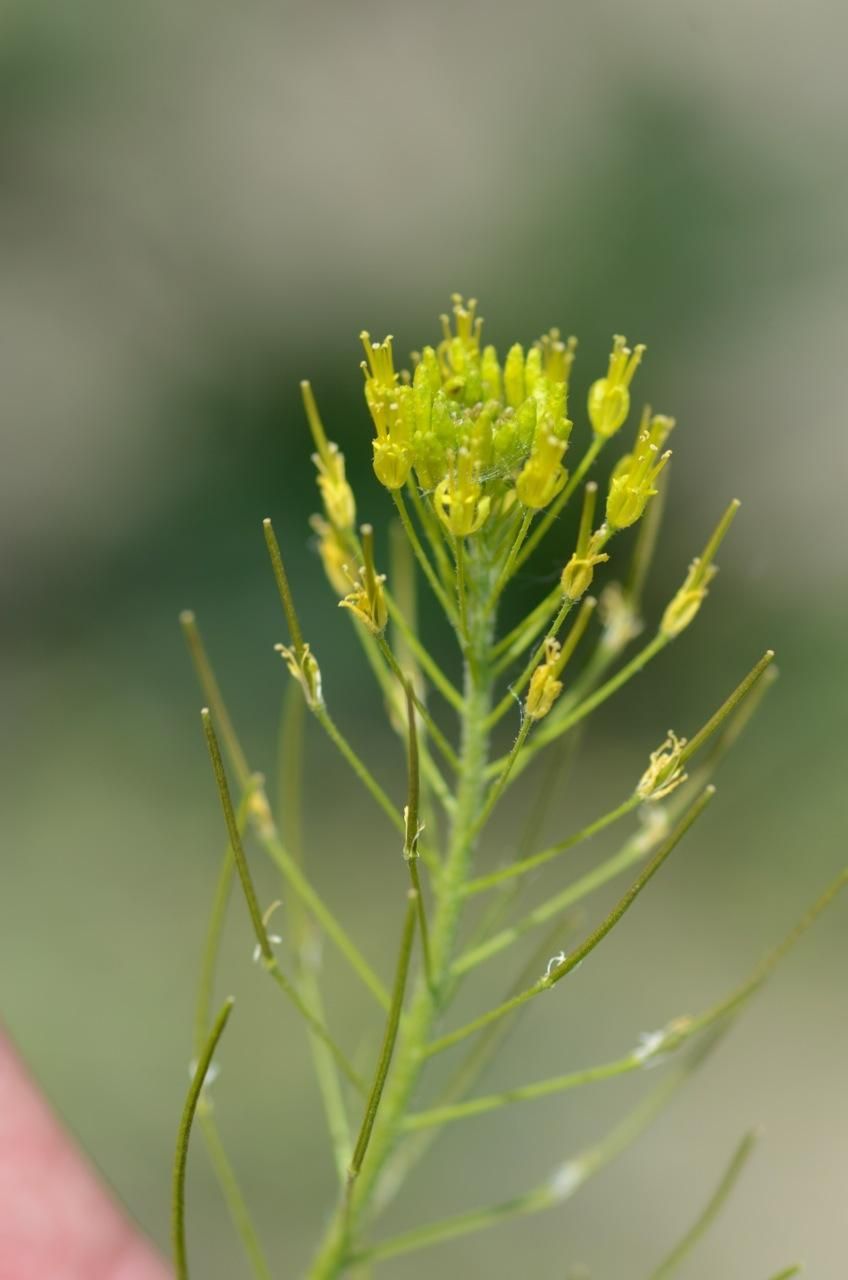
The flowers are very small and have four light yellow to green petals.
The fruits are upward curved, elongated pods.
Features
Flixweed
Descurainia sophia
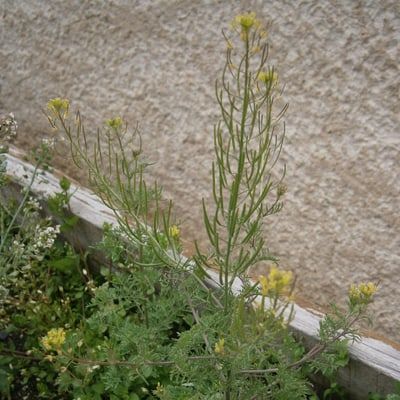
finely divided, narrow leaves
upward curved pods
In the city
Flixweed grows mainly on rubble and on dry slopes, in fields and on dry roadsides. It prefers dry, nitrogen-rich and sandy soils.
Fun Facts
The seeds are spread by self-dispersal, by the wind and by animals.
It has a large distribution area and even grows in Greenland.
The flowering period is from May to September.
It is an annual plant, i.e. it flowers for only one summer and dies after the seeds have ripened.
- Endangerment level Germany: not endangered
In the past, healers derived an effect on bone fractures from the smooth seeds, which become mucilaginous when wet. That is why the plant is also called "Sophia chirurgorum" in old medical books, which means "The Wisdom of Surgeons".
Sources
Blütenstand, Sanja565658, CC BY-SA 3.0, https://commons.wikimedia.org/wiki/File:Descurainia_sophia_01.JPG

Habitus, Meneerke bloem, CC BY-SA 3.0, https://commons.wikimedia.org/wiki/File:Descurainia_sophia_001.JPG

Blütenstand, Radio Tonreg, CC BY-SA 2.0, https://commons.wikimedia.org/wiki/File:Descurainia_sophia_(7282057200).jpg
.jpg)
Page „Gewöhnliche Besenrauke“. : Wikipedia, The Free Encyclopedia. Date of last revision: 16.05.2018, 10:14 UTC. URL: https://de.wikipedia.org/w/index.php?title=Gew%C3%B6hnliche_Besenrauke&oldid=177474353 (Accessed: 17.07.2018).
Seitz, B., Ristow, M., Meißner, J., Machatzi, B. & Sukopp, H. (2018) Rote Liste und Gesamtartenliste der etablierten Farn- und Blütenpflanzen von Berlin. : Der Landesbeauftragte für Naturschutz und Landschaftspflege / Senatsverwaltung für Umwelt, Klima und Verkehr (eds.) Rote Listen der gefährdeten Pflanzen, Pilze und Tiere von Berlin, URL: https://www.berlin.de/sen/uvk/natur-und-gruen/naturschutz/artenschutz/artenlisten-rote-listen/farn-und-bluetenpflanzen/ (Accessed: 26.03.2021).
Spohn, M., Golte-Bechtle, M. & Spohn, R. (2015) Was blüht denn da? Stuttgart: Franckh Kosmos Verlag.
Bundesamt für Naturschutz (n.d.) Artensteckbriefe, URL: http://floraweb.de/pflanzenarten/artenhome.xsql?suchnr=1909& (Accessed: 17.07.2018).