
Short Description
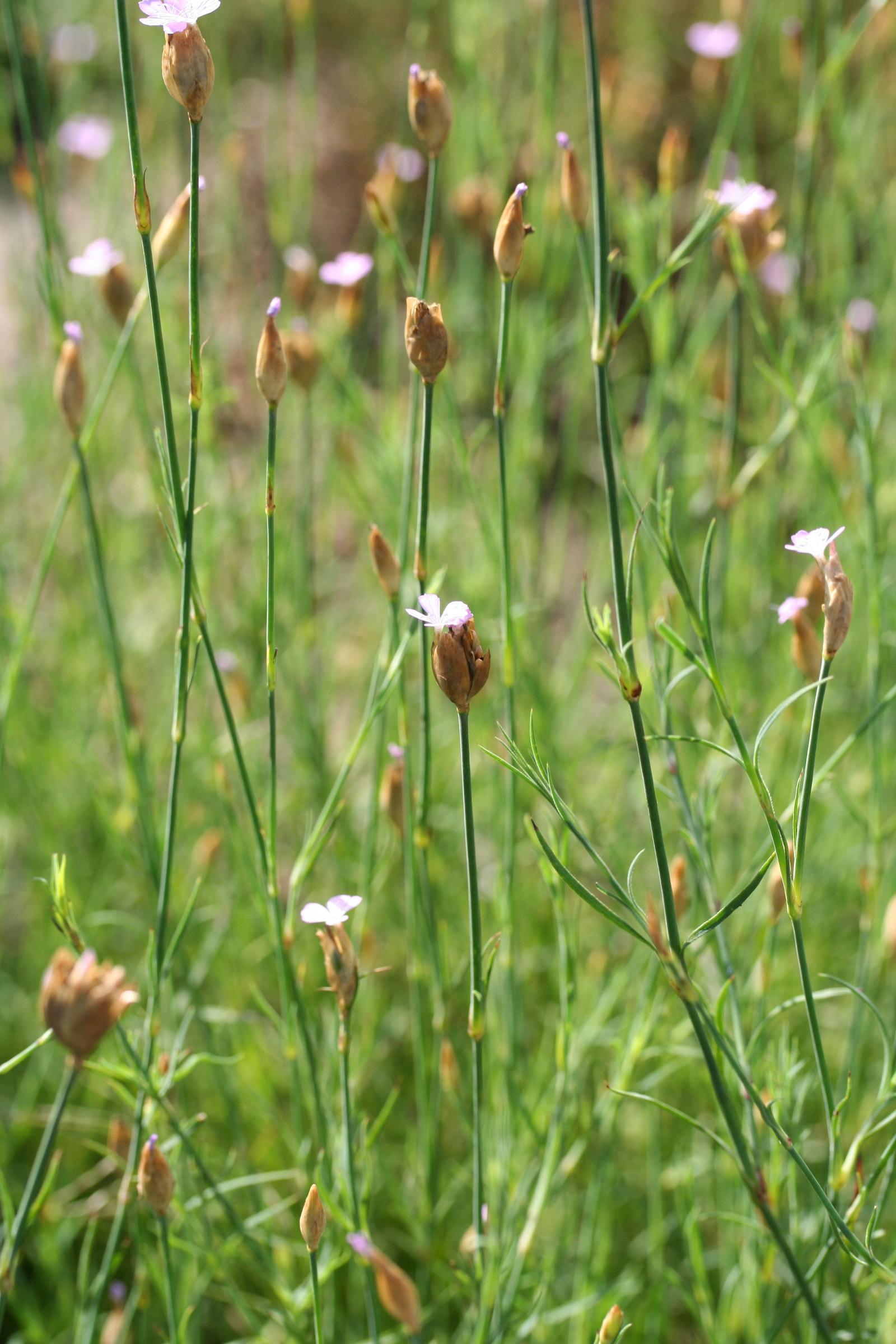
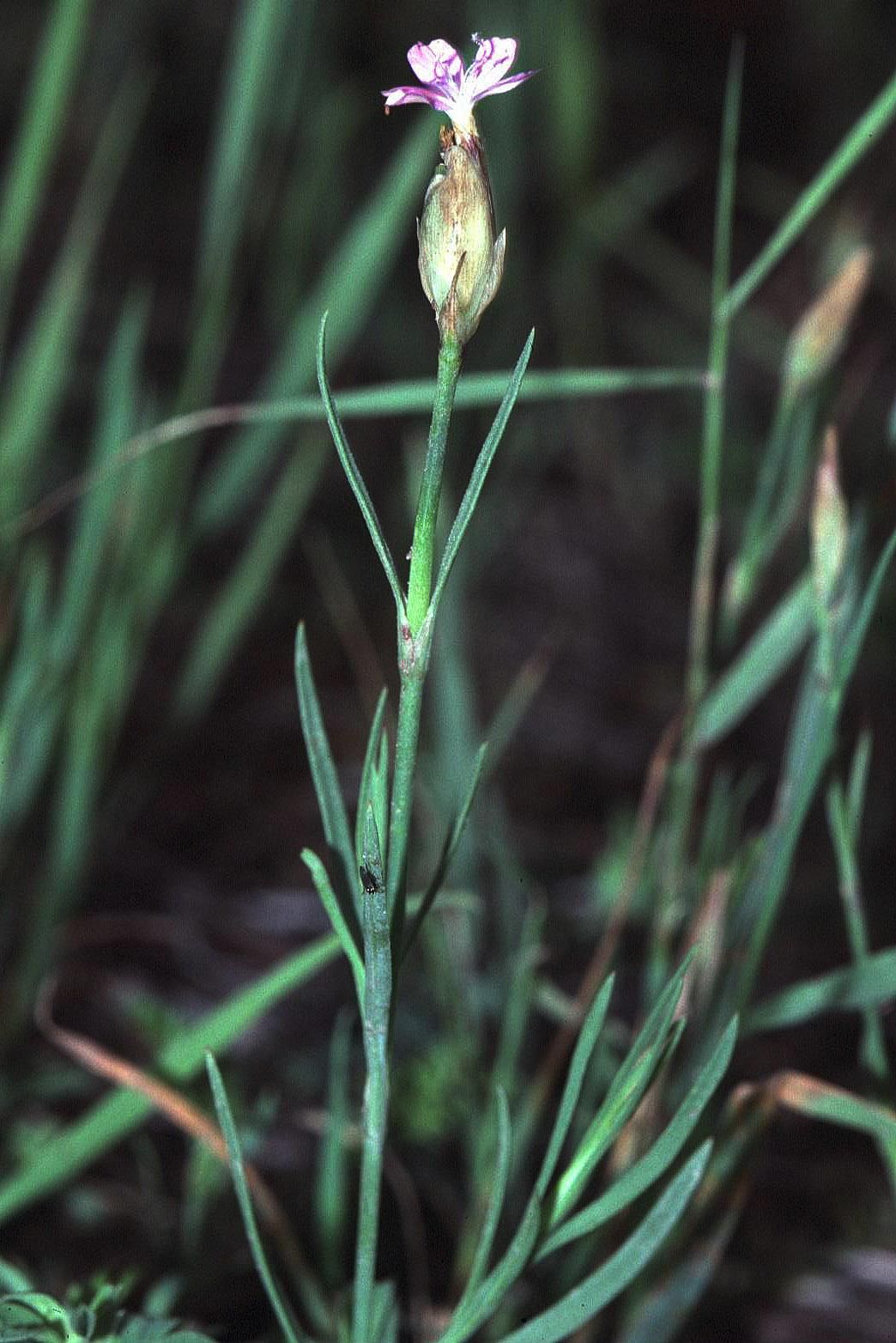
The proliferous pink can grow up to half a meter high.
The linear leaves are in pairs and at the base of the stem in rosette form.
The stem grows erect and glabrous.
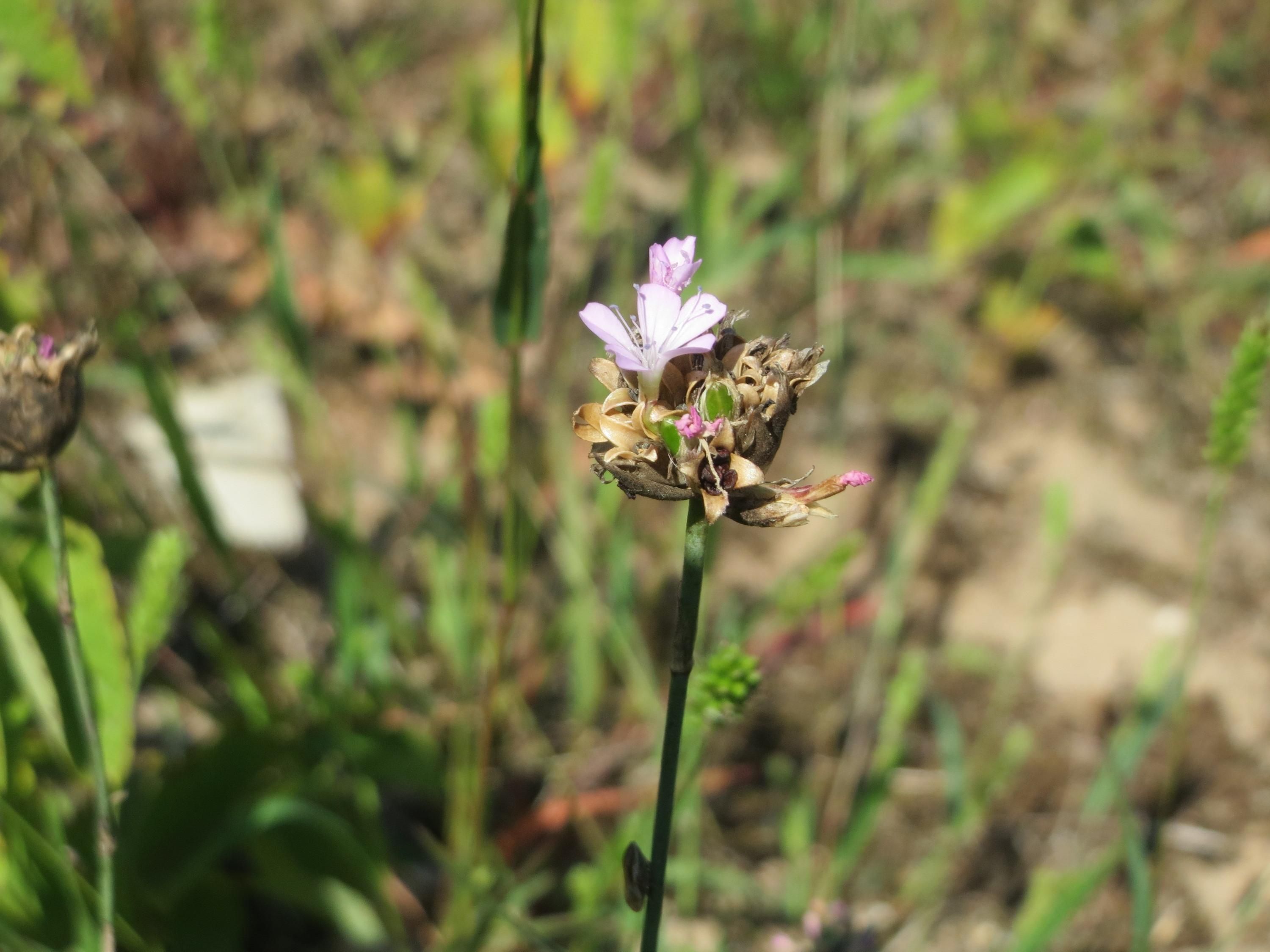
The pink flowers grow at the end of the stem and are surrounded by a dry-skinned sheath. Usually only one flower is open.
The fruits are capsule fruits that open with four lobes and contain many seeds.
Features
Proliferous pink
Petrorhagia prolifera
pink flowers in dry skin
In the city
It grows on patchy sandy and rough grasslands, dunes, rocky outcrops, stone embankments and railroad ballast. It prefers dry soils and is heat and light loving. It is absent at higher altitudes, and is scattered in other locations.
Fun Facts
The flowering period is from June to October.
The flowers open in the morning and usually self-pollinate.
If the plant germinates in the spring, it remains unbranched. Plants germinating in the fall form a rosette and may develop into branched plants in the spring.
It is in partial danger and therefore should not be collected.
It is an annual plant. This means the plant dies in the first year after the maturation of the seeds.
- Endangerment level Germany: not endangered
Sources
Habitus, Michael Wolf, CC BY-SA 3.0, https://commons.wikimedia.org/wiki/File:Petrorhagia_prolifera_03.jpg

Blüte und Früchte, AnRo0002, CC0, https://commons.wikimedia.org/wiki/File:20170823Petrorhagia_prolifera3.jpg

Habitus, Fornax, gemeinfrei, https://commons.wikimedia.org/wiki/File:Petrorhagia_prolifera_eF.jpg

Spohn, M., Golte-Bechtle, M. & Spohn, R. (2015) Was blüht denn da? Stuttgart: Franckh Kosmos Verlag.
Seitz, B., Ristow, M., Meißner, J., Machatzi, B. & Sukopp, H. (2018) Rote Liste und Gesamtartenliste der etablierten Farn- und Blütenpflanzen von Berlin. : Der Landesbeauftragte für Naturschutz und Landschaftspflege / Senatsverwaltung für Umwelt, Klima und Verkehr (eds.) Rote Listen der gefährdeten Pflanzen, Pilze und Tiere von Berlin, URL: https://www.berlin.de/sen/uvk/natur-und-gruen/naturschutz/artenschutz/artenlisten-rote-listen/farn-und-bluetenpflanzen/ (Accessed: 26.03.2021).
Bundesamt für Naturschutz (n.d.) Artensteckbriefe, URL: http://floraweb.de/pflanzenarten/artenhome.xsql?suchnr=4187& (Accessed: 20.08.2018).
Page „Sprossende Felsennelke“. : Wikipedia, The Free Encyclopedia. Date of last revision: 05.09.2017, 21:21 UTC. URL: https://de.wikipedia.org/w/index.php?title=Sprossende_Felsennelke&oldid=168819651 (Accessed: 20.08.2018).
Page „Felsennelken“. : Wikipedia, The Free Encyclopedia. Date of last revision: 30.09.2020, 09:27 UTC. URL: https://de.wikipedia.org/w/index.php?title=Felsennelken&oldid=204121018 (Accessed: 29.03.2021).