
Short Description
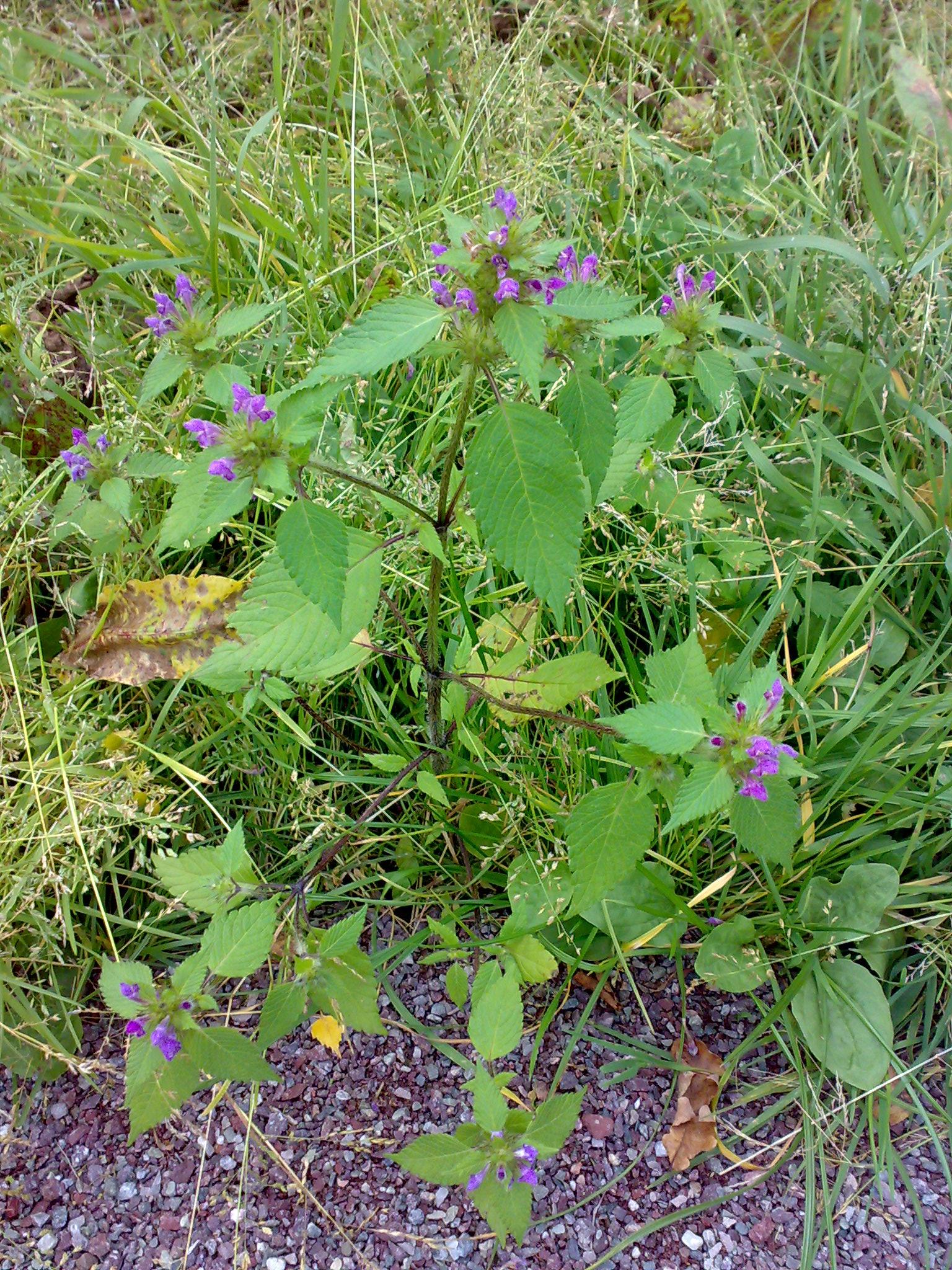
The bifid hemp-nettle can grow up to 60 cm high.
The leaves are ovate and serrated at the edges.They grow opposite each other on the stem.
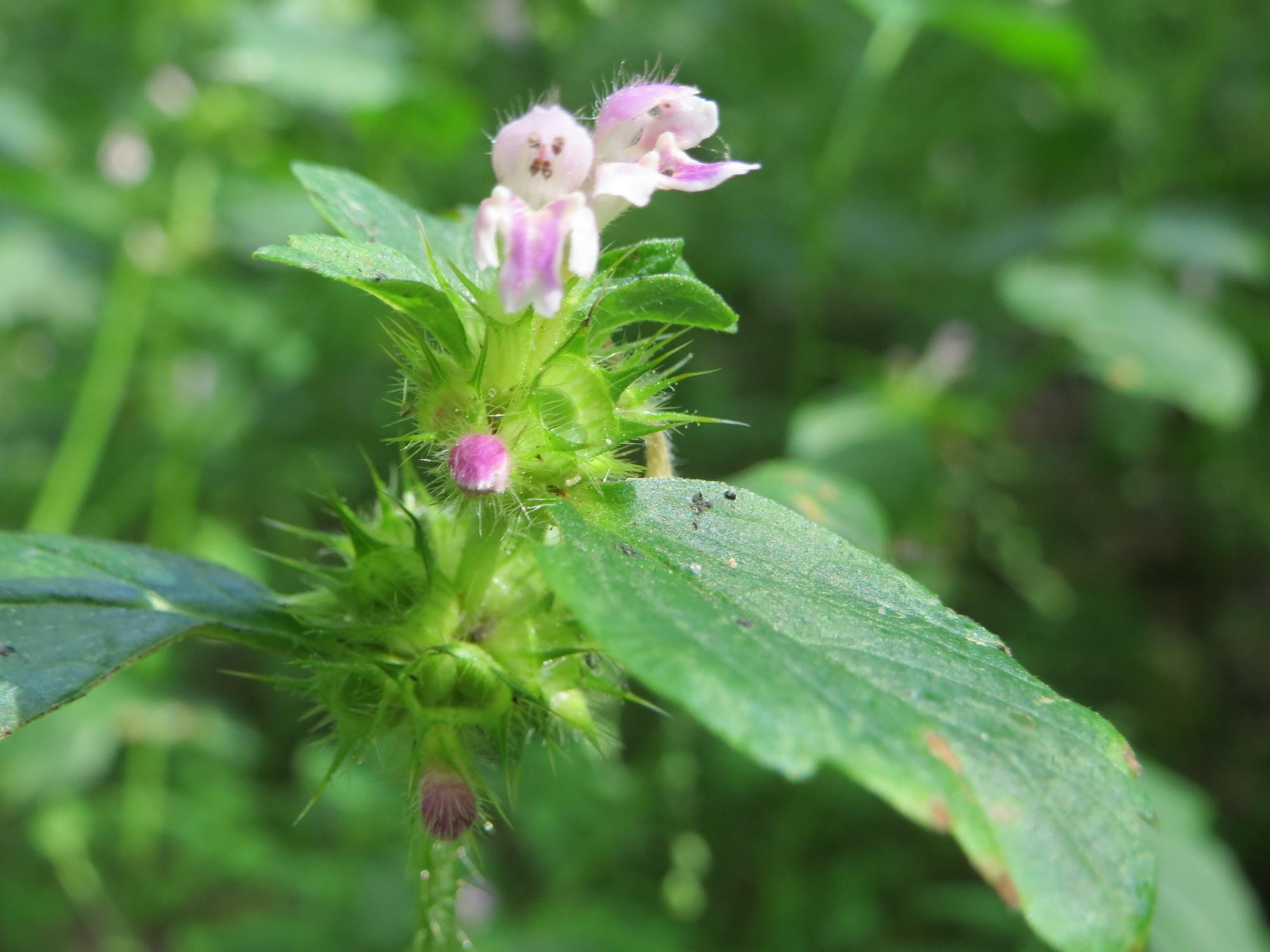
The strong stem grows upright and usually branched. It is square and strongly thickened directly under the leaves. The thickened areas are bristly and hairy.
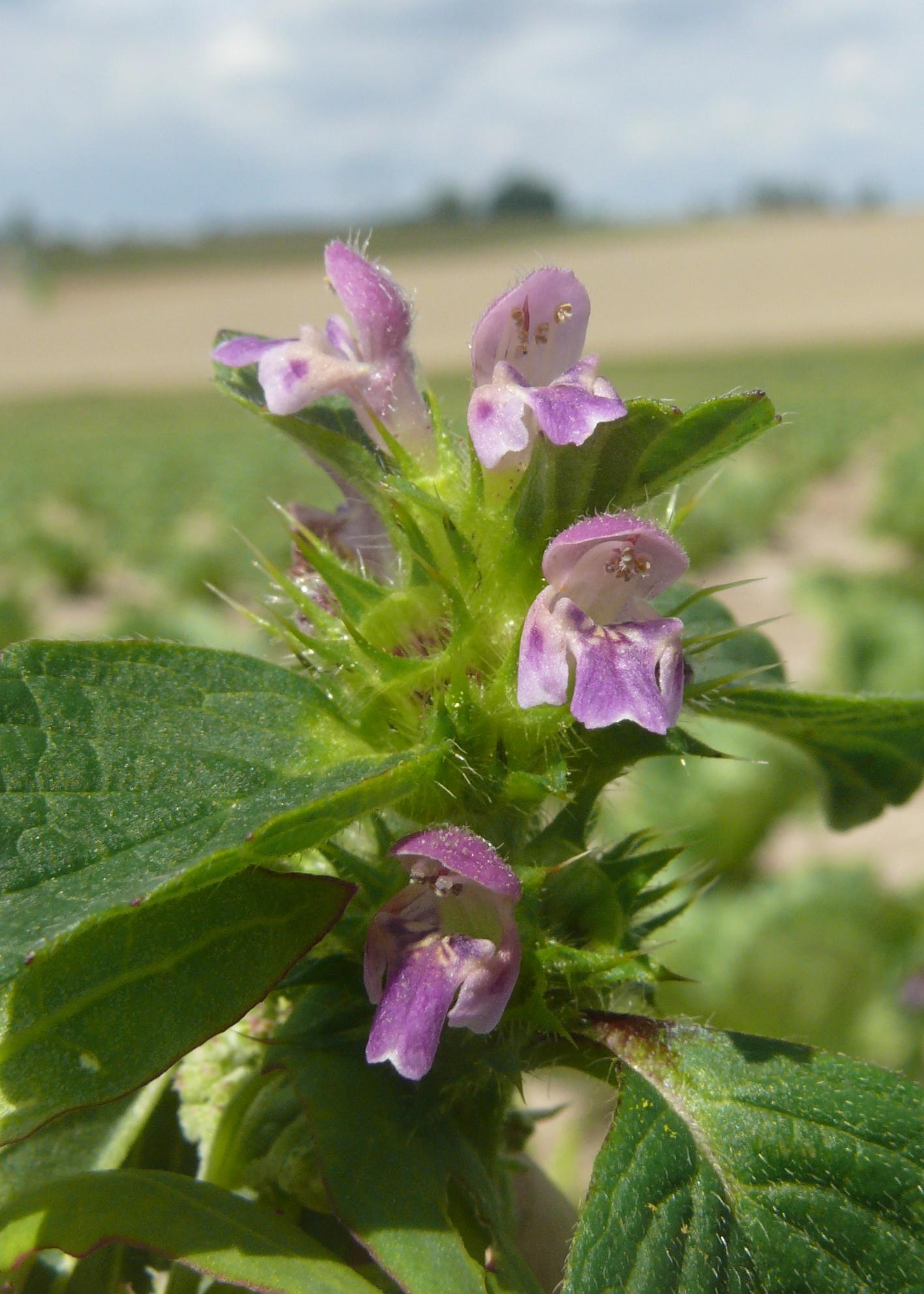
The flowers grow like stalks in dense inflorescences above the leaves. The petals are light red or rarely white and often hairy. They form a typical labiate flower with an upper and lower lip. The lower lip has two hollow lobes.
The fruits are small, single-seeded nutlets. There are always four of them in the calyx of the flower.
Features
Bifid hemp-nettle
Galeopsis bifida
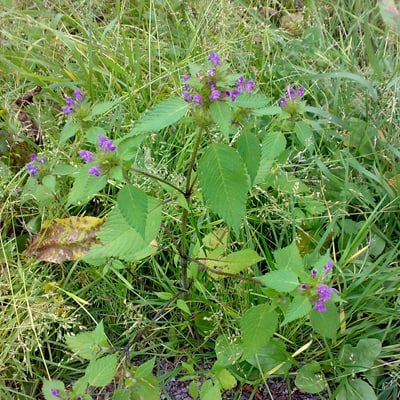
thickened stem at the nodes
square stem
two hollow lobes on the lower lip
Similar species
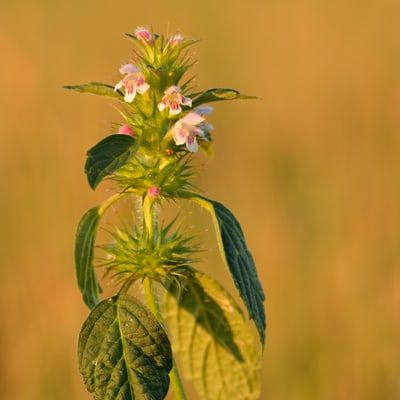
Common hemp-nettle
Galeopsis tetrahit
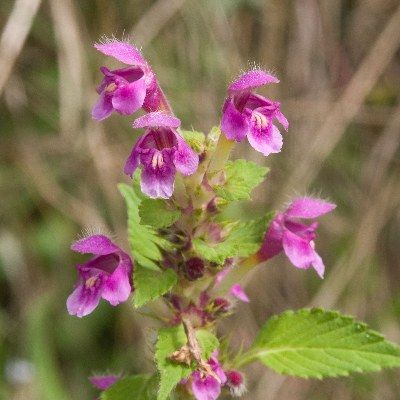
Galeopsis pubescens
In the city
It is widespread and very common in Germany. It prefers moist and nutrient-rich, sandy loam soils and therefore often grows in fields and along forest edges. It avoids lime.
Fun Facts
The two hollow lobes on the lower lip serve as guard rails for visiting insects. The insects have to stick their head between the lobes into the flower to reach the nectar. In doing so, they pollinate the flower.
Animals spread the fruit.
It flowers from June to October.
It is an annual plant. This means the plant dies after the seeds have ripened.
- Endangerment level Germany: not endangered
It is native to northern and central Europe.
Sources
Habitus, Bjoertvedt, CC BY-SA 3.0, https://commons.wikimedia.org/wiki/File:Galeopsis_bifida_07.jpg

Blütenstand, BerndH, CC BY-SA 3.0, https://commons.wikimedia.org/wiki/File:Galeopsis_bifida_230711.JPG

Blütenstand, AnRo0002, CC0 1.0, https://commons.wikimedia.org/wiki/File:20140822Ballota_nigra4.jpg

Kammer, P. M. (2016) Pflanzen einfach bestimmen. Schritt für Schritt einheimische Arten kennenlernen, Bern: Haupt Verlag.
Schauer, T., Caspari, C. & Caspari, S. (2015) Der illustrierte BLV-Pflanzenführer für unterwegs. 1150 Blumen, Gräser, Bäume und Sträucher, München: BLV.
Spohn, M., Golte-Bechtle, M. & Spohn, R. (2015) Was blüht denn da? Stuttgart: Franckh Kosmos Verlag.
Page „Zweispaltiger Hohlzahn“. : Wikipedia, The Free Encyclopedia. Date of last revision: 06.01.2018, 16:46 UTC. URL: https://de.wikipedia.org/w/index.php?title=Zweispaltiger_Hohlzahn&oldid=172654989 (Accessed: 13.02.2018).