
Short Description
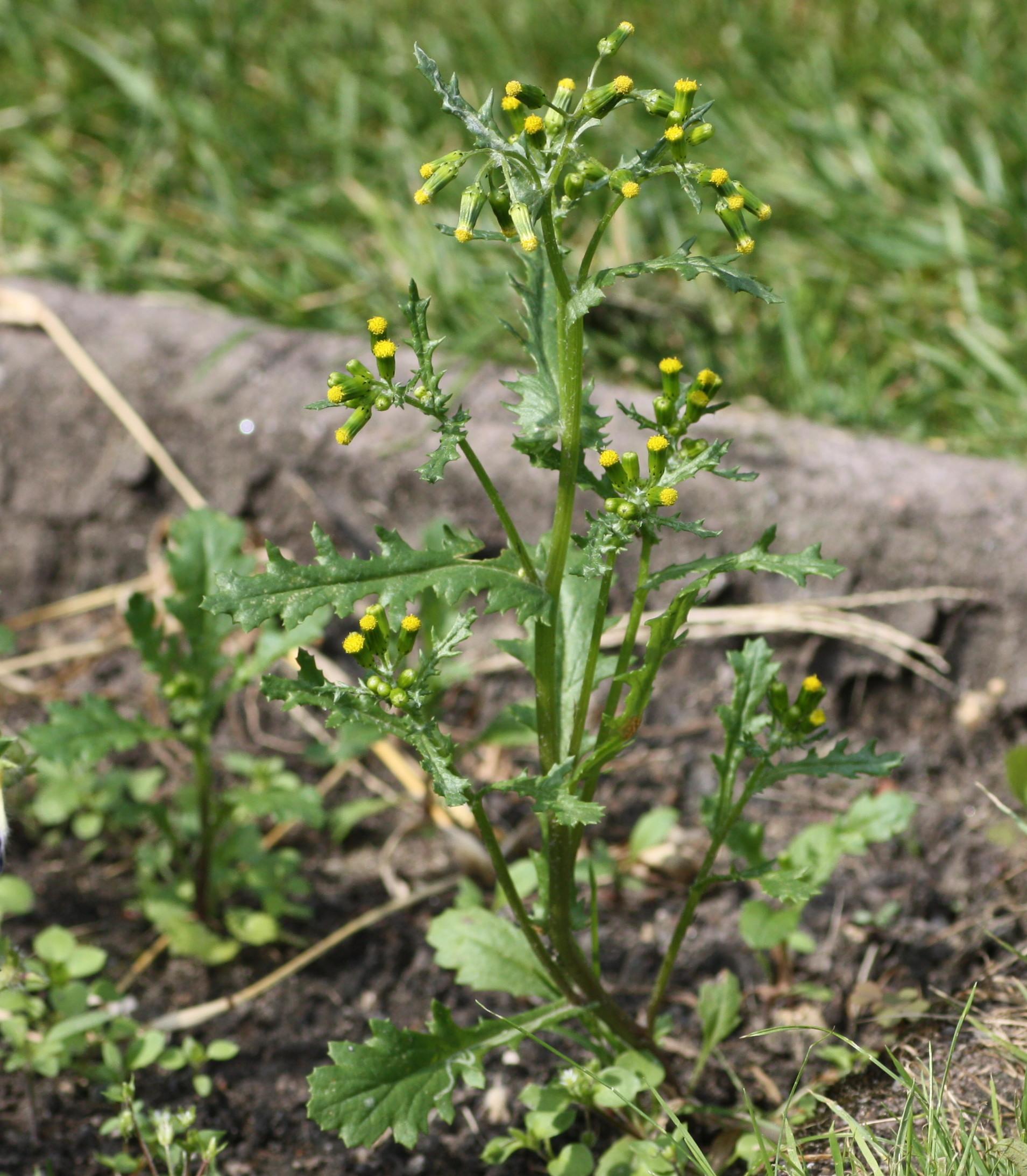
Groundsel can grow of up to 30 cm.
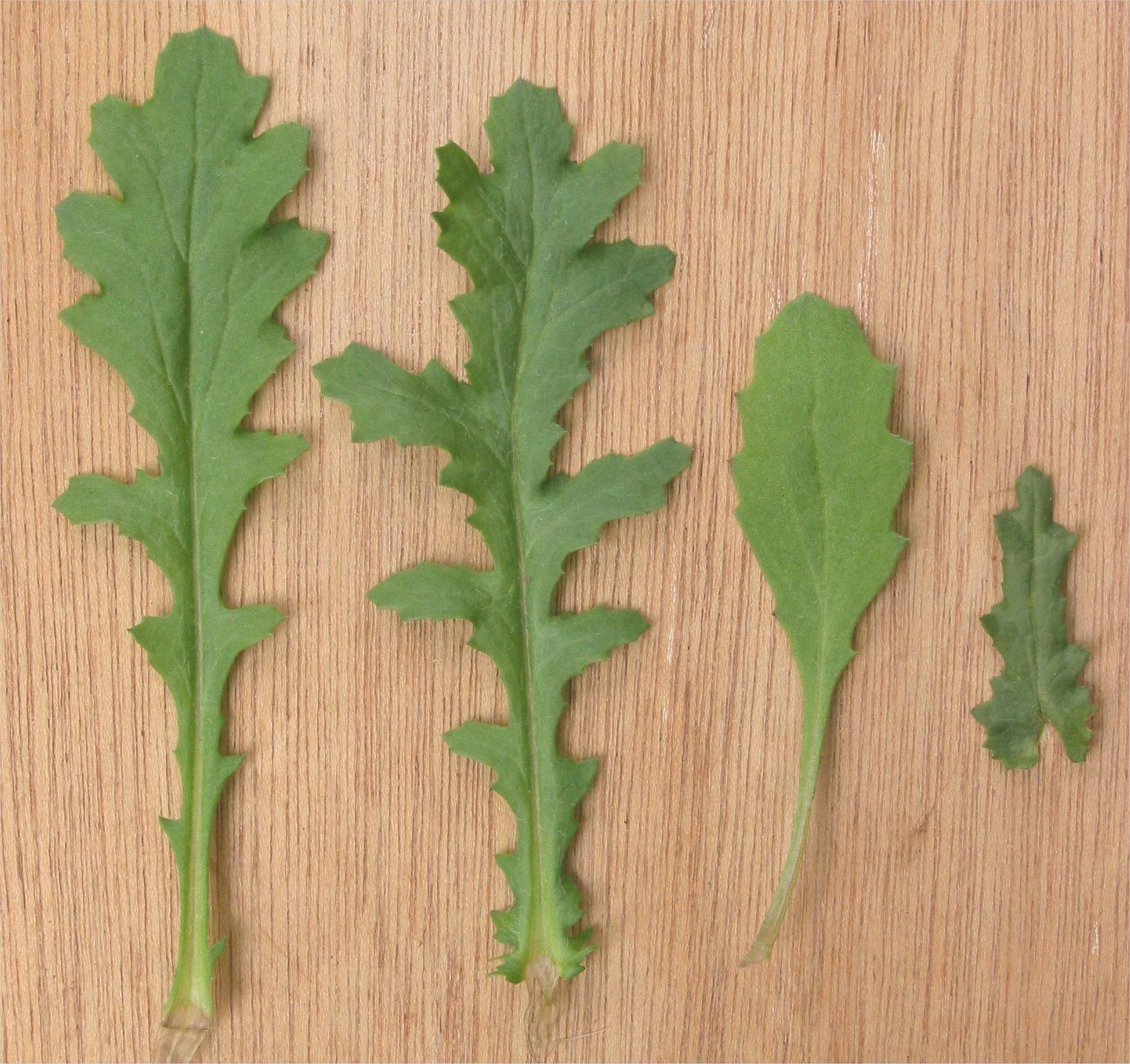
The leaves are elongated. They are lobed (pinnately split). They vary greatly in shape and grow alternately on the stem.
The stem is erect, irregularly branched and generally covered in downy hair.
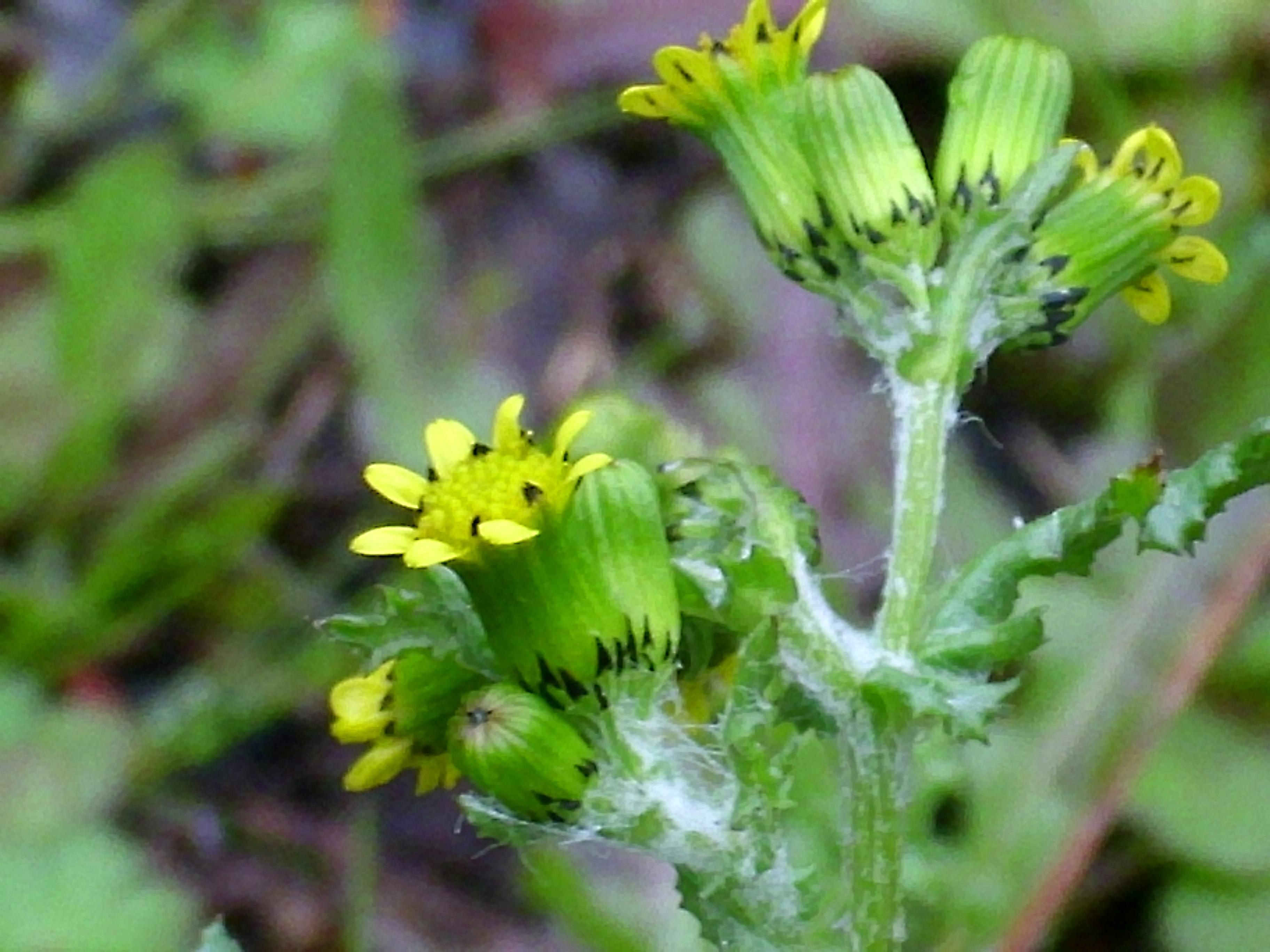
Numerous small yellow flowers are bunched together in a flower head which at first glance could be mistaken for the flower itself.
The seeds are small nut fruits with a ring of feathery hairs.
Features
Groundsel
Senecio vulgaris
poisonous
flower head surrounded by black-tipped leaves
In the city
Groundsel is a synanthrope (ecologically associated with humans) and is common in all areas influenced by human activity such as gardens or building sites. It prefers fresh, nutrient-rich sites on more or less humus-rich soil.
Fun Facts
In 2009, a package of rucola in a German supermarket was found to be contaminated with a stem section of groundsel. Because of groundsel’s toxicity, this led to a complete breakdown in the German rucola market.
It flowers from February to November. It also flowers in winter.
Groundsel is a host plant for many animal species, e.g. butterflies and flies, and provides food for many species of birds.
It is an annual plant, i.e. the plant dies after the seeds have ripened.
- Endangerment level Germany: not endangered
In humans, groundsel can cause cancer and life-threatening liver damage.
Sources
Habitus, Wohlert Wohlers, CC BY-SA, https://species-id.net/openmedia/File:Senecio_vulgaris_1_Pflanze_IMG_5724_Wohlers.JPG

Blütenstand, Javier martin, Gemeinfrei, https://commons.wikimedia.org/wiki/File:Senecio_vulgaris_InflorescenciaEnfoque_2010-3-21_SierraMadrona.jpg

Blätter, Rasbak, CC BY-SA 3.0, https://commons.wikimedia.org/wiki/File:Klein_kruiskruid_bladeren_(Senecio_vulgaris_leaves).jpg
.jpg)
Lippert, W. & Podlech, D. (1993) GU Naturführer. Blumen: die wichtigen Blütenpflanzen Mitteleuropas erkennen und bestimmen, München: Gräfe und Unzer Verlag.
Needon, C. & Petermann, J. (1991) Urania-Naturführer Pflanzen, Leipzig, Jena, Berlin: Urania-Verlag.
Schauer, T., Caspari, C. & Caspari, S. (2015) Der illustrierte BLV-Pflanzenführer für unterwegs. 1150 Blumen, Gräser, Bäume und Sträucher, München: BLV.
Page „Gewöhnliches Greiskraut“. : Wikipedia, The Free Encyclopedia. Date of last revision: 14.06.2016, 19:14 UTC. URL: https://de.wikipedia.org/w/index.php?title=Gew%C3%B6hnliches_Greiskraut&oldid=155299724 (Accessed: 11.10.2016).
Bundesamt für Naturschutz (n.d.) Artensteckbriefe, URL: http://floraweb.de/pflanzenarten/artenhome.xsql?suchnr=5516& (Accessed: 11.10.2016).