
Short Description
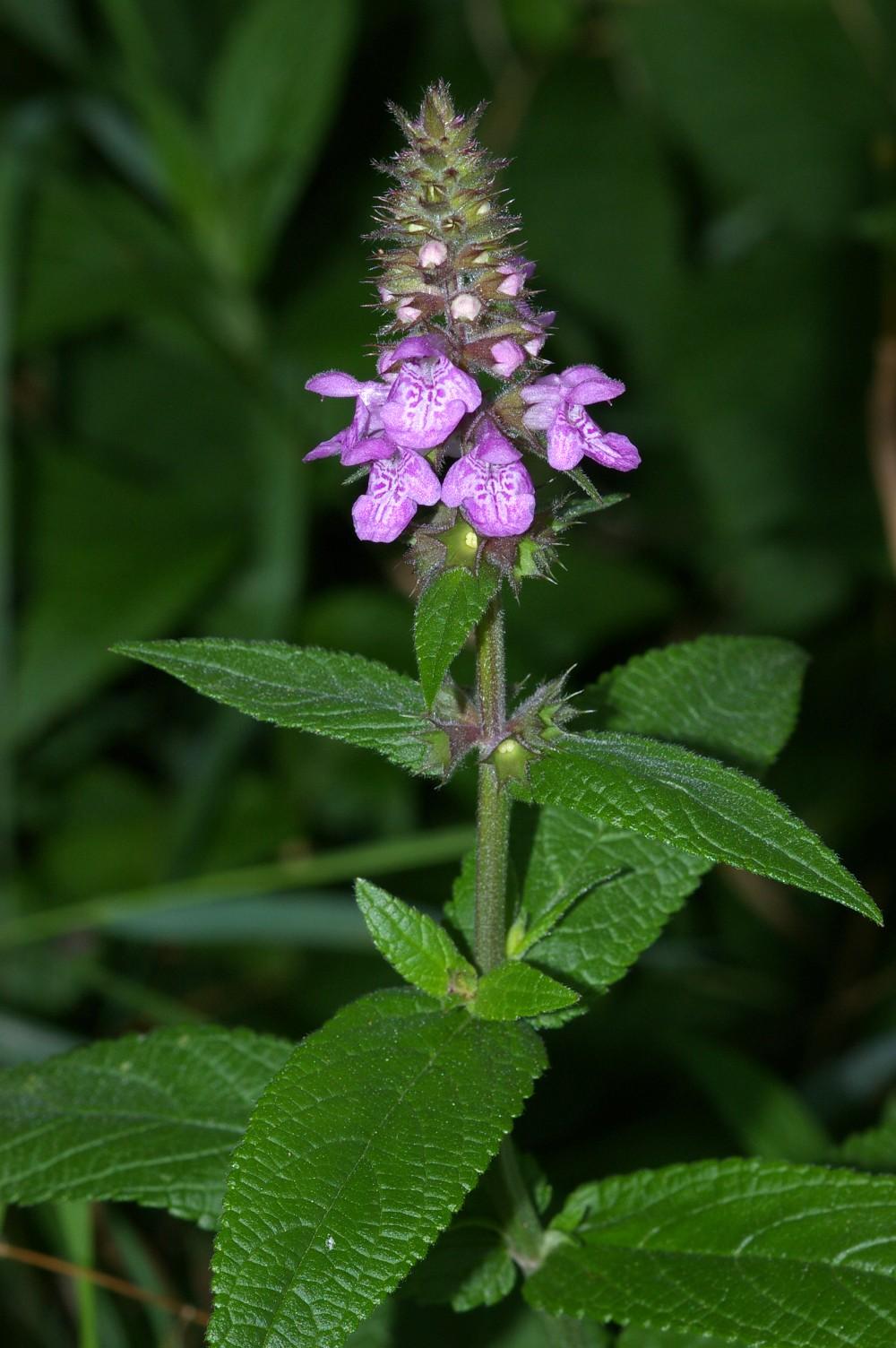
The marsh woundwort can grow up to one metre high.
The leaves are narrowly heart-shaped and often felt-like hairy. Their margin is finely serrated. They grow opposite each other without a stalk directly on the stem.
The stem grows erect. It is square and silky-haired.
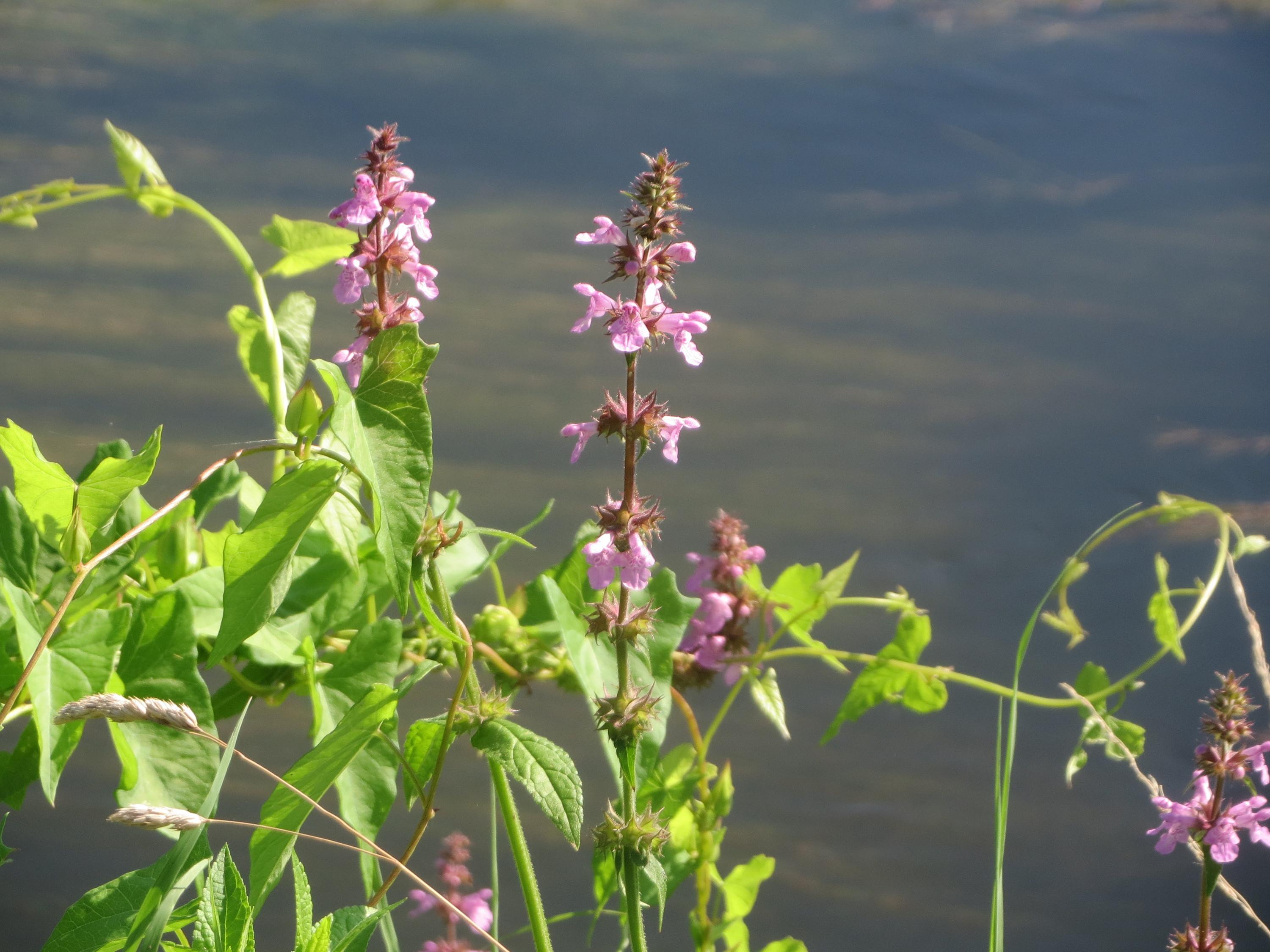
The flowers grow in whorls close together at the top of the stem. They are purple. The flower corolla consists of two lips. The lower lip is about twice as long as the upper lip. It is tripartite and has dark markings.
The fruits are small, single-seeded nutlets. There are always four of them in the calyx of the flower.
Features
Marsh woundwort
Stachys palustris
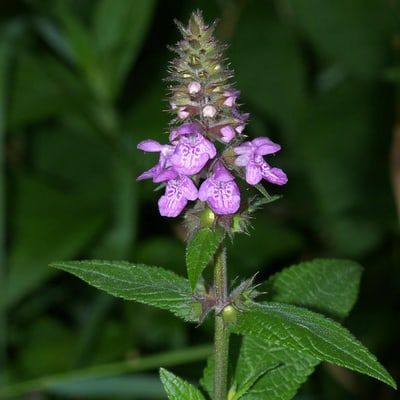
strikingly long lower lip of the flower
square stem
In the city
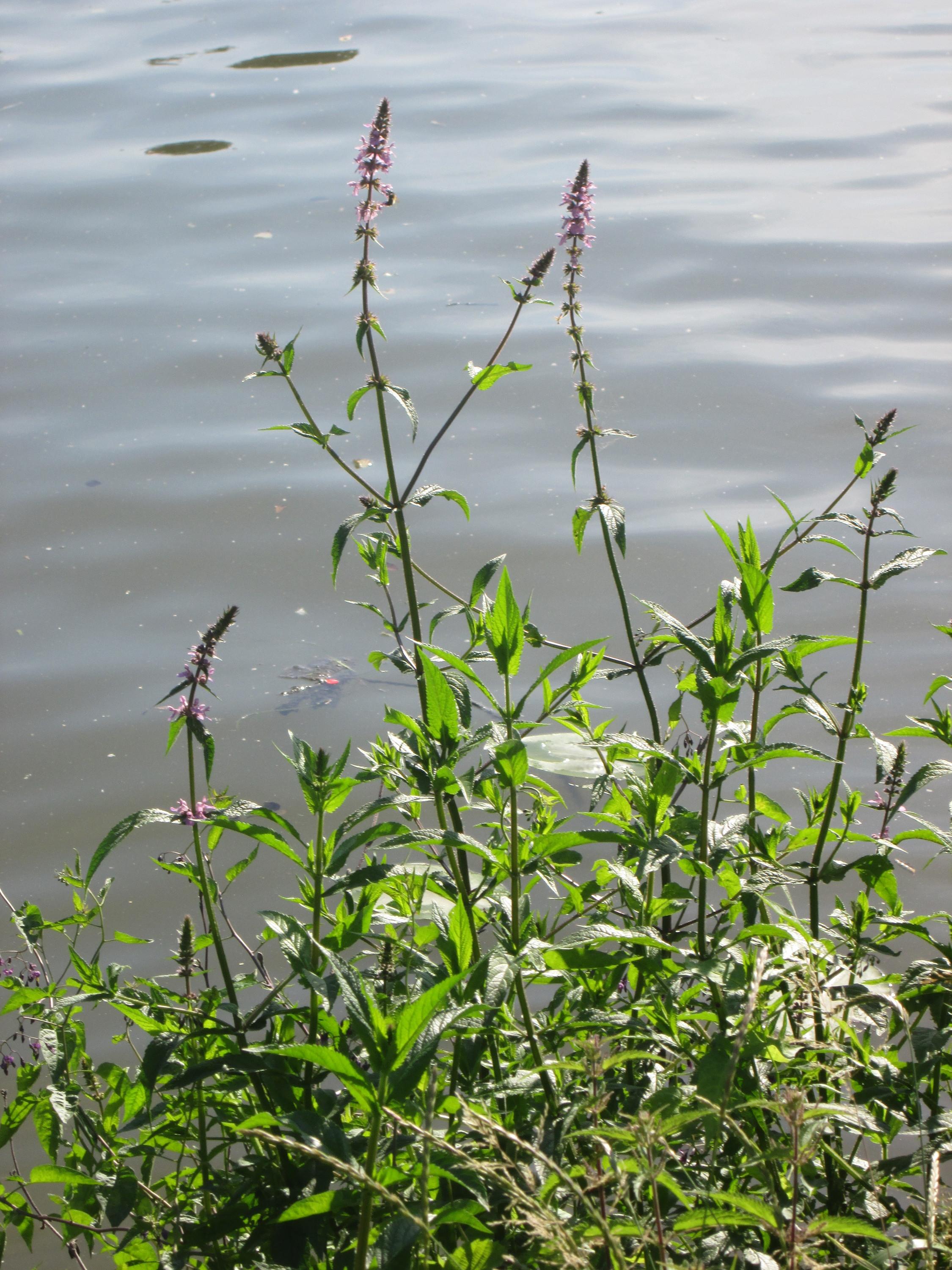
It grows in wet, nutrient-rich places such as wet meadows and fields and along roadsides. It is also often found among other perennials on banks and ditches. It indicates waterlogging.
Fun Facts
The flowers produce plenty of nectar, attracting pollinators such as bees, hoverflies and butterflies. Spontaneous self-pollination is possible before flowering.
The flowering period is from June to September.
It lives for several years and generally flowers and fruits annually (perennial plant).
- Endangerment level Germany: not endangered
It is native to almost all of Europe.
The potato-like storage organs formed in autumn store nutrients and sugars for next year's sprouting. They are used by farmers as nutritious pig feed. In the past, the tubers were also eaten as a vegetable.
Sources
Habitus, Christian Fischer, CC BY-SA 3.0, https://commons.wikimedia.org/wiki/File:StachysPalustris.jpg

Habitus, AnRo0002, CC0 1.0, https://commons.wikimedia.org/wiki/File:20180627Stachys_palustris4.jpg

Habitus, AnRo0002, CC0 1.0, https://commons.wikimedia.org/wiki/File:20160726Stachys_palustris1.jpg

Kammer, P. M. (2016) Pflanzen einfach bestimmen. Schritt für Schritt einheimische Arten kennenlernen, Bern: Haupt Verlag.
Schauer, T., Caspari, C. & Caspari, S. (2015) Der illustrierte BLV-Pflanzenführer für unterwegs. 1150 Blumen, Gräser, Bäume und Sträucher, München: BLV.
Spohn, M., Golte-Bechtle, M. & Spohn, R. (2015) Was blüht denn da? Stuttgart: Franckh Kosmos Verlag.
Page „Sumpf-Ziest“. : Wikipedia, The Free Encyclopedia. Date of last revision: 04.01.2018, 21:51 UTC. URL: https://de.wikipedia.org/w/index.php?title=Sumpf-Ziest&oldid=172598686 (Accessed: 27.03.2018).