
Short Description
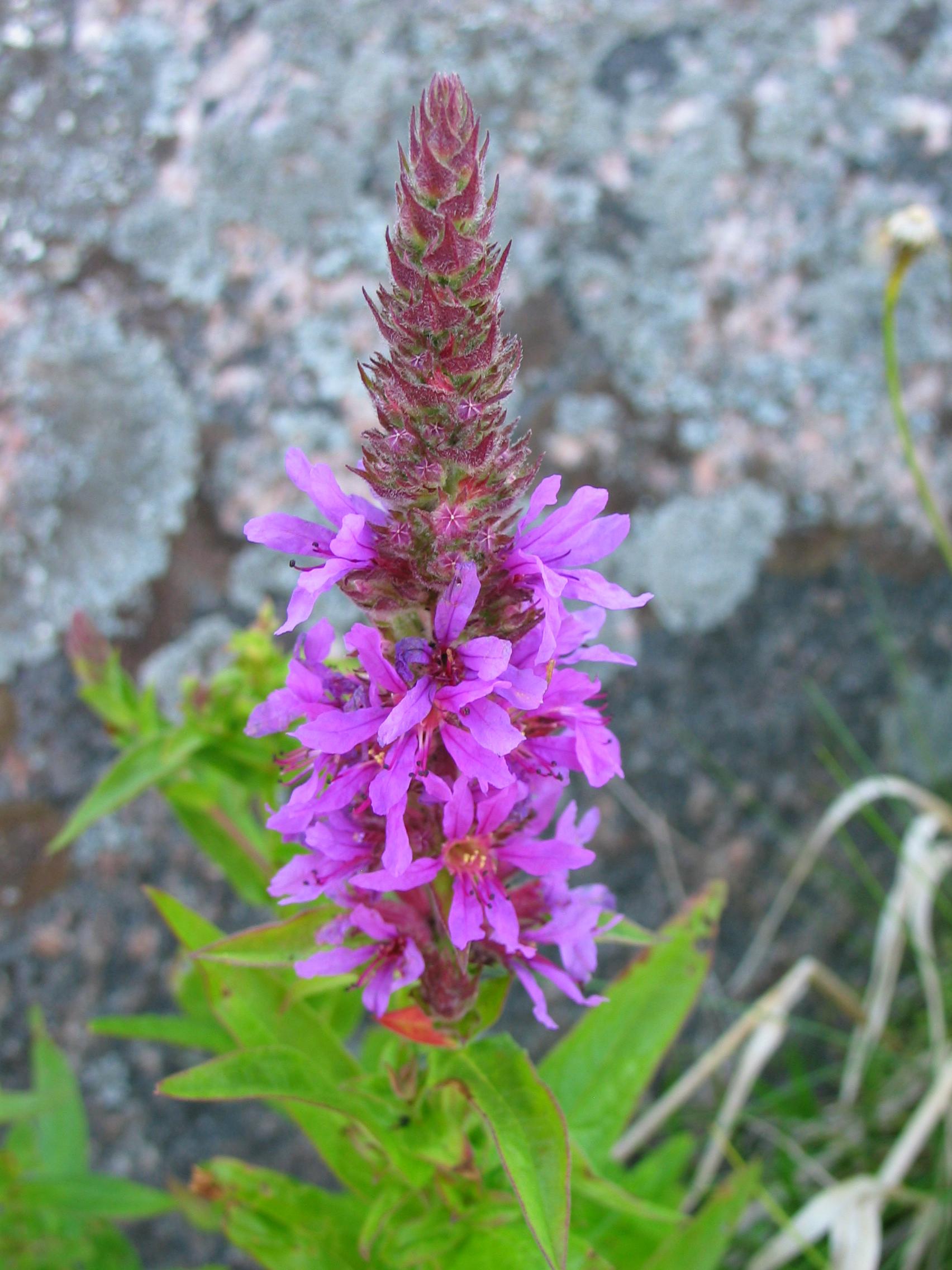
The purple loosestrife can grow up to 1.5 metres high.
The leaves are lanceolate to oval. They sit opposite each other or in whorls of three on the stem. On the underside the leaf veins are clearly visible.
The stem grows erect and partly branched. It is square.
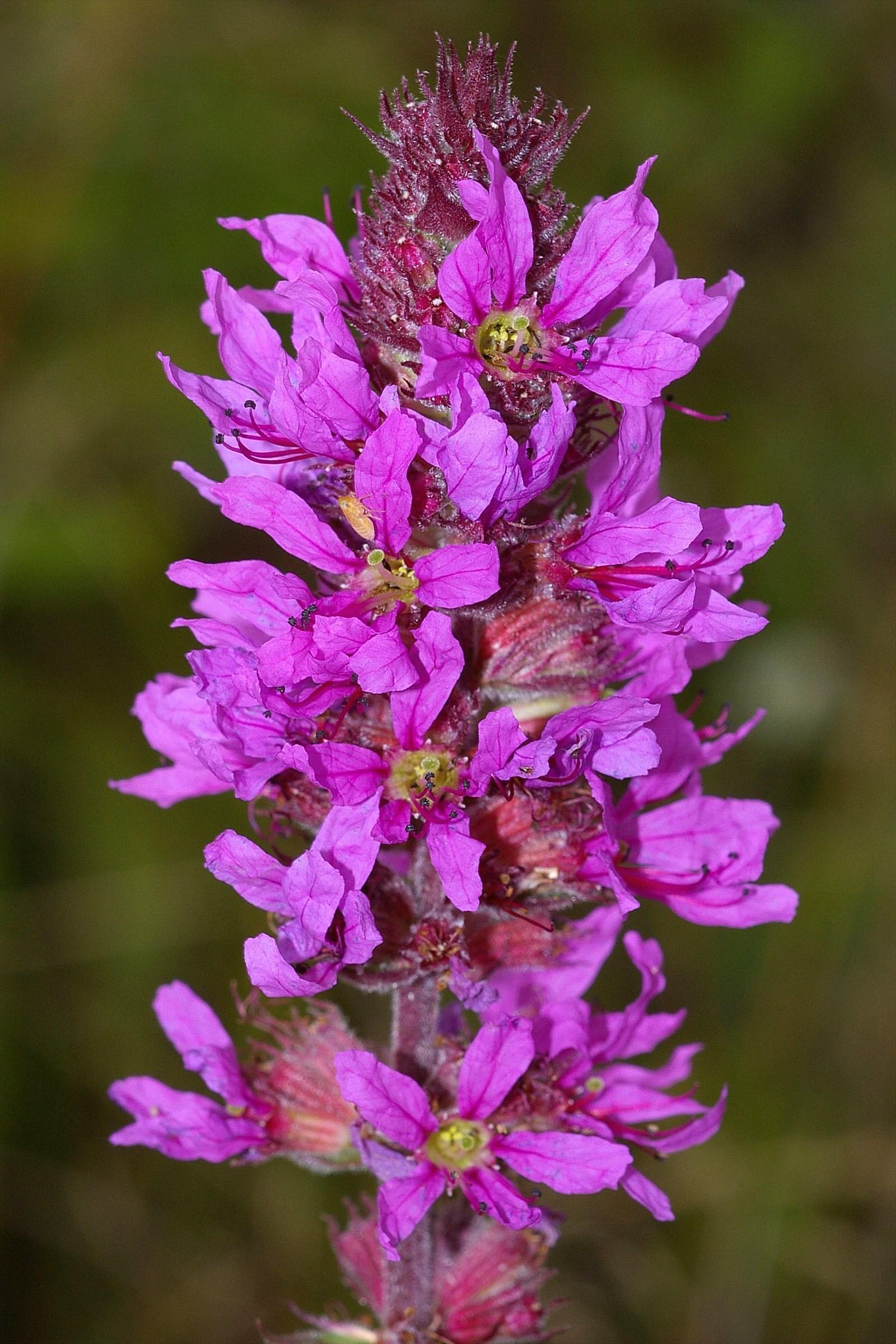
The flowers have six violet-red, narrow petals. They sit in whorls in a long, spike-like inflorescence at the end of the stem.
The fruit is a two-lobed capsule fruit.
Features
Purple loosestrife
Lythrum salicaria
striking, violet-red flowers
long, spike-like inflorescence
In the city
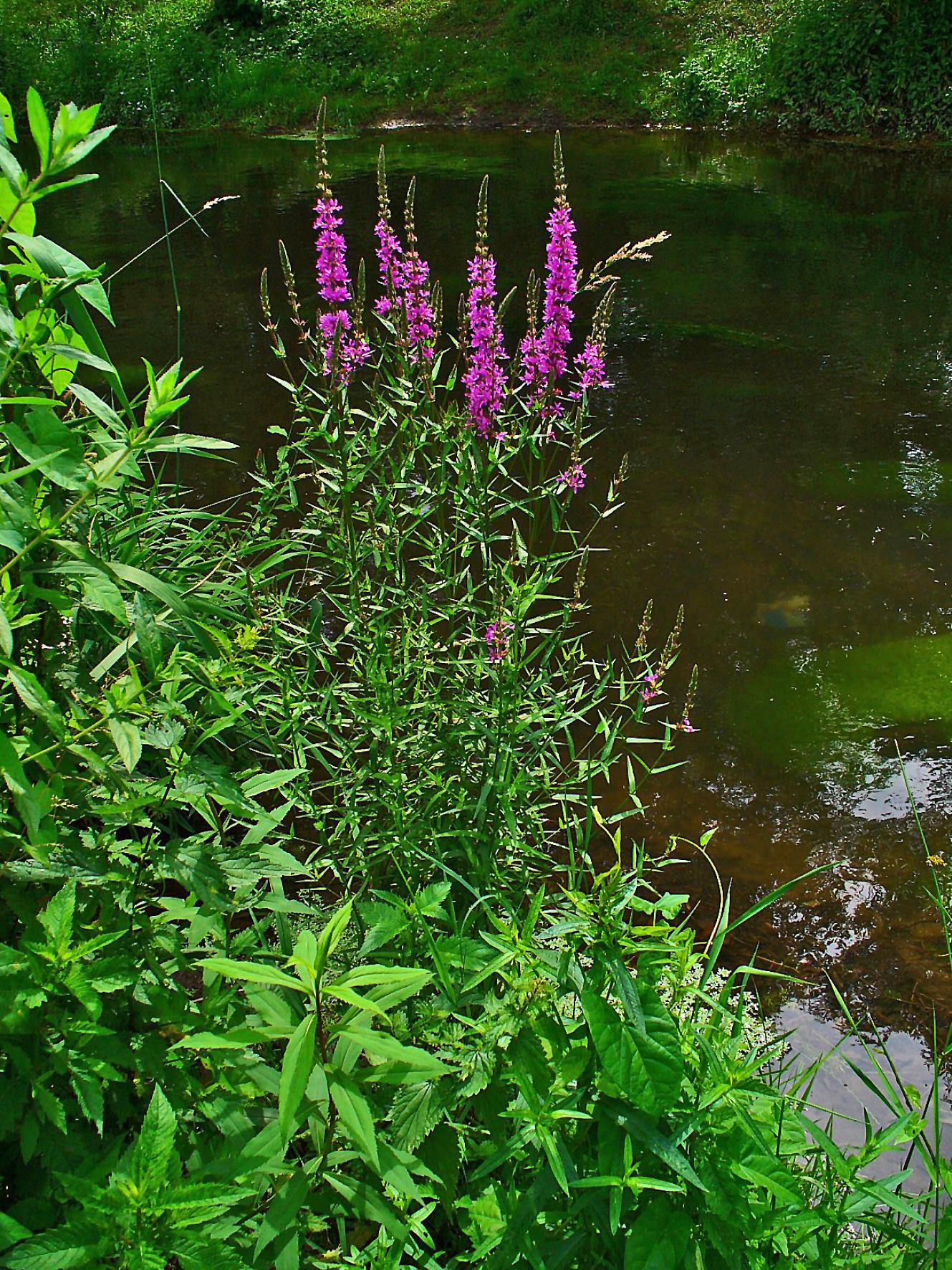
The purple loosestrife can grow in almost all damp places. It is found in wet meadows, along ditches and on the shores of lakes and rivers. It is also occasionally planted as an ornamental plant at the edges of water bodies. It prefers nutrient-rich and calcareous loam and clay soils.
Fun Facts
Each plant has one of three different flower types, which differ in the length of the pistil and stamens. Each flower type can only be pollinated by one of the other types, not the same type, thus ensuring cross-pollination between different plants.
The pollinators are mainly hoverflies, but also bees and butterflies. It is of particular value as a nectar donor.
The flowering period is from July to September.
It lives for several years and generally flowers and fruits annually (perennial plant).
A single plant can produce up to three million seeds, which are spread by wind and water. In addition, the seeds have mucilage hairs and thus stick to waterbirds.
- Endangerment level Germany: not endangered
It is native to Europe and Asia.
The dried herb can be drunk as a tea for diarrhoea. Externally, it can be used to stop bleeding.
Sources
Habitus, Jonas Bergsten, PD, https://commons.wikimedia.org/wiki/File:Lythrum_salicaria_20060712_002.jpg

Blütenstand, Christian Fischer, CC BY-SA 3.0, https://commons.wikimedia.org/wiki/File:LythrumSalicariaBig.jpg

Habitus, H. Zell, CC BY-SA 3.0, https://commons.wikimedia.org/wiki/File:Lythrum_salicaria_001.JPG

Kammer, P. M. (2016) Pflanzen einfach bestimmen. Schritt für Schritt einheimische Arten kennenlernen, Bern: Haupt Verlag.
Schauer, T., Caspari, C. & Caspari, S. (2015) Der illustrierte BLV-Pflanzenführer für unterwegs. 1150 Blumen, Gräser, Bäume und Sträucher, München: BLV.
Spohn, M., Golte-Bechtle, M. & Spohn, R. (2015) Was blüht denn da? Stuttgart: Franckh Kosmos Verlag.
Page „Gewöhnlicher Blutweiderich“. : Wikipedia, The Free Encyclopedia. Date of last revision: 28.05.2017, 19:58 UTC. URL: https://de.wikipedia.org/w/index.php?title=Gew%C3%B6hnlicher_Blutweiderich&oldid=165890698 (Accessed: 15.03.2018).
Bundesamt für Naturschutz (n.d.) Artensteckbriefe, URL: http://floraweb.de/pflanzenarten/artenhome.xsql?suchnr=3572& (Accessed: 15.03.2018).