
Short Description
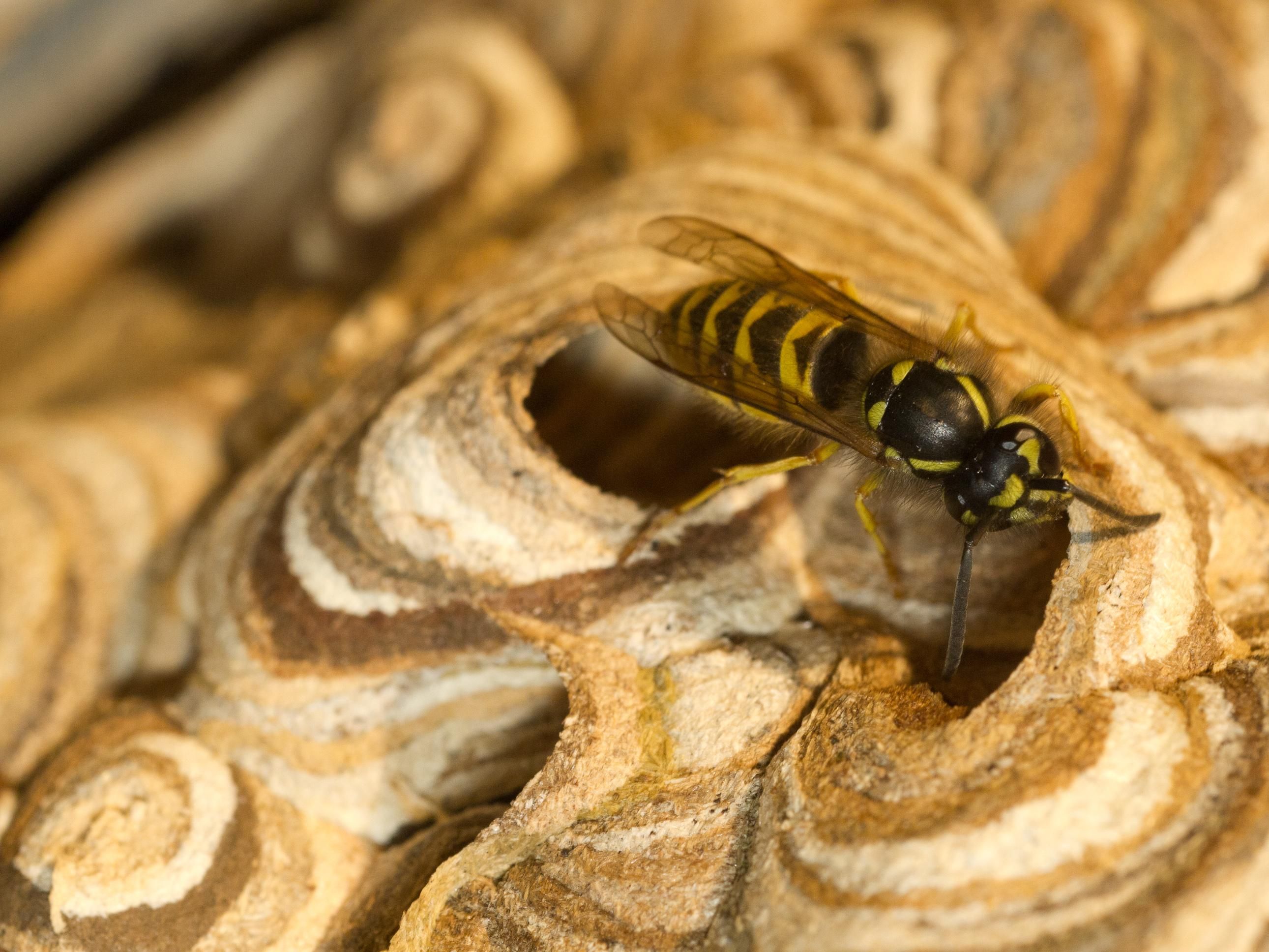
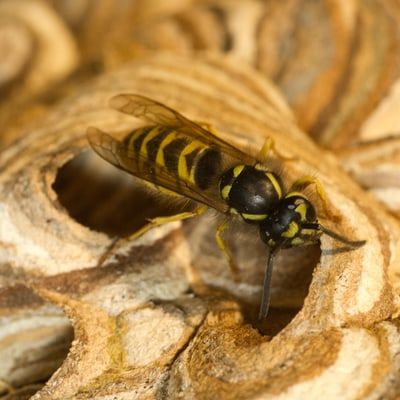
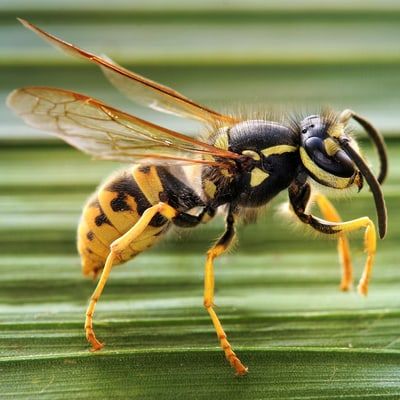
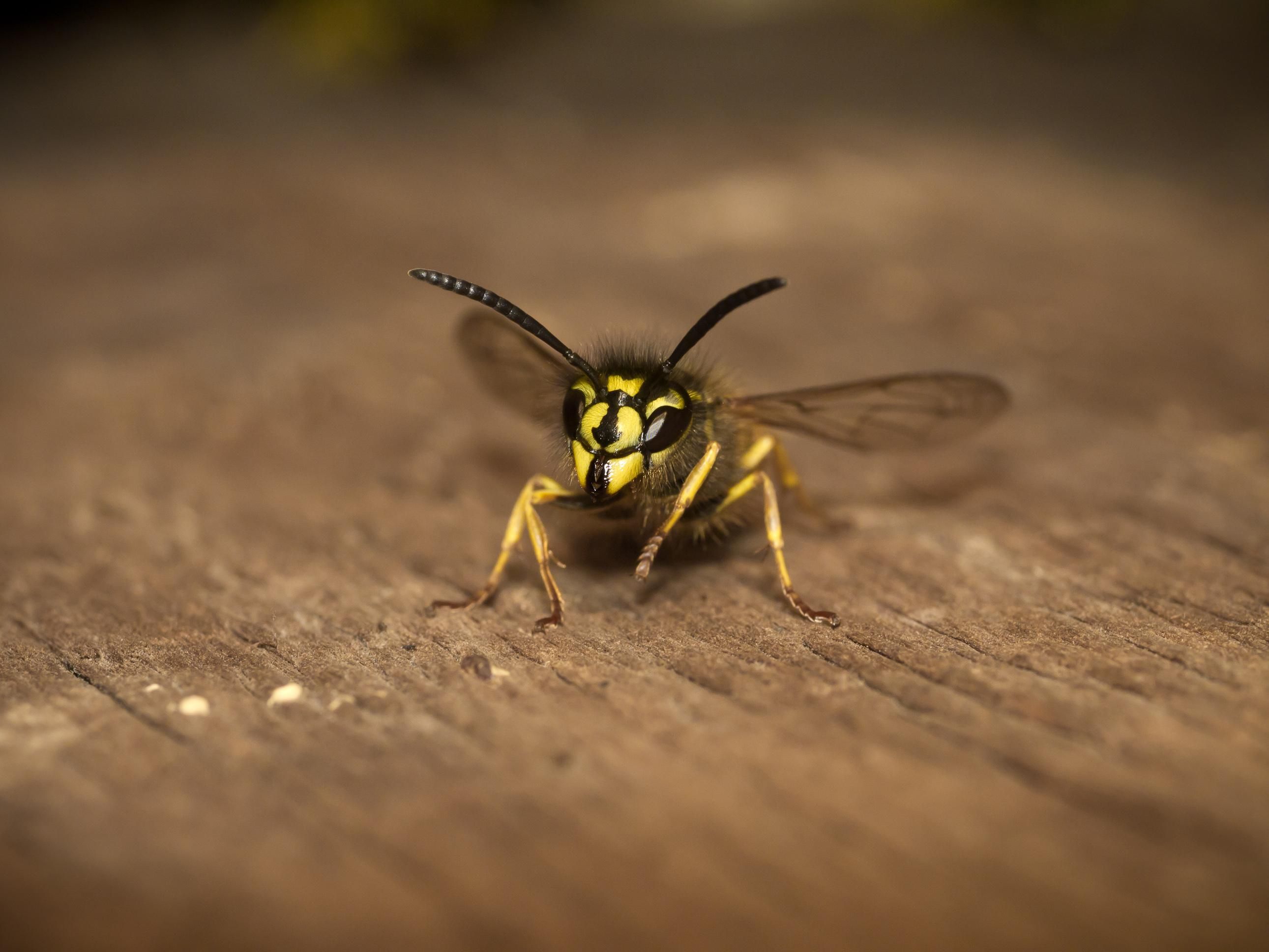
The common wasp is black and yellow. On the forehead it has a broad black line that becomes thicker towards the bottom. The black dots on the abdomen are usually not completely enclosed in yellow. These features can only be recognised with the help of a magnifying glass.
The queens are larger than the males (drones) and the workers.
Features
Common wasp
Vespula vulgaris
broad black line on the forehead
In the city
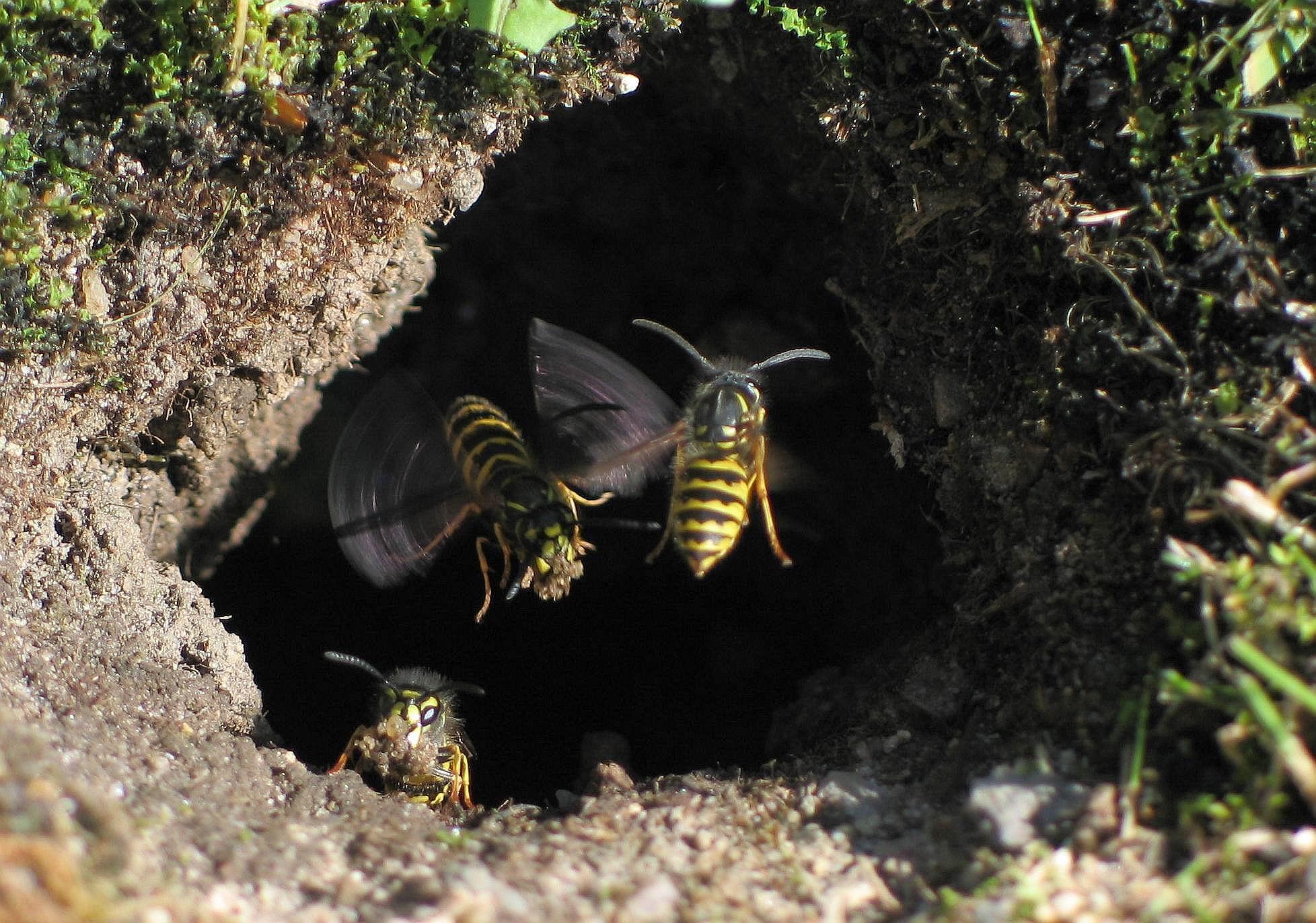
The common wasp builds its nest mainly in cavities in the ground, but also inside buildings, e.g. in roller shutter boxes.
Fun Facts
In Germany, only the German wasp and the common wasp fly onto desserts and other foods.
It is peaceful and not out to sting anyone. However, it will defend itself if it feels threatened.
The queen starts building the nest in April.
Adults feed mainly on plant and fruit juices, nectar and the honeydew of aphids. The larvae are fed with insects, especially flies.
It forms annual colonies that die with the first frost. Only the mated young queens overwinter in a suitable hiding place and establish a new colony in spring.
- Endangerment level Germany: not endangered
Their venom causes allergic reactions in some people.
Sources
Habitus, IgorArenz, CC BY-SA 3.0, https://commons.wikimedia.org/wiki/File:Nestbau_der_gemeinen_Wespe_VI.jpg

Nest, Soebe, CC BY-SA 3.0, https://commons.wikimedia.org/wiki/File:Vespula_vulgaris.jpg

Habitus, IgorArenz, CC BY-SA 3.0, https://commons.wikimedia.org/wiki/File:Gemeine_Wespe.jpg

Saure, C. (2005) Rote Liste und Gesamtartenliste der Bienen und Wespen (Hymenoptera part.) von Berlin mit Angaben zu den Ameisen. : Der Landesbeauftragte für Naturschutz und Landschaftspflege / Senatsverwaltung für Stadtentwicklung (eds.) Rote Listen der gefährdeten Pflanzen und Tiere von Berlin, URL: https://www.berlin.de/sen/uvk/natur-und-gruen/naturschutz/artenschutz/artenlisten-rote-listen/insekten/ (Accessed: 29.03.2021).
Bellmann, H. (1999) Der neue Kosmos-Insektenführer. Über1400 Fotos, Stuttgart: Franckh Kosmos Verlag.
Bellmann, H. (2005) Bienen, Wespen, Ameisen. Hautflügler Mitteleuropas, Stuttgart: Franckh Kosmos Verlag.
Page „Gemeine Wespe“. : Wikipedia, The Free Encyclopedia. Date of last revision: 01.12.2017, 16:22 UTC. URL: https://de.wikipedia.org/w/index.php?title=Gemeine_Wespe&oldid=171573189# (Accessed: 10.01.2018).
Tauchert, P. (n.d.) Gemeine oder Gewöhnliche Wespe (Vespula vulgaris), URL: http://www.aktion-wespenschutz.de/Wespenarten/Gemeine%20wespe/vulgarisIndex.htm (Accessed: 10.01.2018).
Dr. Felke – Institut für Schädlingskunde (n.d. Wespen - Informationen zu Aussehen, Lebensweise und Bekämpfungsmöglichkeiten, URL: http://www.schaedlingskunde.de/Diverse_htm/Wespen-Lebensweise-Bekaempfung.htm (Accessed: 10.01.2018).
Nuß, M. (2014) Gemeine Wespe (Vespula vulgaris (Linnaeus, 1758)), URL: https://www.insekten-sachsen.de/Pages/TaxonomyBrowser.aspx?id=167811 (Accessed: 10.01.2018).