
Short Description
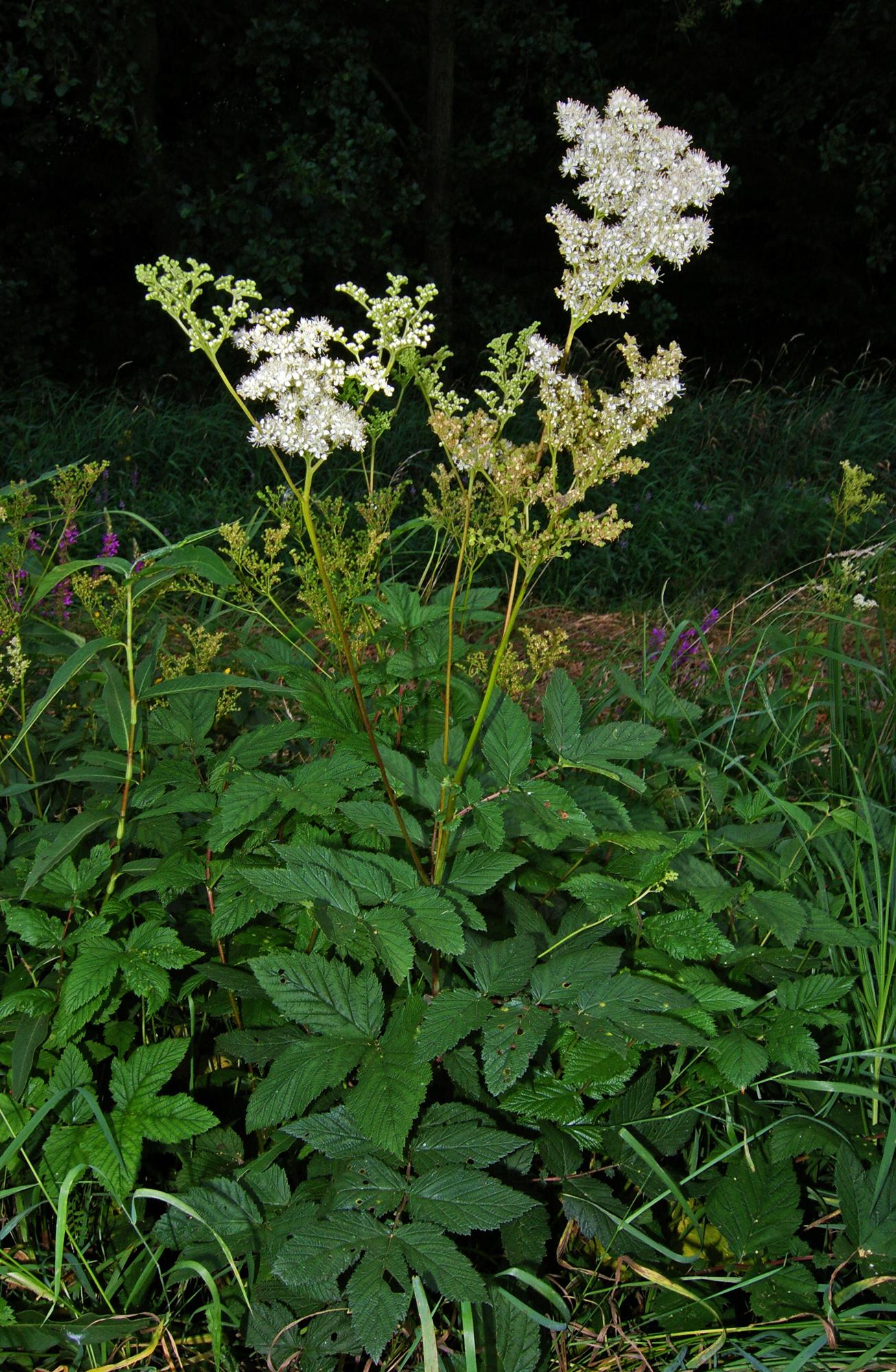
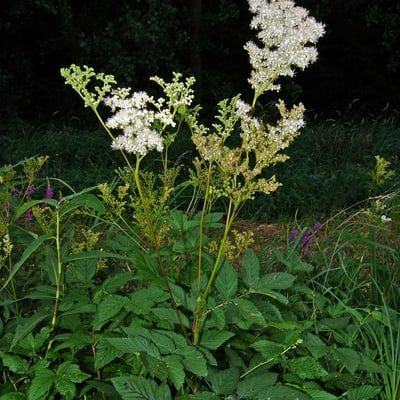
The meadowsweet can grow up to 1.5 metres high.
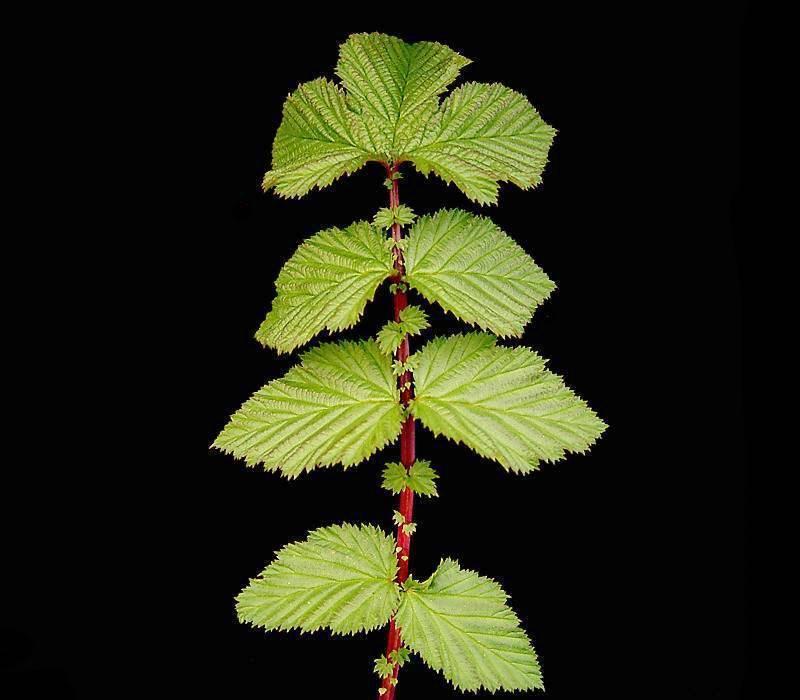
The leaves are solitary and alternate on the stem. A leaf consists of several leaf segments (pinnate). The leaflets are pointed ovate.
The stem is usually richly branched and reddish overflowing.
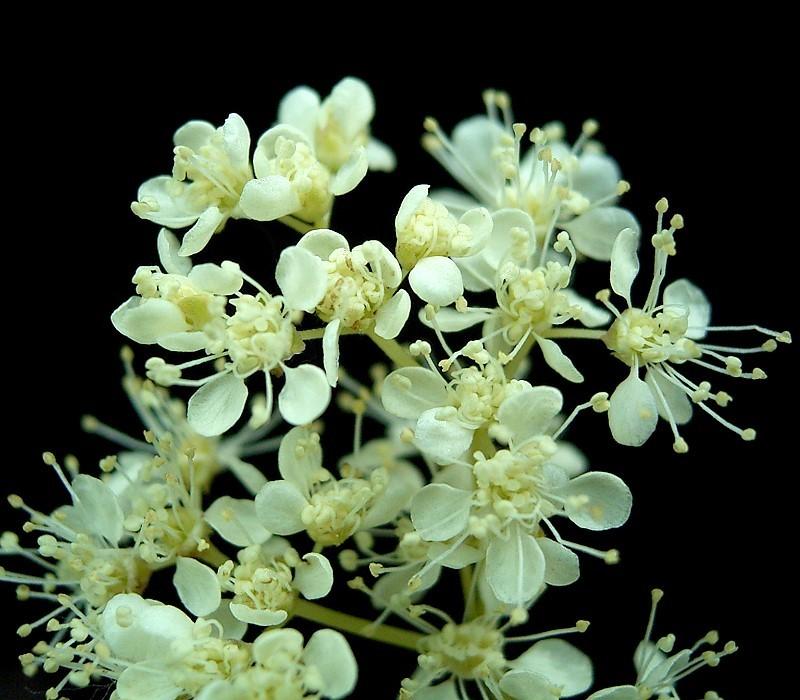
The flowers are small, yellowish-white and numerous in large inflorescences. The individual flowers have five petals and many stamens.
The fruits are small nuts.
Features
Meadowsweet
Filipendula ulmaria
numerous white flowers
intense fragrance
In the city
In the city, meadowsweet is often found along ditches and stream banks as well as in wet meadows. It prefers moist to wet, nutrient-rich sites with sandy loam and clay soils. It benefits from nutrient enrichment in the urban environment.
Fun Facts
The fresh flowers can be used to flavour desserts and drinks.
The flowers of meadowsweet contain an anti-inflammatory substance (salicylaldehyde), which is sold today in a modified form as the main ingredient in aspirin.
In folk medicine, meadowsweet is used as a diaphoretic, diuretic and mild anti-inflammatory.
It flowers from June to August.
It lives for several years and generally flowers and fruits annually (perennial plant).
- Endangerment level Germany: not endangered
The dried flowers can be used to make tea or as a room fragrance. The root and the shoots can be eaten as a vegetable.
Sources
Habitus, Christian Fischer, CC BY-SA 3.0, https://commons.wikimedia.org/wiki/File:FilipendulaUlmaria.jpg

Blüten, Frank Vincentz, CC BY-SA 3.0, https://commons.wikimedia.org/wiki/File:Filipendula_ulmaria2_ies.jpg

Blätter, Frank Vincentz, CC BY-SA 3.0, https://commons.wikimedia.org/wiki/File:Filipendula_ulmaria_ies.jpg

Eggenberg, S. & Möhl, A. (2007) Flora Vegetativa: Ein Bestimmungsbuch für Pflanzen der Schweiz im blütenlosen Zustand, Bern, Stuttgart, Wien: Haupt Verlag.
Spohn, M., Golte-Bechtle, M. & Spohn, R. (2015) Was blüht denn da? Stuttgart: Franckh Kosmos Verlag.
Jäger, E. J. (2011) Rothmaler - Exkursionsflora von Deutschland. Gefäßpflanzen: Grundband, Heidelberg: Spektrum Akademischer Verlag.
Kammer, P. M. (2016) Pflanzen einfach bestimmen. Schritt für Schritt einheimische Arten kennenlernen, Bern: Haupt Verlag.
Lippert, W. & Podlech, D. (1993) GU Naturführer. Blumen: die wichtigen Blütenpflanzen Mitteleuropas erkennen und bestimmen, München: Gräfe und Unzer Verlag.
Schauer, T., Caspari, C. & Caspari, S. (2015) Der illustrierte BLV-Pflanzenführer für unterwegs. 1150 Blumen, Gräser, Bäume und Sträucher, München: BLV.
Page „Echtes Mädesüß“. : Wikipedia, The Free Encyclopedia. Date of last revision: 06.11.2016, 14:54 UTC. URL: https://de.wikipedia.org/w/index.php?title=Echtes_M%C3%A4des%C3%BC%C3%9F&oldid=159438034 (Accessed: 17.01.2017).
Bundesamt für Naturschutz (n.d.) Artensteckbriefe, URL: http://floraweb.de/pflanzenarten/artenhome.xsql?suchnr=2458& (Accessed: 17.01.2017).