
Short Description
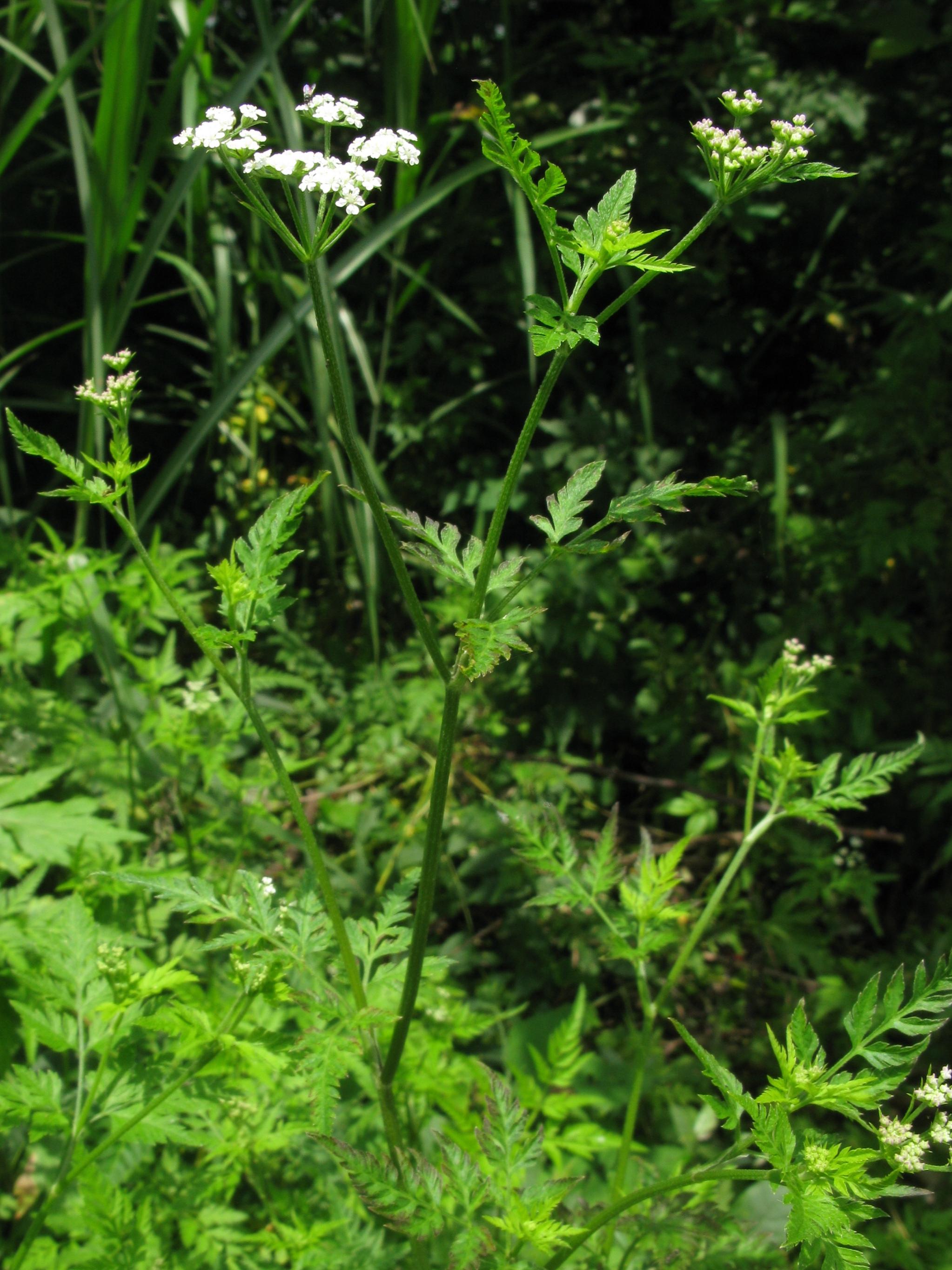
The upright hedge-parsley can grow over one metre high. It is green to grey and densely hairy.
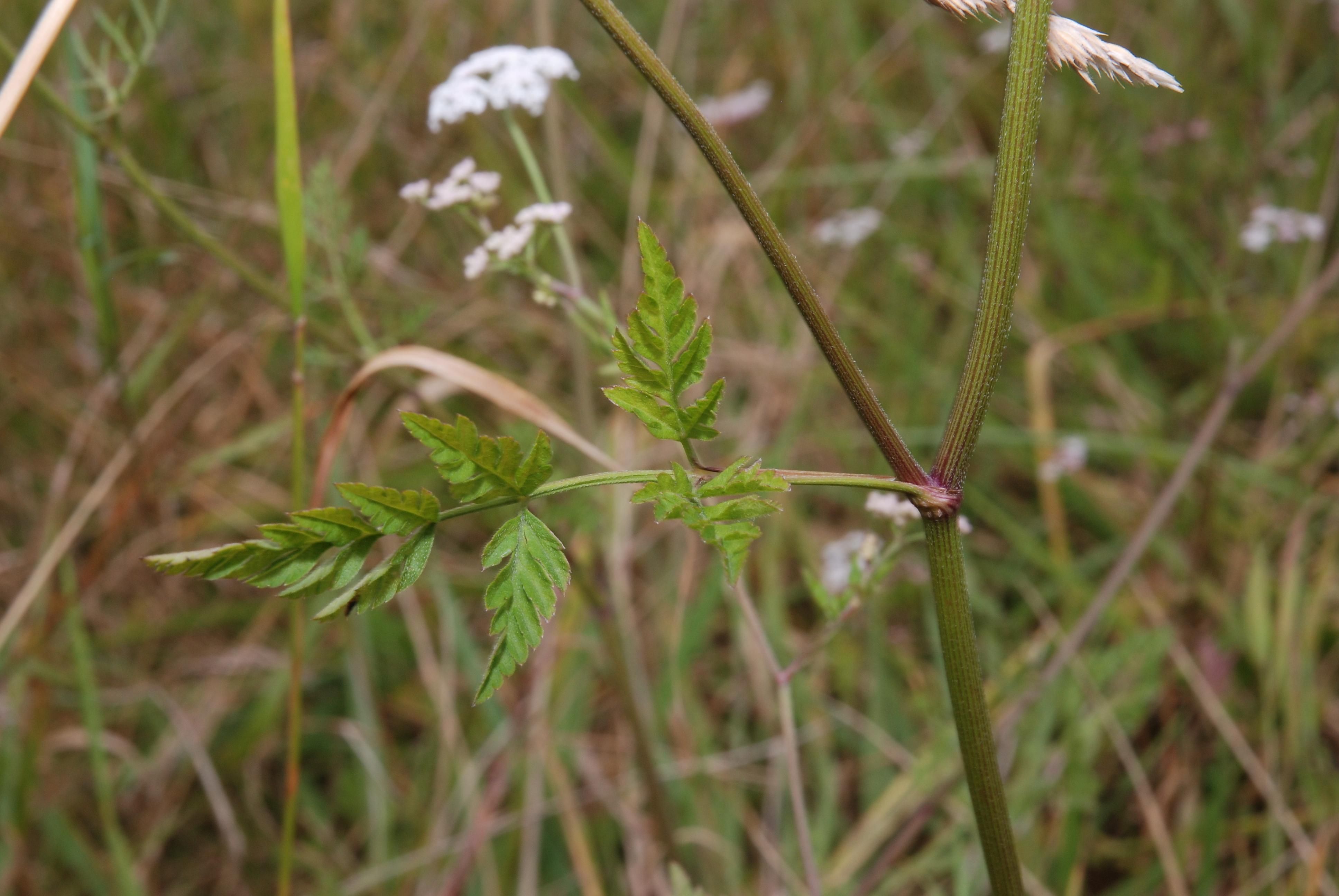
The stem leaves are composed of deeply incised leaflets.
The stem is often reddish brown and has downwards facing appressed hairs.
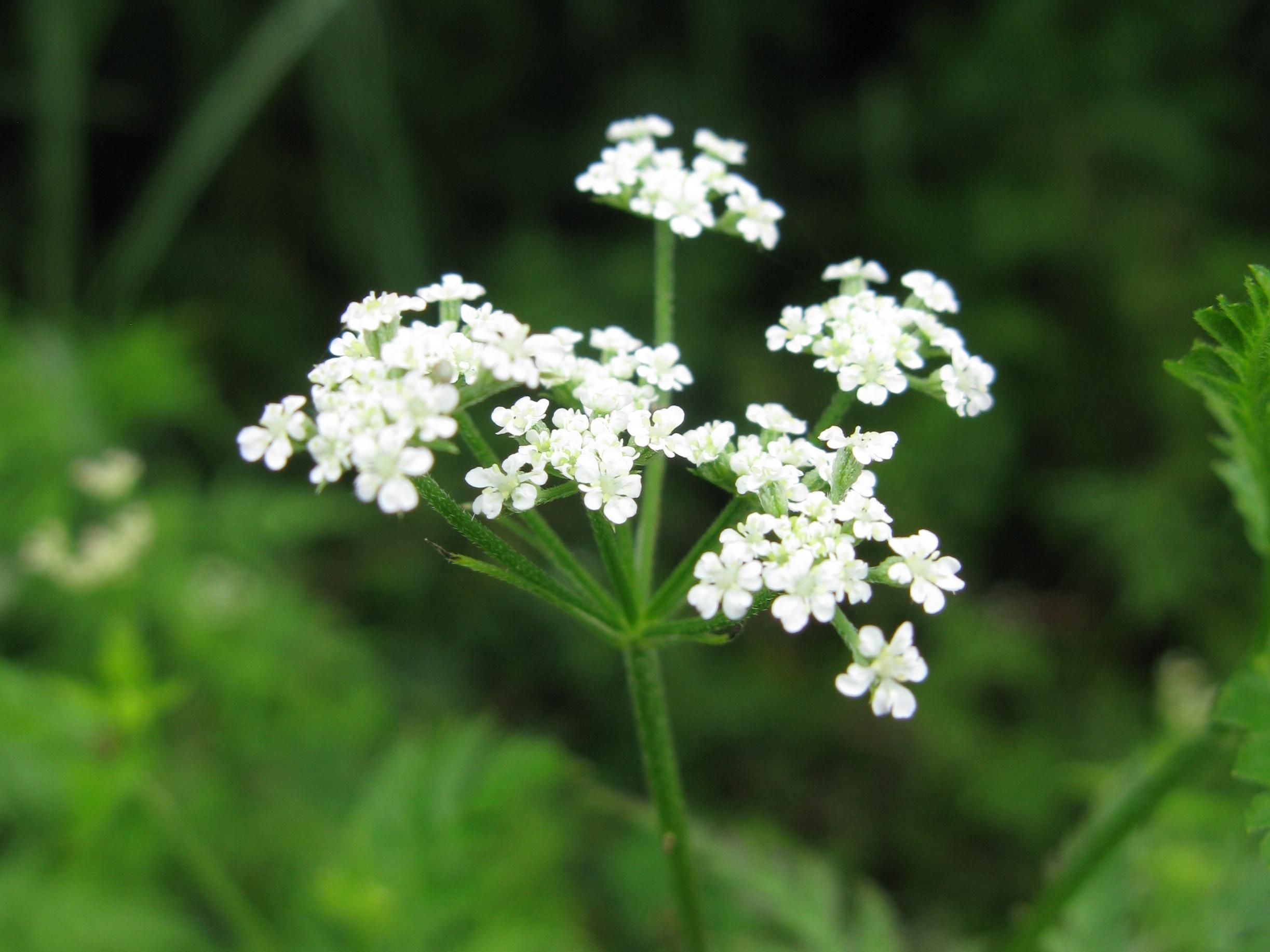
The inflorescences consist of four to twelve main branches. The white to pink flowers are arranged in umbels.
The fruits are ovoid, often purple-red schizocarps with spiny bristles.
Features
Upright hedge-parsley
Torilis japonica
deeply incised leaflets
closely appressed hairs
In the city
The upright hedge-parsley grows next to bushes, hedges, forest paths and edges. It prefers fresh, mostly base-rich, humous loamy soils. It tends to grow in the shade and is common.
Fun Facts
The flowering period is from July to August.
The bristly fruits stick to animal skins and clothes and are spread in this way.
- Endangerment level Germany: not endangered
The plant was probably introduced with the first human settlement and is now found as far away as East Asia.
Sources
Habitus, Qwert1234, CC BY-SA 3.0, https://commons.wikimedia.org/wiki/File:Torilis_japonica_1.JPG

Blütenstand, Qwert1234, CC BY-SA 3.0, https://commons.wikimedia.org/wiki/File:Torilis_japonica_2.JPG

Blatt, Olivier Pichard, CC BY-SA 3.0, https://commons.wikimedia.org/wiki/File:Torilis_japonica_chezy-sur-marne_02_03082007_5.JPG

Spohn, M., Golte-Bechtle, M. & Spohn, R. (2015) Was blüht denn da? Stuttgart: Franckh Kosmos Verlag.
Schauer, T., Caspari, C. & Caspari, S. (2015) Der illustrierte BLV-Pflanzenführer für unterwegs. 1150 Blumen, Gräser, Bäume und Sträucher, München: BLV.
Kammer, P. M. (2016) Pflanzen einfach bestimmen. Schritt für Schritt einheimische Arten kennenlernen, Bern: Haupt Verlag.
Seitz, B., Ristow, M., Meißner, J., Machatzi, B. & Sukopp, H. (2018) Rote Liste und Gesamtartenliste der etablierten Farn- und Blütenpflanzen von Berlin. : Der Landesbeauftragte für Naturschutz und Landschaftspflege / Senatsverwaltung für Umwelt, Klima und Verkehr (eds.) Rote Listen der gefährdeten Pflanzen, Pilze und Tiere von Berlin, URL: https://www.berlin.de/sen/uvk/natur-und-gruen/naturschutz/artenschutz/artenlisten-rote-listen/farn-und-bluetenpflanzen/ (Accessed: 26.03.2021).
Page „Gewöhnlicher Klettenkerbel“. : Wikipedia, The Free Encyclopedia. Date of last revision: 26.07.2018, 14:04 UTC. URL: https://de.wikipedia.org/w/index.php?title=Gew%C3%B6hnlicher_Klettenkerbel&oldid=179468211 (Accessed: 18.09.2018).
Bundesamt für Naturschutz (n.d.) Artensteckbriefe, URL: http://floraweb.de/pflanzenarten/artenhome.xsql?suchnr=5987& (Accessed: 18.09.2018).