
Short Description
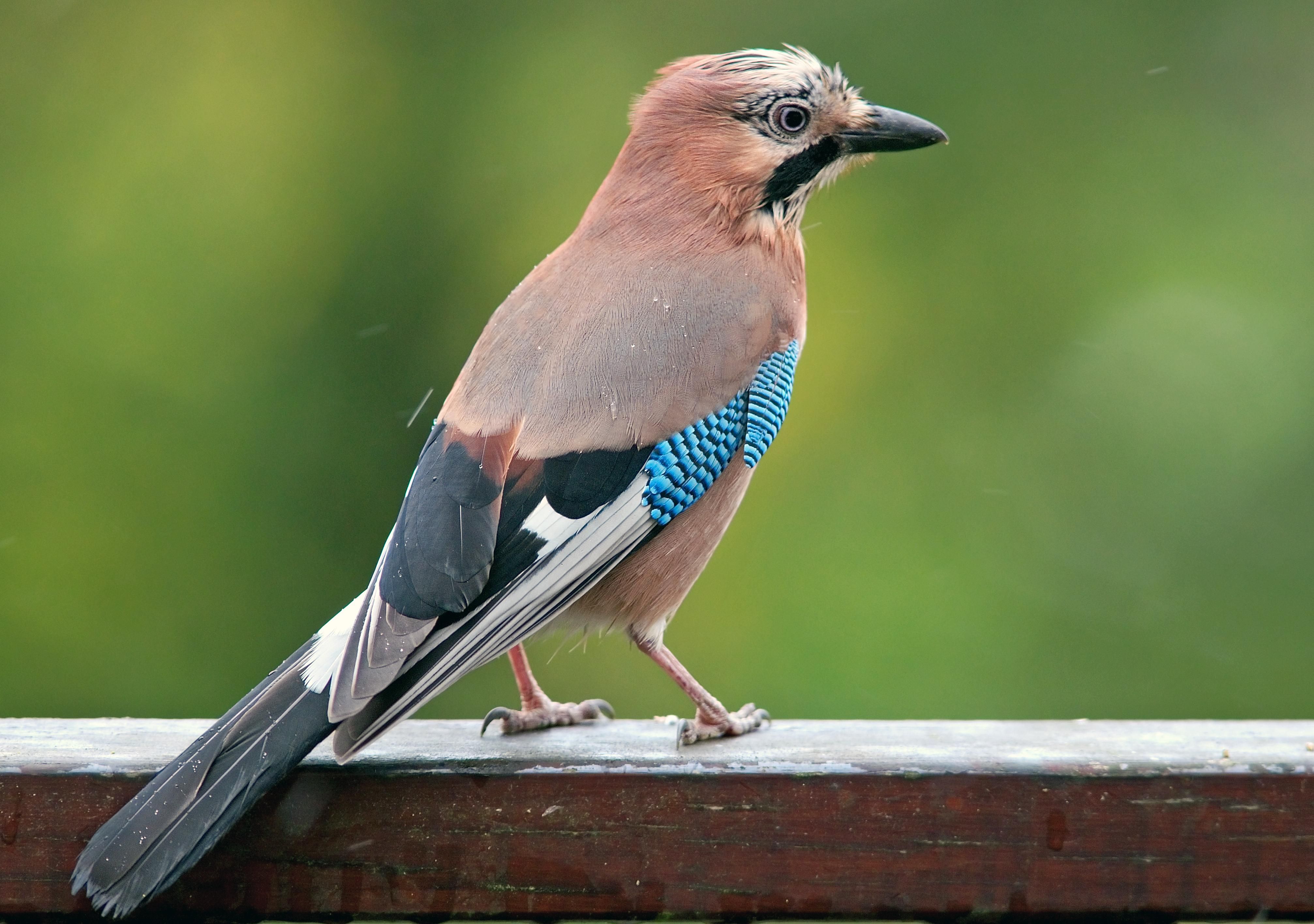
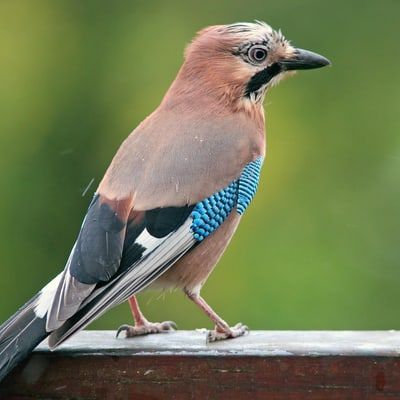
The Eurasian jay is reddish beige to matt foxy brown. Characteristic are its broad rounded wings with a light-blue and black barring. Another striking feature is its clearly delineated black moustachial stripe.
Features
Eurasian jay
Garrulus glandarius
wings with a blue band
Rufe, auch Bussardrufe
Frommolt (CC BY-SA 3.0)

In the city
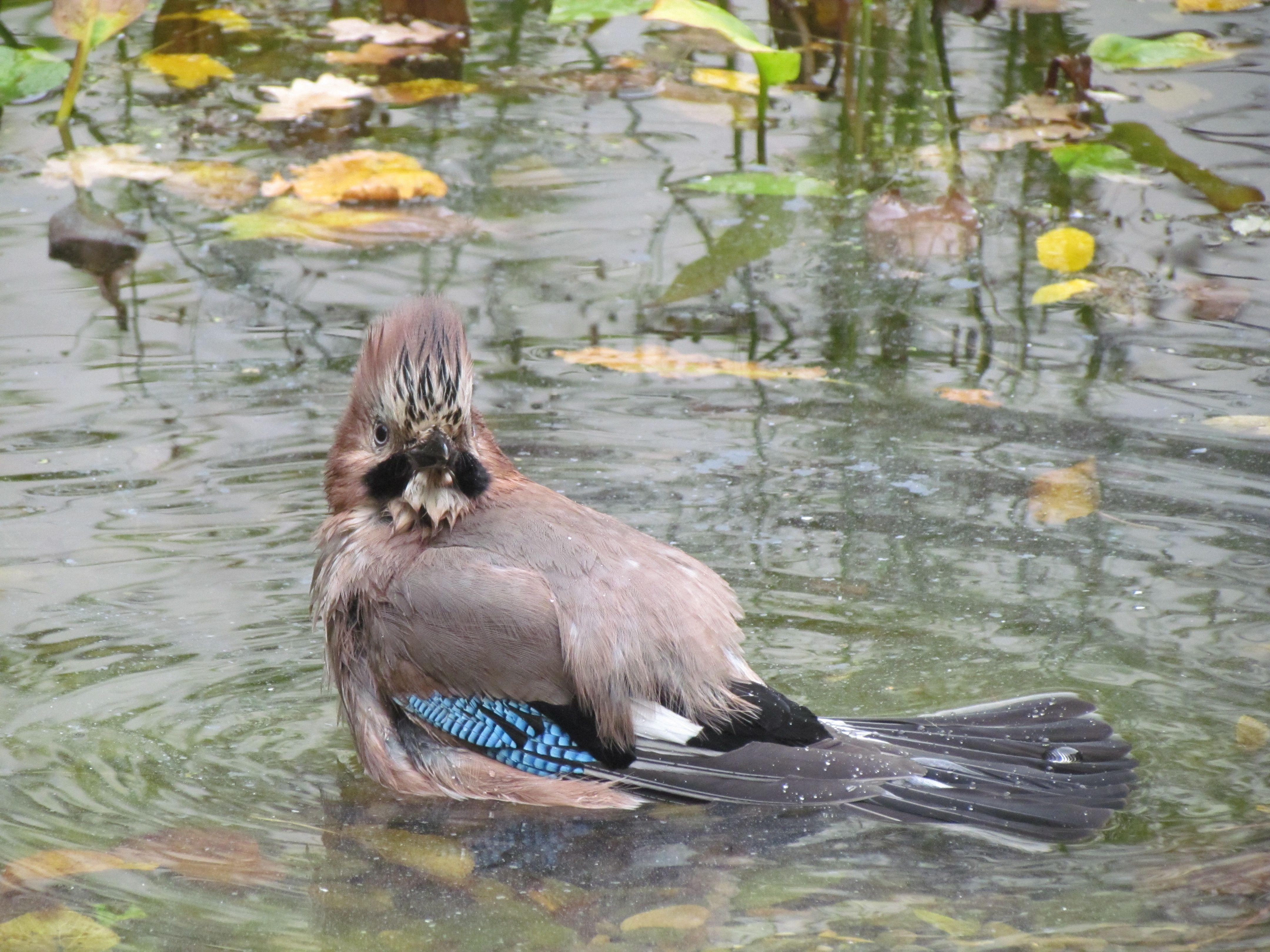
In forest-like settings, the Eurasian jay also breeds close to habitation, e.g. in parks, large gardens or cemeteries.
Fun Facts
The Eurasian jay can imitate other birds and sounds.
It makes deposits of food throughout the year.
Similar to squirrels, jays often forget the hiding places of their winter stores (mainly nuts and acorns), thus contributing to the dissemination of oak, beech and hazel.
The Eurasian jay’s blue and black striped thumb feather is a popular hat feather.
Eurasian jays hibernate in Germany. Northern and eastern European populations migrate to central Europe from the middle of September to the end of March or early May. This can result in quasi invasions of flying flocks.
- Endangerment level Germany: not endangered
Sources
Habitus , Luc Viatour, CC BY-SA 3.0, https://commons.wikimedia.org/wiki/File:Garrulus_glandarius_B_Luc_Viatour.jpg

Habitus , Klaaschwotzer, CC0 1.0, https://commons.wikimedia.org/wiki/File:Garrulus_glandarius_DS_5.jpg

Habitus , Mark Medcalf, CC BY-SA 2.0, https://commons.wikimedia.org/wiki/File:Garrulus_glandarius_-Scotland-8_(1).jpg
.jpg)
Page „Eichelhäher“. : Wikipedia, The Free Encyclopedia. Date of last revision: 14.01.2021, 08:18 UTC. URL: https://de.wikipedia.org/w/index.php?title=Eichelh%C3%A4her&oldid=207626510 (Accessed: 10.02.2021).
Witt, K. & Steiof, K. (2013) Rote Liste und Liste der Brutvögel von Berlin, 3. version, 15.11.2013. : Berliner Ornithologische Arbeitsgemeinschaft e.V. (eds.) Berliner Ornithologischer Bericht, volume 23, Berlin: Berliner Ornithologische Arbeitsgemeinschaft e.V., 1-23.