
Short Description
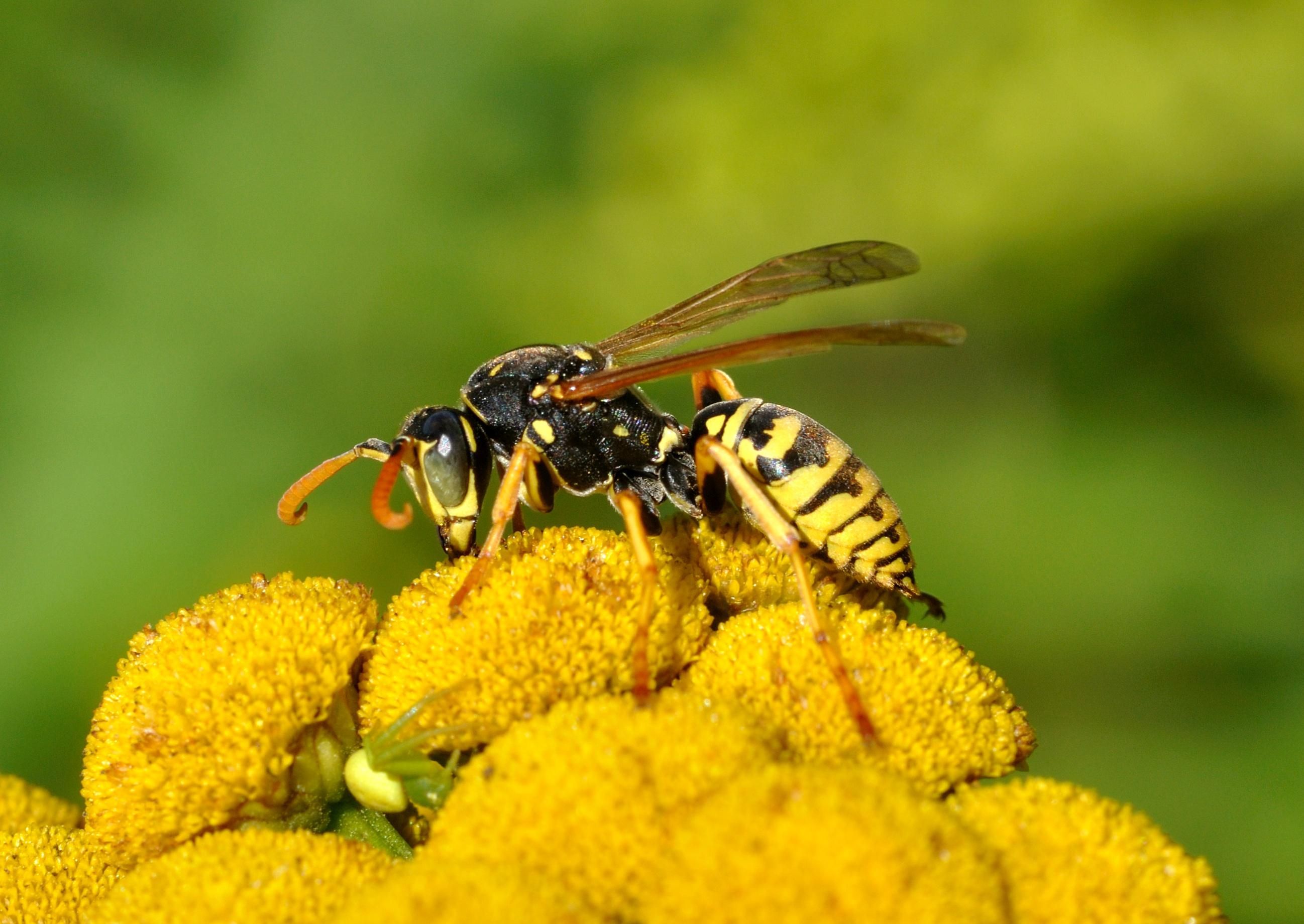
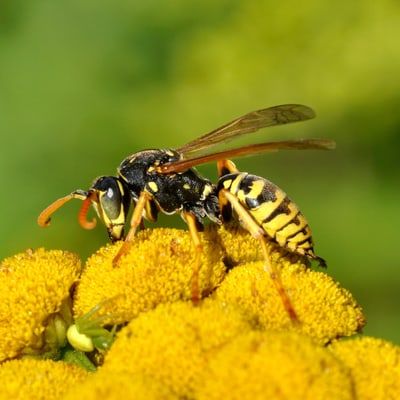
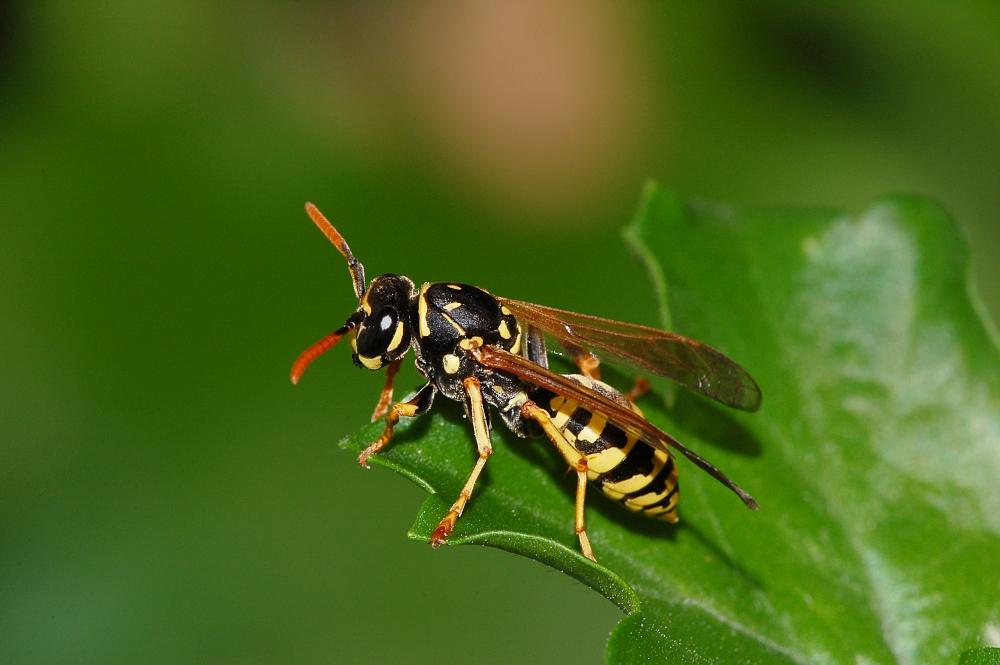
The drop-shaped abdomen of the European paper wasp is yellow-black. The head shield is yellow and has a black central spot. The antennae are orange-yellow all around from the third limb onwards. Very striking are their rather long legs, which hang down when flying.
The queen grows slightly larger than the workers and the males (drones).
Features
European paper wasp
Polistes dominula
long, drooping legs
slow flight
Similar species
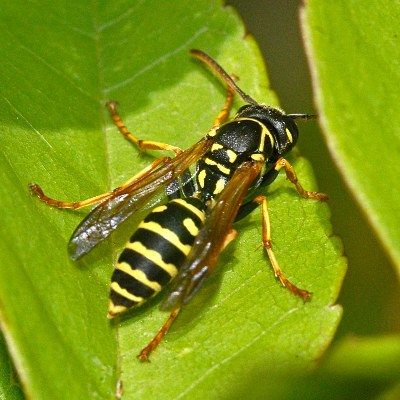
Polistes nimpha
In the city
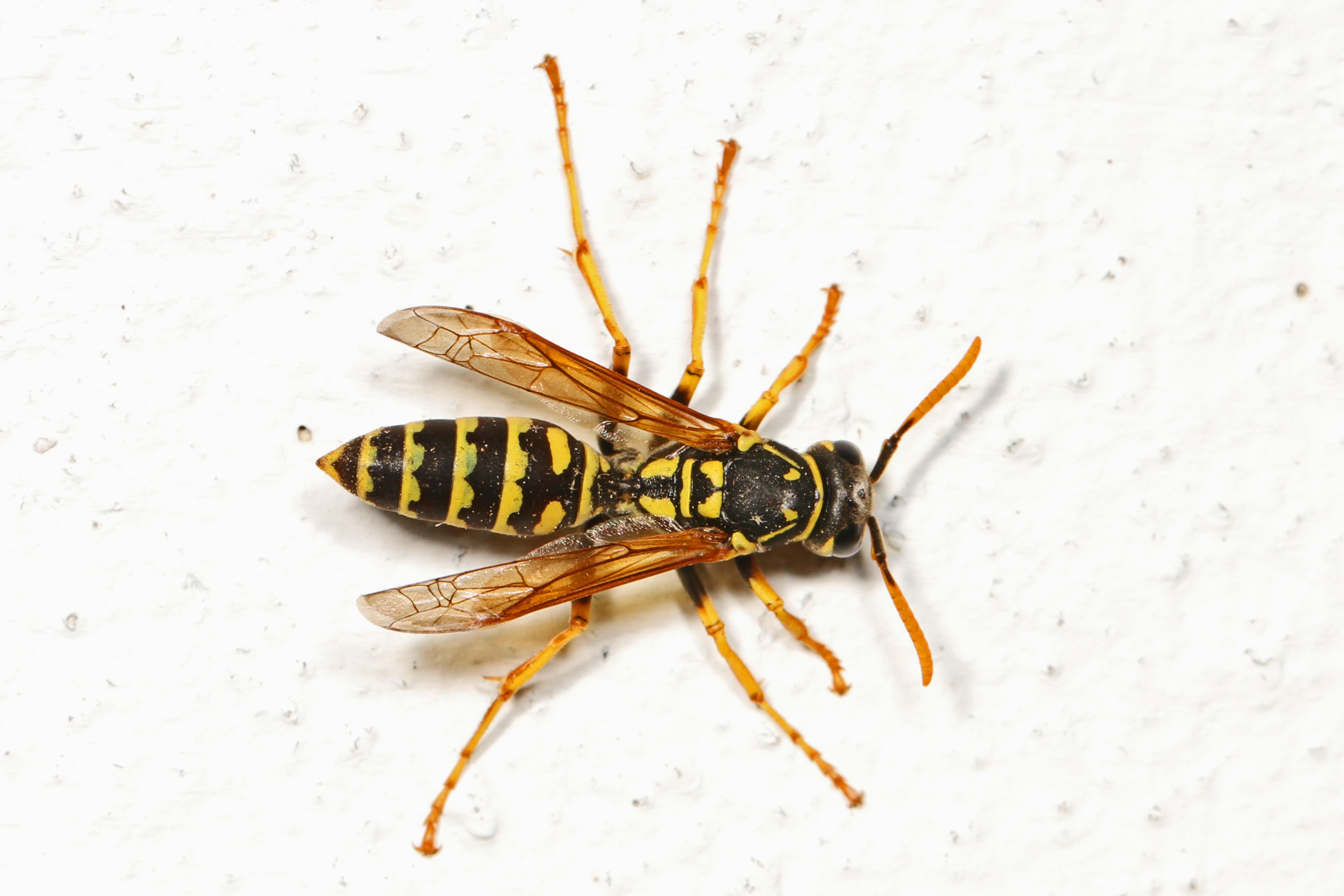
European paper wasps inhabit open and warm areas, such as meadows and bushy heaths. They are also often found in settlements. Their small, shell-less nests are often built vertically on plant stems or stones inside or outside buildings. Sometimes the nests are also built in cavities, e.g. in metal pipes of bridge railings.
Fun Facts
It flies from April to September.
The workers can regulate the temperature in the nest. When it is hot, they take in water from bodies of water or other water sources, spit it onto the nest and fan it with their wings to cool it. When it is cold, they give off heat by shivering with their muscles.
The strongest queen eats the brood of the competitors shortly after egg laying until they give up egg laying and act only as workers.
The workers chew up insects and spiders and pass them on in ball form to the larvae and the workers.
They are very peaceful. The danger of stings exists at most when the animals feel threatened.
- Endangerment level Germany: not endangered
Sources
Habitus, Quartl, CC BY-SA 3.0, https://commons.wikimedia.org/wiki/File:Polistes_dominula_qtl2.jpg

Habitus, Judy Gallagher, CC BY-SA 2.0, https://www.flickr.com/photos/52450054@N04/9161604059/
Habitus, rimm, CC BY-SA 2.5, https://commons.wikimedia.org/wiki/File:Polistes_dominulus_fg01.JPG

Page „Gallische Feldwespe“. : Wikipedia, The Free Encyclopedia. Date of last revision: 01.10.2017, 05:12 UTC. URL: https://de.wikipedia.org/w/index.php?title=Gallische_Feldwespe&oldid=169575313 (Accessed: 08.02.2018).
Bellmann, H. (2005) Bienen, Wespen, Ameisen. Hautflügler Mitteleuropas, Stuttgart: Franckh Kosmos Verlag.
Saure, C. (2005) Rote Liste und Gesamtartenliste der Bienen und Wespen (Hymenoptera part.) von Berlin mit Angaben zu den Ameisen. : Der Landesbeauftragte für Naturschutz und Landschaftspflege / Senatsverwaltung für Stadtentwicklung (eds.) Rote Listen der gefährdeten Pflanzen und Tiere von Berlin, URL: https://www.berlin.de/sen/uvk/natur-und-gruen/naturschutz/artenschutz/artenlisten-rote-listen/insekten/ (Accessed: 29.03.2021).
Böttcher, S. (2015) Friedliche Mückenjägerin: die Feldwespe, URL: http://www.wildes-berlin.de/feldwespe/ (Accessed: 08.02.2018).