
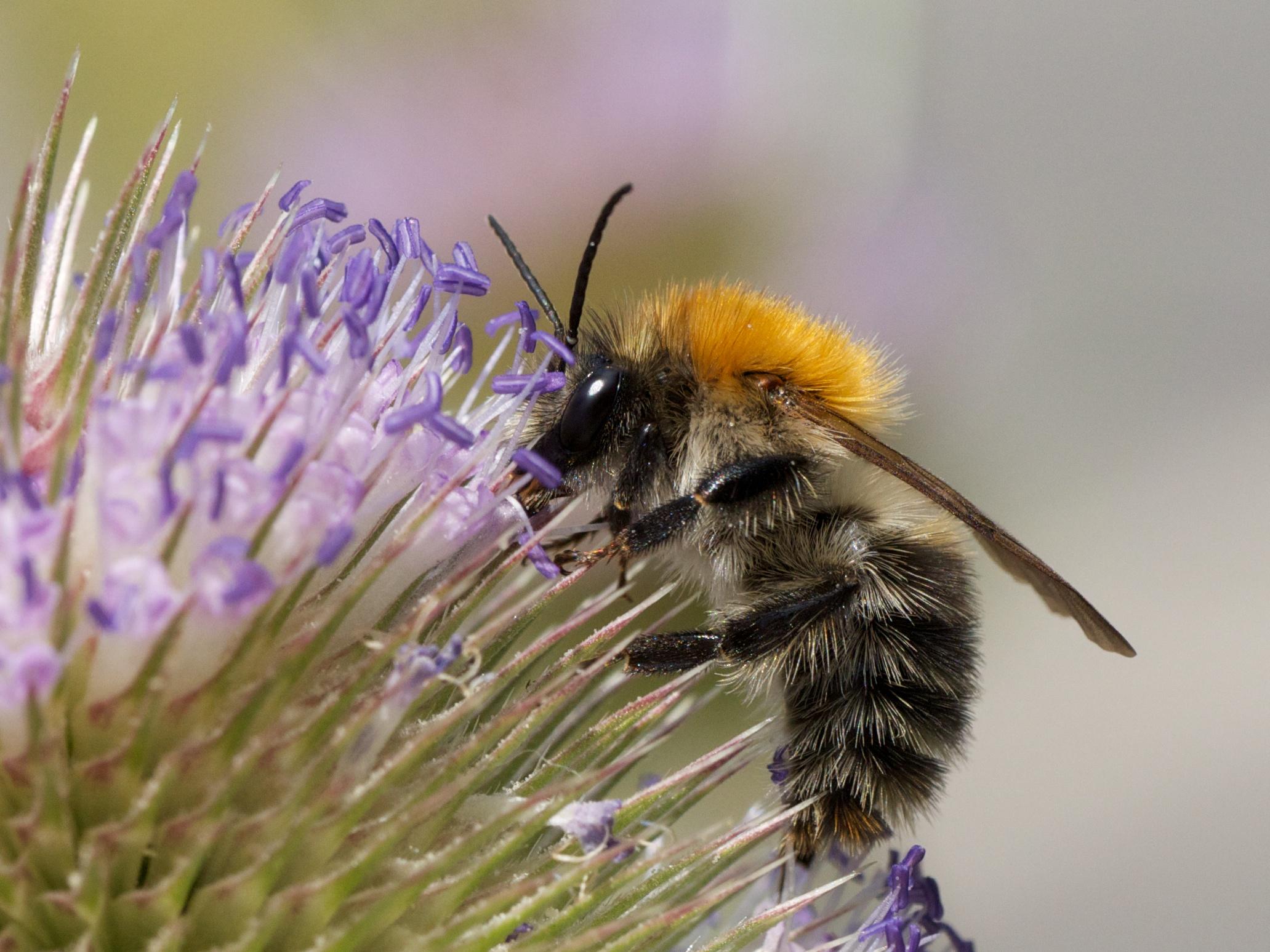
Short Description
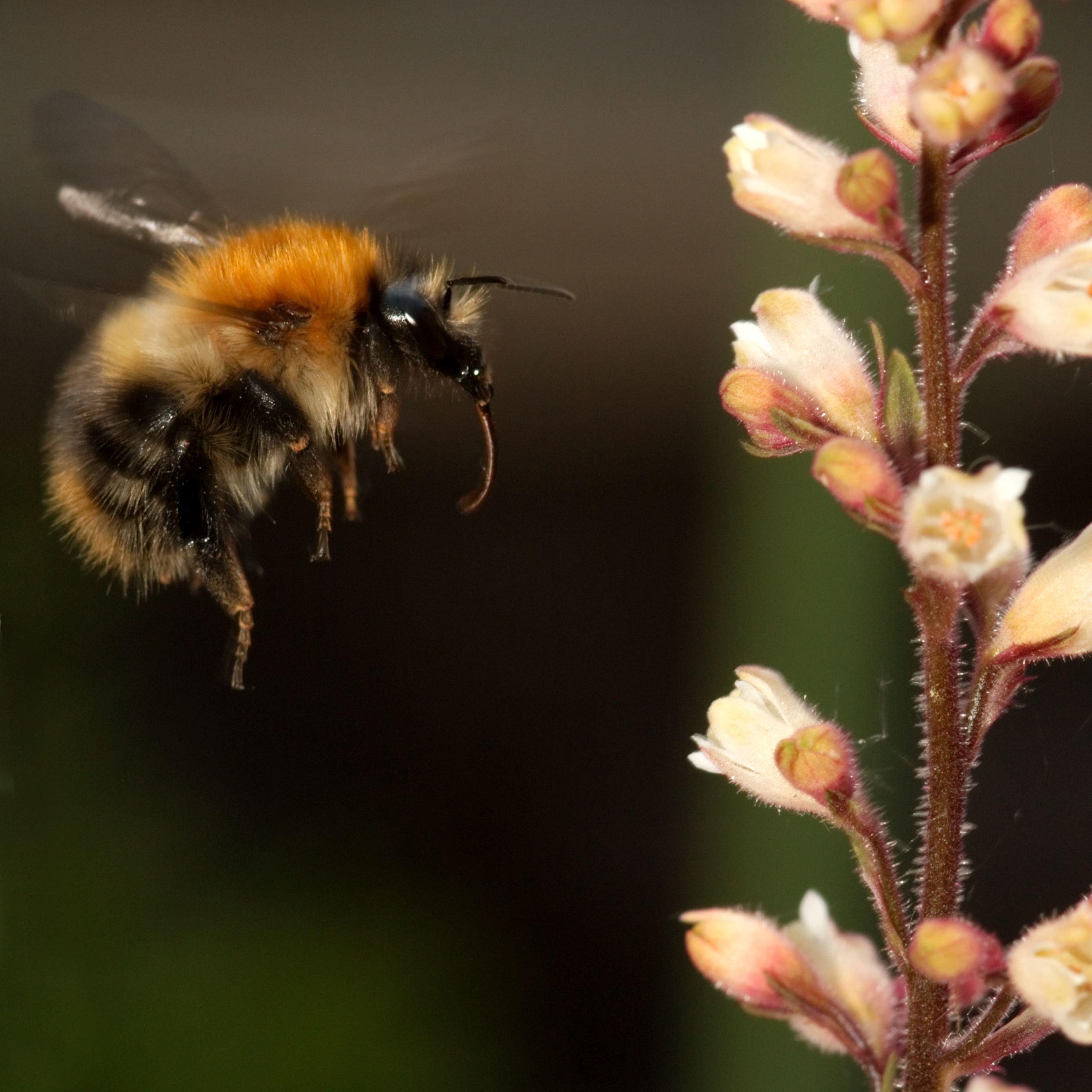
The common carder bee is beige to orange. The base of the wings is covered with grey-black hairs. However, the colouration is variable and there are also animals with a reddish brown or greyish black body.
Features
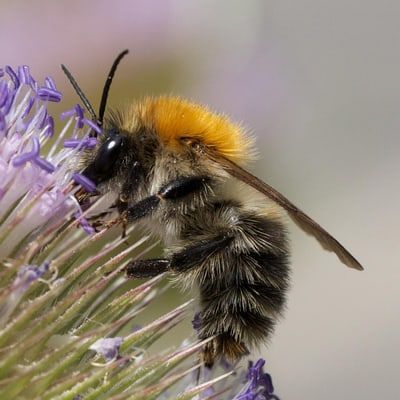
Common carder bumble bee
Bombus pascuorum
black hairy wing base
Similar species
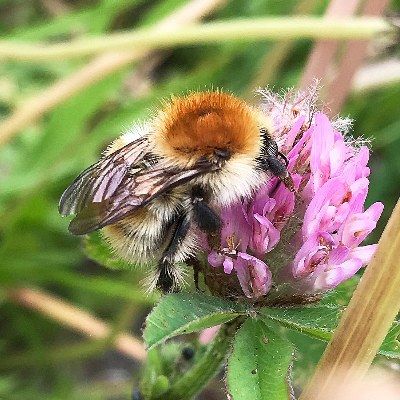
Brown-banded carder bee
Bombus humilis
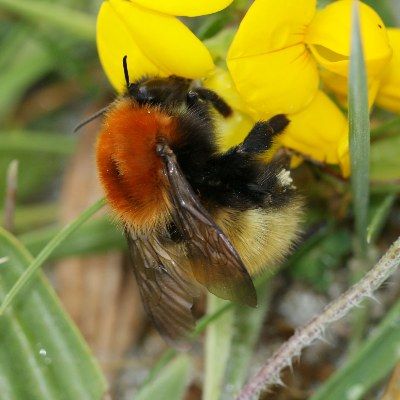
Large carder bee
Bombus muscorum
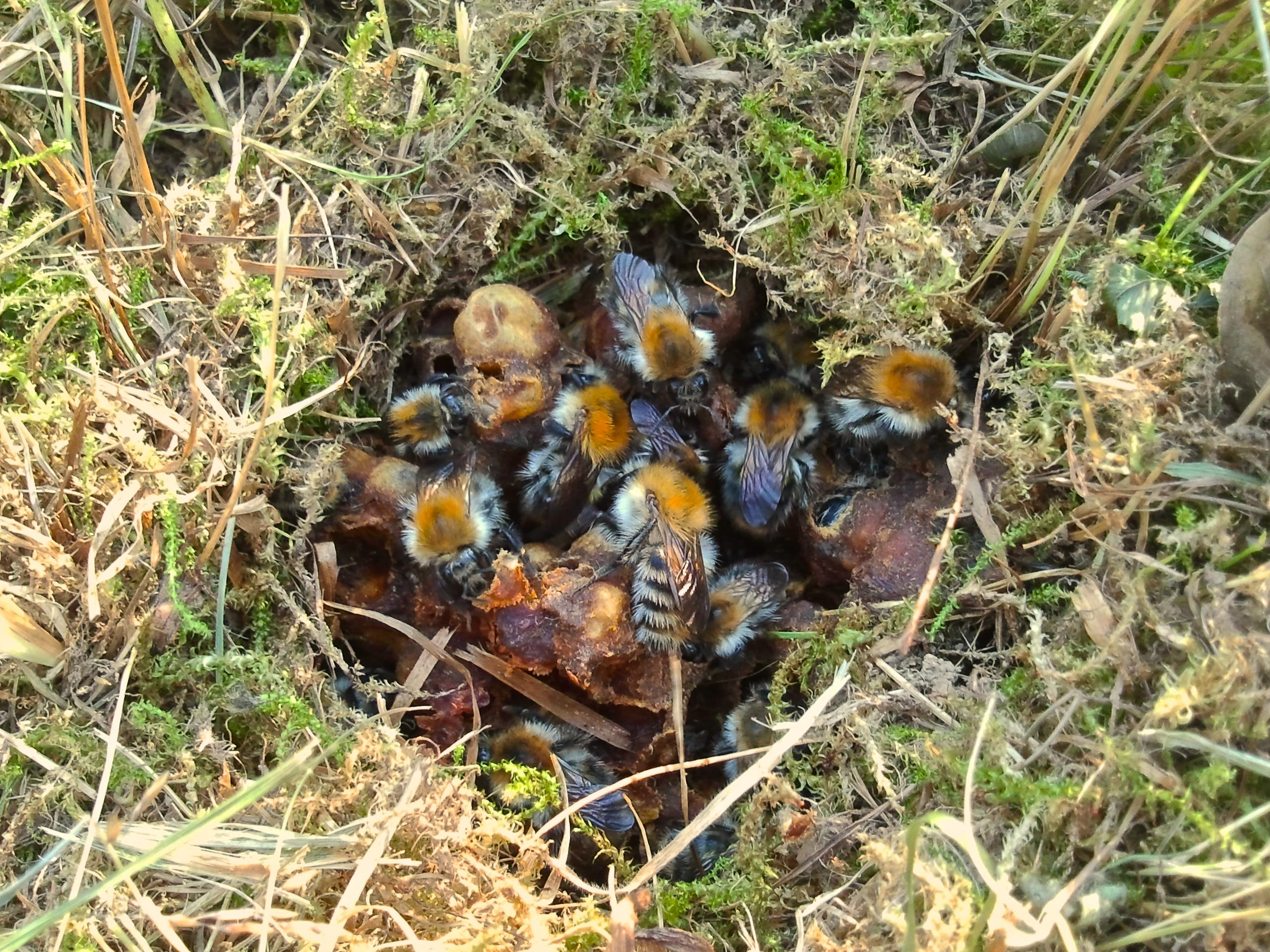
In the city
The common carder bee is adaptable and colonises many habitats, e.g. meadows, gardens, ditches, roadsides and fieldsides, parks and forests. It is very common. It builds its nests both above and below ground. Preferred sites include old mice nests, bird nests and nest boxes.
Fun Facts
It flies from March to October.
Bumblebees can sting, but they are very peaceful and rather shy.
Bombus campestris is the parasite of the common carder bee. It prefers to lay its eggs in the nests of the field bumblebee so that they can be fed by its workers.
They make an important contribution to the pollination of numerous flowers.
- Endangerment level Germany: not endangered
Sources
Habitus, Sputniktilt, CC BY-SA 3.0, https://commons.wikimedia.org/wiki/File:Bombus_pascuorum_Zurich_lateral.jpg

Nest ohne obere Wachs-Abdeckung, Panoramedia, CC BY-SA 3.0, https://commons.wikimedia.org/wiki/File:Apoidea.jpg

Drone, Sffubs, CC BY-SA 3.0, https://upload.wikimedia.org/wikipedia/commons/4/49/Bumblebee_heuchera.jpg

Page „Ackerhummel“. : Wikipedia, The Free Encyclopedia. Date of last revision: 03.05.2017, 15:51 UTC. URL: https://de.wikipedia.org/w/index.php?title=Ackerhummel&oldid=165151349 (Accessed: 11.01.2018).
Bellmann, H. (1999) Der neue Kosmos-Insektenführer. Über1400 Fotos, Stuttgart: Franckh Kosmos Verlag.
Bellmann, H. (2005) Bienen, Wespen, Ameisen. Hautflügler Mitteleuropas, Stuttgart: Franckh Kosmos Verlag.
Saure, C. (2005) Rote Liste und Gesamtartenliste der Bienen und Wespen (Hymenoptera part.) von Berlin mit Angaben zu den Ameisen. : Der Landesbeauftragte für Naturschutz und Landschaftspflege / Senatsverwaltung für Stadtentwicklung (eds.) Rote Listen der gefährdeten Pflanzen und Tiere von Berlin, URL: https://www.berlin.de/sen/uvk/natur-und-gruen/naturschutz/artenschutz/artenlisten-rote-listen/insekten/ (Accessed: 29.03.2021).
Binot-Hafke, M., Balzer, S., Becker, N., Gruttke, H., Haupt, H., Hofbauer, N., Ludwig, G., Matzke-Hajek, G. & Strauch, M. (2011) Rote Liste gefährdeter Tiere, Pflanzen und Pilze Deutschlands. volume 3: Wirbellose Tiere (part 1), Bonn-Bad Godesberg: Bundesamt für Naturschutz.