
Short Description
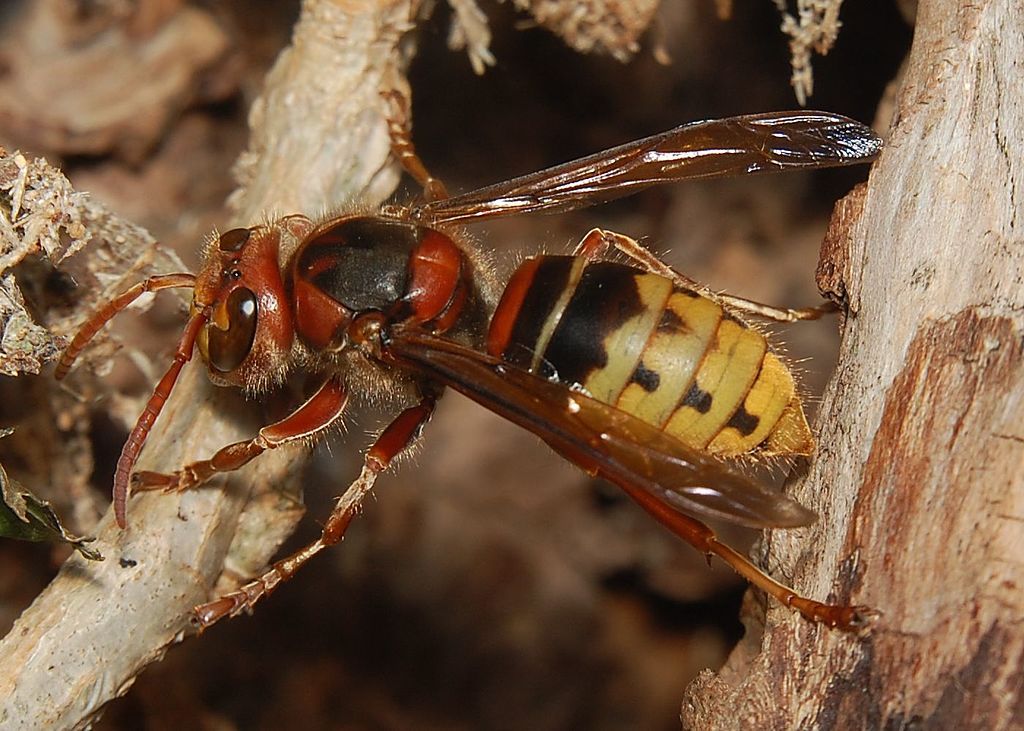
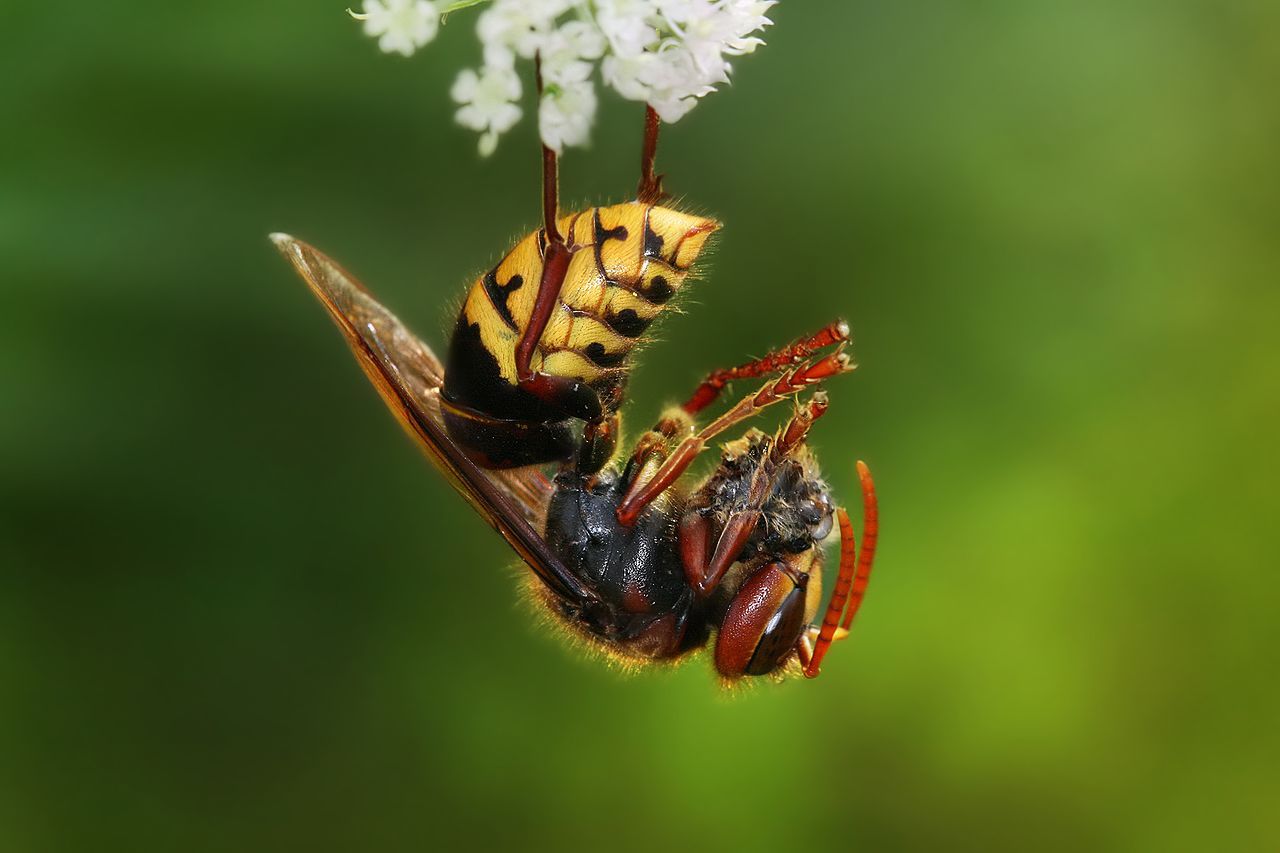
The European hornet is very large (up to 3.5 cm). The head and rump are black and usually have reddish-brown markings. The rear edge of the head is reddish brown. The abdomen is tricoloured: the front section is reddish brown, behind it comes a more or less broad dark spot, the end section is yellow with black markings. There are several variations of colouration and markings.
The queen is larger than the males (drones) and the workers.
Features
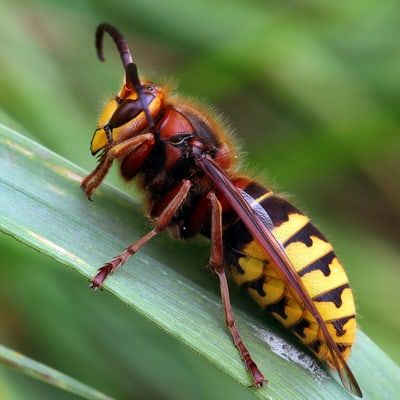
European hornet
Vespa crabro
very large
Similar species
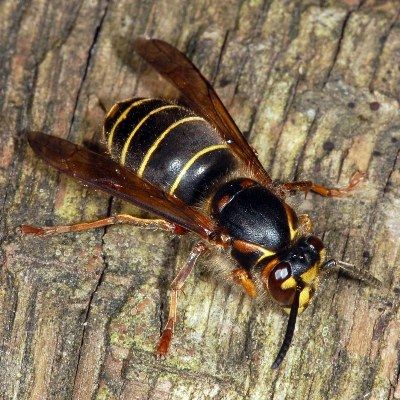
Dolichovespula media
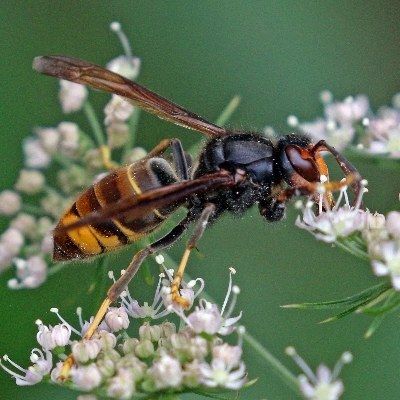
Yellow-legged hornet
Vespa velutina
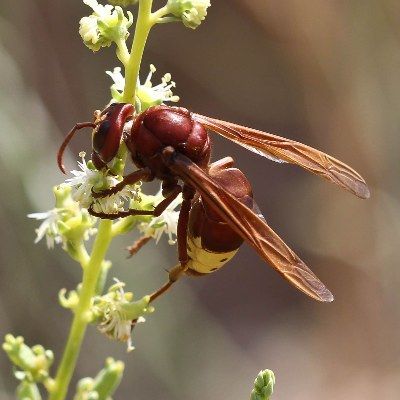
Oriental hornet
Vespa orientalis
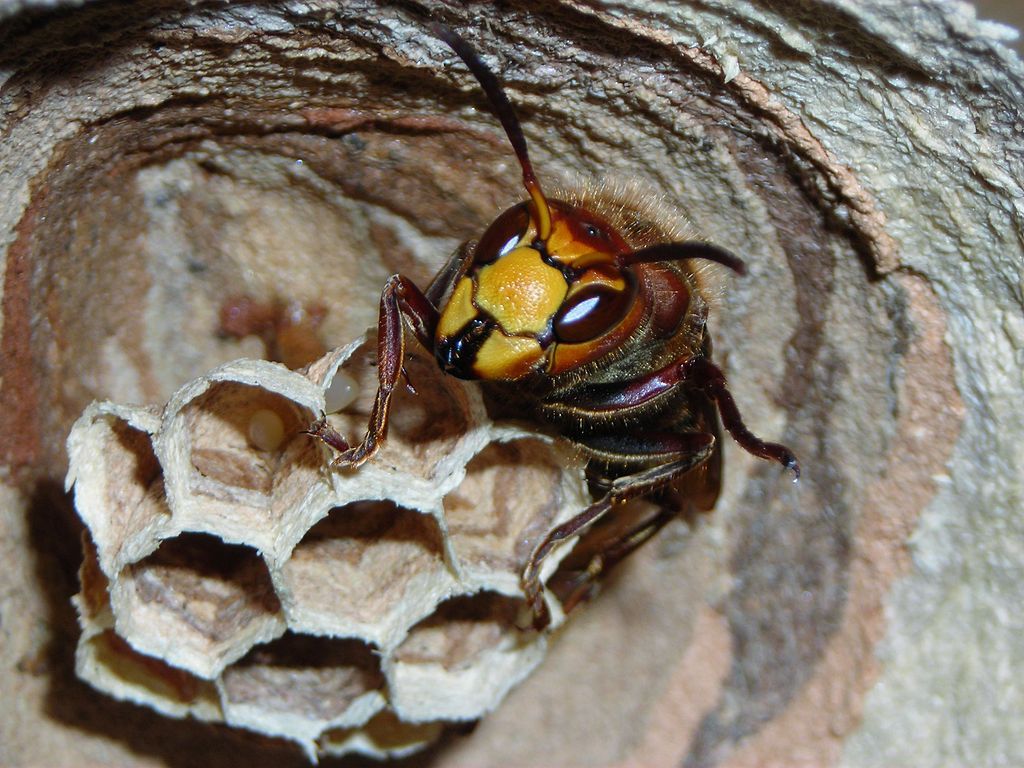
In the city
Hornets build their nests in rain-protected, dark cavities. They often use tree hollows for this, but also man-made cavities such as bird nesting boxes, tool sheds and attics.
Fun Facts
It flies from April to October.
Hornets are extraordinarily peaceful. They always prefer to avoid conflict by flight. Disturbances such as hectic movements and vibrations at the nest should nevertheless be avoided.
Hornets are under protection. They must not be killed and their nests must not be destroyed. The removal of a nest is only possible with the permission of the nature conservation authorities. However, elementary protection of the nest, e.g. with fly wire, is often sufficient.
Sogar Tiere, die demselben Nest entstammen können unterschiedliche Farben und Muster haben.
The larvae's diet consists exclusively of animal material, mostly insects. For their own food, adult hornets use sugary plant juices. They rarely visit flowers.
- Endangerment level Germany: not endangered
The venom of hornets can cause allergic reactions in some people. However, it is no more toxic than bee or wasp venom.
Sources
Arbeiterin, Accipiter, CC BY 3.0, https://de.wikipedia.org/wiki/Hornisse#/media/Datei:Vespa_crabro_80708.jpg

Königin, Oldobelix, CC BY-SA 3.0, https://de.wikipedia.org/wiki/Hornisse#/media/Datei:20070430-Garten-hornisse2.jpg

Habitus, Richard Bartz, CC BY-SA 2.5, https://de.wikipedia.org/wiki/Hornisse#/media/Datei:Vespa_crabro_germana_with_prey_Richard_Bartz.jpg

NABU – Naturschutzbund Deutschland e.V. (n.d.) Friedliche Brummer. Hornissen im menschlichen Siedlungsbereich, URL: https://www.nabu.de/tiere-und-pflanzen/insekten-und-spinnen/hautfluegler/wespen-und-hornissen/00492.html (Accessed: 09.02.2018).
Bellmann, H. (1999) Der neue Kosmos-Insektenführer. Über1400 Fotos, Stuttgart: Franckh Kosmos Verlag.
Bellmann, H. (2005) Bienen, Wespen, Ameisen. Hautflügler Mitteleuropas, Stuttgart: Franckh Kosmos Verlag.
Page „Hornisse“. : Wikipedia, The Free Encyclopedia. Date of last revision: 24.12.2017, 10:54 UTC. URL: https://de.wikipedia.org/w/index.php?title=Hornisse&oldid=172251449 (Accessed: 10.01.2018).
Saure, C. (2005) Rote Liste und Gesamtartenliste der Bienen und Wespen (Hymenoptera part.) von Berlin mit Angaben zu den Ameisen. : Der Landesbeauftragte für Naturschutz und Landschaftspflege / Senatsverwaltung für Stadtentwicklung (eds.) Rote Listen der gefährdeten Pflanzen und Tiere von Berlin, URL: https://www.berlin.de/sen/uvk/natur-und-gruen/naturschutz/artenschutz/artenlisten-rote-listen/insekten/ (Accessed: 29.03.2021).