
Short Description
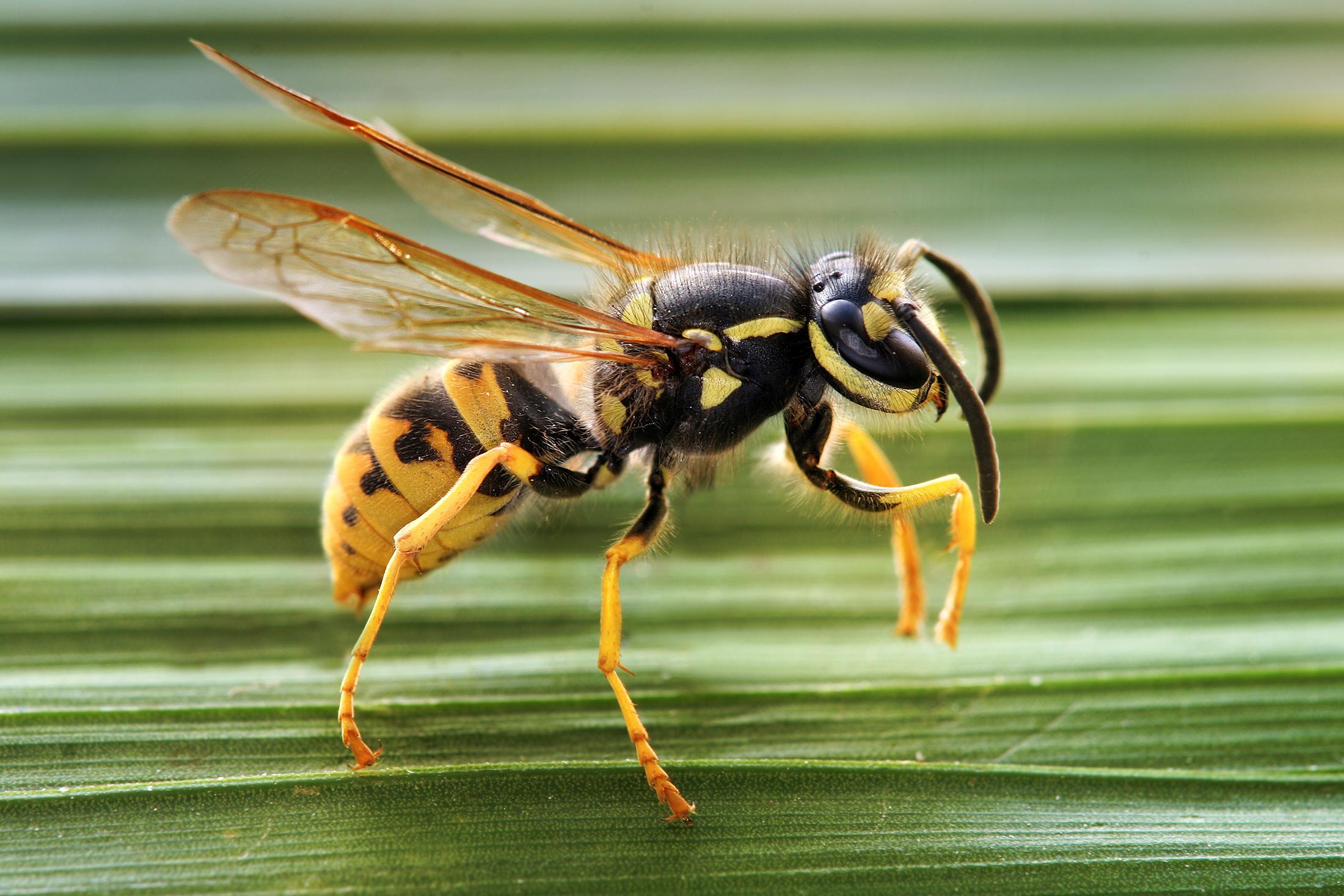
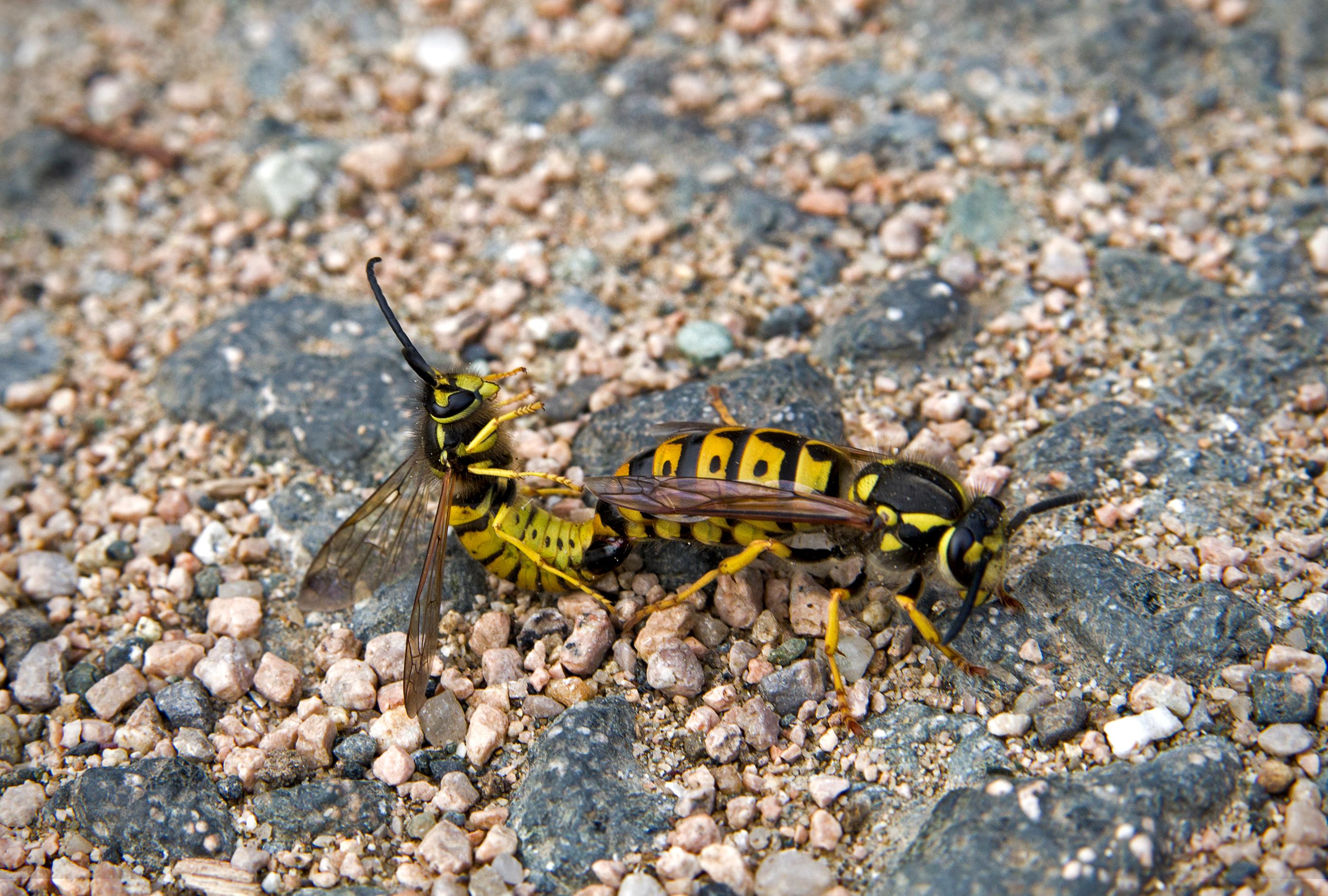
The German wasp is black and yellow. It has one or three black spots on the forehead. Also unique is the narrow space between the lower edge of the eye and the base of the upper jaw. The black dots on the abdomen are usually completely enclosed in yellow. However, these features can only be seen with certainty with the help of a magnifying glass.
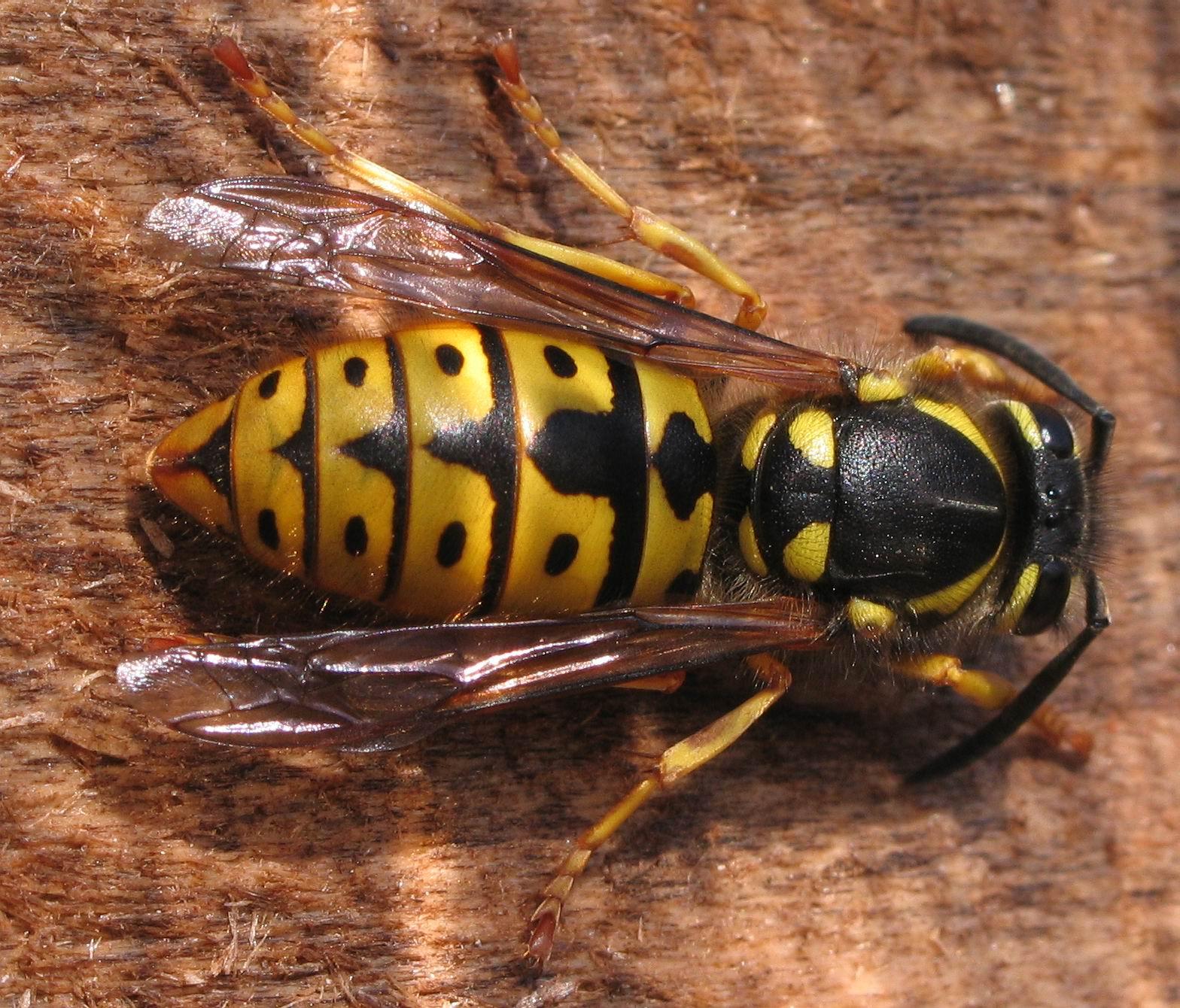
The queen is clearly larger than the males (drones) and the workers.
Features
German yellowjacket
Vespula germanica
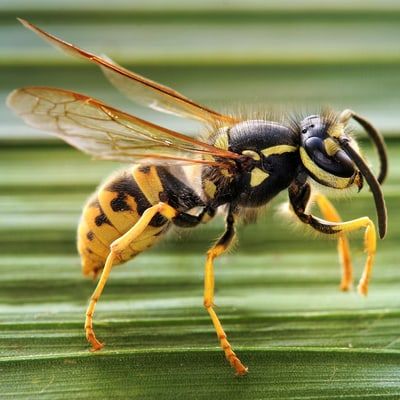
three black dots on the forehead
In the city
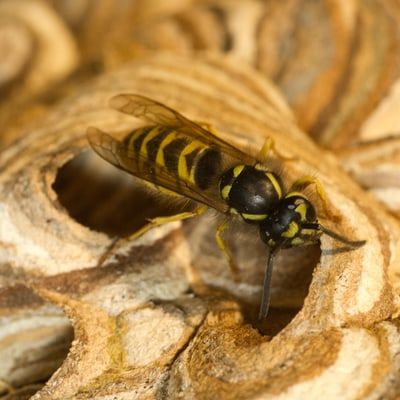
The German wasp is very common in cities. It prefers to lay its nest in dark cavities, for example hidden in the ground or in roof trusses.
Fun Facts
In Germany, only the German wasp and the common wasp fly onto desserts and other foods.
It only becomes really aggressive if there are disturbances near the nest.
It does not die after it has stung. Although its sting is barbed, the musculature around the sting is very well developed so that it can pull it out again after stinging.
It feeds on flies, mosquitoes and caterpillars. It also loves sweet juices and overripe fruit.
It lives in states that are organised in a division of labour. The animals are either busy building nests, cleaning cells, feeding larvae, caring for the queen or procuring food.
- Endangerment level Germany: not endangered
Sources
Habitus, Richard Bartz, CC BY-SA 2.5, https://commons.wikimedia.org/wiki/File:Vespula_germanica_Horizontalview_Richard_Bartz.jpg

Königin, Soebe, CC BY-SA 3.0, https://commons.wikimedia.org/wiki/File:Vespula_germanica_Queen.jpg

.jpg)
Bellmann, H. (1999) Der neue Kosmos-Insektenführer. Über1400 Fotos, Stuttgart: Franckh Kosmos Verlag.
Bellmann, H. (2005) Bienen, Wespen, Ameisen. Hautflügler Mitteleuropas, Stuttgart: Franckh Kosmos Verlag.
Page „Deutsche Wespe“. : Wikipedia, The Free Encyclopedia. Date of last revision: 01.10.2017, 16:26 UTC. URL: https://de.wikipedia.org/w/index.php?title=Deutsche_Wespe&oldid=169591521 (Accessed: 05.01.2018).
Saure, C. (2005) Rote Liste und Gesamtartenliste der Bienen und Wespen (Hymenoptera part.) von Berlin mit Angaben zu den Ameisen. : Der Landesbeauftragte für Naturschutz und Landschaftspflege / Senatsverwaltung für Stadtentwicklung (eds.) Rote Listen der gefährdeten Pflanzen und Tiere von Berlin, URL: https://www.berlin.de/sen/uvk/natur-und-gruen/naturschutz/artenschutz/artenlisten-rote-listen/insekten/ (Accessed: 29.03.2021).
Funk, W. (2007-2018) Deutsche Wespe, URL: http://www.insektenbox.de/hautfl/wespeg.htm (Accessed: 05.01.2018).
NABU – Naturschutzbund Deutschland e.V. (n.d.) Kein Grund zur Panik. Hornissen und Wespen sind friedlicher als allgemein gedacht, URL: https://www.nabu.de/tiere-und-pflanzen/insekten-und-spinnen/hautfluegler/wespen-und-hornissen/02624.html (Accessed: 05.01.2018).
Wespen Ratgeber (2018) Wespenkönigin – Lebensweise, Aufgaben und Erkennungsmerkmale, URL: http://www.wespen-ratgeber.de/wespenkoenigin/ (Accessed: 05.01.2018).
Nuß, M. (2017) Deutsche Wespe (Vespula germanica (Fabricius, 1793)), URL: https://www.insekten-sachsen.de/Pages/TaxonomyBrowser.aspx?Id=167807 (Accessed: 05.01.2018).