
Short Description
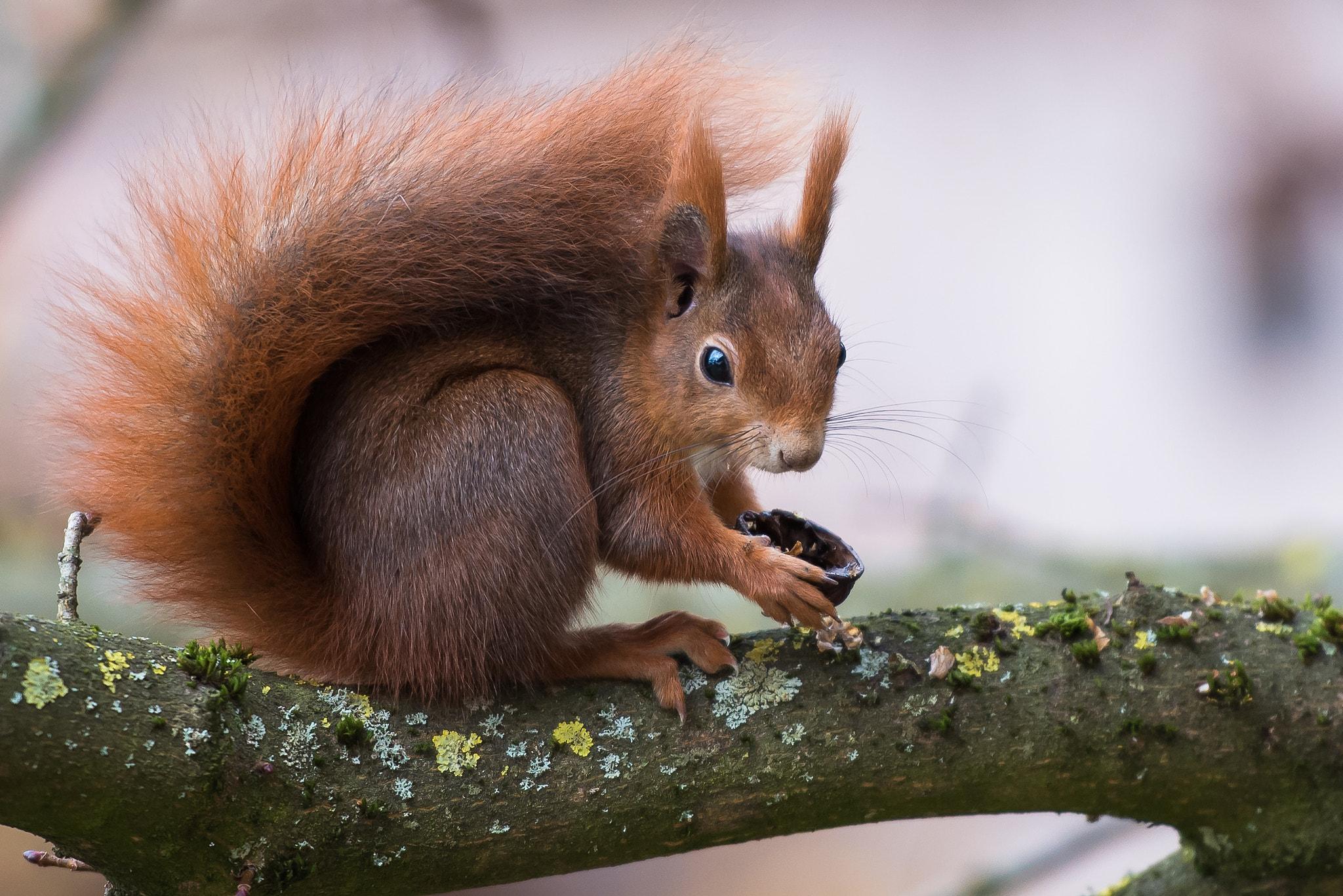
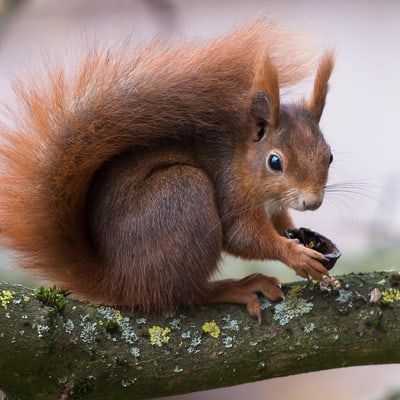
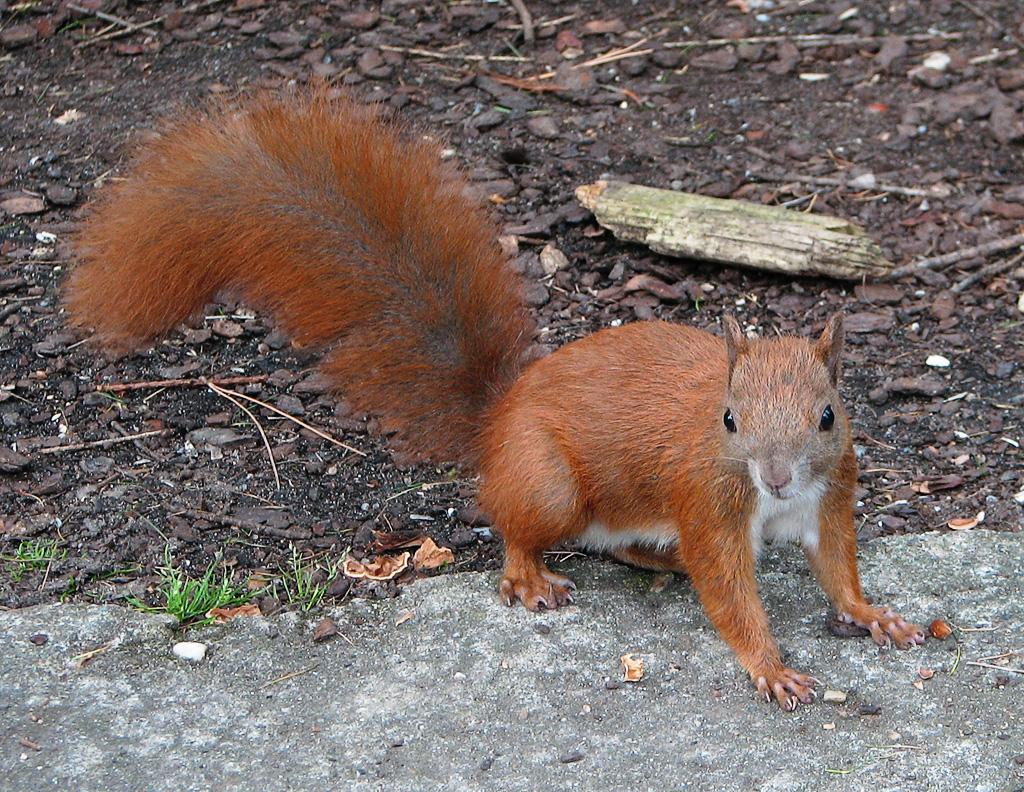
The characteristic feature of the squirrel is its long bushy tail. The colour of its fur ranges between light red and brown-black. The underside is always light, mostly white. In its winter coat, the ear tufts are very distinctive. Its tracks resemble small handprints running in a straight line, with the small paired prints of the front paws behind the larger back paw prints.
Features
Red squirrel
Sciurus vulgaris
long bushy tail
Kontaktlaute
Gnensch, CC BY-SA 3.0

In the city
Squirrels can be found in all wooded green spaces in the urban environment, including the city centre. There it also feeds on garbage or is fed by humans.
As synanthropic animals, squirrels can become quite tame in urban environments and even climb up house façades. As they may carry parasites, direct contact is not advised.
Fun Facts
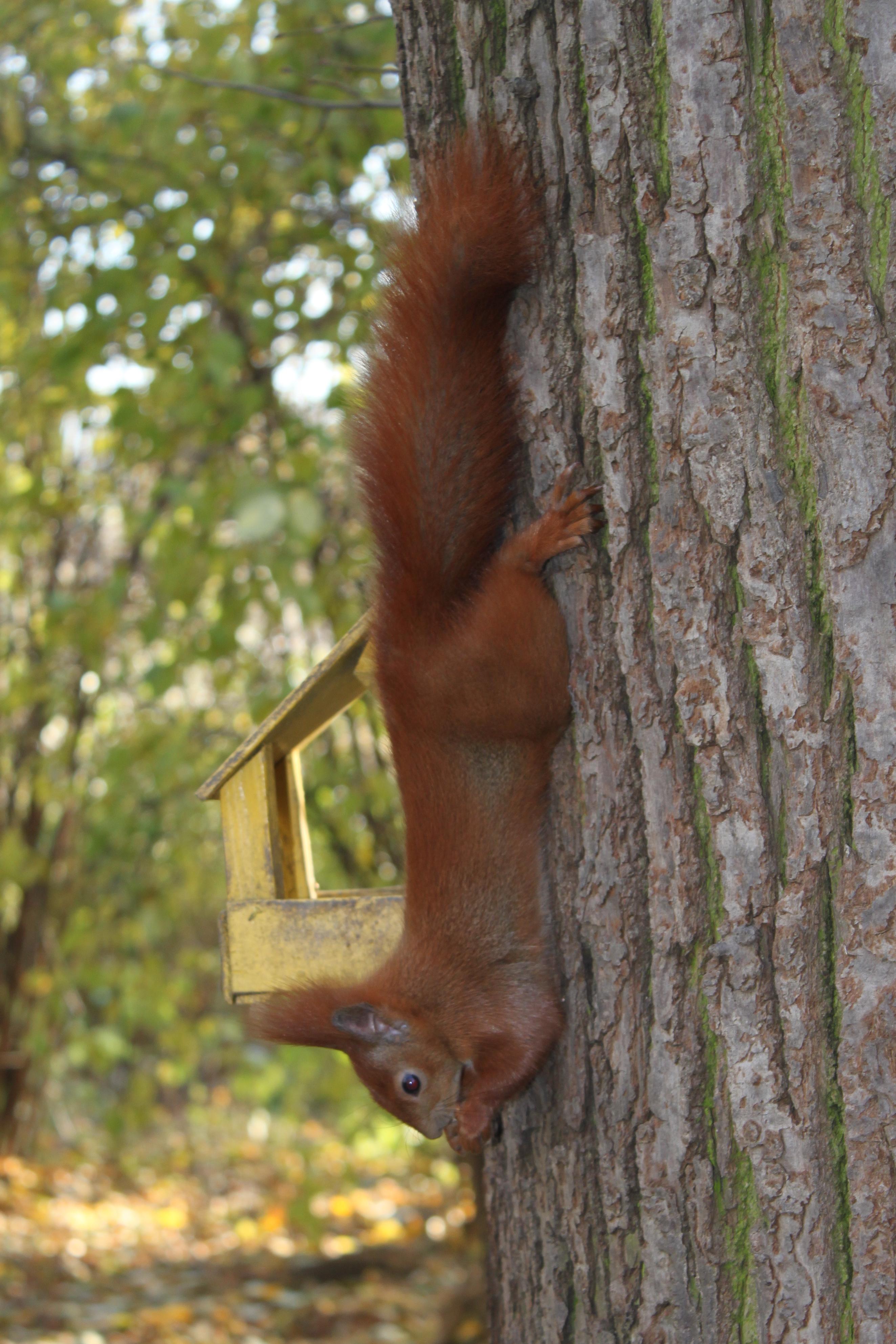
It climbs down trees head first
Squirrel teeth never stop growing, for that reason, they need to be ground down regularly by gnawing on hard food.
Squirrels can easily cover several metres in a single jump.
They build spherical nests known as dreys in which they raise their young. These are placed in branch forks of high tree crowns.
For the winter, squirrels make various food deposits which they bury in the ground or near the roots of trees. Any such deposits not dug up in time sprout in spring, thus contributing towards forest rejuvenation.
- Endangerment level Germany: not endangered
Sources
Habitus , Petra Taenzer, CC BY-SA 3.0, https://commons.wikimedia.org/wiki/File:Eichh%C3%B6rnchen_(132716067).jpeg
.jpeg)
Habitus , Darkone, CC BY-SA 2.5, https://commons.wikimedia.org/wiki/File:Red_squirrel_(Sciurus_vulgaris).jpg
.jpg)
Habitus , Crusier, CC BY-SA 3.0, https://commons.wikimedia.org/wiki/File:Sciurus_vulgaris_Park_Skaryszewski_3.JPG

Page „Eichhörnchen“. : Wikipedia, The Free Encyclopedia. Date of last revision: 10.04.2016, 20:39 UTC. URL: https://de.wikipedia.org/w/index.php?title=Eichh%C3%B6rnchen&oldid=153361092 (Accessed: 06.05.2016).
Bezirksamt Lichtenberg von Berlin, Umwelt- und Naturschutzamt (n.d.) Eichhörnchen (Sciurus vulgaris), URL: https://www.berlin.de/ba-lichtenberg/auf-einen-blick/freizeit/gruen/artikel.280118.php (Accessed: 06.05.2016).
Das Dorf der Tiere (2008) Dörentruper Wege: Spuren und Fährten des Wildes, URL: http://www.das-dorf-der-tiere.de/app/webroot/templates/user_7/fileroot/flyer4fhrtenundspuren.pdf (Accessed: 06.05.2016).
Haupt, H., Ludwig, G., Gruttke, H., Binot-Hafke, M., Otto C. & Pauly, A. (2009) Rote Liste gefährdeter Tiere, Pflanzen und Pilze Deutschlands. volume 1: Wirbeltiere, Bonn-Bad Godesberg: Bundesamt für Naturschutz.
Klawitter, J., Altenkamp, R., Kallasch, C., Köhler, D., Krauß, M., Rosenau, S. & Teige, T. (2005) Rote Liste und Gesamtartenliste der Säugetiere (Mammalia) von Berlin. : Der Landesbeauftragte für Naturschutz und Landschaftspflege / Senatsverwaltung für Stadtentwicklung (eds.) Rote Listen der gefährdeten Pflanzen und Tiere von Berlin, URL: https://www.berlin.de/sen/uvk/natur-und-gruen/naturschutz/artenschutz/artenlisten-rote-listen/saeugetiere/ (Accessed: 30.03.2021).