
Short Description
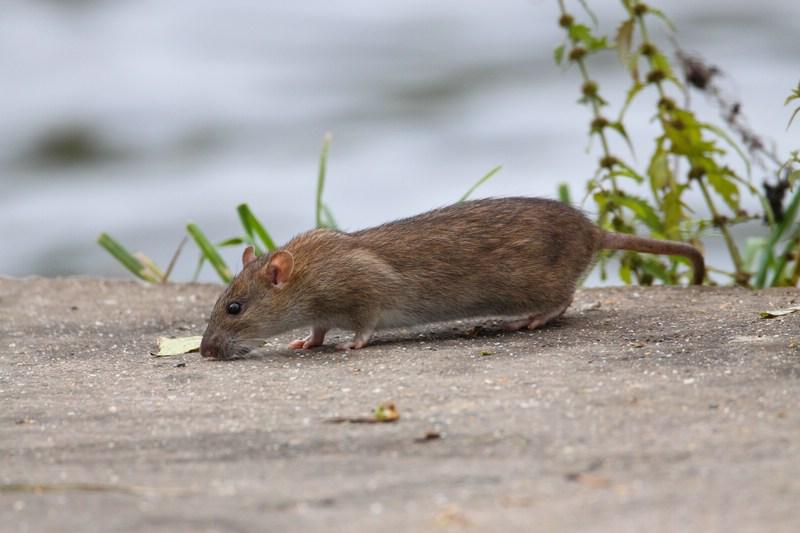
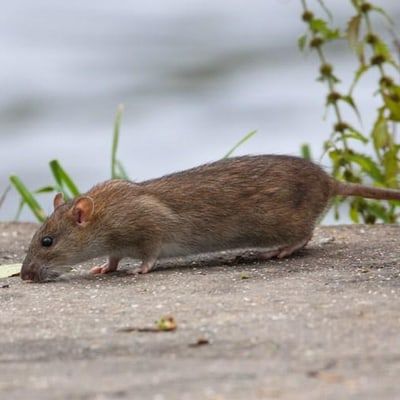
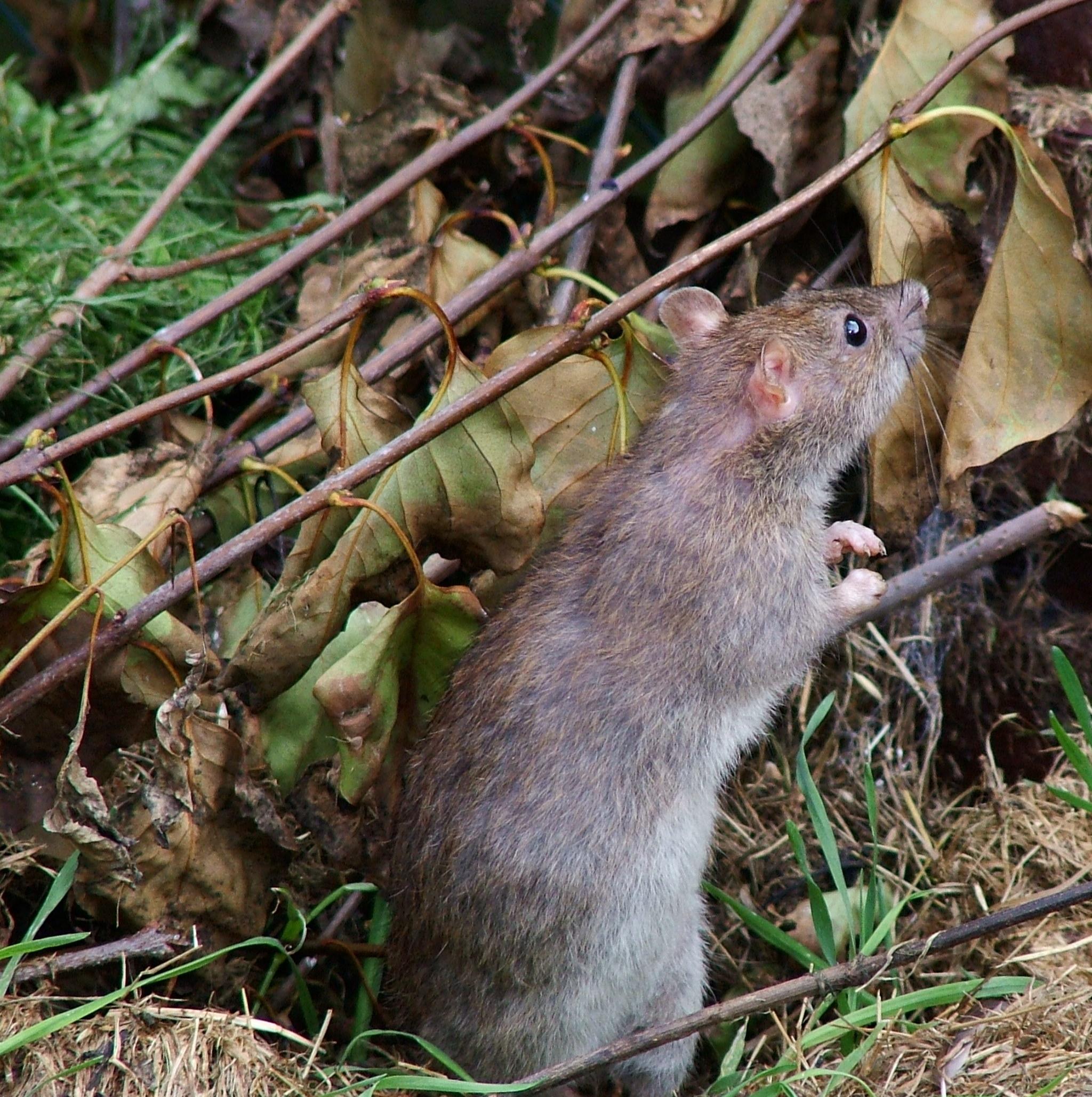
The brown rat is sturdily built and has a rather square skull. It is grey-brown with a pale grey underside. Its tail is thick, hairless and about as long as its body. In the paw print, the toes appear splayed. The front paws have four toes. The hind paws are larger and have five toes.
Males are markedly larger and plumper than females.
Features
Brown rat
Rattus norvegicus
tail as long as its body
Similar species
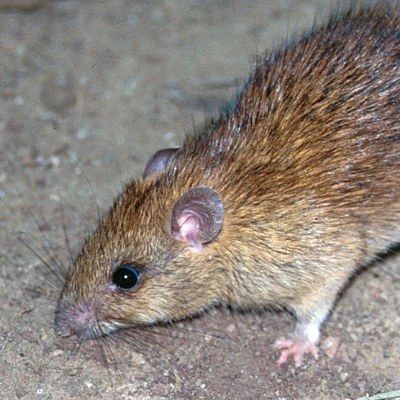
Black rat
Rattus rattus
In the city
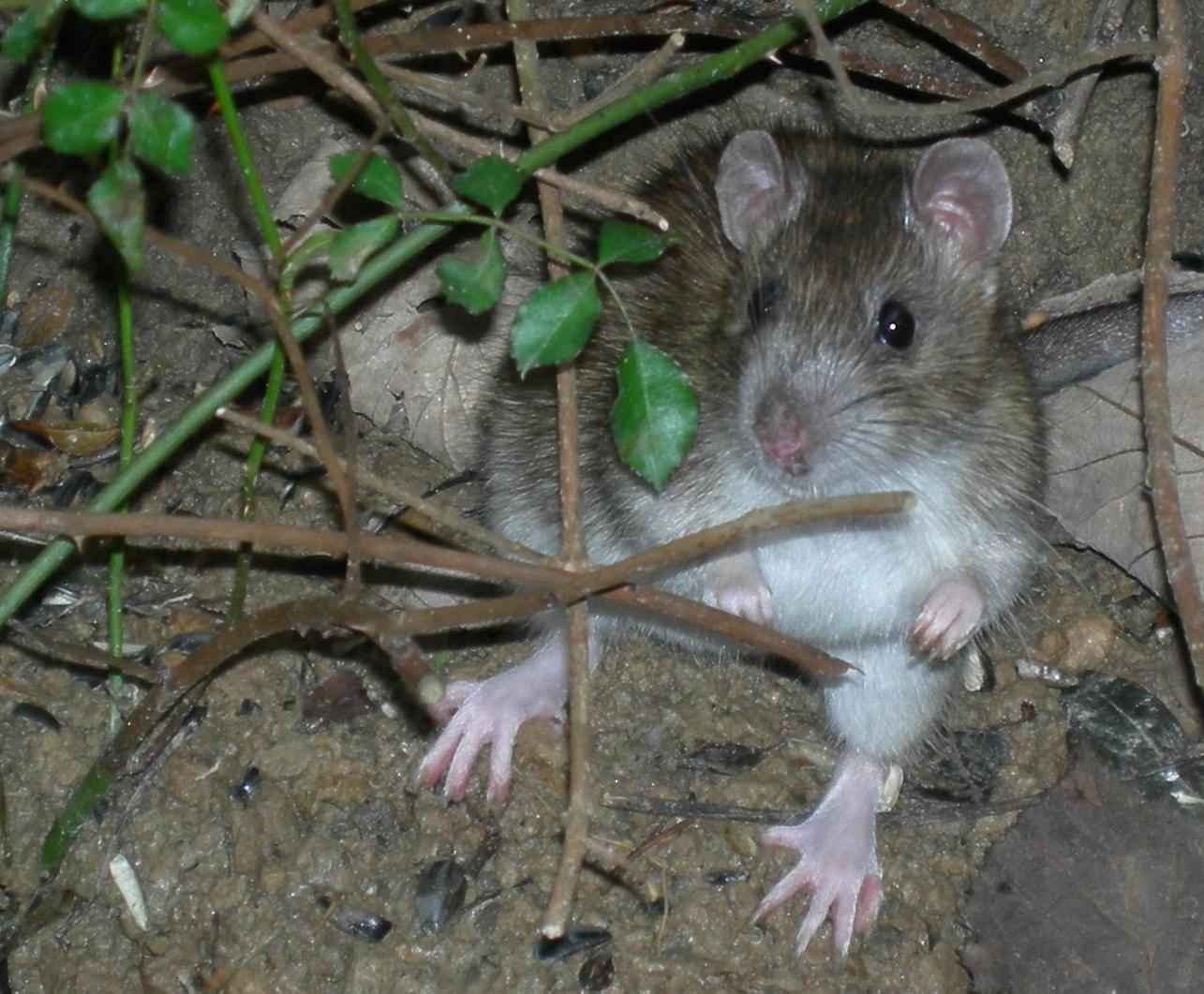
Brown rats live in sewers, but also in rubbish dumps, rubbish bins, stables, composting facilities and in all sorts of buildings where they can find food and shelter.
The omnivores also feed on food scraps in the sewer; for that reason, food scraps should never be disposed of in either sink or toilet. Brown rats can transmit diseases.
Fun Facts
For a major city such as Berlin, a population of two rats per inhabitant is normal.
Brown rats also communicate in the ultrasound range which is inaudible to humans.
Brown rats are the parent form of fancy rats which are popular breeding animals and pets.
Brown rats are excellent swimmers and climbers.
The brown rat is the largest indigenous mouse species.
- Endangerment level Germany: not endangered
It originates from Asia and has been around in Europe since the 18th century.
Sources
Habitus , Hans-Jörg Hellwig, CC BY-SA 3.0, https://commons.wikimedia.org/wiki/File:Co-swand-09-12.jpg

Habitus, Norvegicas, CC BY-SA 4.0, https://de.wikipedia.org/wiki/Datei:Wanderratte001.JPG

Habitus , Reg Mckenna, CC BY-SA 2.0, https://de.wikipedia.org/wiki/Datei:RatStanding.jpg

Leibniz-Institut für Zoo- und Wildtierforschung (n.d.) Wanderratte, URL: http://www.izw-berlin.de/wanderratte.html (Accessed: 09.05.2016).
Page „Wanderratte“. : Wikipedia, The Free Encyclopedia. Date of last revision: 19.03.2016, 17:38 UTC. URL: https://de.wikipedia.org/w/index.php?title=Wanderratte&oldid=152657563 (Accessed: 09.05.2016).
Resch, C. & Resch, S. (2016) Wanderratte - Rattus norvegicus. Internethandbuch über Kleinsäugerarten im mitteleuropäischen Raum: Körpermerkmale, Ökologie und Verbreitung, Haus im Ennstal: apodemus - Priv. Institut f. Wildtierbiologie, URL: https://kleinsaeuger.at/rattus-norvegicus.html (Accessed: 29.12.2016).
Haupt, H., Ludwig, G., Gruttke, H., Binot.Hafke, M., Otto C. & Pauly, A. (RED.) (2009): Rote Liste gefährdeter Tiere, Pflanzen und Pilze Deutschlands. Band 1: Wirbeltiere. Bundesamt für Naturschutz, Bonn-Bad Godesberg
Klawitter, J., Altenkamp, R., Kallasch, C., Köhler, D., Krauß, M., Rosenau, S. & Teige, T. (2005) Rote Liste und Gesamtartenliste der Säugetiere (Mammalia) von Berlin. : Der Landesbeauftragte für Naturschutz und Landschaftspflege / Senatsverwaltung für Stadtentwicklung (eds.) Rote Listen der gefährdeten Pflanzen und Tiere von Berlin, URL: https://www.berlin.de/sen/uvk/natur-und-gruen/naturschutz/artenschutz/artenlisten-rote-listen/saeugetiere/ (Accessed: 30.03.2021).