
Short Description
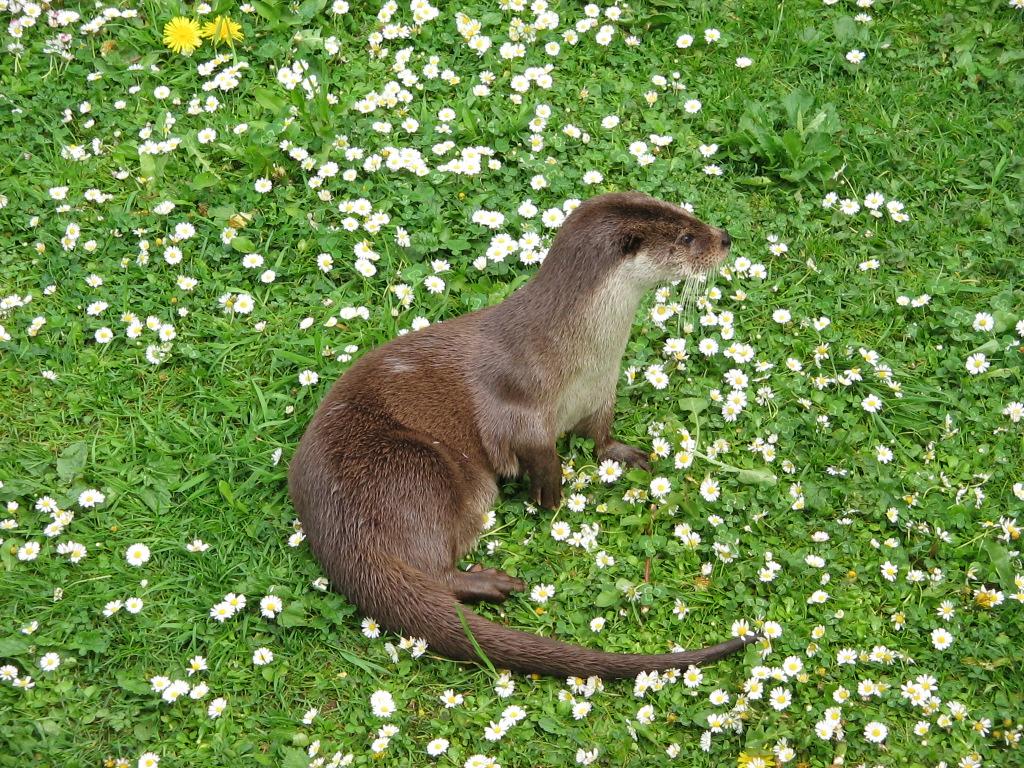
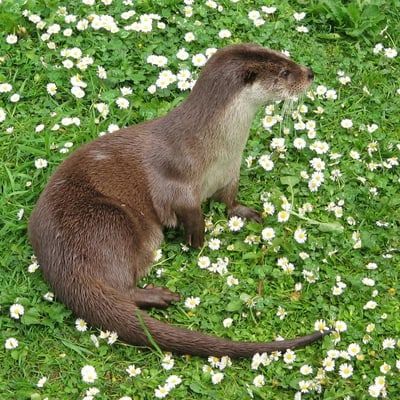
The Eurasian otter has an elongated body with short legs. It is light brown. It has long tactile hairs on its snout, which are an important sensory organ. When old, the throat and front neck become whitish. The tracks can be easily recognised by the five round toe pads arranged in a semicircle around the main ball and short blunt claws.
Features
Eurasian otter
Lutra lutra
elongated body with very short legs
by or in the water
In the city
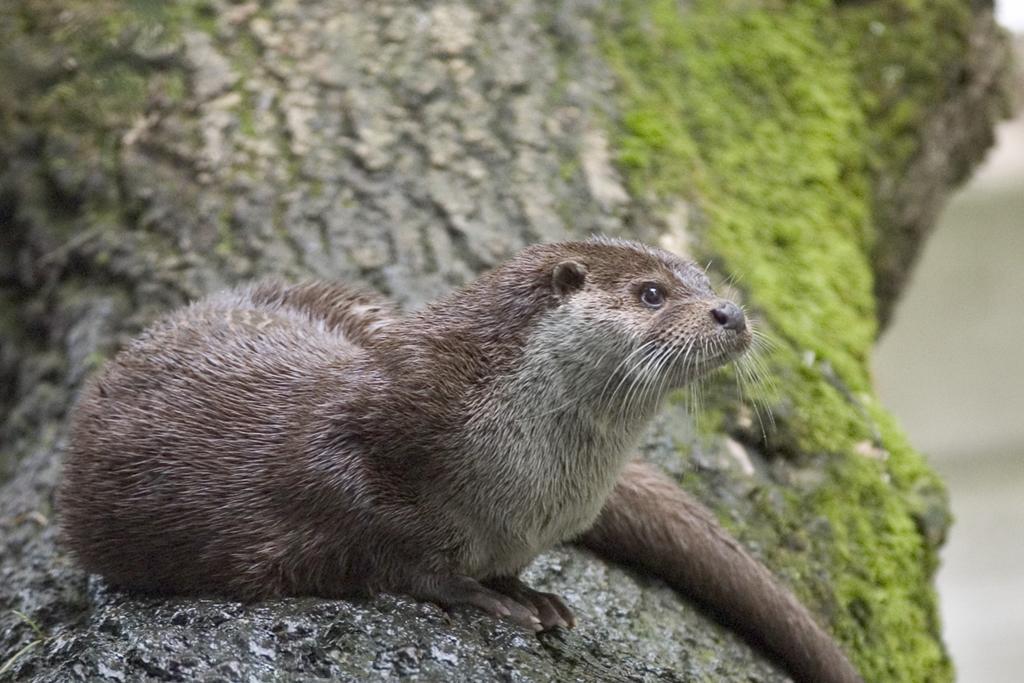
Otters are not typical urban animals. However, they are found in numerous freshwater habitats that offer good water quality, fish as a food source and hiding places on the banks.
The otter is severely threatened by human activities. These include habitat destruction, pollution and invasive fishing nets.
Fun Facts
They can dive for up to eight minutes. They close their ears and nostrils while doing so.
Although it spends a lot of time in the water, the otter mates on land.
The structure of its hair protects the otter extremely effectively against wetness and cold. The hairs are interlocked like a zip. Insulating air bubbles are held in place so that water cannot penetrate to the skin.
The otter digs its burrow on the bank. The entrance is below the water level, but the living chambers are above the high-water mark and thus remain dry. They are connected to the environment by an air shaft.
It is one of the best swimmers among land animals.
- Endangerment level Germany: endangered
Sources
Habitus , Factumquintus, CC BY-SA 3.0, https://commons.wikimedia.org/wiki/File:Fischotter_Lutra_lutra.jpg

Habitus , Bernard Landgraf, CC BY-SA 3.0, https://commons.wikimedia.org/wiki/File:Fischotter,_Lutra_Lutra.JPG

Page „Fischotter“. : Wikipedia, The Free Encyclopedia. Date of last revision: 15.04.2016, 13:11 UTC. URL: https://de.wikipedia.org/w/index.php?title=Fischotter&oldid=153498804 (Accessed: 09.05.2016).
Haupt, H., Ludwig, G., Gruttke, H., Binot-Hafke, M., Otto C. & Pauly, A. (2009) Rote Liste gefährdeter Tiere, Pflanzen und Pilze Deutschlands. volume 1: Wirbeltiere, Bonn-Bad Godesberg: Bundesamt für Naturschutz.
Klawitter, J., Altenkamp, R., Kallasch, C., Köhler, D., Krauß, M., Rosenau, S. & Teige, T. (2005) Rote Liste und Gesamtartenliste der Säugetiere (Mammalia) von Berlin. : Der Landesbeauftragte für Naturschutz und Landschaftspflege / Senatsverwaltung für Stadtentwicklung (eds.) Rote Listen der gefährdeten Pflanzen und Tiere von Berlin, URL: https://www.berlin.de/sen/uvk/natur-und-gruen/naturschutz/artenschutz/artenlisten-rote-listen/saeugetiere/ (Accessed: 30.03.2021).
Kowarik, I. (2008) Beschluss des Sachverständigenbeirats für Naturschutz und Landschaftspflege zum Schutz von Biber und Fischotter (2009). Senatsverwaltung für Stadtentwicklung Berlin, URL: https://www.berlin.de/sen/uvk/natur-und-gruen/naturschutz/sachverstaendigenbeirat/beschluesse/ (Accessed: 29.12.2016).
Ministerium für Umwelt, Naturschutz und Raumordnung der Landes Brandenburg (1999) Artenschutzprogramm Elbebiber und Fischotter, URL: https://mluk.brandenburg.de/cms/media.php/lbm1.a.3310.de/aspbiber.pdf (Accessed: 29.12.2016).
NABU Landesverband Berlin (n.d.) AG Biber. Naturnahe Spree, URL: https://berlin.nabu.de/wir-ueber-uns/bezirksgruppen/friedrichshain-kreuzberg/ag-biber-naturnahe-spree/spree/ (Accessed: 29.12.2016).
Böttcher, S. (2016) Gefährdeter Räuber: der Fischotter, URL: http://www.wildes-berlin.de/gefaehrdeter-raeuber-der-fischotter/ (Accessed: 29.12.2016).
Wildtierkataster Schleswig-Holstein (2009) Der Fischotter, URL: http://www.wildtier-kataster.uni-kiel.de/pages/tierarten/saeugetiere/fischotter.php (Accessed: 29.12.2016).
BUND Landesverband Niedersachsen (n.d.) Der fischende Otter, URL: http://www.bund-niedersachsen.de/service/beobachtungstipps/april/der_fischende_otter/ (Accessed: 29.12.2016).
Grand-Duché de Luxembourg Région wallonne (2007) Spuren/Trittsiegel erkennen. Spurensucherschulung: Europa LIFE, URL: http://www.loutres.be/IMG/pdf/Spurensucherschulung.pdf (Accessed: 01.12.2016).
Boye, P. (1993) Heimische Säugetiere. Ein Bestimmungsschlüssel für die in der Bundesrepublik Deutschland wildlebenden Säugetiere, ausser den Ordnungen Robben, Paarhufer und Wale, Hamburg: Deutscher Jugendbund für Naturbeobachtungen.