
Short Description
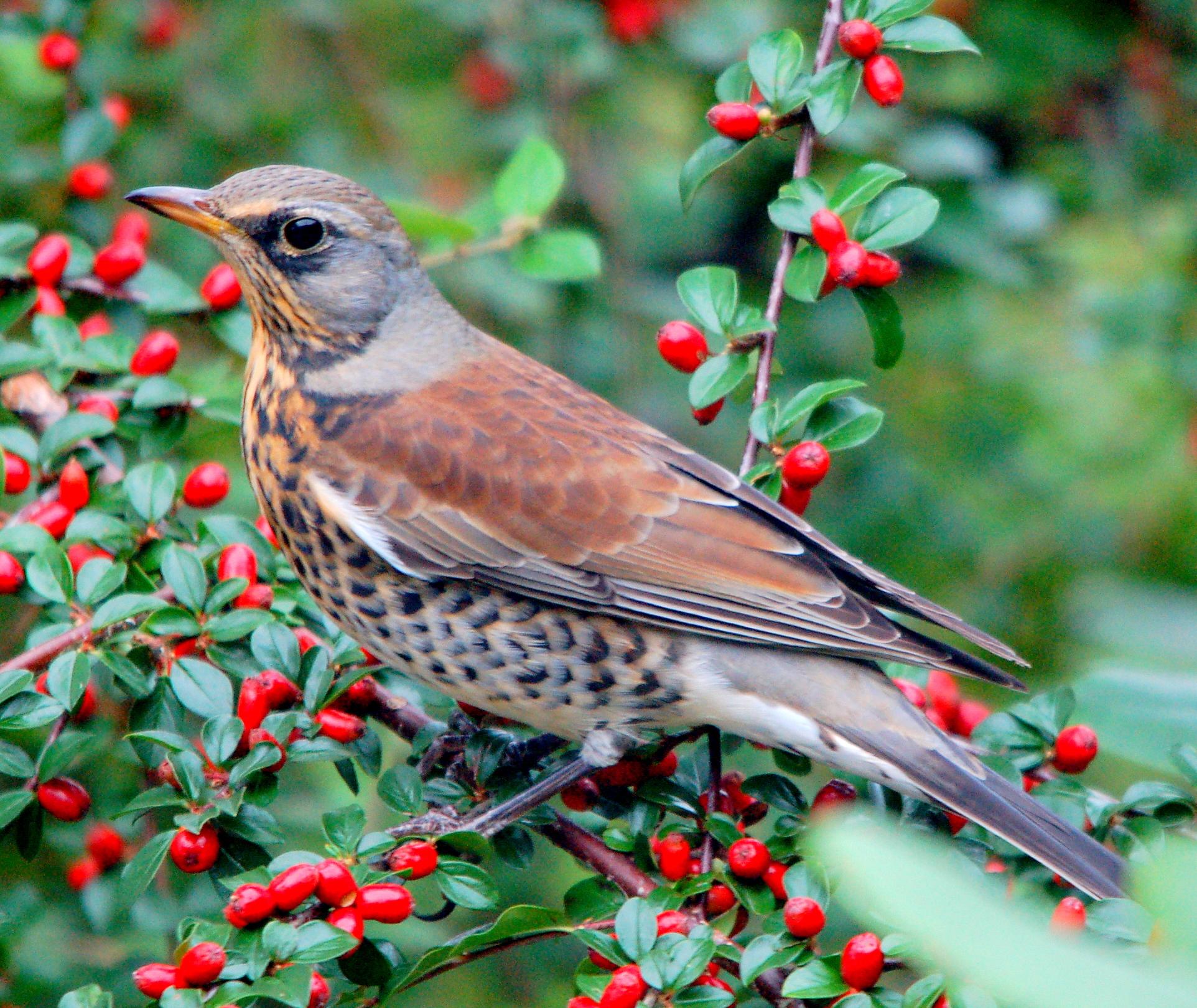
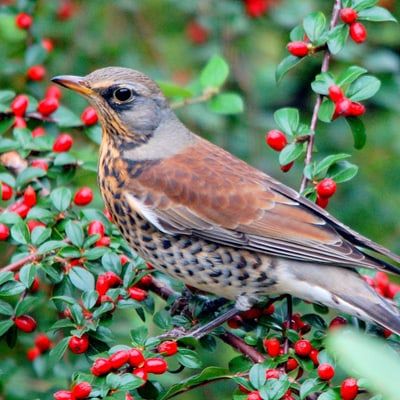
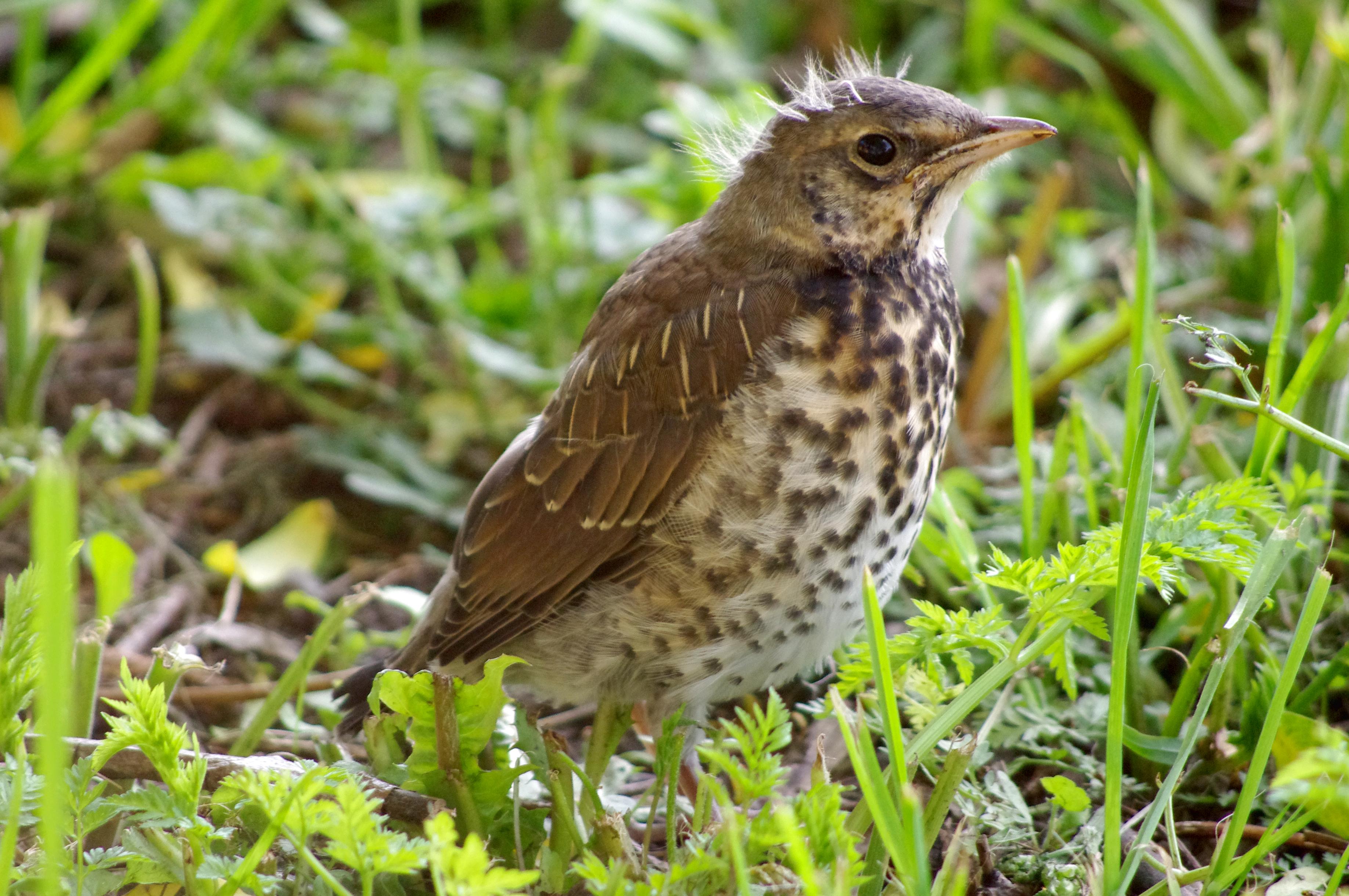
The fieldfare is red-brown with a grey head and an obvious supercilium (plumage on the head). Its throat and upper chest are ochre yellow, the remaining underparts are whitish. Underparts and flanks are marked with black longitudinal stripes and dark-brown, arrowhead-shaped patches. The area above the tail feathers (rump) is light grey. The legs are dark-brown. The bill is yellow to yellow-orange with a dark tip.
Features
Fieldfare
Turdus pilaris
grey head
Gesang
Frommolt, CC BY-SA 3.0

Similar species
In the city
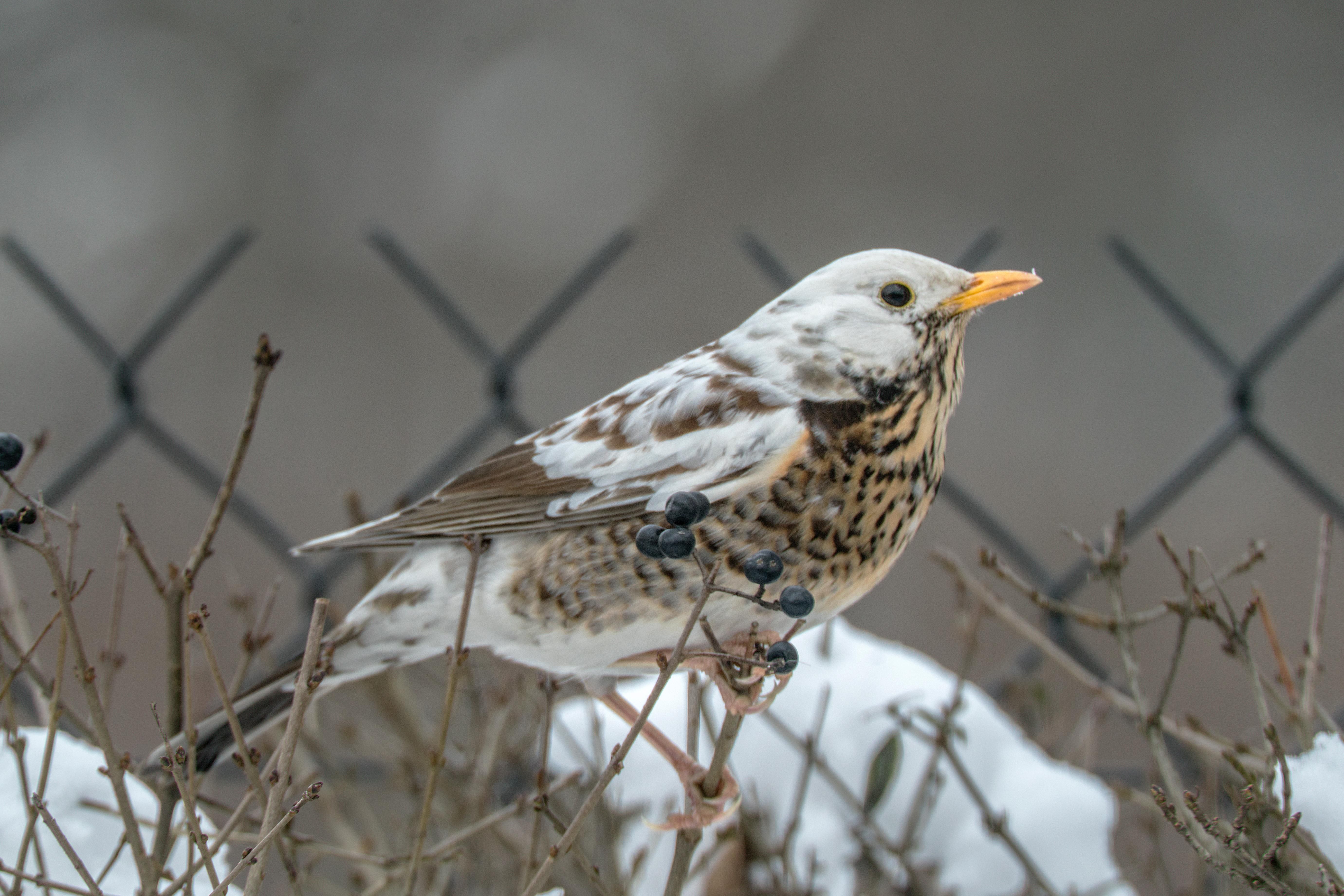
Fieldfares feed mainly on earthworms. They are found in great numbers in parks, gardens and green spaces. Fieldfares are seen increasingly often in areas of human habitation and can also be observed in great numbers at sports grounds.
Fun Facts
Fieldfares are known for aiming “bird poop” at attackers. It is not clear whether this is a deliberate defence mechanism or whether it is a nervous reaction.
They used to be regarded in Central Europe as a popular food bird and captured in great numbers.
Fieldfares are migratory birds that move via south-western Europe to western Africa at the end of October and return in the middle of March. Fieldfares from north-eastern Europe can be seen from October to March in Central Europe as winter visitors.
- Endangerment level Germany: not endangered
Sources
Habitus , Arnstein Rønning, CC BY-SA 3.0, https://commons.wikimedia.org/wiki/File:Turdus_pilaris_no.JPG

mit Scheckung (Leuzismus), Jerzy Strzelecki, CC BY-SA 3.0, https://commons.wikimedia.org/wiki/File:Leucistic_Fieldfare(Turdus_pilaris),_Lodz(Poland)(js)01.jpg
,_Lodz(Poland)(js)01.jpg)
Jungtier, Jakub Hałun, CC BY-SA 3.0, https://commons.wikimedia.org/wiki/File:20130531_Turdus_pilaris_5932.jpg

Page „Wacholderdrossel“. : Wikipedia, The Free Encyclopedia. Date of last revision: 18.08.2015, 11:45 UTC. URL: https://de.wikipedia.org/w/index.php?title=Wacholderdrossel&oldid=145153066 (Accessed: 18.02.2016).
Witt, K. & Steiof, K. (2013) Rote Liste und Liste der Brutvögel von Berlin, 3. version, 15.11.2013. : Berliner Ornithologische Arbeitsgemeinschaft e.V. (eds.) Berliner Ornithologischer Bericht, volume 23, Berlin: Berliner Ornithologische Arbeitsgemeinschaft e.V., 1-23.
Artenfinder (2016) Turdus pilaris (Wacholderdrossel), URL: https://arteninfo.net/elearning/voegel/speciesportrait/3122 (Accessed: 24.04.2016).