
Short Description
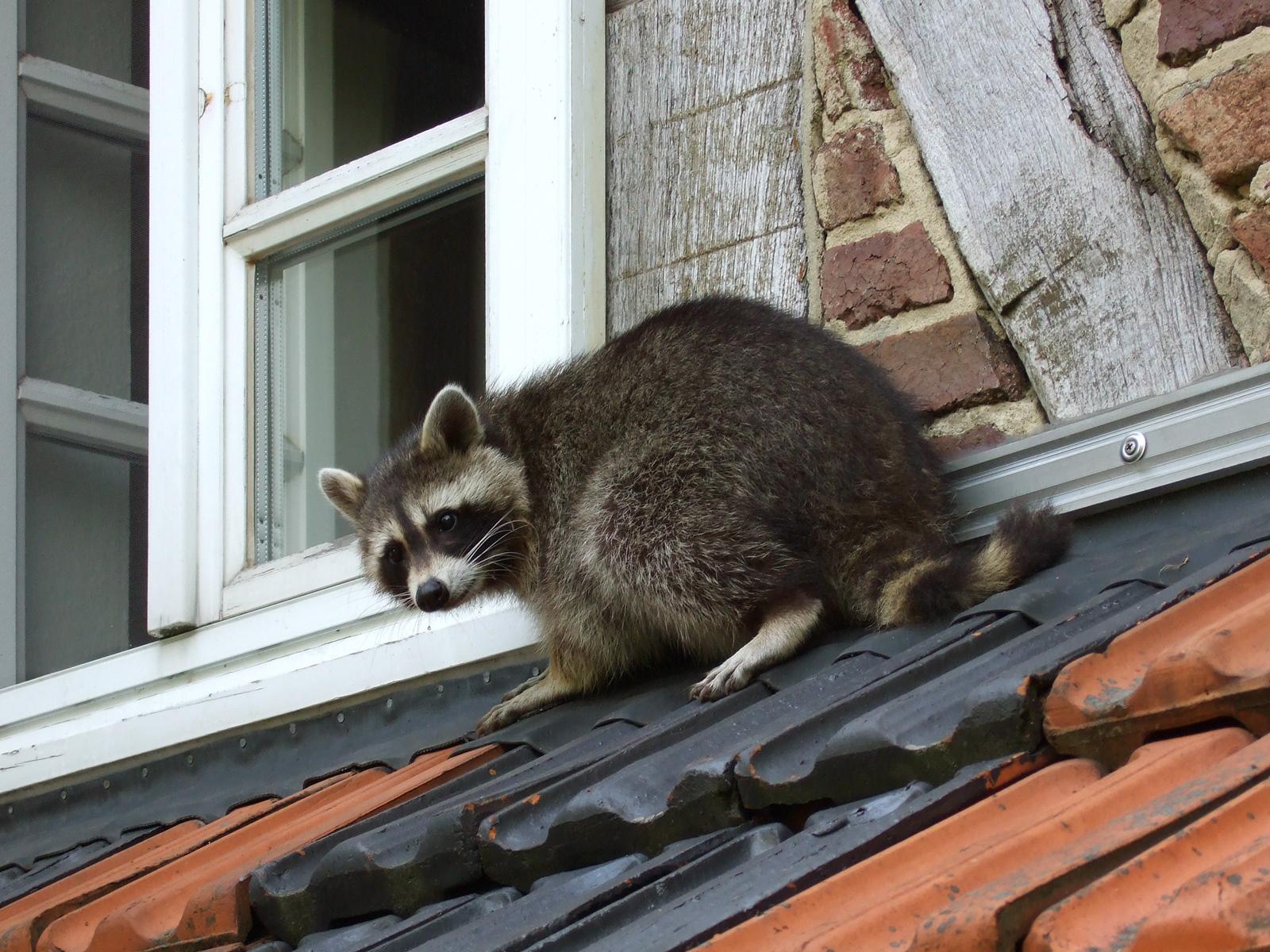
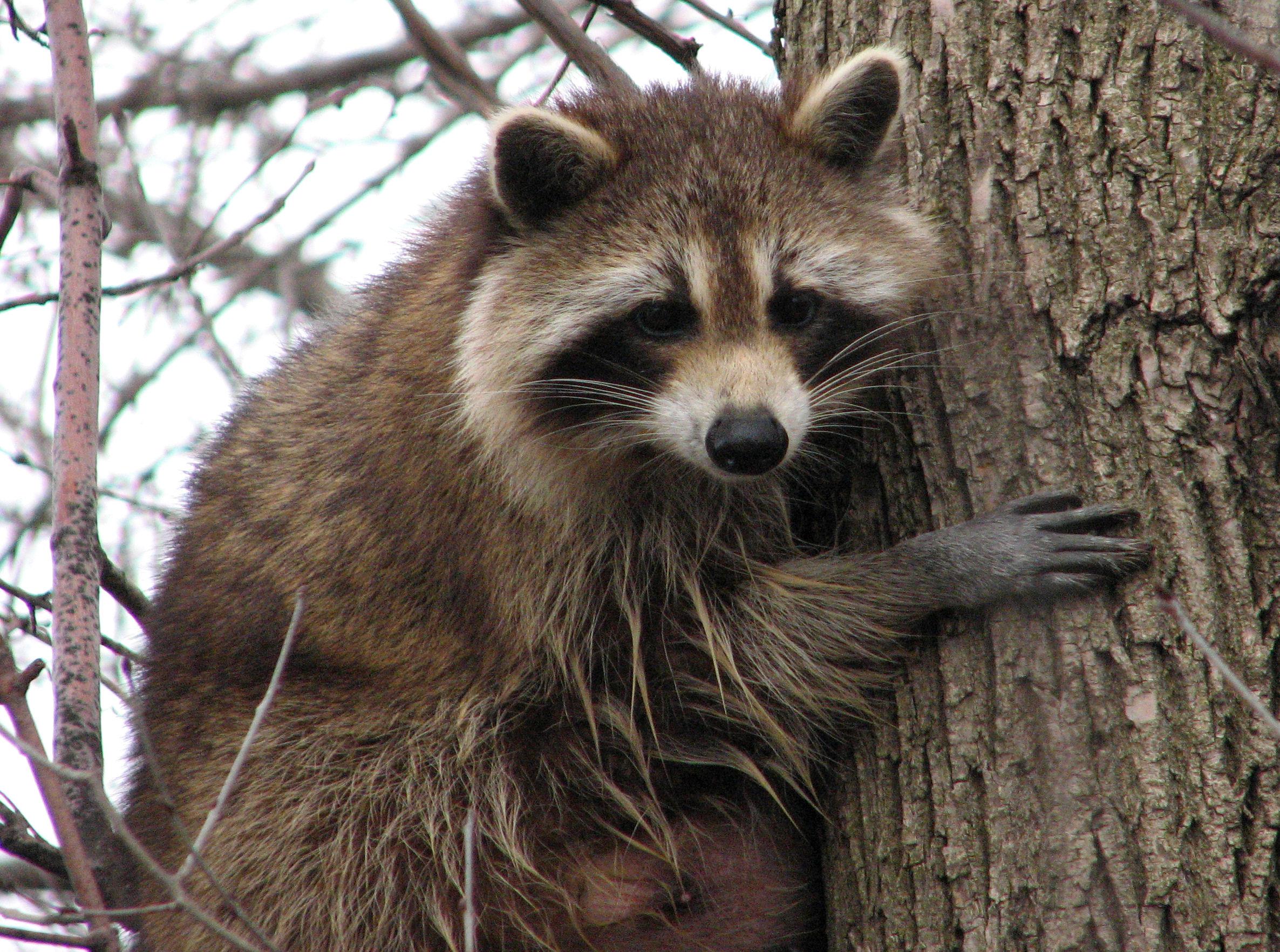
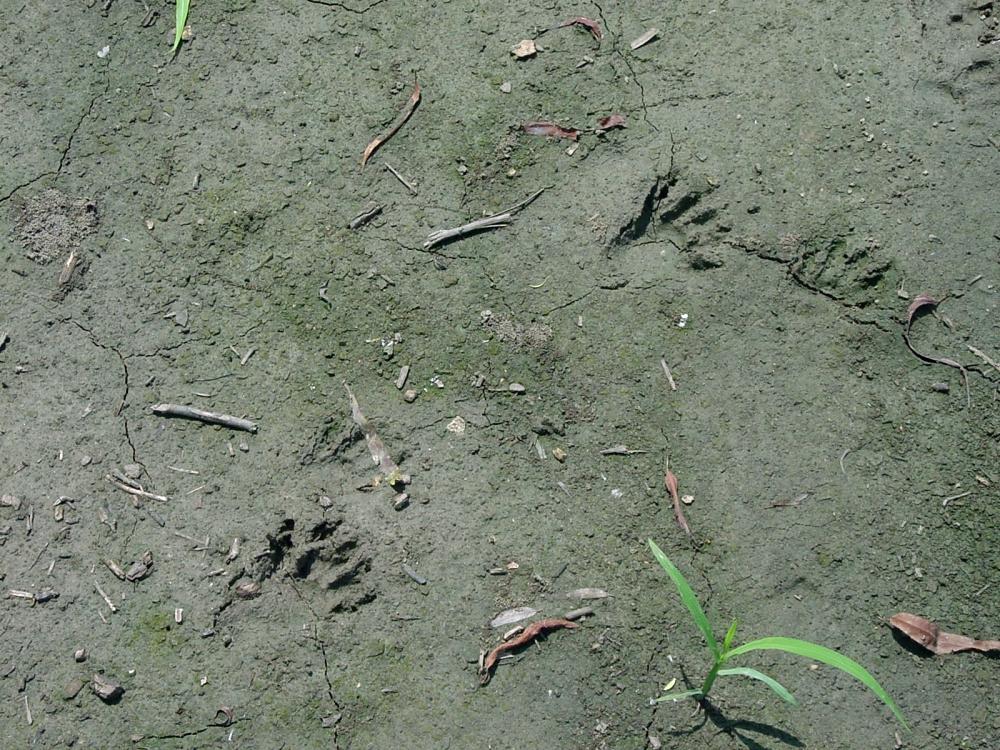
Raccoons are comparatively unmistakeable. They are grey and easy to recognise by their round head with pointed muzzle and black-and-white facial mask. The bushy tail with alternating black and white rings is also typical. The five longish toes of the raccoon are reminiscent of a child’s hand. Hind and front paws are generally placed next to each other.
Features
Raccoon
Procyon lotor
black-and-white ringed tail

In the city
In an urban environment, raccoons inhabit attics, garden sheds, garages, empty buildings, parks and open green spaces. They are omnivores and also live on waste.
Repeated conflicts with humans arise because raccoons use buildings for sleeping, causing damage in the process. It has become evident that hunting raccoons in no solution in this conflict.
Fun Facts
The raccoon’s Latin name “Procyon lotor” and the German name “Waschbär” refer to the raccoon’s observed habit of “washing” their food; however, this action merely imitates the search for food near the shore-line of rivers or lakes.
The raccoon population in Germany goes back to two deliberately released pairs in Hessia in 1934 and to raccoons escaped from a fur farm in Brandenburg in 1945.
Raccoons have a thumb.
Kassel is seen as the “raccoon capital” of Germany.
Raccoons perceive their environment mainly via their sense of touch.
- Endangerment level Germany: not endangered
The raccoon originates from Central America and has spread rapidly in Europe as one of the most successful non-native animals (Neozoa).
Sources
Habitus , Carsten Volkwein, CC BY-SA 2.5, https://commons.wikimedia.org/wiki/File:Waschbaer_auf_dem_Dach.jpg

Weibchen, D. Gordon E. Robertson, CC BY-SA 3.0, https://commons.wikimedia.org/wiki/File:Raccoon_female.jpg

Trittsiegel, rimm, CC BY-SA 2.5, https://commons.wikimedia.org/wiki/File:Waschbaer_fg01.jpg

Leibniz-Institut für Zoo- und Wildtierforschung (n.d.) Waschbär, URL: http://www.izw-berlin.de/waschbaer.html (Accessed: 16.05.2016).
Page „Waschbär“. : Wikipedia, The Free Encyclopedia. Date of last revision: 28.04.2016, 11:11 UTC. URL: https://de.wikipedia.org/w/index.php?title=Waschb%C3%A4r&oldid=153899716 (Accessed: 06.05.2016).
Landesforstamt Berlin (n.d.) Waschbär, URL: http://www.stadtentwicklung.berlin.de/forsten/wildtiere/de/waschbaer.shtml (Accessed: 29.12.2016).
NABU Landesverband Berlin (n.d.) Wildtiere in der Stadt. Von tierischen Mitbewohnern in Berlin, URL: https://berlin.nabu.de/tiere-und-pflanzen/wildtiere-in-der-stadt/ (Accessed: 29.12.2016).
Ministerium für Ländlichen Raum und Verbraucherschutz (n.d.) Marderhund, URL: https://www.landwirtschaft-bw.info/pb/MLR.LAZBW,Lde/Startseite/Wildforschungsstelle/Marderhund (Accessed: 29.12.2016).
Grand-Duché de Luxembourg Région wallonne (2007) Spuren/Trittsiegel erkennen. Spurensucherschulung: Europa LIFE, URL: http://www.loutres.be/IMG/pdf/Spurensucherschulung.pdf (Accessed: 01.12.2016).
Haupt, H., Ludwig, G., Gruttke, H., Binot-Hafke, M., Otto C. & Pauly, A. (2009) Rote Liste gefährdeter Tiere, Pflanzen und Pilze Deutschlands. volume 1: Wirbeltiere, Bonn-Bad Godesberg: Bundesamt für Naturschutz.
Klawitter, J., Altenkamp, R., Kallasch, C., Köhler, D., Krauß, M., Rosenau, S. & Teige, T. (2005) Rote Liste und Gesamtartenliste der Säugetiere (Mammalia) von Berlin. : Der Landesbeauftragte für Naturschutz und Landschaftspflege / Senatsverwaltung für Stadtentwicklung (eds.) Rote Listen der gefährdeten Pflanzen und Tiere von Berlin, URL: https://www.berlin.de/sen/uvk/natur-und-gruen/naturschutz/artenschutz/artenlisten-rote-listen/saeugetiere/ (Accessed: 30.03.2021).
Boye, P. (1993) Heimische Säugetiere. Ein Bestimmungsschlüssel für die in der Bundesrepublik Deutschland wildlebenden Säugetiere, ausser den Ordnungen Robben, Paarhufer und Wale, Hamburg: Deutscher Jugendbund für Naturbeobachtungen.