
Short Description
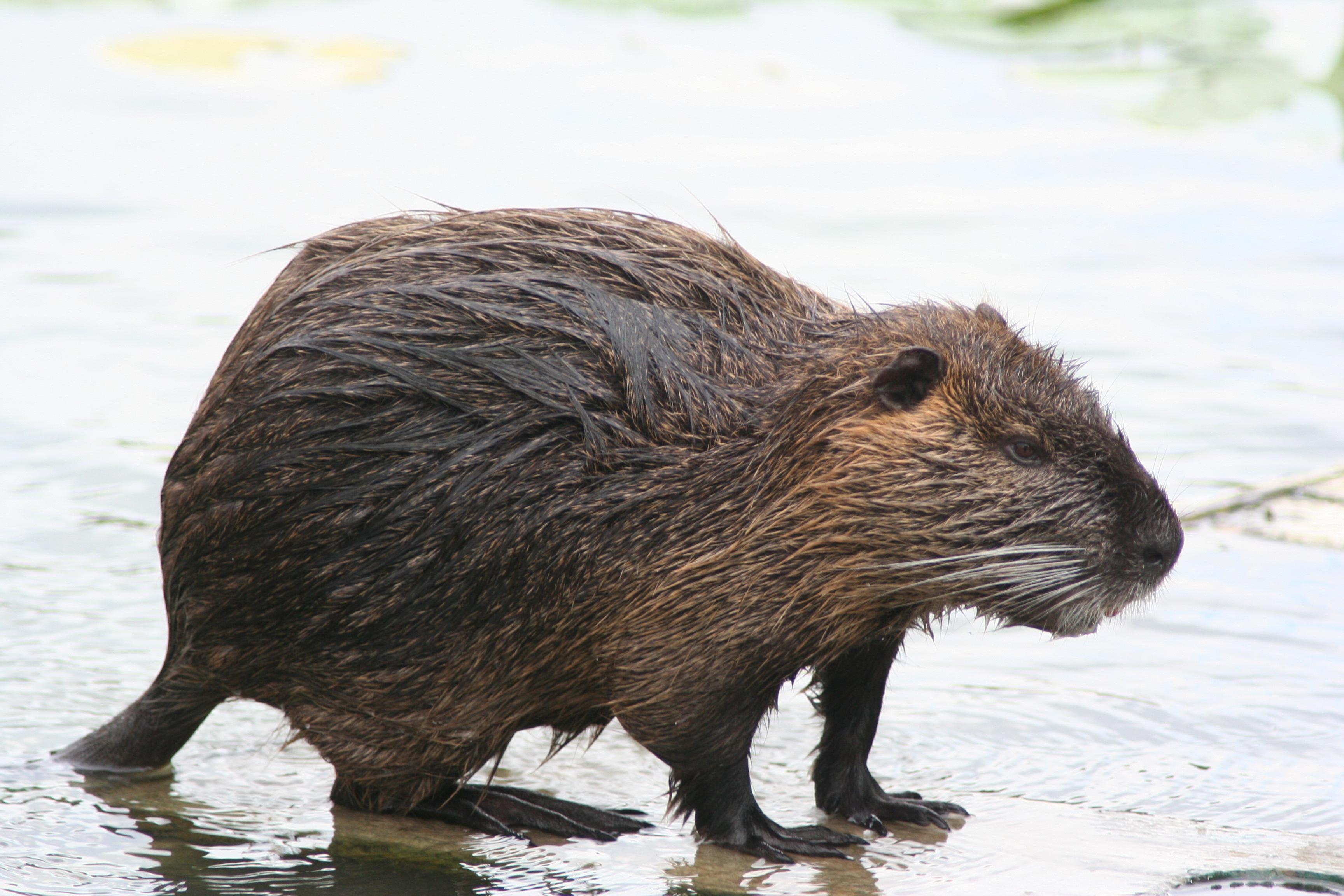
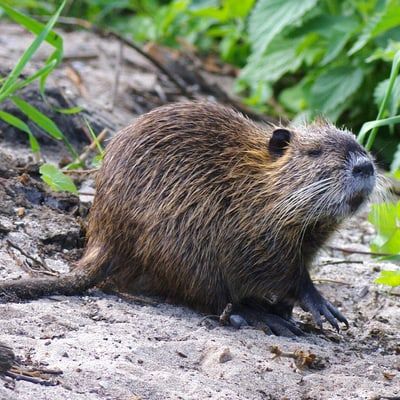
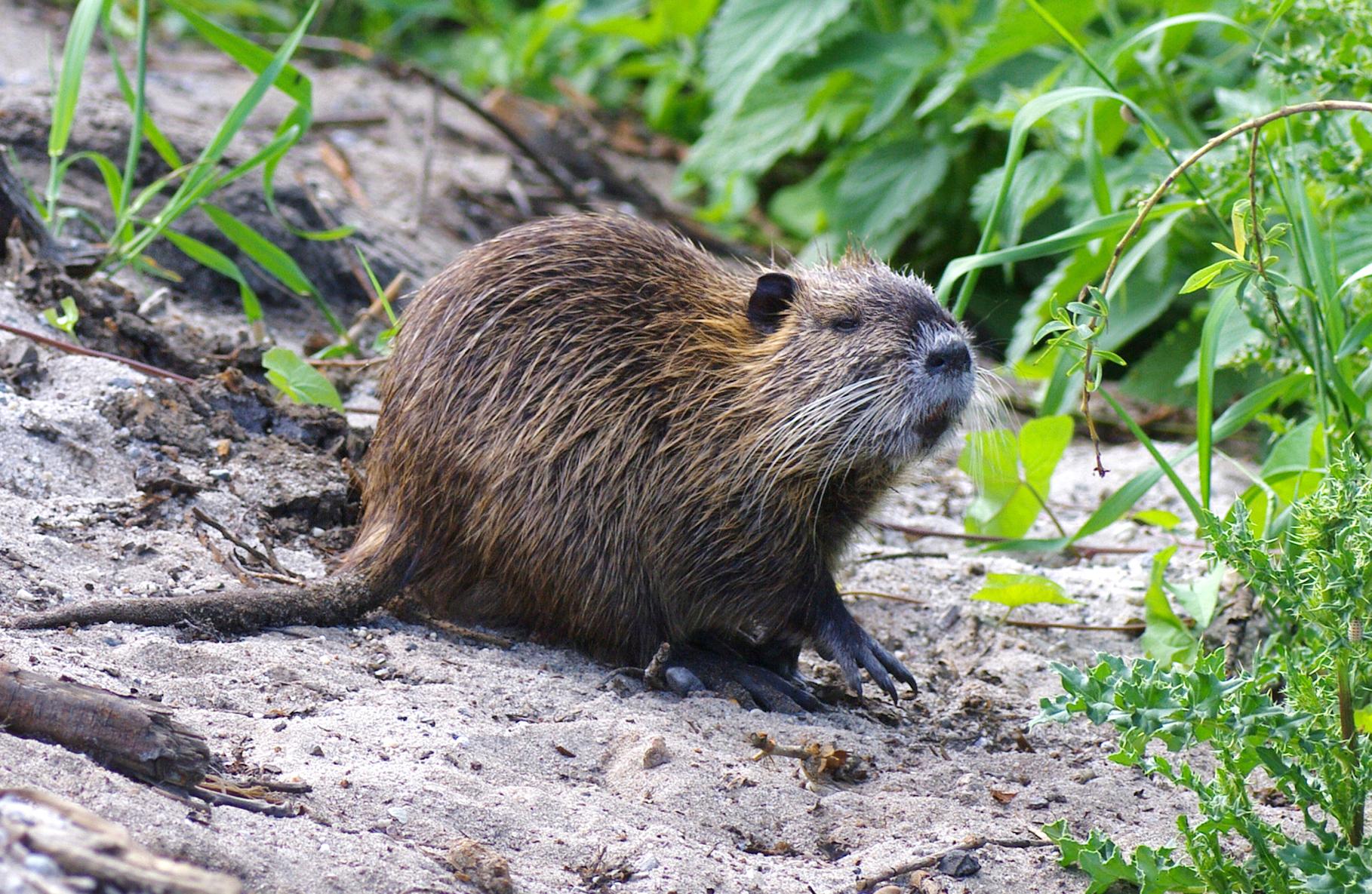
Nutrias have a rounded scaly tail. The fur is generally reddish-brown with greyish underparts. Striking features are their orange teeth and white whiskers. Their ears are well visible. They have five finger-like toes with webbing in between. There is no webbing on the fifth toe. In their trackways, toes, claws and pads are normally obvious. When swimming, head, nape and back are visible out of the water.
Features
Nutria
Myocastor coypus
visible ears
5th toe without webbing
white whiskers
Similar species
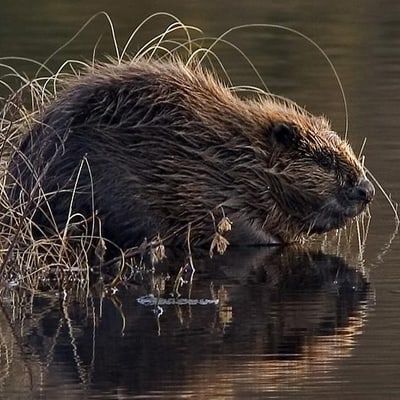
European beaver
Castor fiber
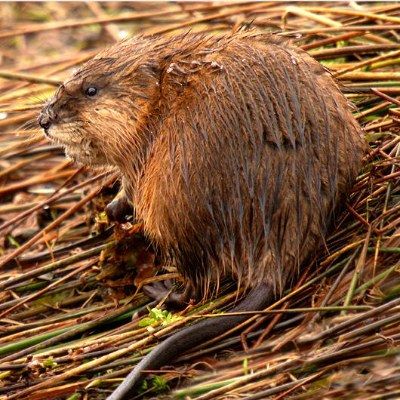
Muskrat
Ondatra zibethicus
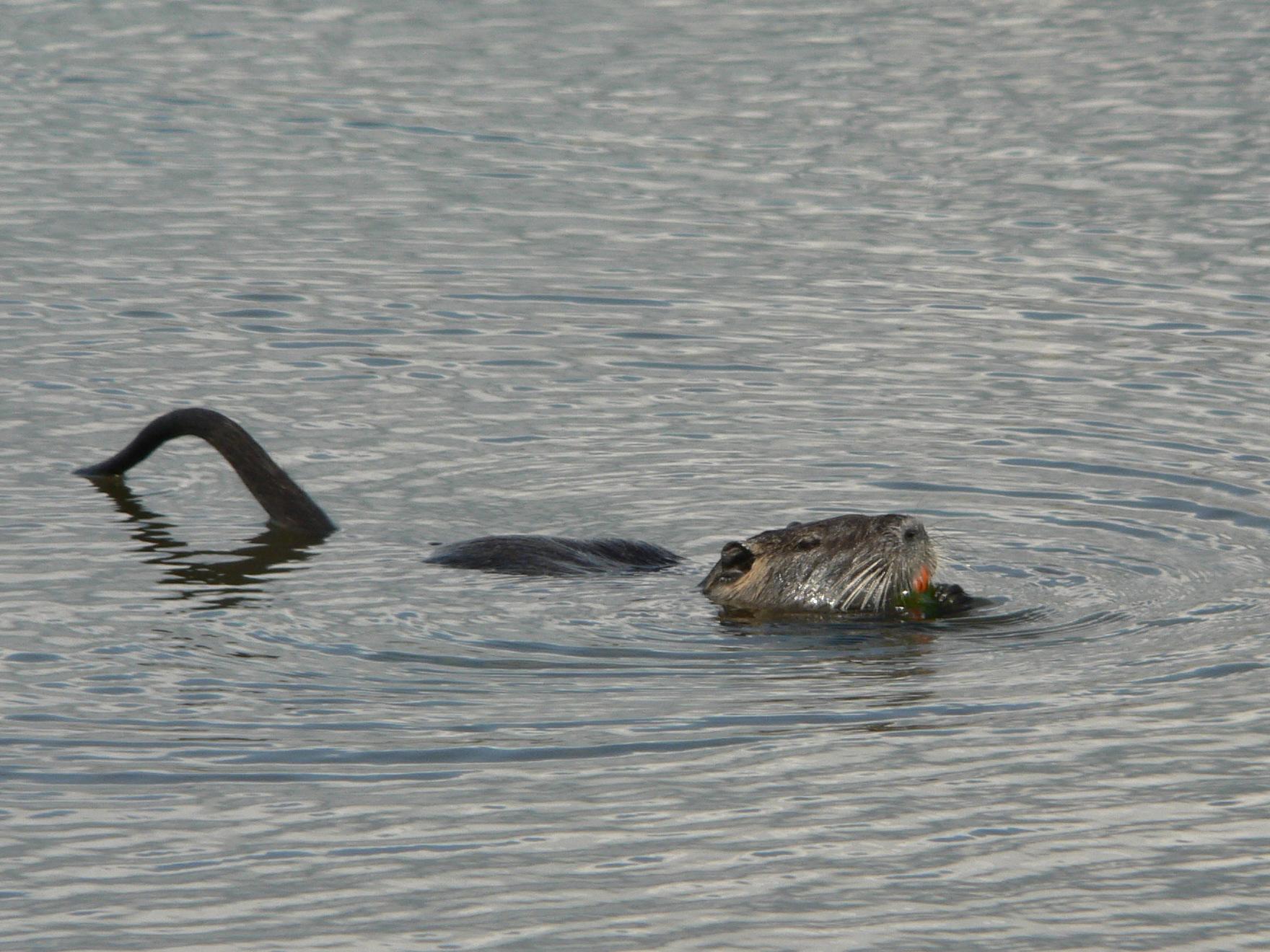
In the city
Nutrias can be found near ponds, lakes and rivers. They are often also seen in parks. Although normally nocturnal, they can be seen in urban settings at midday and in the afternoon, too. Because of the rich food supply in urban settings, nutria are less likely to have their own territory and form colonies.
In town, they are not very shy and allow humans to feed them. However, they are wild animals and should not be fed.
Fun Facts
he colour of the teeth can be used to determine age, sexual maturity and general state of health. Juveniles and sick animals have yellow teeth.
The orange teeth are caused by iron deposits.
The absence of webbing on the fifth toes makes it easier to climb on banks.
Nutrias are bred for their furs. In some regions, though, their meat is considered a delicacy.
- Endangerment level Germany: not evaluated
Nutria originates from North America. In Europe, they can be traced back to animals escaped from fur farms. From about 1930 onwards, they have been observed in the wild in Germany. They are thus non-native animals (neozoa).
Sources
Habitus , Philippe Amelant, CC BY-SA 3.0, https://commons.wikimedia.org/wiki/File:Myocastor_coypus_-_ragondin.jpg

Habitus , Walter Siegmund, CC BY-SA 2.5, https://commons.wikimedia.org/wiki/File:Myocastor_coypus_01857t.JPG

Habitus , Christian Fischer, CC BY-SA 3.0, https://commons.wikimedia.org/wiki/File:MyocastorCoypus.jpg

Page „Nutria“. : Wikipedia, The Free Encyclopedia. Date of last revision: 21.10.2016, 20:36 UTC. URL: https://de.wikipedia.org/w/index.php?title=Nutria&oldid=158954155 (Accessed: 01.12.2016).
Di Monaco, A. (2014-2016) Unterschied Nutria, Biber & Bisam oder ' wie erkenne ich ein Nutria ', URL: http://www.nutria-info.com/unterschied-nutria-biber-bisam/ (Accessed: 01.12.2016).
Wildtierportal Baden-Württemberg (n.d.) Nutria in Baden-Württemberg, URL: http://wildtiere-stadt.wildtiere-bw.de/tierarten/nutria_in_baden-wuerttemberg/biologie.html (Accessed: 01.12.2016).
Haupt, H., Ludwig, G., Gruttke, H., Binot-Hafke, M., Otto C. & Pauly, A. (2009) Rote Liste gefährdeter Tiere, Pflanzen und Pilze Deutschlands. volume 1: Wirbeltiere, Bonn-Bad Godesberg: Bundesamt für Naturschutz.
Klawitter, J., Altenkamp, R., Kallasch, C., Köhler, D., Krauß, M., Rosenau, S. & Teige, T. (2005) Rote Liste und Gesamtartenliste der Säugetiere (Mammalia) von Berlin. : Der Landesbeauftragte für Naturschutz und Landschaftspflege / Senatsverwaltung für Stadtentwicklung (eds.) Rote Listen der gefährdeten Pflanzen und Tiere von Berlin, URL: https://www.berlin.de/sen/uvk/natur-und-gruen/naturschutz/artenschutz/artenlisten-rote-listen/saeugetiere/ (Accessed: 30.03.2021).
Grand-Duché de Luxembourg Région wallonne (2007) Spuren/Trittsiegel erkennen. Spurensucherschulung: Europa LIFE, URL: http://www.loutres.be/IMG/pdf/Spurensucherschulung.pdf (Accessed: 01.12.2016).