
Short Description
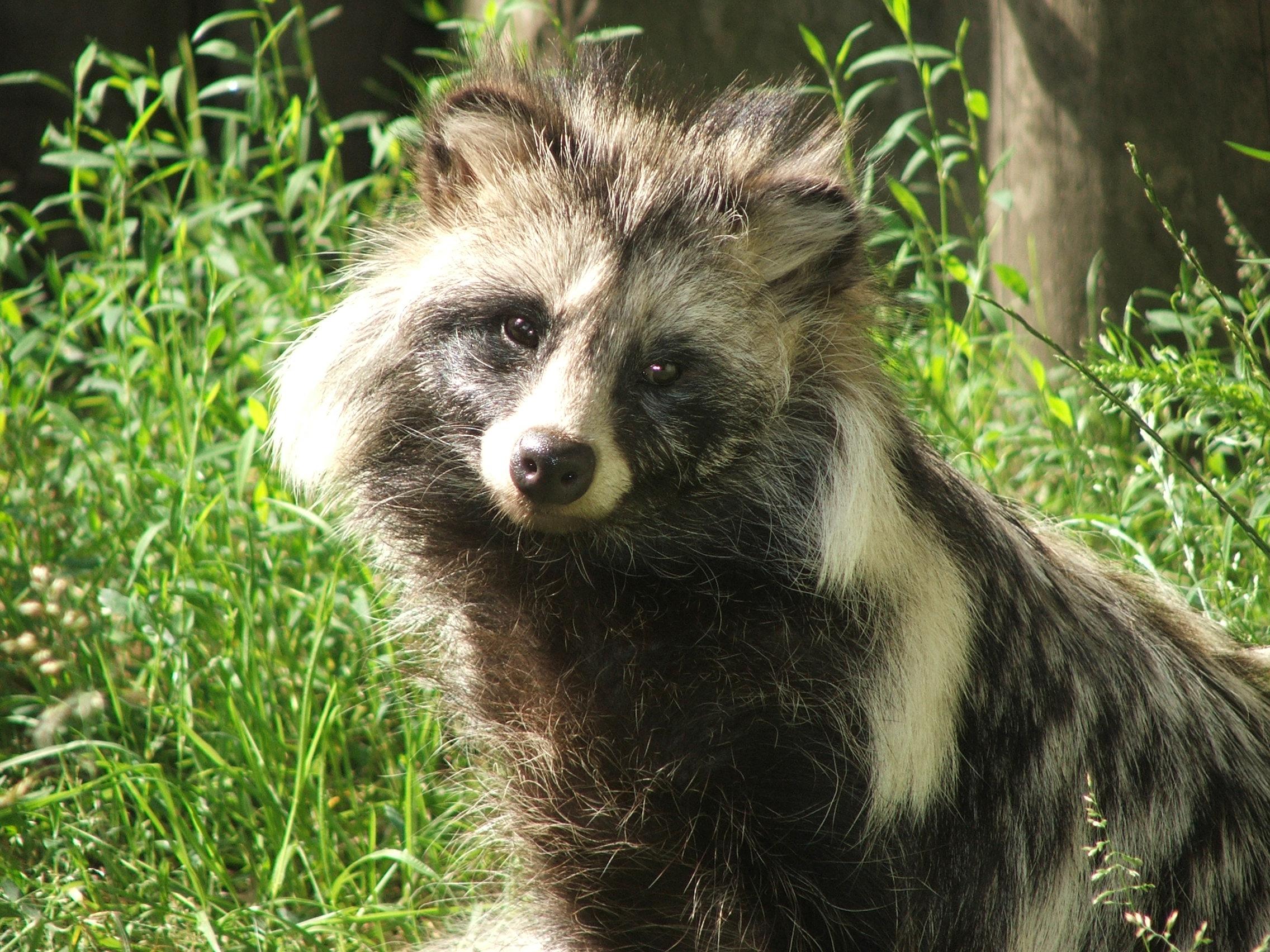
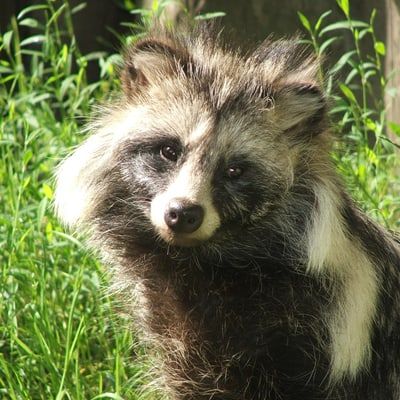
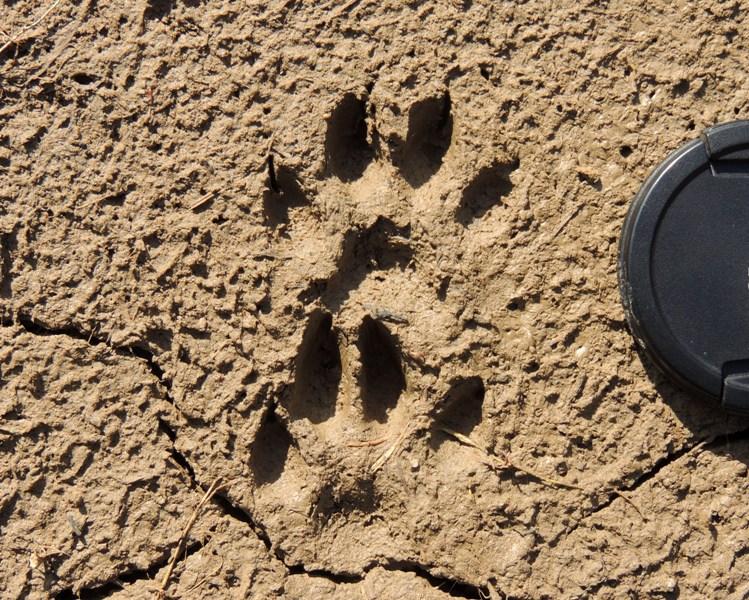
The raccoon dog has a black facial mask. Its sides are beige-grey. Its back and head are a deep black. Its tracks are rounded with a large and easily visible main pad and four toe pads with short blunt claws.
Features
Raccoon dog
Nyctereutes procyonoides
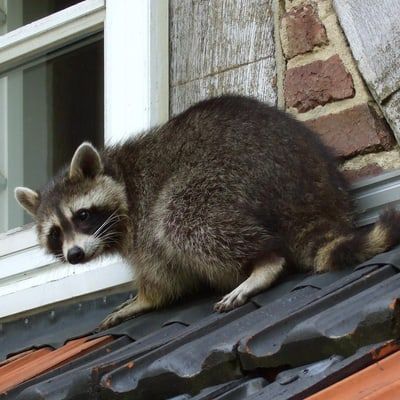
superficial resemblance of a raccoon
In the city
Raccoon dogs prefer forests and habitats with sufficient undergrowth for cover. They mainly live in areas close to water. In their search for food, they also climb up trees to get to fruit or berries.
Raccoon dogs are very shy and can mainly be seen at night.
Fun Facts
In regions with particularly cold winters, raccoon dogs hibernate.
Raccoon dogs are omnivores.
Other than its name might suggest, raccoon dogs are closer related to a fox and a wolf than to a raccoon.
In Japanese folklore, raccoon dogs are seen as harbingers of good luck.
- Endangerment level Germany: not evaluated
Raccoon dogs originate from eastern Asia and were introduced to Europe for their fur. They are a non-native species (neozoa).
Sources
Habitus , Pkuczynski, CC BY-SA 3.0, https://commons.wikimedia.org/wiki/File:Nyctereutes_procyonoides_4_(Piotr_Kuczynski).jpg
.jpg)
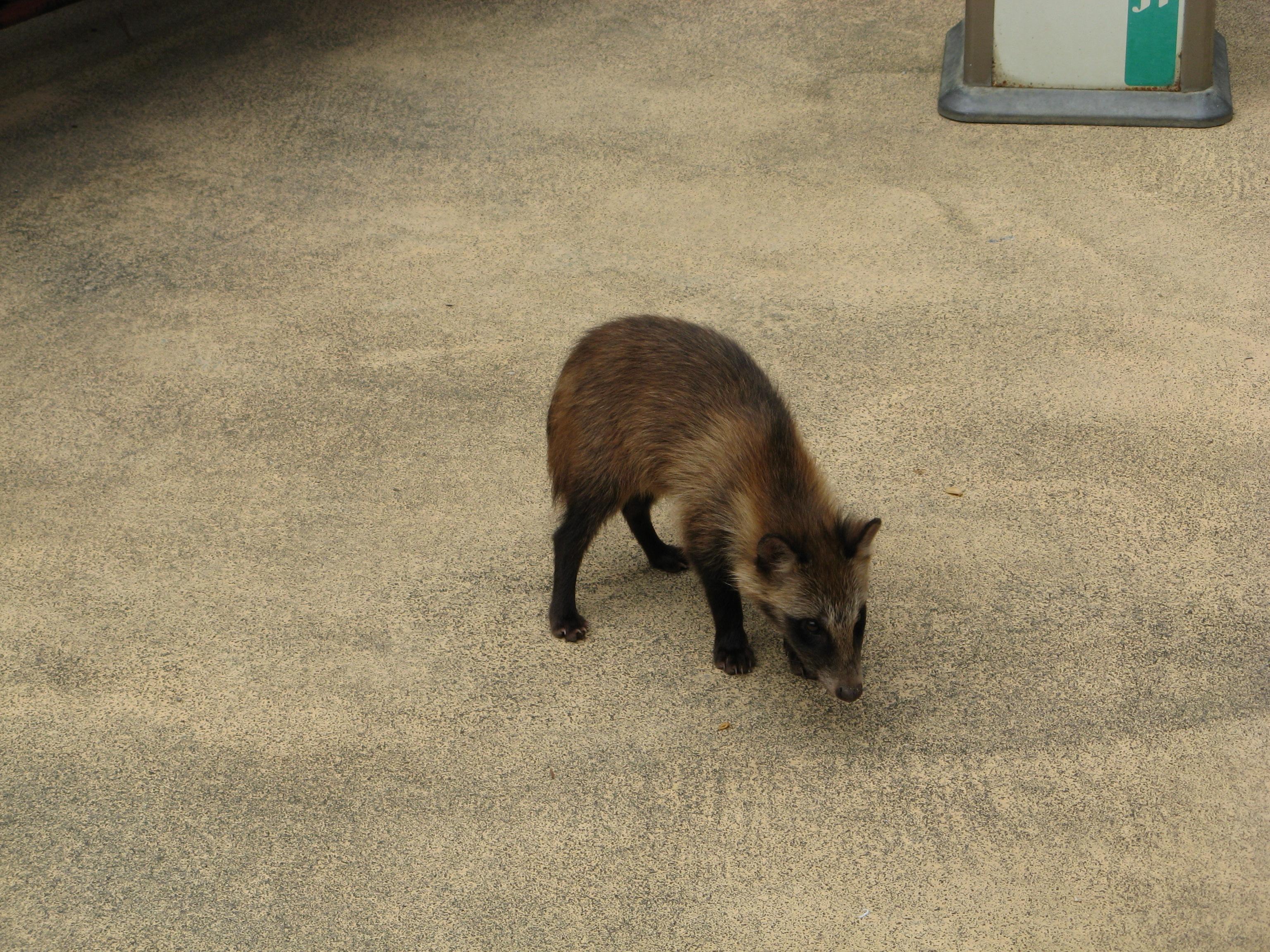
Jungtier, Micha L. Rieser, CC BY-SA 3.0, https://commons.wikimedia.org/wiki/File:Nyctereutes_procyonoides_viverrinus_-_juvenile_-_Miyajima,_Japan_-_20071002-03.jpg

Trittsiegel, Arkhivov, CC BY-SA 3.0, https://commons.wikimedia.org/wiki/File:Nyctereutes_procyonoides_footprints.JPG

Page „Marderhund“. : Wikipedia, The Free Encyclopedia. Date of last revision: 30.12.2016, 03:12 UTC. URL: https://de.wikipedia.org/w/index.php?title=Marderhund&oldid=161088160 (Accessed: 30.12.2016).
Encyclopedia of Life (n.d.) Raccoon dog. Nyctereutes procyonoides (Gray 1834), URL: http://www.eol.org/pages/328684/overview (Accessed: 30.12.2016).
Dein Natur- & Jagdportal (n.d.) Marderhund (Enok) Steckbrief, URL: https://auf-jagd.de/haarwild/marderhund-enok-steckbrief/ (Accessed: 30.12.2016).
PETA Deutschland e.V. (2016) Der Marderhund: 7 faszinierende Fakten über Marderhunde, URL: http://www.peta.de/marderhunde#.WGKIdX3jEsI (Accessed: 30.12.2016).
Deutscher Jagdverband e. V. (n.d.) Marderhund (Nyctereutes procyonoides), URL: https://www.jagdverband.de/content/marderhund-nyctereutes-procyonoides (Accessed: 30.12.2016).
Grand-Duché de Luxembourg Région wallonne (2007) Spuren/Trittsiegel erkennen. Spurensucherschulung: Europa LIFE, URL: http://www.loutres.be/IMG/pdf/Spurensucherschulung.pdf (Accessed: 01.12.2016).
Haupt, H., Ludwig, G., Gruttke, H., Binot-Hafke, M., Otto C. & Pauly, A. (2009) Rote Liste gefährdeter Tiere, Pflanzen und Pilze Deutschlands. volume 1: Wirbeltiere, Bonn-Bad Godesberg: Bundesamt für Naturschutz.
Klawitter, J., Altenkamp, R., Kallasch, C., Köhler, D., Krauß, M., Rosenau, S. & Teige, T. (2005) Rote Liste und Gesamtartenliste der Säugetiere (Mammalia) von Berlin. : Der Landesbeauftragte für Naturschutz und Landschaftspflege / Senatsverwaltung für Stadtentwicklung (eds.) Rote Listen der gefährdeten Pflanzen und Tiere von Berlin, URL: https://www.berlin.de/sen/uvk/natur-und-gruen/naturschutz/artenschutz/artenlisten-rote-listen/saeugetiere/ (Accessed: 30.03.2021).