
Short Description
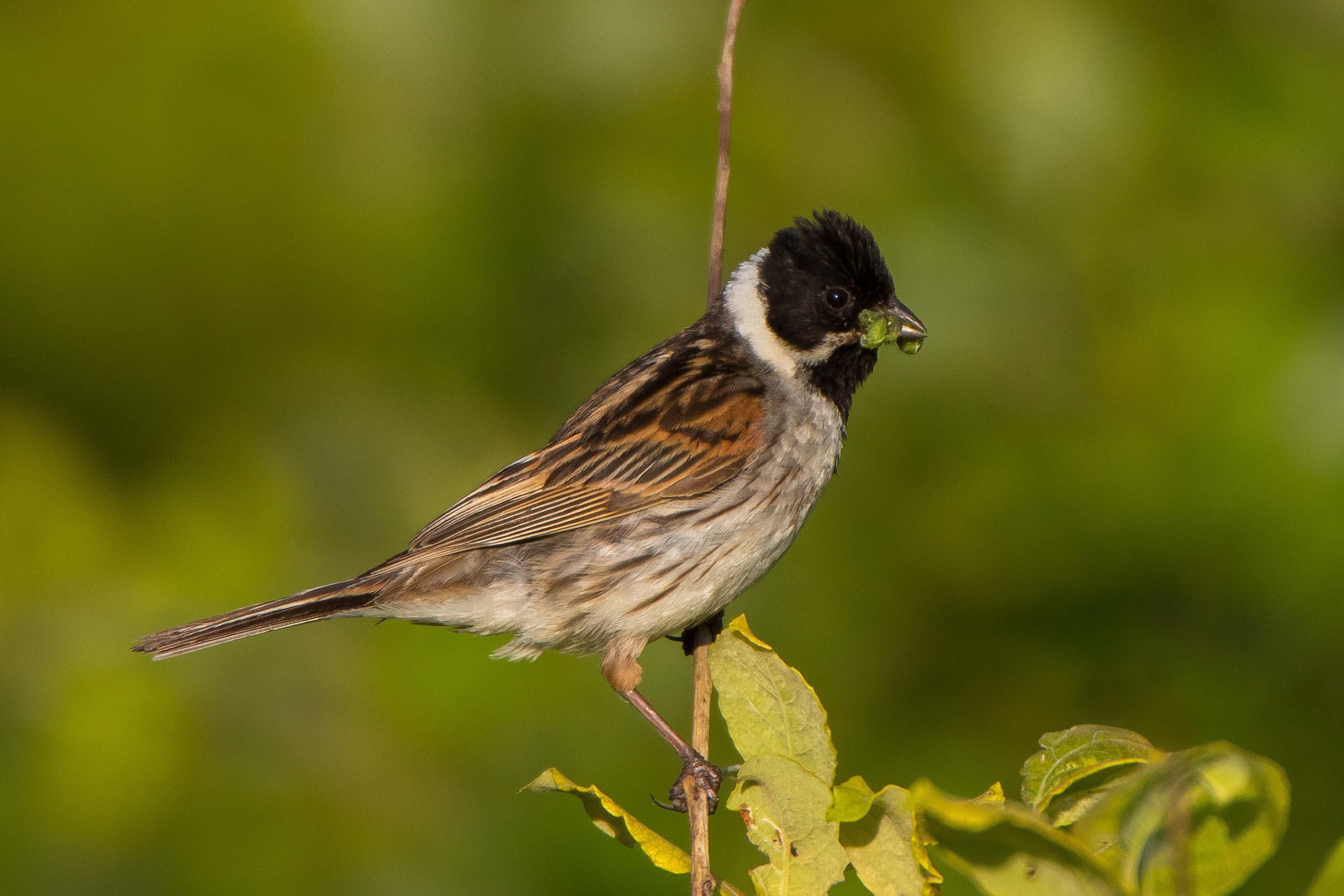
The common reed bunting has a dark-brown streaked back and greyish-white underparts.
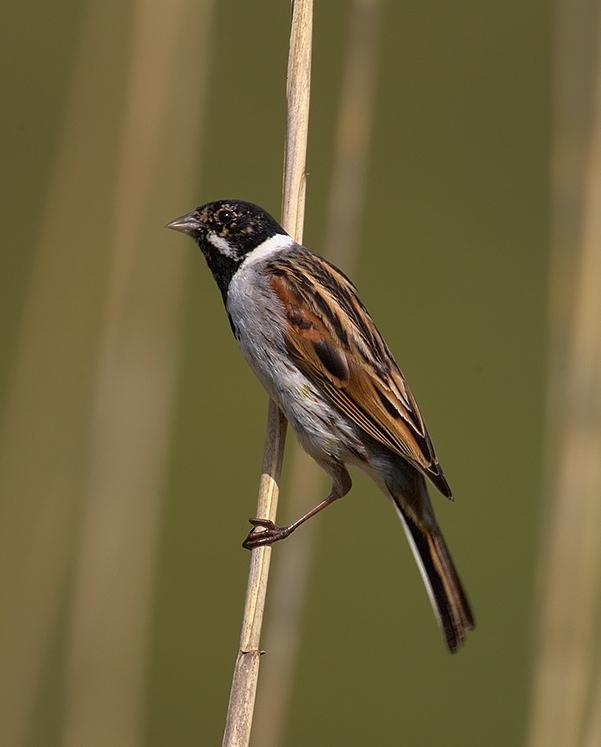
Males have a black head and throat. A striking feature is their white neck collar.
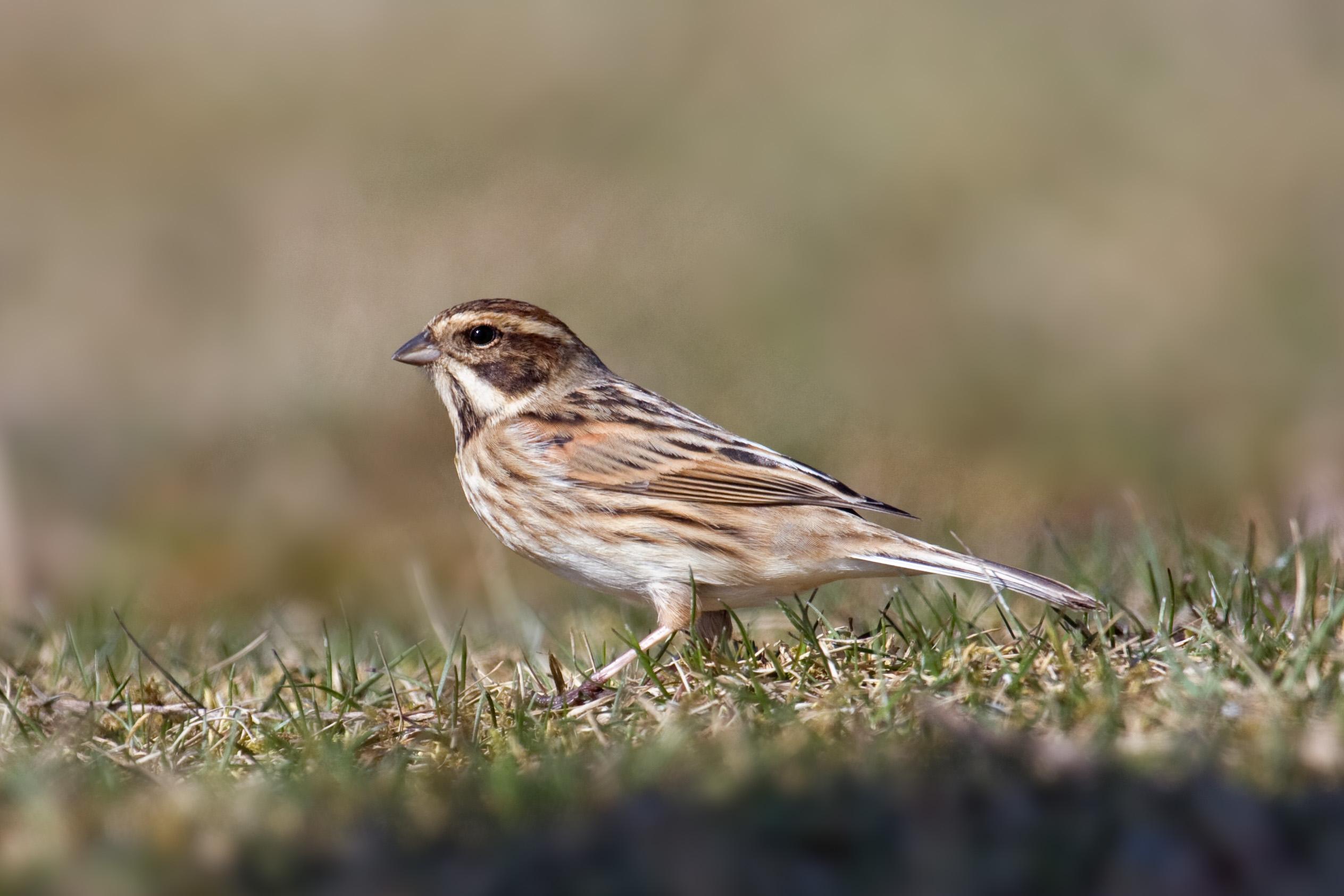
Females look more inconspicuous with a drab brown head and a black-and-white moustachial stripe and a pale supercilium (plumage on the head).
Features
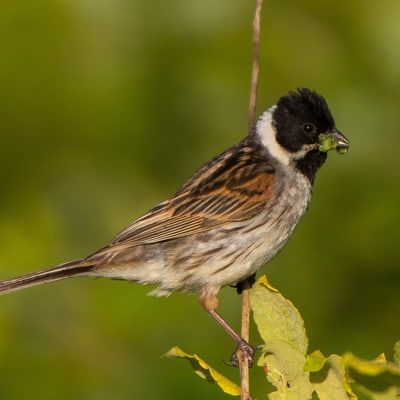
Common reed bunting
Emberiza schoeniclus
males with white neck collar
Gesang
Conrads, CC BY-SA 3.0

Similar species
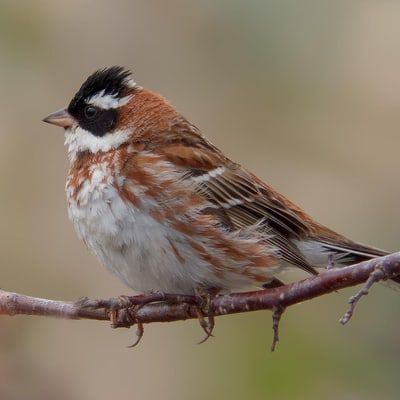
Rustic bunting
Emberiza rustica
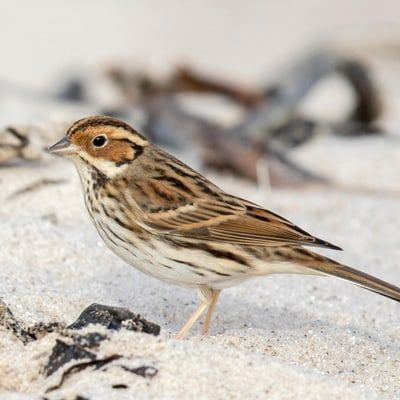
Little bunting
Emberiza pusilla
In the city
Common reed buntings are found near inland waters with dense vegetation along their banks. In winter, some leave these areas close to bodies of water and move with chaffinches and sparrows to parks or feeding sites.
Fun Facts
Common reed buntings complain loudly when disturbed.
Common reed buntings are migratory birds that hibernate in the Mediterranean. They return to Germany from their winter quarters from March onwards.
The common reed bunting is also known as the reed sparrow, because of its similarity in size and colour - with the exception of its black head markings.
- Endangerment level Germany: not endangered
Sources
Männchen, Andreas Trepte, CC BY-SA 2.5, https://commons.wikimedia.org/wiki/File:Rohrammer_maenchen.jpg

Weibchen, Andreas Trepte, CC BY-SA 2.5, https://commons.wikimedia.org/wiki/File:Reed_Bunting.jpg

Männchen, Martin Mecnarowski, CC BY-SA 3.0, https://commons.wikimedia.org/wiki/File:Emberiza_schoeniclus_1_(Martin_Mecnarowski).jpg
.jpg)
Svensson, L. (2011) Der Kosmos Vogelführer - Alle Arten Europas, Nordafrikas und Vorderasiens, Stuttgart: Franckh Kosmos Verlag.
Page „Rohrammer“. : Wikipedia, The Free Encyclopedia. Date of last revision: 10.12.2015, 11:29 UTC. URL: https://de.wikipedia.org/w/index.php?title=Rohrammer&oldid=148926025 (Accessed: 12.02.2016).
Singer, D. (2013): Welcher Vogel ist das?: Vögel Europas. Der Kosmos Naturführer, edition 3, Stuttgart: Franckh Kosmos Verlag.
Brodowski, G. (2007-2021) Die Rohrammer, URL: http://www.brodowski-fotografie.de/beobachtungen/rohrammer.html (Accessed: 22.03.2021).
Witt, K. & Steiof, K. (2013) Rote Liste und Liste der Brutvögel von Berlin, 3. version, 15.11.2013. : Berliner Ornithologische Arbeitsgemeinschaft e.V. (eds.) Berliner Ornithologischer Bericht, volume 23, Berlin: Berliner Ornithologische Arbeitsgemeinschaft e.V., 1-23.
NABU – Naturschutzbund Deutschland e.V. (2016) Rote Liste der Brutvögel Deutschlands. 5. version, published August 2016, URL: https://www.nabu.de/tiere-und-pflanzen/voegel/artenschutz/rote-listen/10221.html (Accessed: 07.04.2017).