
Short Description
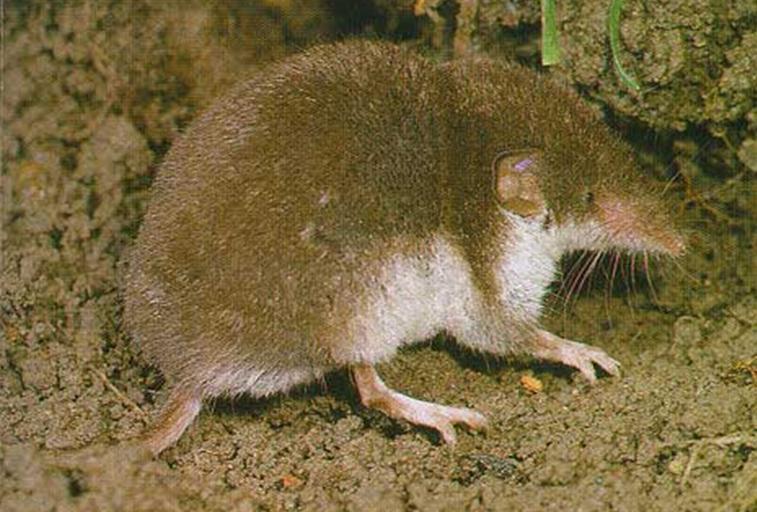
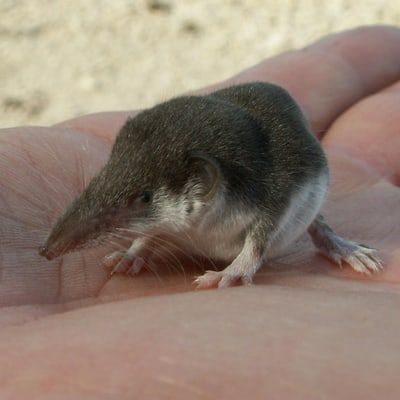
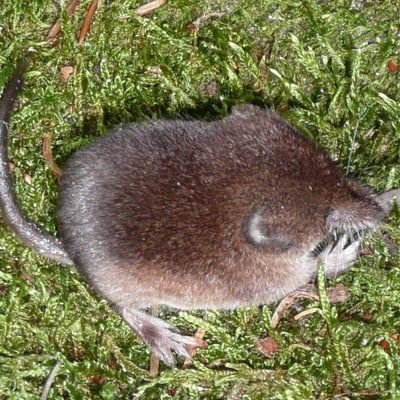
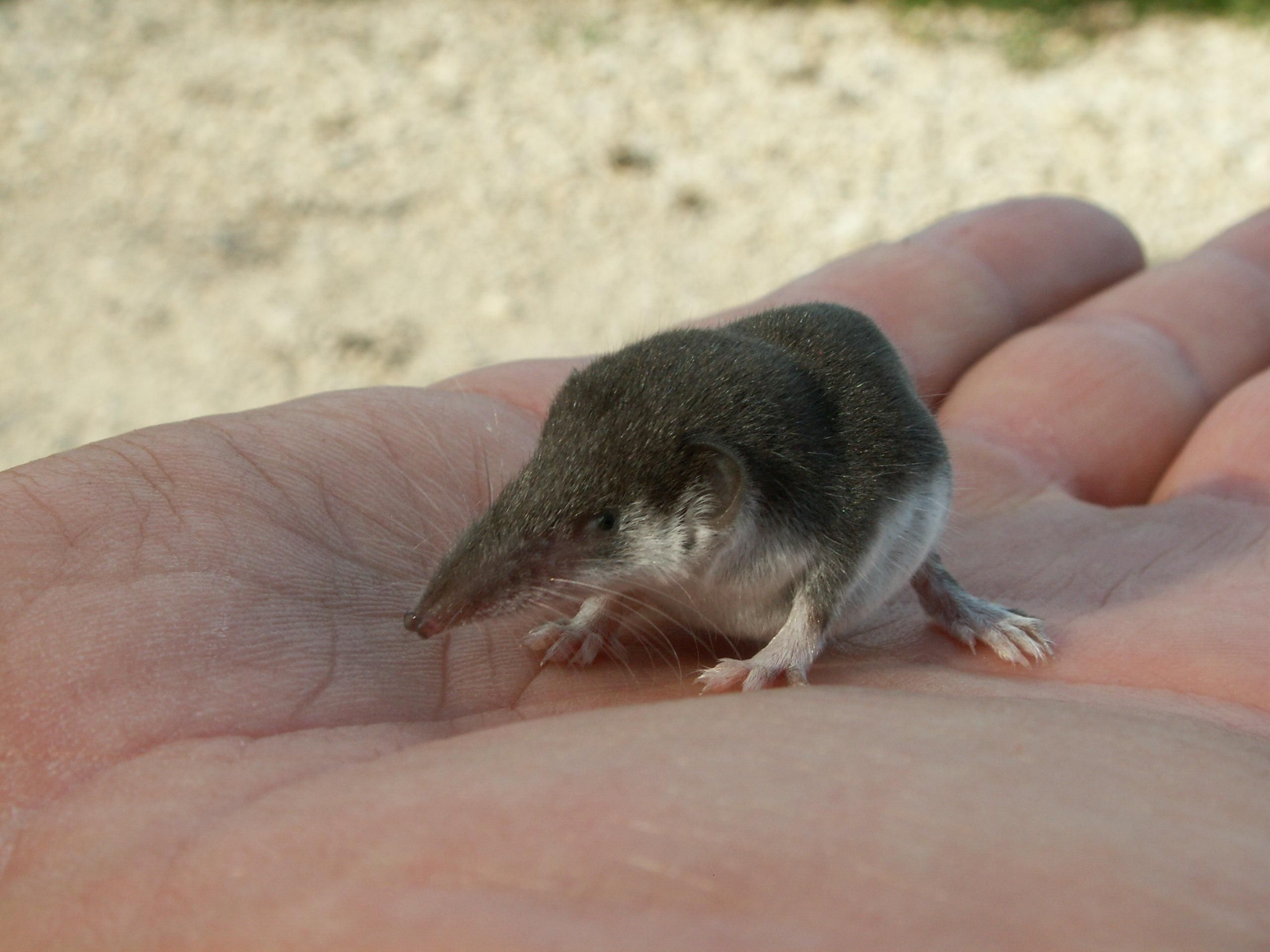
The bicoloured shrew has quite a pointed muzzle and small eyes. Its upper side is brown-grey. The sides and the underside are white. There is a sharp dividing line between the two colours on the back and on the belly. The tail is dark on top and lighter underneath. The outer ears project from the fur. It has five splayed toes on each of its front and back paws. A fine line from its tail can also often be seen.
Features
Bicoloured shrew
Crocidura leucodon
long pointed muzzle
projecting ears
In the city
Bicoloured shrews are often found in larger towns. They mainly live in open, much frequented habitats. These include uncultivated land, waysides, fields and gardens. They do not live in wooded areas.
During the cold season, in particular, they seek out houses or apartments for hibernating.
Fun Facts
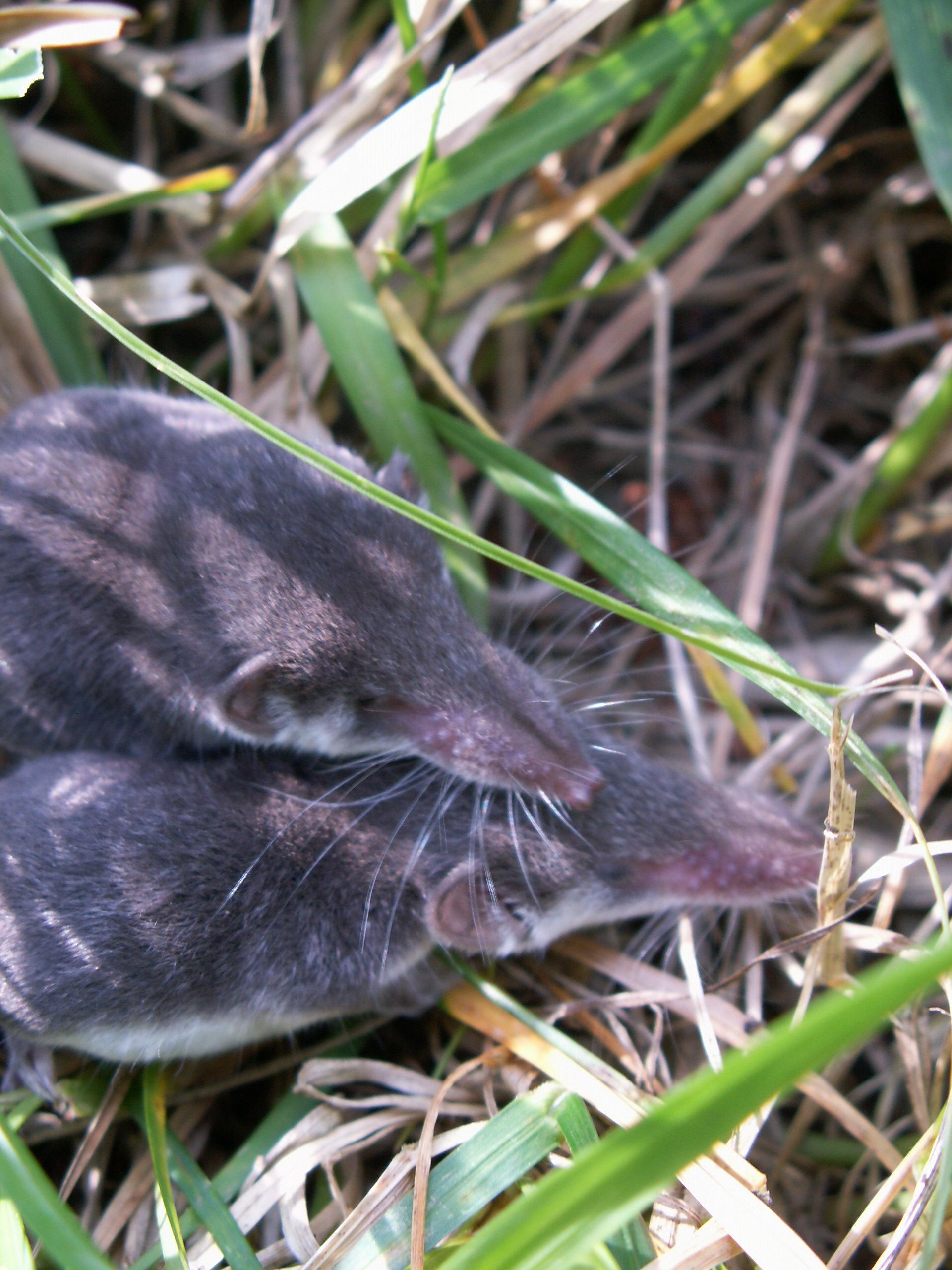
In spring, females and their offspring form typical caravans. Each animal clings on to the tail of the one in front.
Bicoloured shrews feed mainly on insects and molluscs.
They are predominantly nocturnal.
They constitute an important food source for many birds of prey such as the barn owl or the brown owl.
- Endangerment level Germany: Warning list
Sources
Habitus , Dodoni, CC BY-SA 3.0, https://commons.wikimedia.org/wiki/File:Crocidura_leucodon.JPG

Paar, Werner Korschinsky, PD, https://commons.wikimedia.org/wiki/File:Crocidura_leucodon-2.jpg

Habitus , Werner Korschinsky, PD, https://commons.wikimedia.org/wiki/File:Crocidura_leucodon-1.jpg

Shenbrot, G., Hutterer, R., Kryštufek, B., Yigit, N., Mitsainas, G. & Palomo, L. (2016) Crocidura leucodon. The IUCN Red List of Threatened Species, URL: http://www.iucnredlist.org/details/29651/0 (Accessed: 29.12.2016).
Page „Feldspitzmaus“. : Wikipedia, The Free Encyclopedia. Date of last revision: 29.10.2016, 21:18 UTC. URL: https://de.wikipedia.org/w/index.php?title=Feldspitzmaus&oldid=159191290 (Accessed: 29.12.2016).
apodemus - Privates Institut für Wildtierbiologie (n.d.) Informationen über mitteleuropäische Kleinsäuger, URL: http://kleinsaeuger.at/crocidura-leucodon.html (Accessed: 29.12.2016).
Tierdoku (2009) Feldspitzmaus, URL: http://tierdoku.com/index.php?title=Feldspitzmaus (Accessed: 29.12.2016).
Zoologische Staatssammlung München (n.d.) Feldspitzmaus, URL: https://www.zsm.mwn.de/external/ksaeuger/feldspitzmaus.html (Accessed: 29.12.2016).
Resch, C. & Resch, S. (2016) Waldspitzmaus - Sorex araneus, URL: http://kleinsaeuger.at/sorex-araneus.html (Accessed: 29.12.2016).
Haupt, H., Ludwig, G., Gruttke, H., Binot-Hafke, M., Otto C. & Pauly, A. (2009) Rote Liste gefährdeter Tiere, Pflanzen und Pilze Deutschlands. volume 1: Wirbeltiere, Bonn-Bad Godesberg: Bundesamt für Naturschutz.
Klawitter, J., Altenkamp, R., Kallasch, C., Köhler, D., Krauß, M., Rosenau, S. & Teige, T. (2005) Rote Liste und Gesamtartenliste der Säugetiere (Mammalia) von Berlin. : Der Landesbeauftragte für Naturschutz und Landschaftspflege / Senatsverwaltung für Stadtentwicklung (eds.) Rote Listen der gefährdeten Pflanzen und Tiere von Berlin, URL: https://www.berlin.de/sen/uvk/natur-und-gruen/naturschutz/artenschutz/artenlisten-rote-listen/saeugetiere/ (Accessed: 30.03.2021).
Boye, P. (1993) Heimische Säugetiere. Ein Bestimmungsschlüssel für die in der Bundesrepublik Deutschland wildlebenden Säugetiere, ausser den Ordnungen Robben, Paarhufer und Wale, Hamburg: Deutscher Jugendbund für Naturbeobachtungen.