
Short Description
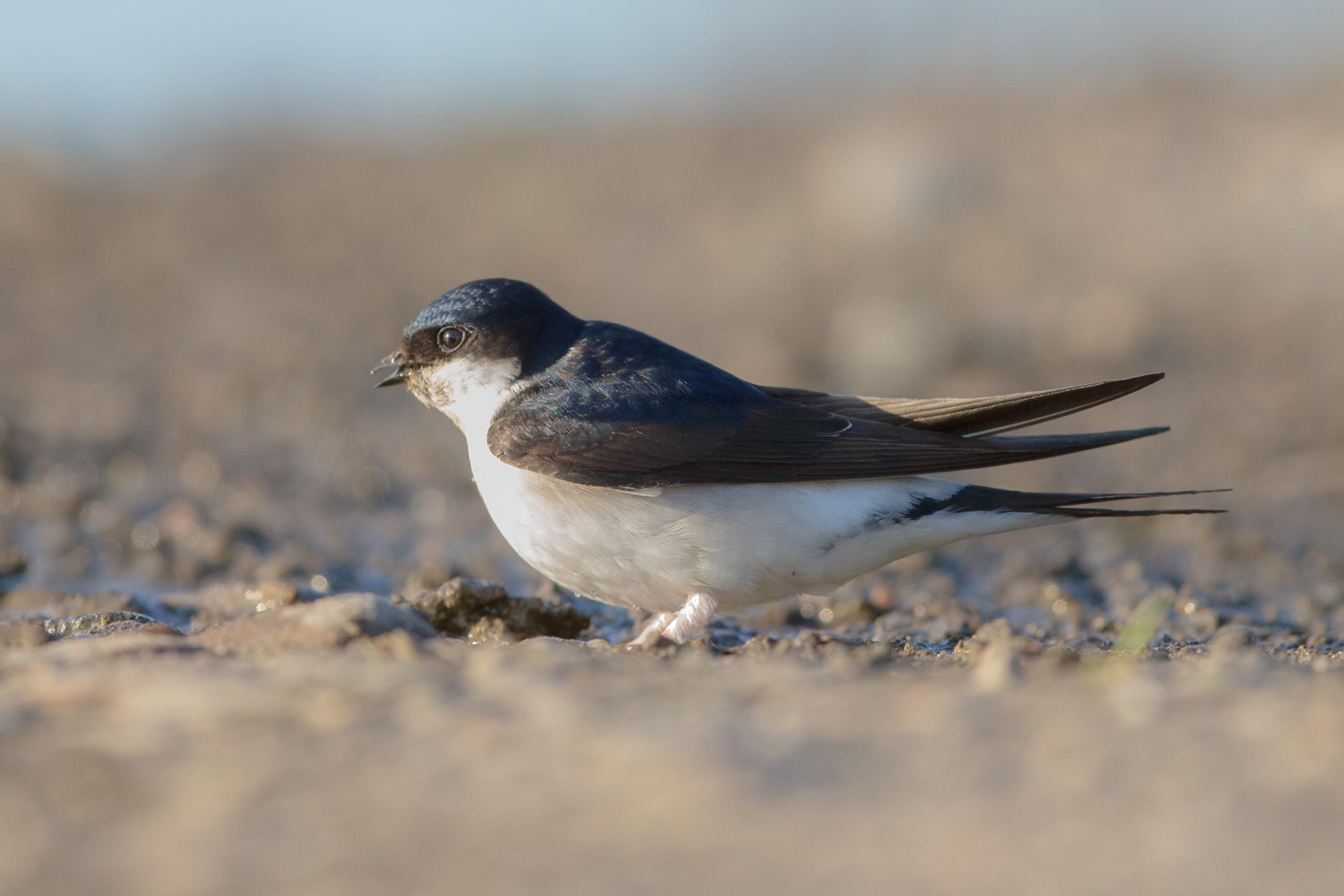
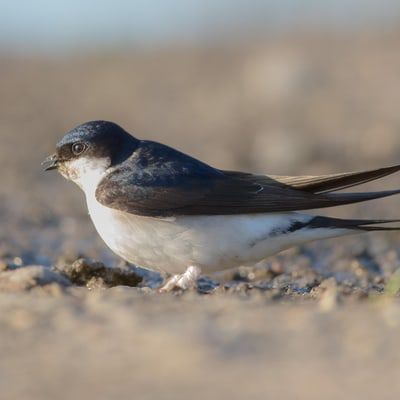
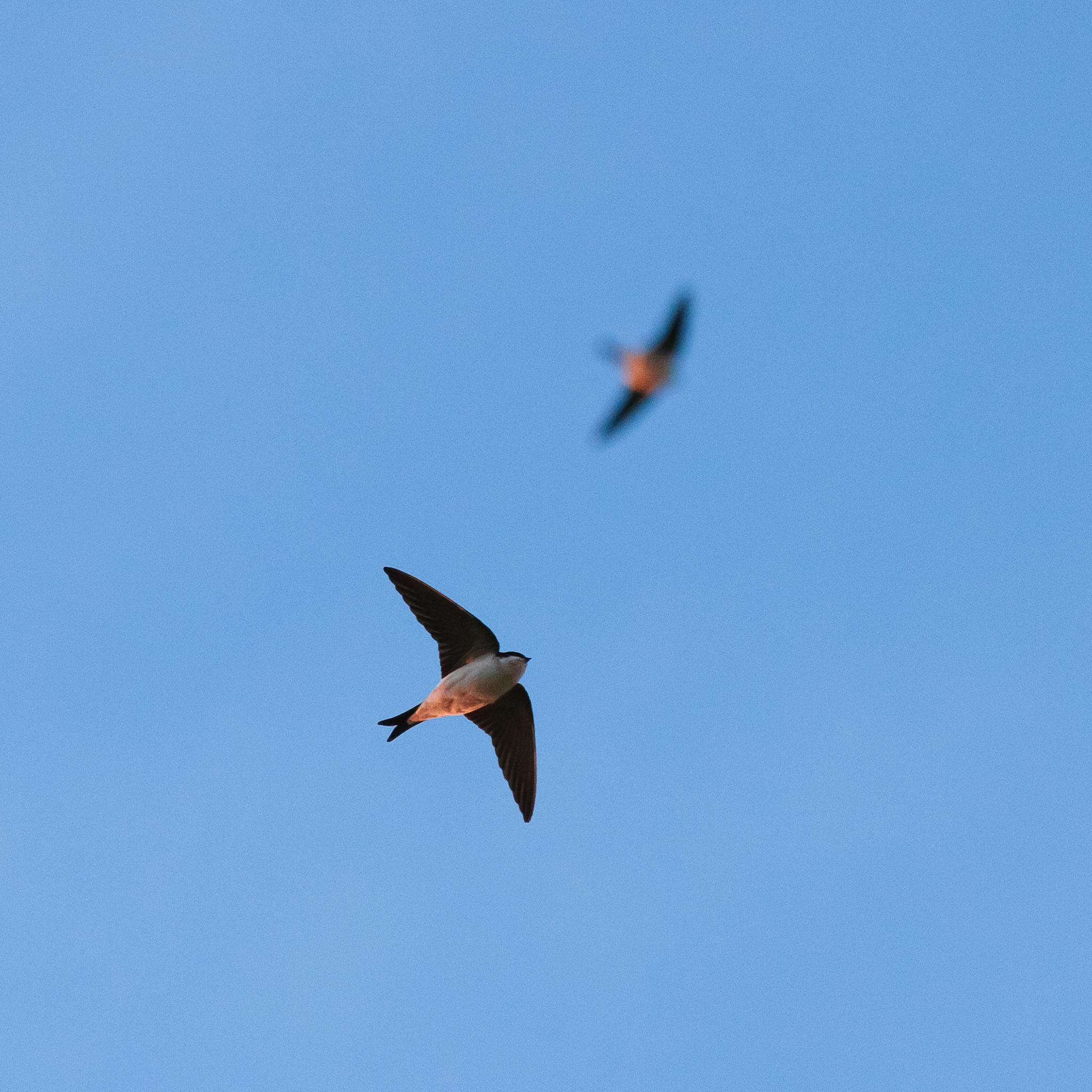
The common house martin is black and white and has a short forked tail. Striking features are its white underparts and the white rump in contrast to the black to blue-black of the rest of its body.
Features
Common house martin
Delichon urbicum
forked tail
white underparts and rump
Rufe
Frommolt (CC BY-SA 3.0)

In the city
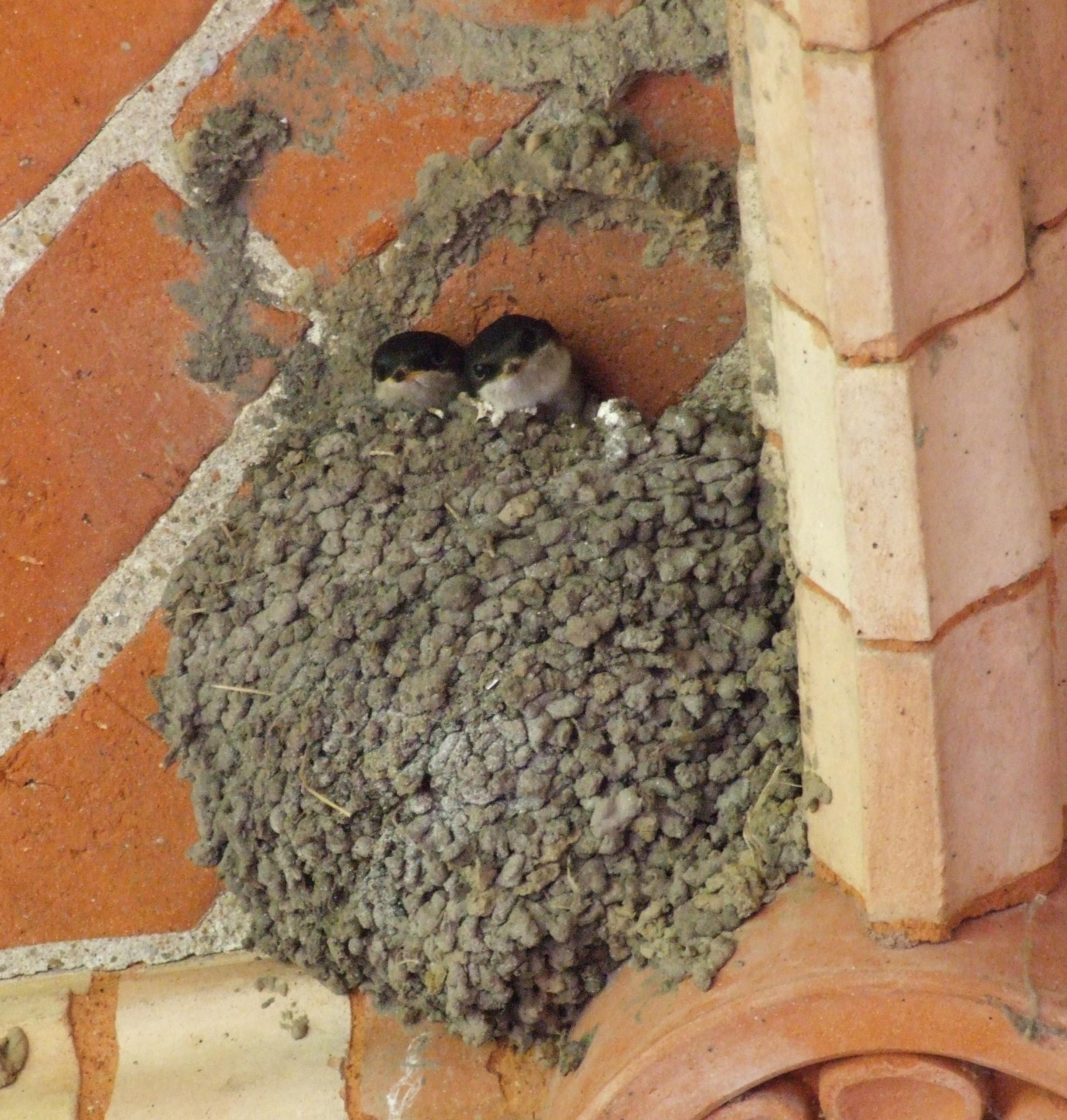
House martins require vertical surfaces with overhangs to build their nests. These can be frequently found in town. e.g. in form of house eaves or roofed gateways. They build their nests on the outside walls. In general, they benefit from nesting options created by humans. However, smooth modern and modernised façades are frequently not suitable.
Fun Facts
House martins breed colonially. A colony generally consists of four to five nests.
They are migratory birds and can be observed in Germany between the end of April and the end of September. They hibernate in Africa.
House martins are very loyal to the place of their birth.
- Endangerment level Germany: endangered
Sources
Habitus , Andreas Trepte, CC BY-SA 2.5, https://commons.wikimedia.org/wiki/File:Mehlschwalbe_Delichon_urbicum.jpg

im Flug, Martin, CC BY-SA 2.0, https://commons.wikimedia.org/wiki/File:Delichon_urbicum_-Ireland_-flying-8.jpg

Jungtier, Claus Ableiter, CC BY-SA 3.0, https://commons.wikimedia.org/wiki/File:Zwei_Jungschwalben_im_Nest.jpg

Page „Mehlschwalbe“. : Wikipedia, The Free Encyclopedia. Date of last revision: 21.09.2015, 14:10 UTC. URL: https://de.wikipedia.org/w/index.php?title=Mehlschwalbe&oldid=146261446 (Accessed: 09.02.2016).
Bejcek, V. (1988) Zugvögel, Hanau/Main: Verlag Werner Dausien.
Witt, K. & Steiof, K. (2013) Rote Liste und Liste der Brutvögel von Berlin, 3. version, 15.11.2013. : Berliner Ornithologische Arbeitsgemeinschaft e.V. (eds.) Berliner Ornithologischer Bericht, volume 23, Berlin: Berliner Ornithologische Arbeitsgemeinschaft e.V., 1-23.
NABU – Naturschutzbund Deutschland e.V. (2016) Rote Liste der Brutvögel Deutschlands. 5. version, published August 2016, URL: https://www.nabu.de/tiere-und-pflanzen/voegel/artenschutz/rote-listen/10221.html (Accessed: 07.04.2017).