
Short Description
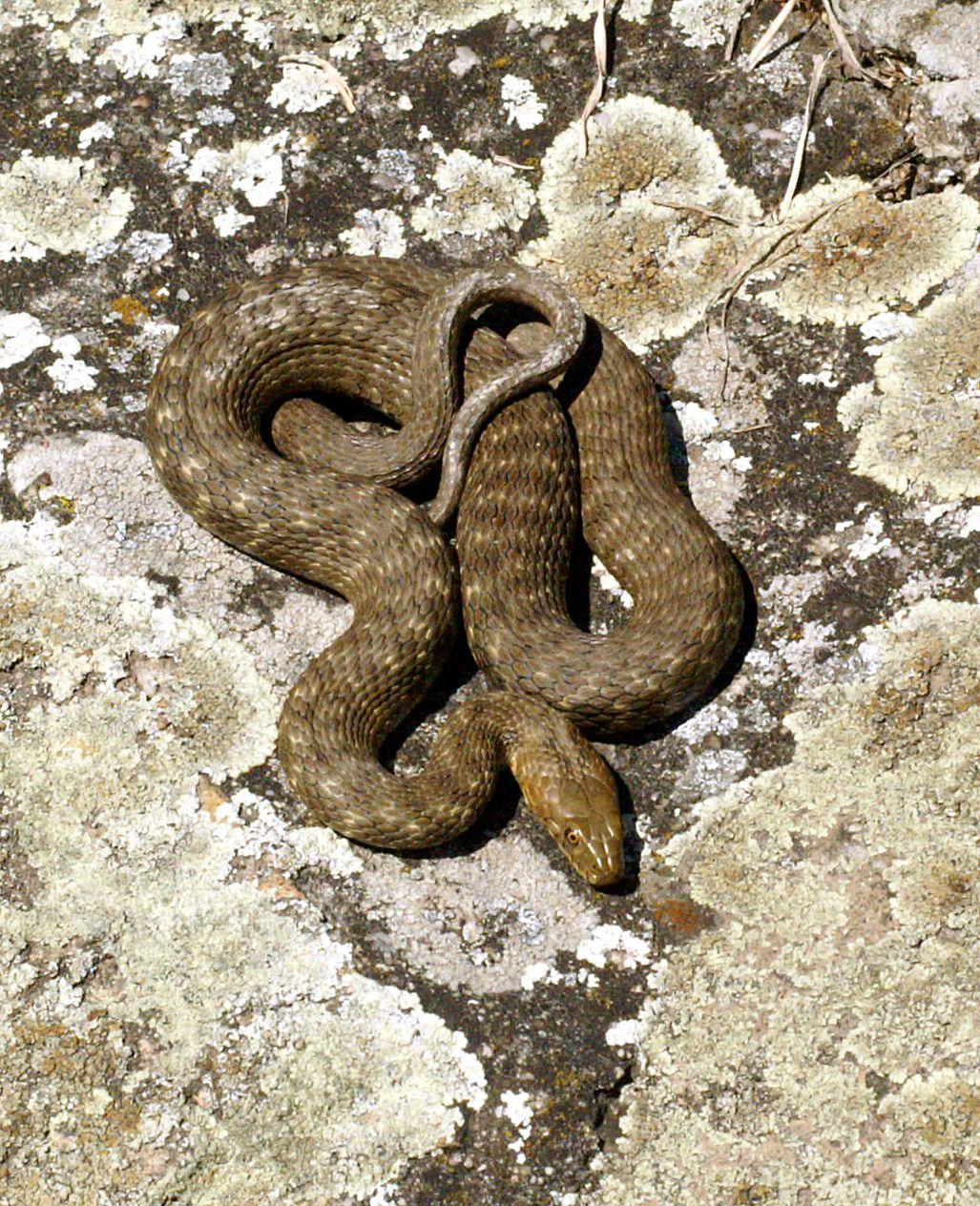
The dice snake is grey, brown or olive. On the back it has four to five rows of dark, mostly square spots. The underside is white to yellow and also has square, darker spots. Its narrow, pointed head is clearly set off from the body.
The male is somewhat shorter and usually only reaches 80 cm.
Features
Tessellated water snake
Natrix tessellata
square spots
In the city
The dice snake is found on sunny stretches of river. It needs riparian zones rich in structures and creeks, such as those found near weirs and dams. In addition, slopes with rocks and dry walls in dry grasslands are important as winter quarters and basking sites.
It is threatened with extinction. The reason for this is, among other things, river regulation and the expansion of roads.
Fun Facts
The dice snake is a water snakes.
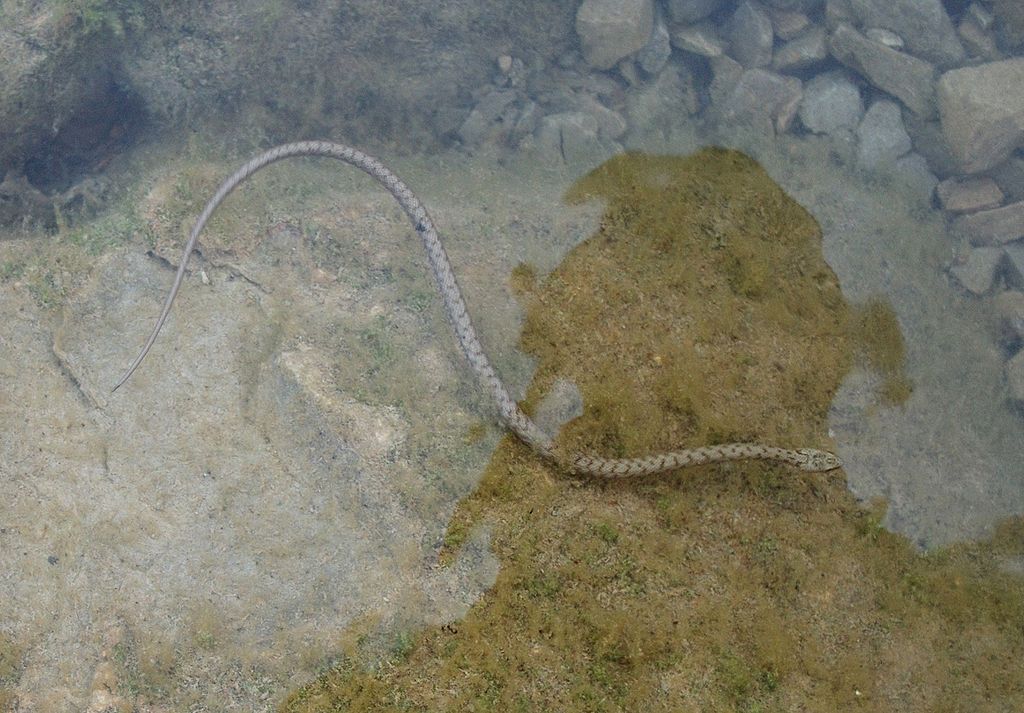
It is adapted to life in the water. Its eyes and nostrils are moved upwards, for example.
It is diurnal and feeds on fish.
It is very rare and only occurs on three Rhine tributaries in Rhineland-Palatinate: Lahn, Moselle and Nahe.
- Endangerment level Germany: threatened with extinction
Sources
Habitus , Orchi, CC BY-SA 3.0, https://commons.wikimedia.org/wiki/File:Natrix_tessellata_Rheinland-Pfalz_01.jpg

Juvenile, Alma, CC BY-SA 3.0, https://commons.wikimedia.org/wiki/File:Natrix_tessellata_Juv.JPG

Page „Würfelnatter“. : Wikipedia, The Free Encyclopedia. Date of last revision: 05.01.2019, 07:32 UTC. URL: https://de.wikipedia.org/w/index.php?title=W%C3%BCrfelnatter&oldid=184411143 (Accessed: 27.02.2019).