
Short Description
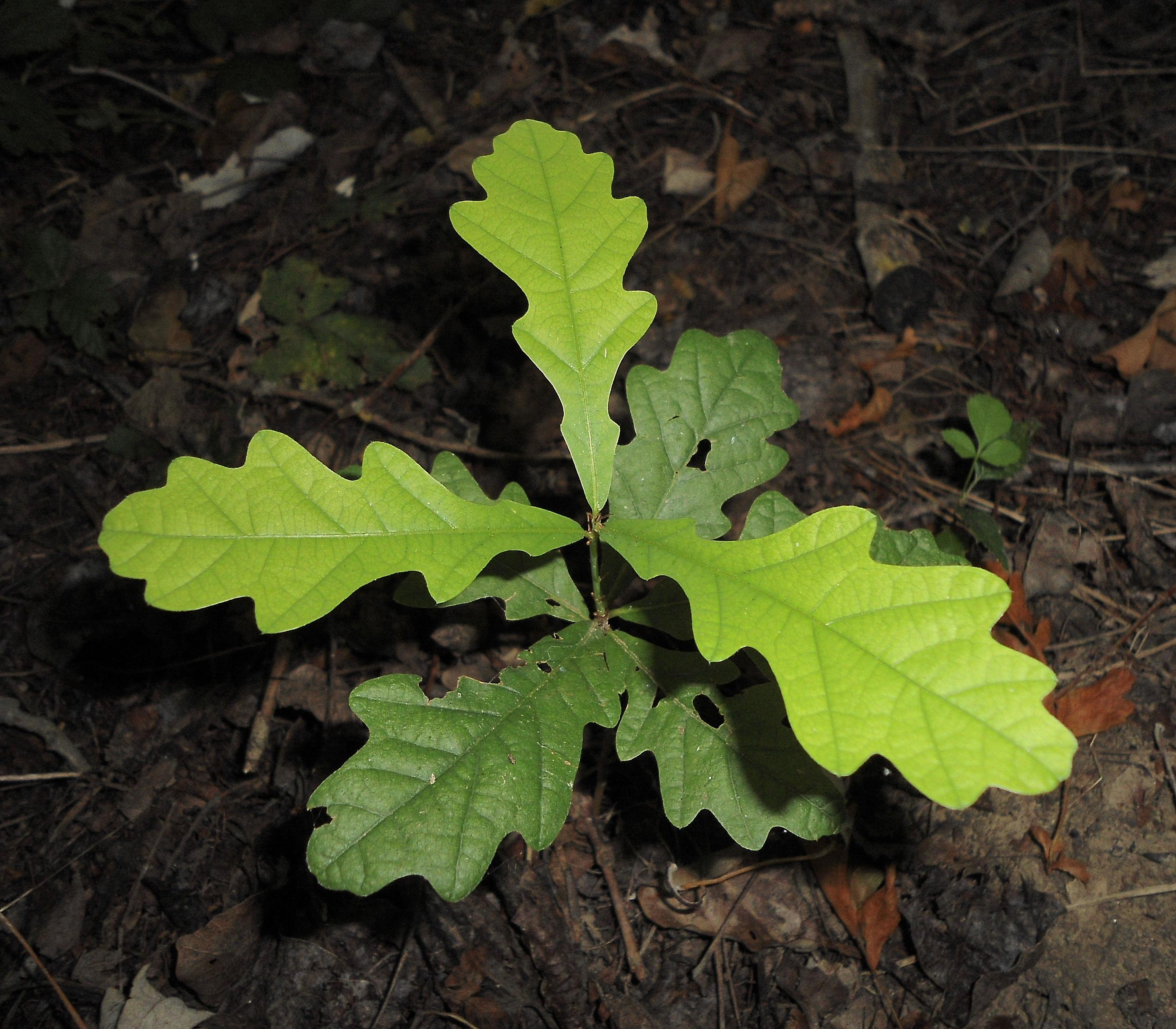
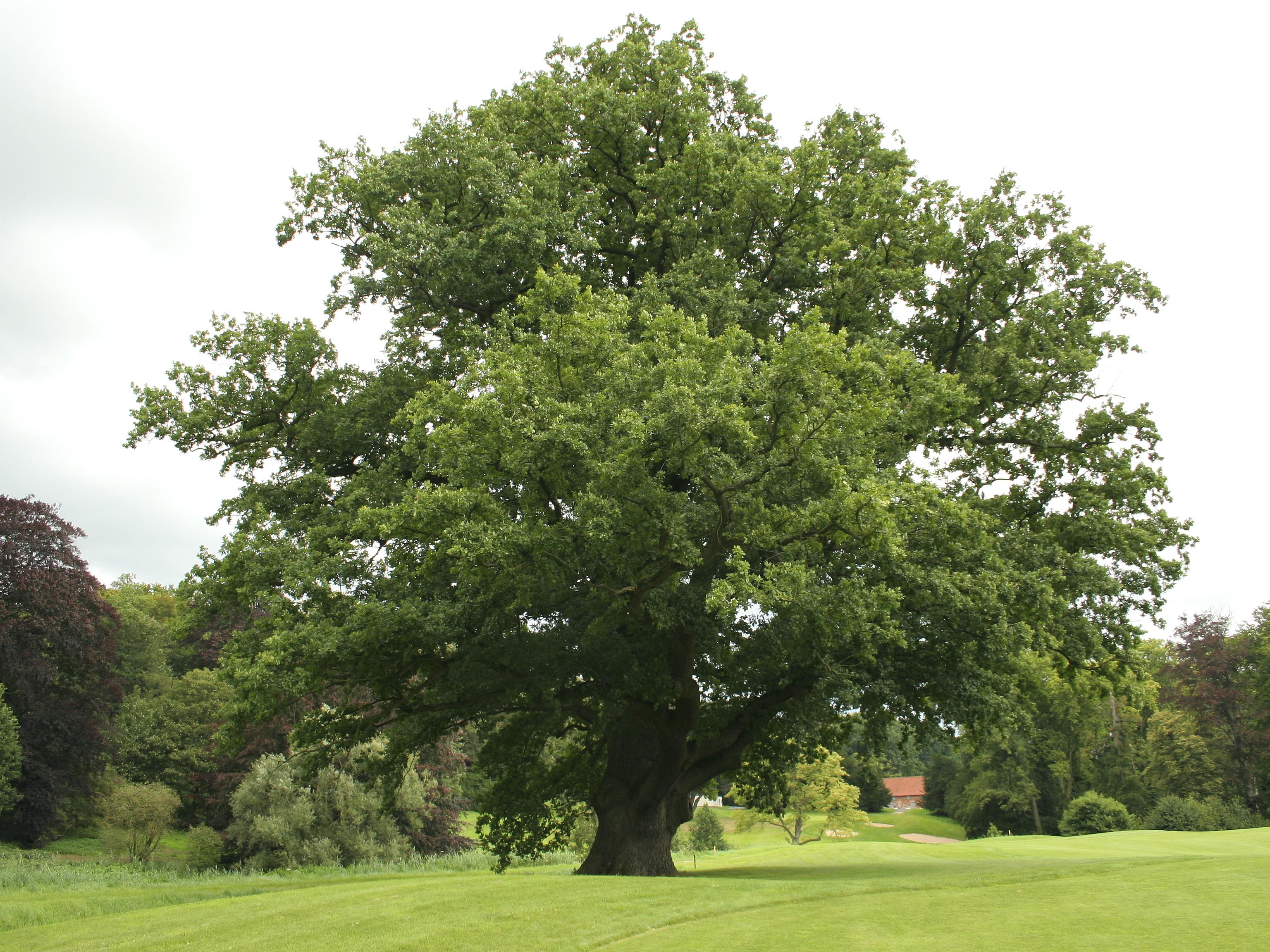
The common oak can grow up to 50 m tall. It has a short trunk and a sparse crown.
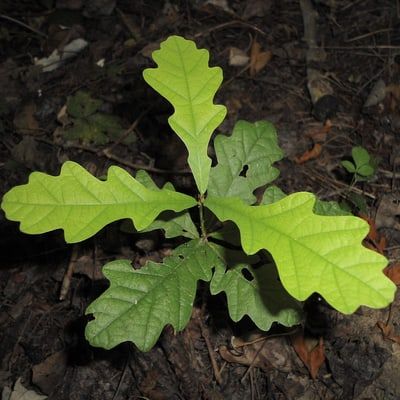
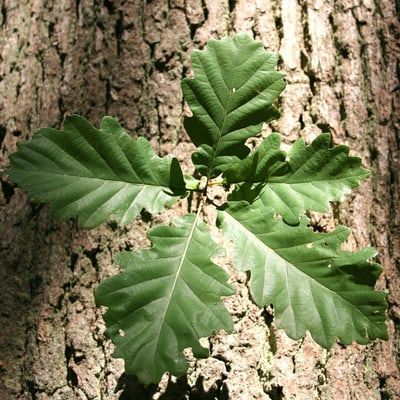
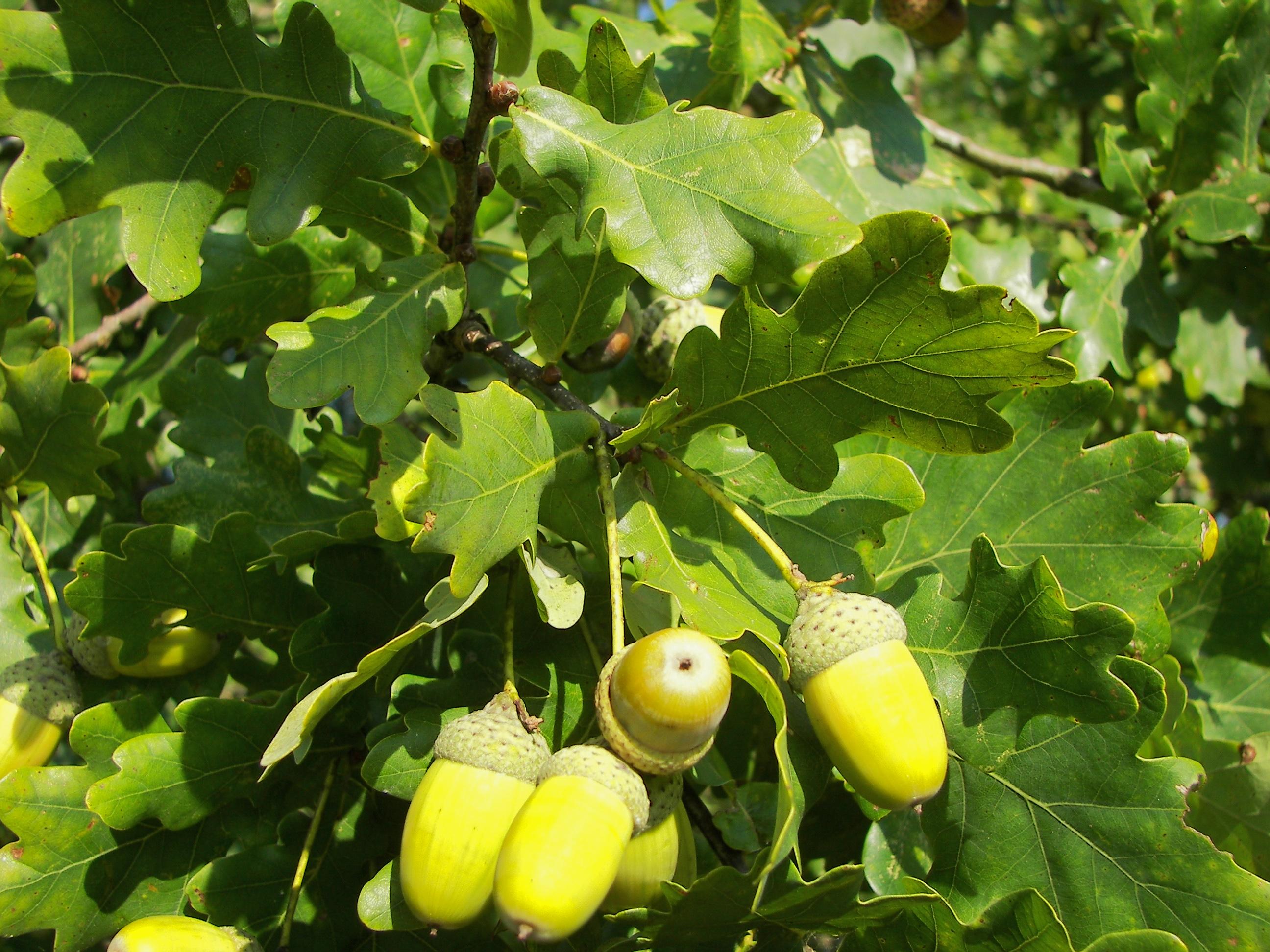
Its leaves are oval to obovate with several blunt lobes and short stalks. They are alternately arranged on the stem. The leaf base is generally heart-shaped and ear-like (auriculate). The underside of the leaves is generally hairless.
The bark is thick, grey-brown with deep vertical fissures.
The tree has male and female flowers. The male flowers are arranged in long drooping catkins and are greenish-yellow. The female flowers are noticeably more inconspicuous, slightly red and found at the tips of the new shoots in flower heads with short or no stalks.
The individual nuts (“acorns”) are clustered in seed heads. The seed heads have a long stalk.
Features
Common oak
Quercus robur
obtusely lobed leaves
leaves with short stalks
seed heads with long stalks
In the city
The common oak is a frequent and popular road and urban tree. It is considered salt-tolerant and therefore copes well with salt spreading in winter. Its potential for improving urban air quality by binding particulate matter is also discussed. The crowns and old tree trunks provide an important habitat for numerous animals (especially birds and insects) and thus contribute to ecological diversity in the city.
Fun Facts
Across Germany, about 30% of trees older than 500 years are common oaks.
The tannins in bark, fruits and leaves are used in natural medicine against inflammations.
There is a lot of discussion amongst scientists whether the sessile oak and the common oak are different species in view of their unproblematic crossbreeding and the existence of numerous transitional forms.
In the forests of central Europe, oaks could only become established with human support; otherwise they would have been displaced by the European beech.
It flowers from April to May.
The fruit ripens in September to October.
- Endangerment level Germany: not endangered
- Usage:
Tannins from oak bark were used to tan leather.
Leaves, bark and acorns (particularly unripe ones) are poisonous to horses and cattle.
Sources
Blatt, Dimìtar Nàydenov, CC BY-SA 4.0, https://commons.wikimedia.org/wiki/File:%D0%9E%D0%B1%D0%B8%D0%BA%D0%BD%D0%BE%D0%B2%D0%B5%D0%BD_%D0%B4%D1%8A%D0%B1_-_%D1%84%D0%B8%D0%B4%D0%B0%D0%BD%D0%BA%D0%B0.jpg

Habitus, Jean-Pol GRANDMONT, CC BY-SA 3.0, https://commons.wikimedia.org/wiki/File:Quercus_robur_JPG_(d1).jpg
.jpg)
Frucht, Nikanos, CC BY-SA 2.5, https://commons.wikimedia.org/wiki/File:Quercus_Robur_031.jpg

Aas, G. & Riedmiller, A. (2002) Laubbäume. Bestimmen – Kennenlernen – Schützen, Bindlach: Gondrom Verlag.
Amann, G. & Richter, P. (1962) Bäume und Sträucher des Waldes, Melsungen: Verlag J. Neumann – Neudamm.
Forum DIE GRÜNE STADT (2013) Bäume und Pflanzen lassen Städte atmen. Schwerpunkt - Feinstaub, URL: https://www.die-gruene-stadt.de/baeume-und-pflanzen-lassen-staedte-atmen.pdfx (Accessed: 02.08.2018).
Böhlmann, D. (2015) Laubbäume temperierter Klimate mit ihrer Artenvielfalt, Berlin: Patzer Verlag.
Mitchell, A. (1975) Die Wald- und Parkbäume Europas. Ein Bestimmungsbuch, Hamburg und Berlin: Verlag Paul Parey.
Quartier, A. (1989) Bäume und Sträucher, München: BLV.
Roloff, A. (2013) Bäume in der Stadt. Besonderheiten - Funktion - Nutzen - Arten - Risiken, Stuttgart: Verlag Eugen Ulmer.
Roth, L., Daunderer, M. & Kormann, K. (2008) Giftpflanzen - Pflanzengifte. Vorkommen, Wirkung, Therapie. Allergische und phototoxische Reaktionen, Hamburg: Nikol Verlag.
Page „Stieleiche“. : Wikipedia, The Free Encyclopedia. Date of last revision: 12.04.2016, 06:48 UTC. URL: https://de.wikipedia.org/w/index.php?title=Stieleiche&oldid=153399112 (Accessed: 26.05.2016).