
Short Description
The Scots elm is a deciduous tree and has a broad irregular many-domed crown. It can grow up to 20 m tall.
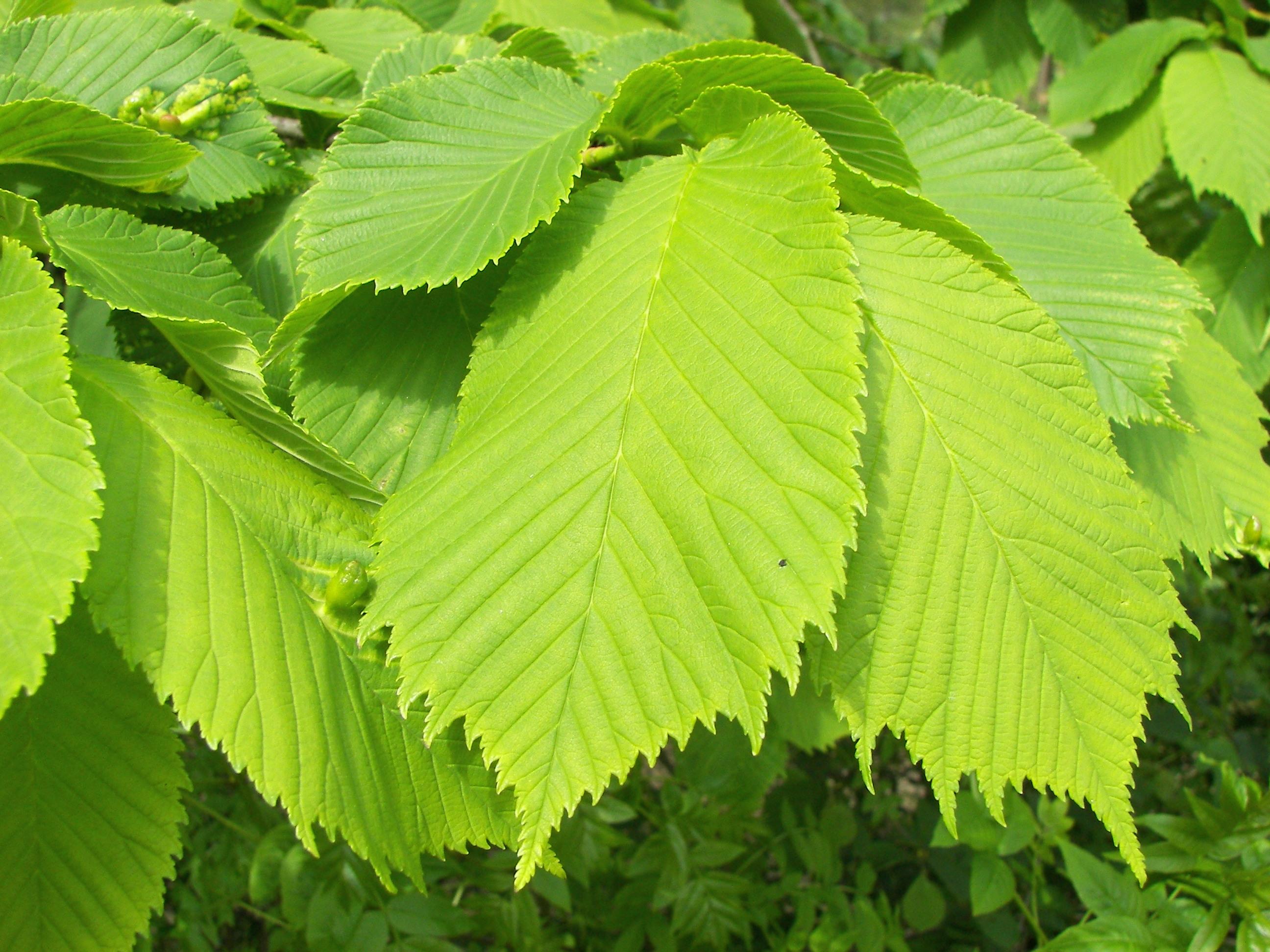
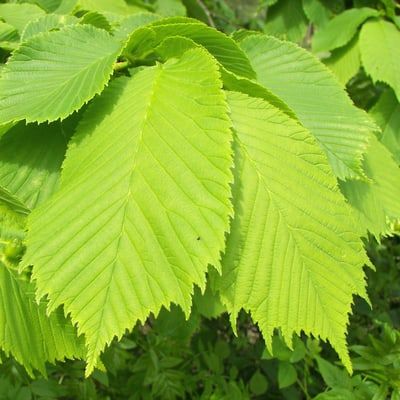
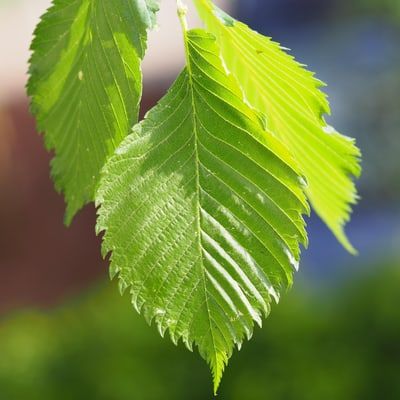
The leaves grow alternately on the branch. They are oval and frequently have three lobes. The upper surface is often rough. The leaf base is clearly asymmetric and the leaf margin double-serrated.
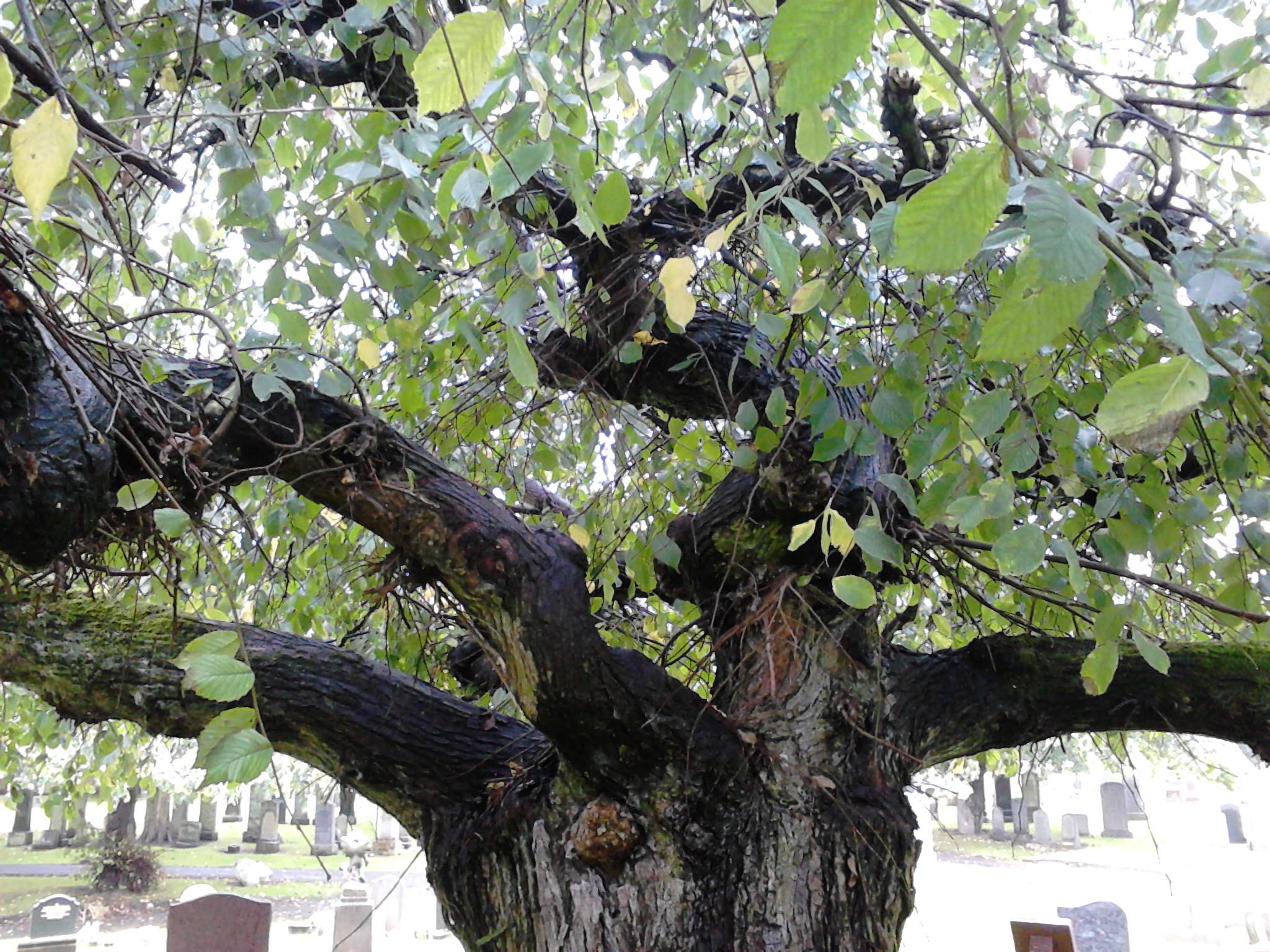
The trunk is often leaning or not quite upright with arched and almost horizontal branches. The bark remains smooth and silver-grey for a long time. With age, though, it becomes increasingly darker and develops longitudinal cracks.
The flowers appear in dense greenish-brown clusters. The individual florets are inconspicuous with a red ciliated perianth and clearly extending stamens. They have a short stalk.
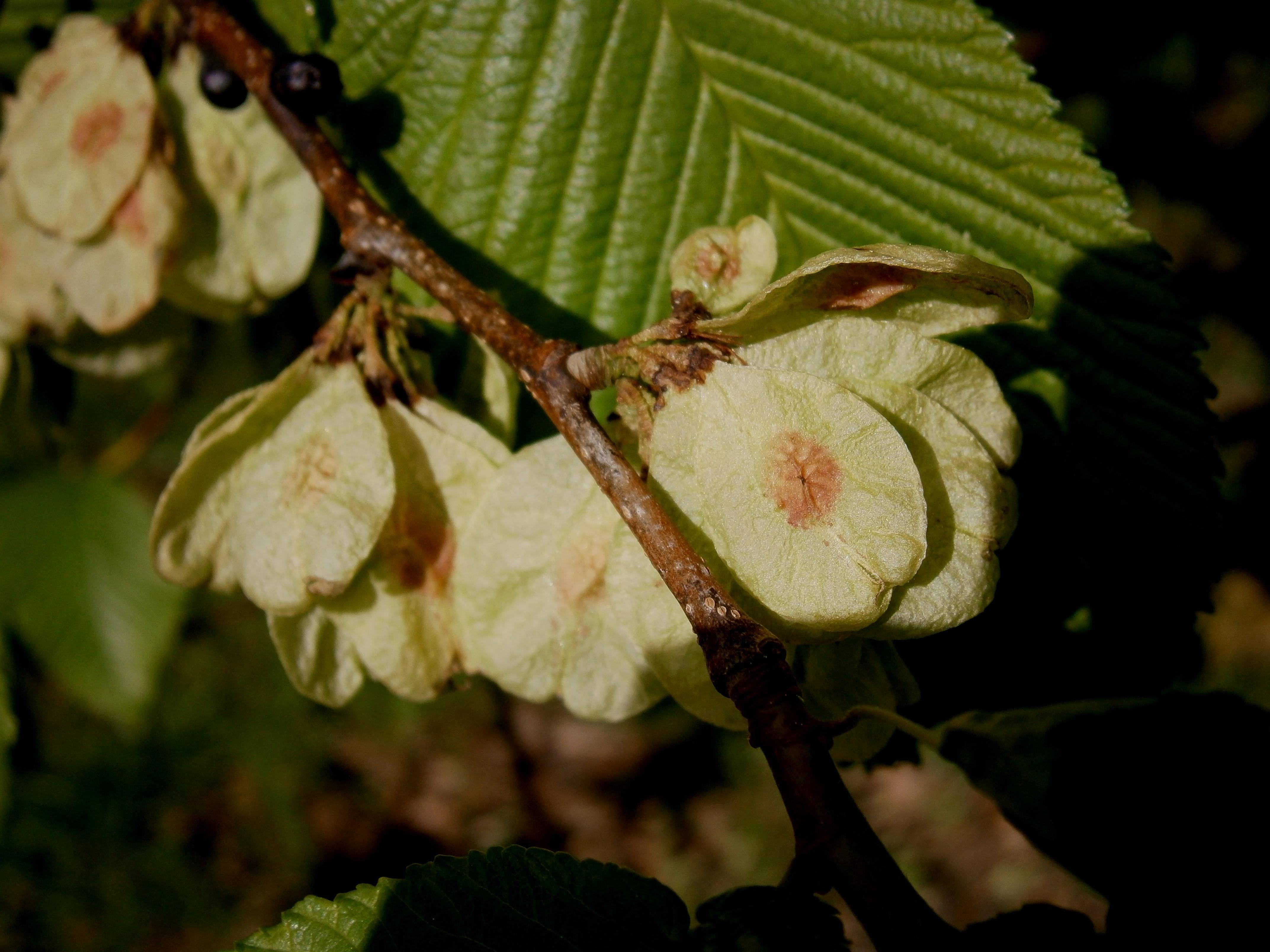
The fruits are broad winged nuts. They ripen from greenish to whitish.
Features
Scots elm
Ulmus glabra
very rough leaf surface
asymmetric leaf base
In the city
The Scots elm is often planted in parks. The associated garden varieties are most frequently planted. Elms are well able to cope with droughts and shady sites and are thus well suited to parking places and pedestrian areas. As elms tend to develop a shallow root system which can lift pavement or road surfaces, they are less suitable as roadside trees.
Fun Facts
From the 1920s, elms across all of Europe have been affected by a fungus causing them to die. This has caused a significant reduction in their population.
The fruits are disseminated by the wind as “whirlygigs”.
An oil can be produced from the seeds.
Elm wood used to be a sought-after wood for the construction of stairs and bridges because it is very weatherproof.
It flowers from March to April.
The fruit ripening season is in April to June.
- Endangerment level Germany: not endangered
Bark and leaves were formerly used to treat rheumatic complaints and skin rashes.
Sources
Blatt, Willow, CC BY-SA 3.0, https://commons.wikimedia.org/wiki/File:Ulmus_glabra_001.jpg

Rinde, Tom elm, CC BY-SA 4.0, https://commons.wikimedia.org/wiki/File:Ulmus_glabra_%27Horizontalis%27._Seafield_Cemetery,_Edinburgh_(2).jpg
.jpg)
Frucht, Meneerke bloem, CC BY-SA 3.0, https://commons.wikimedia.org/wiki/File:Ulmus_glabra_seed_02.jpg

Aas, G. & Riedmiller, A. (2002) Laubbäume. Bestimmen – Kennenlernen – Schützen, Bindlach: Gondrom Verlag.
Amann, G. & Richter, P. (1962) Bäume und Sträucher des Waldes, Melsungen: Verlag J. Neumann – Neudamm.
Böhlmann, D. (2015) Laubbäume temperierter Klimate mit ihrer Artenvielfalt, Berlin: Patzer Verlag.
Mitchell, A. (1975) Die Wald- und Parkbäume Europas. Ein Bestimmungsbuch, Hamburg und Berlin: Verlag Paul Parey.
Roloff, A. (2013) Bäume in der Stadt. Besonderheiten - Funktion - Nutzen - Arten - Risiken, Stuttgart: Verlag Eugen Ulmer.
Page „Bergulme“. : Wikipedia, The Free Encyclopedia. Date of last revision: 13.02.2016, 20:09 UTC. URL: https://de.wikipedia.org/w/index.php?title=Bergulme&oldid=151453773 (Accessed: 19.05.2016).