
Short Description
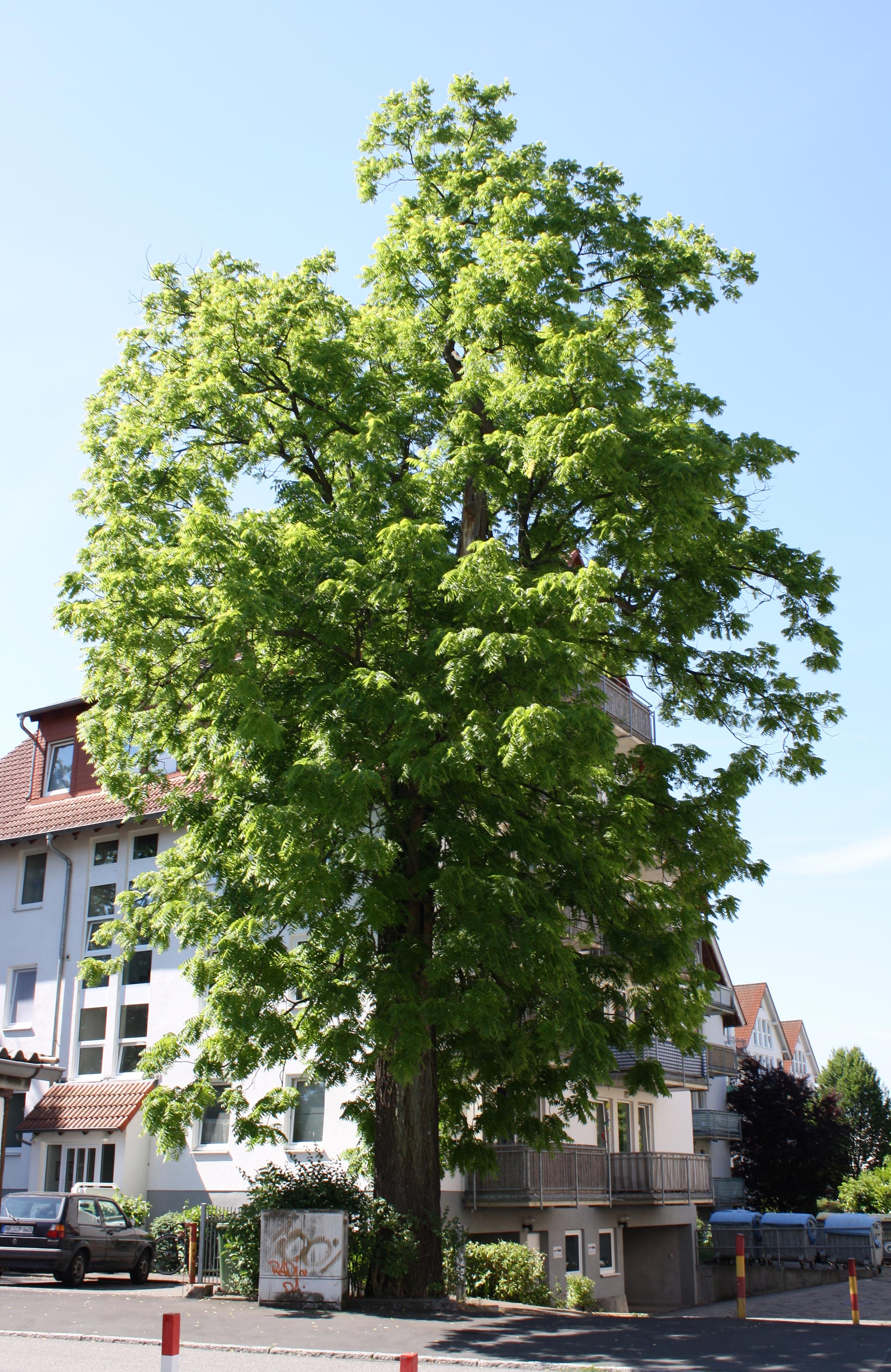
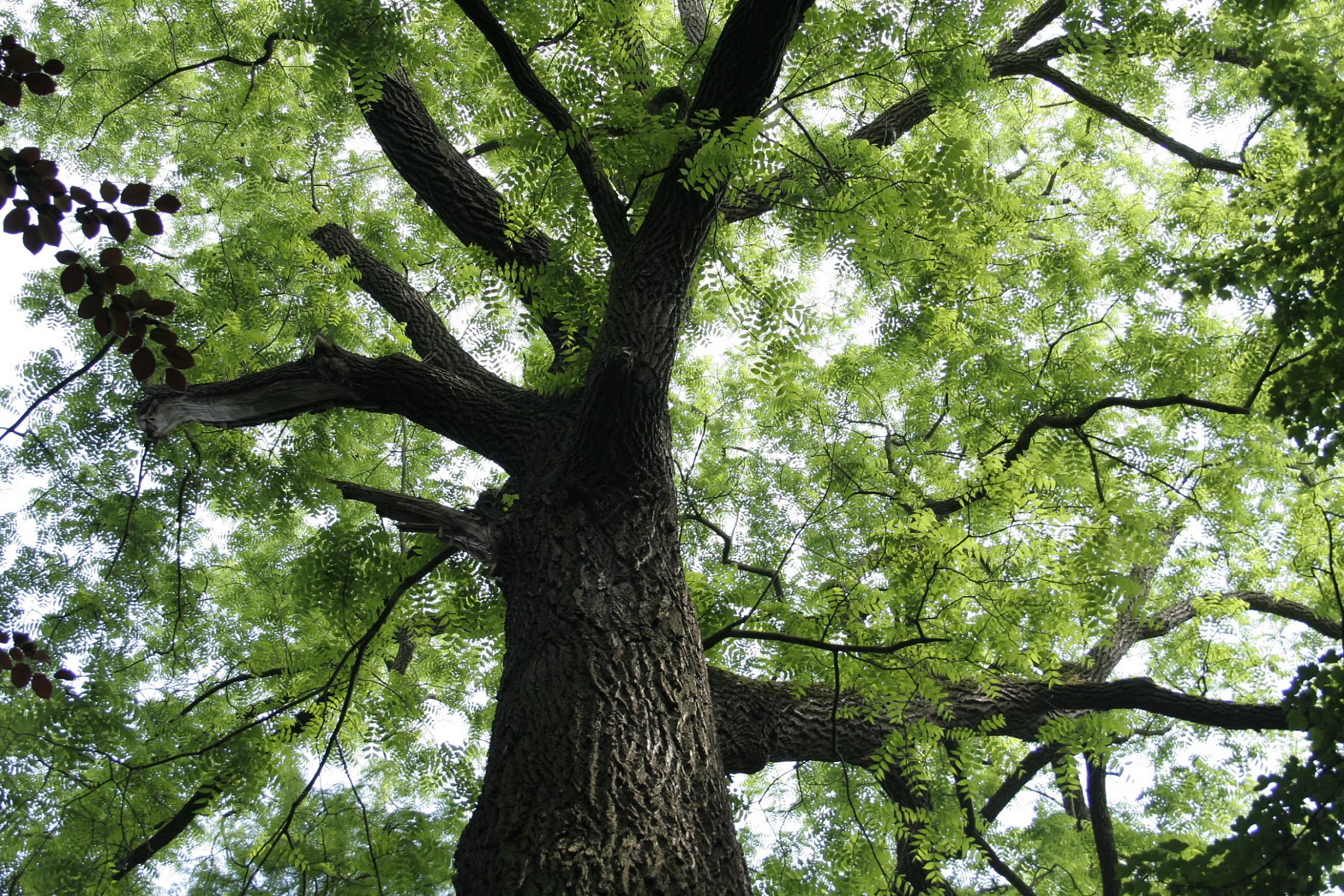
The Eastern black walnut is a deciduous tree with a round crown. It can grow up to 30 m high.
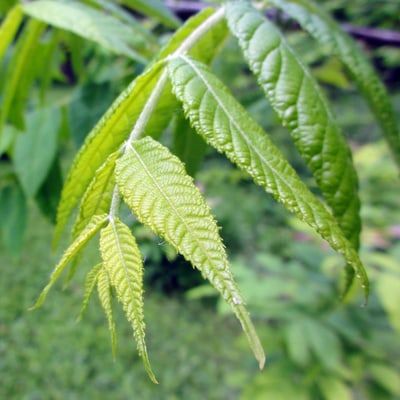
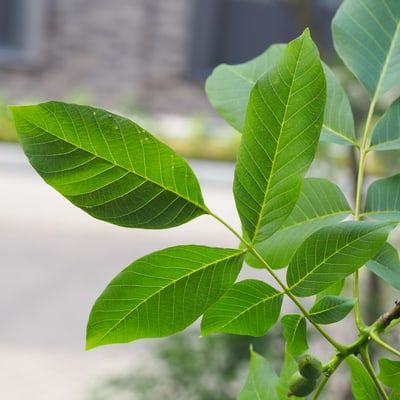
The leaves grow on the branch alternately. A leaflet consists of numerous smaller, elongated partial leaves. They are long-pointed and grow in pairs.
The trunk is upright and often gnarled with a brown and heavily furrowed bark.
It has male and female flowers. The male flowers are green-yellow and hang in elongated flower heads ("catkins"). The female flowers are green and inconspicuous.
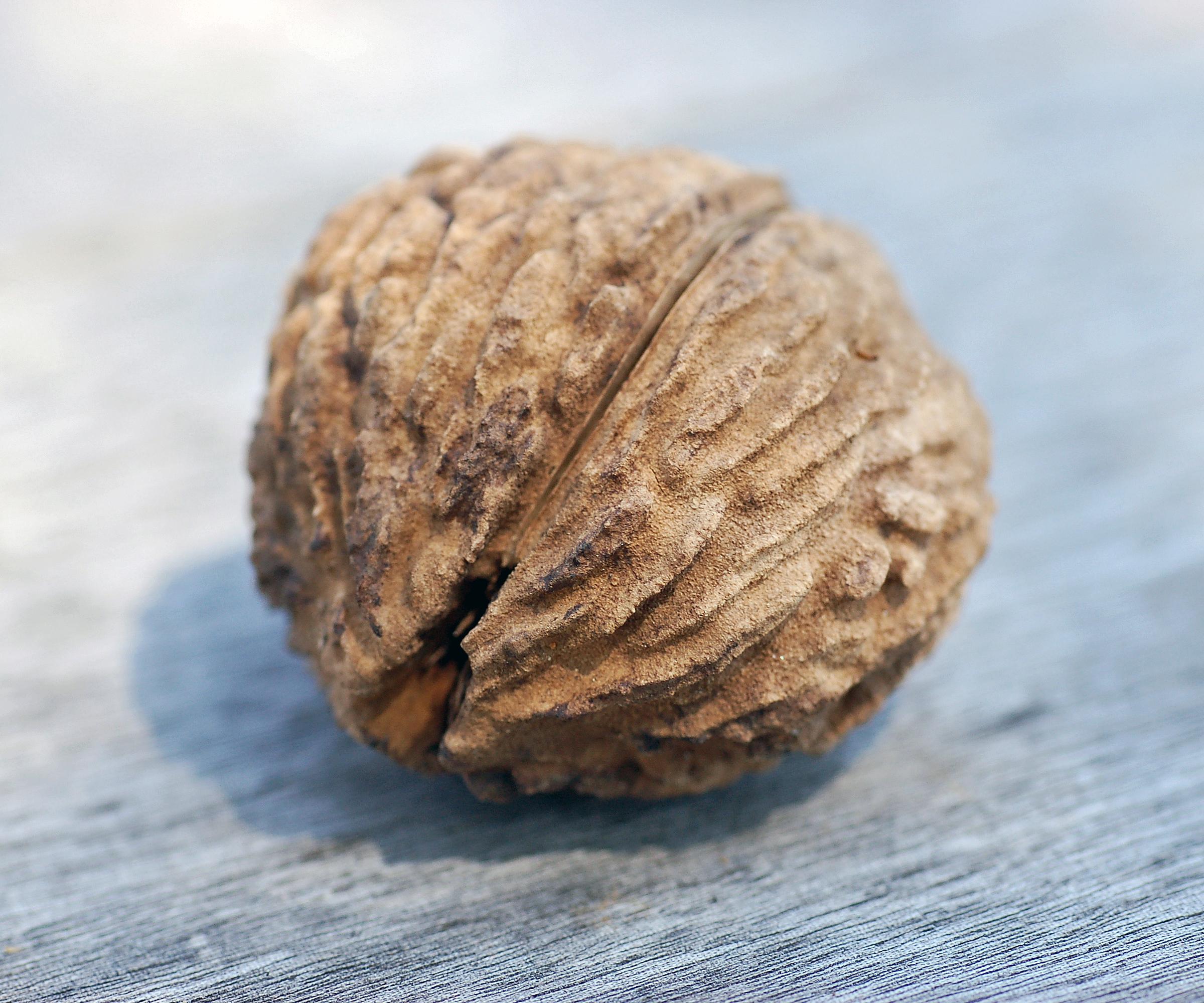
The fruit is very similar to a walnut. They are initially surrounded by a green, smooth shell that later turns brown. In autumn the shell cracks open and the woody fruits fall out. Their skin is deeply grooved with sharp edges.
Features
Eastern black walnut
Juglans nigra
large walnut-like fruits
clearly pointed partial leaves
In the city
The black walnut is a rather rare ornamental tree. In the city it is mostly seen as a solitary tree in parks. It prefers bright and sunny locations with nutrient-rich soil.
Fun Facts
It flowers from June to July.
It is an important supplier of timber in North America.
The wood has a particularly beautiful grain and is mainly used in furniture production.
- Endangerment level Germany: not evaluated
It originates from North America and belongs to the non-native plants (neophytes).
The fruits are edible.
Sources
Habitus, Hydro, CC BY-SA 4.0, https://commons.wikimedia.org/wiki/File:Juglans_nigra.Marburg.jpg

Frucht, Ram-Man, CC BY-SA 3.0, https://commons.wikimedia.org/wiki/File:Black_Walnut_Juglans_nigra_Nut_2400px.jpg

Rinde, Jean-Pol GRANDMONT, CC BY-SA 3.0, https://commons.wikimedia.org/wiki/File:Tournai_AR1aJPG.jpg

Page „Schwarznuss“. : Wikipedia, The Free Encyclopedia. Date of last revision: 30.12.2016, 21:02 UTC. URL: https://de.wikipedia.org/w/index.php?title=Schwarznuss&oldid=161118264 (Accessed: 29.05.2017).