
Short Description
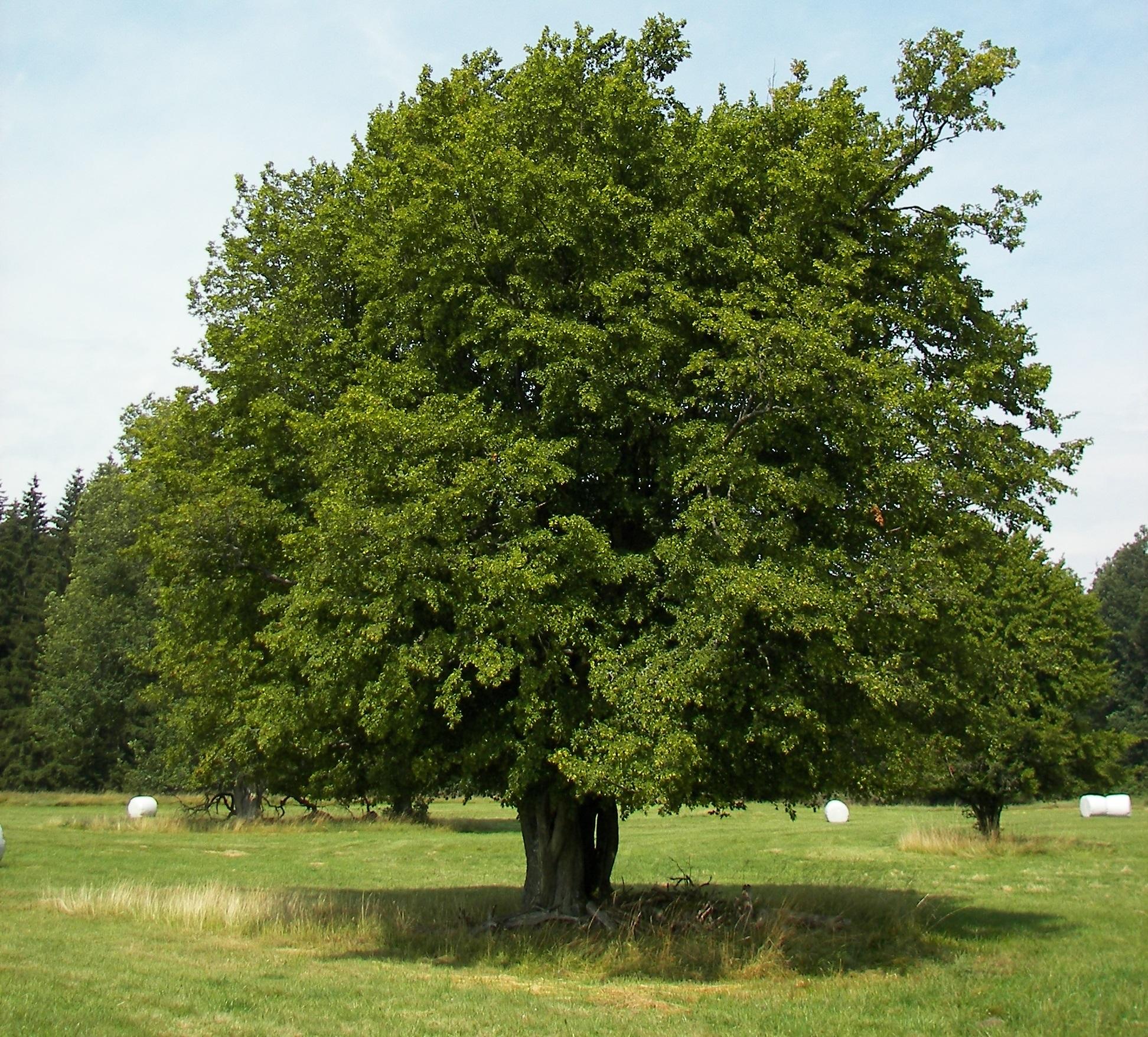
The European hornbeam can grow up to 30 m tall and has a broad umbrella-like crown.
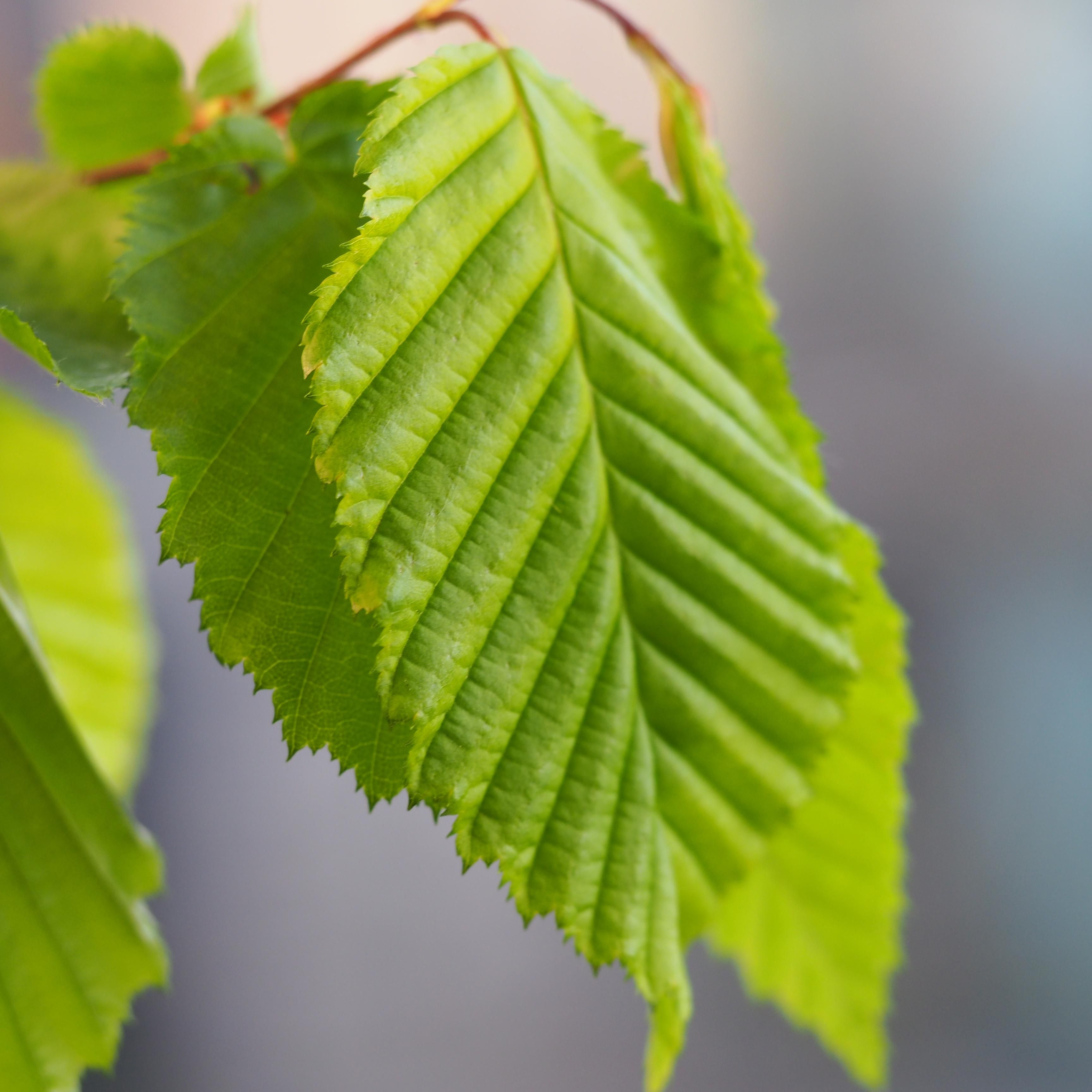
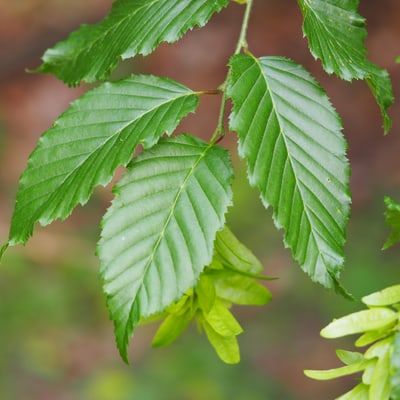
The leaves grow alternately on the branch. The are oval and pointed with a double serrated margin. Their parallel lateral nerves give them a corrugated appearance.
The bark is grey, smooth with net-like markings and little bark formation. The trunk surface is undulating.
The pendulous yellowish-brown flowers are known as catkins. The are compounds of the many male flowers. Female flowers are arranged in inconspicuous greenish-shite catkins and located at the end of twigs.
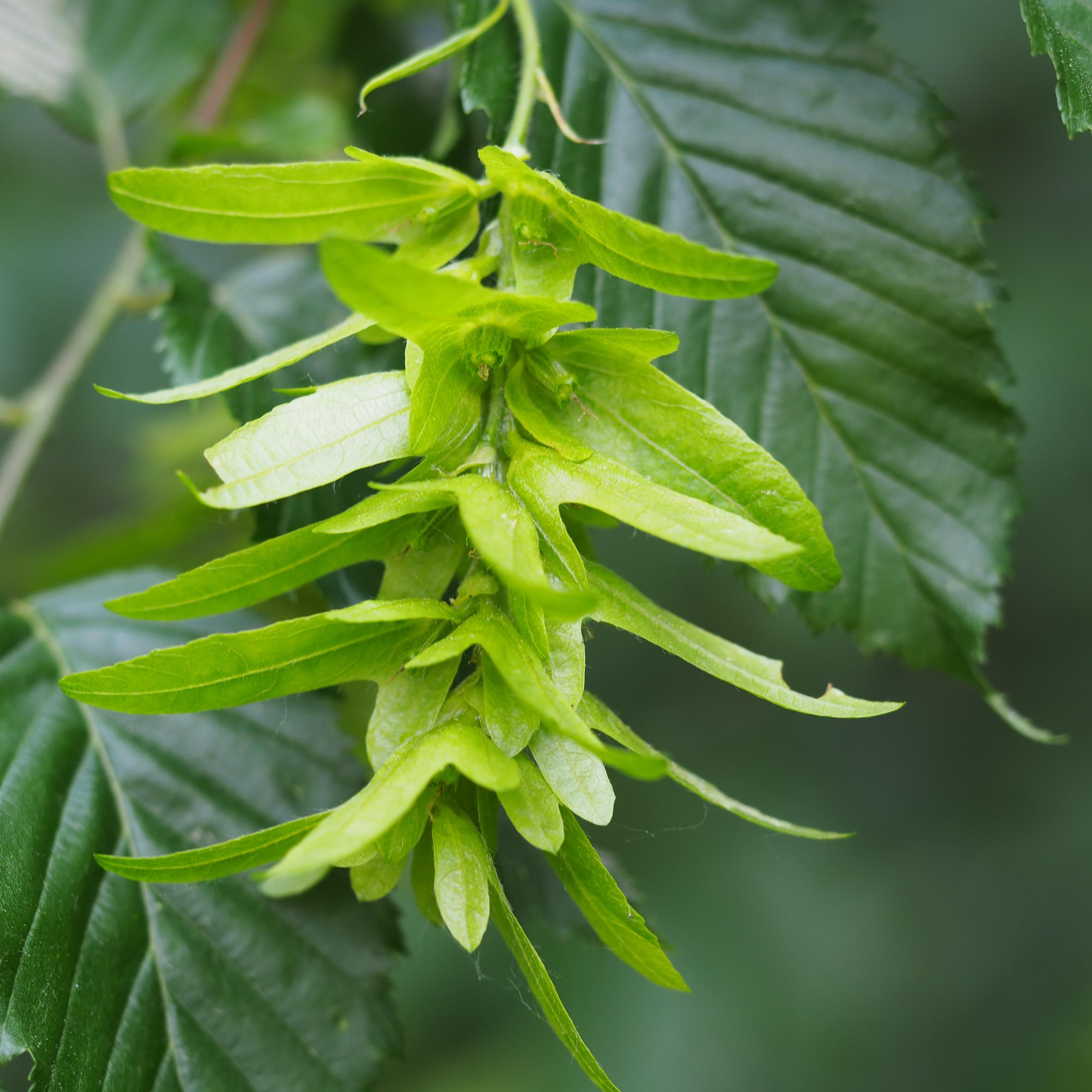
Its fruits are nuts enclosed in a three-lobed greenish-yellow covering. The centre lobe is notably longer.
Features
European hornbeam
Carpinus betulus
leaves have a distinctive corrugated appearance
nuts with a three-lobed covering (bract)
In the city
The European hornbeam is often found in parks to provide shelter or hedges. It has good properties in terms of noise reduction. It is tolerant of shade, but reacts sensitively to emissions, soil sealing and salt. This makes it well suited to tree-lined roads, parking places and pedestrian areas. It is only of limited use as a roadside tree.
Fun Facts
Hornbeam wood is very heavy and amongst the hardest of the indigenous woods.
It flowers from May to June.
The fruit ripening season is in September to October.
- Endangerment level Germany: not endangered
- Usage:
The leaves contain substances with wound-healing and anti-inflammatory properties.
Sources
Blatt, Alice Kracht, CC BY-SA 4.0, http://species-id.net/openmedia/File:Carpinus_betulus_%2821%29.JPG
.JPG)
Habitus, Willow, CC BY-SA 3.0, https://commons.wikimedia.org/wiki/File:Carpinus_betulus_-_Hunsr%C3%BCck_001.jpg

Fruchtstand, Alice Kracht, CC BY-SA 4.0, https://offene-naturfuehrer.de/web/Datei:Carpinus_betulus_(22).JPG
.JPG)
Aas, G. & Riedmiller, A. (2002) Laubbäume. Bestimmen – Kennenlernen – Schützen, Bindlach: Gondrom Verlag.
Böhlmann, D. (2015) Laubbäume temperierter Klimate mit ihrer Artenvielfalt, Berlin: Patzer Verlag.
Quartier, A. (1989) Bäume und Sträucher, München: BLV.
Roloff, A. (2013) Bäume in der Stadt. Besonderheiten - Funktion - Nutzen - Arten - Risiken, Stuttgart: Verlag Eugen Ulmer.
Page „Hainbuche“. : Wikipedia, The Free Encyclopedia. Date of last revision: 08.04.2016, 06:18 UTC. URL: https://de.wikipedia.org/w/index.php?title=Hainbuche&oldid=153278335 (Accessed: 03.05.2016).