
Short Description
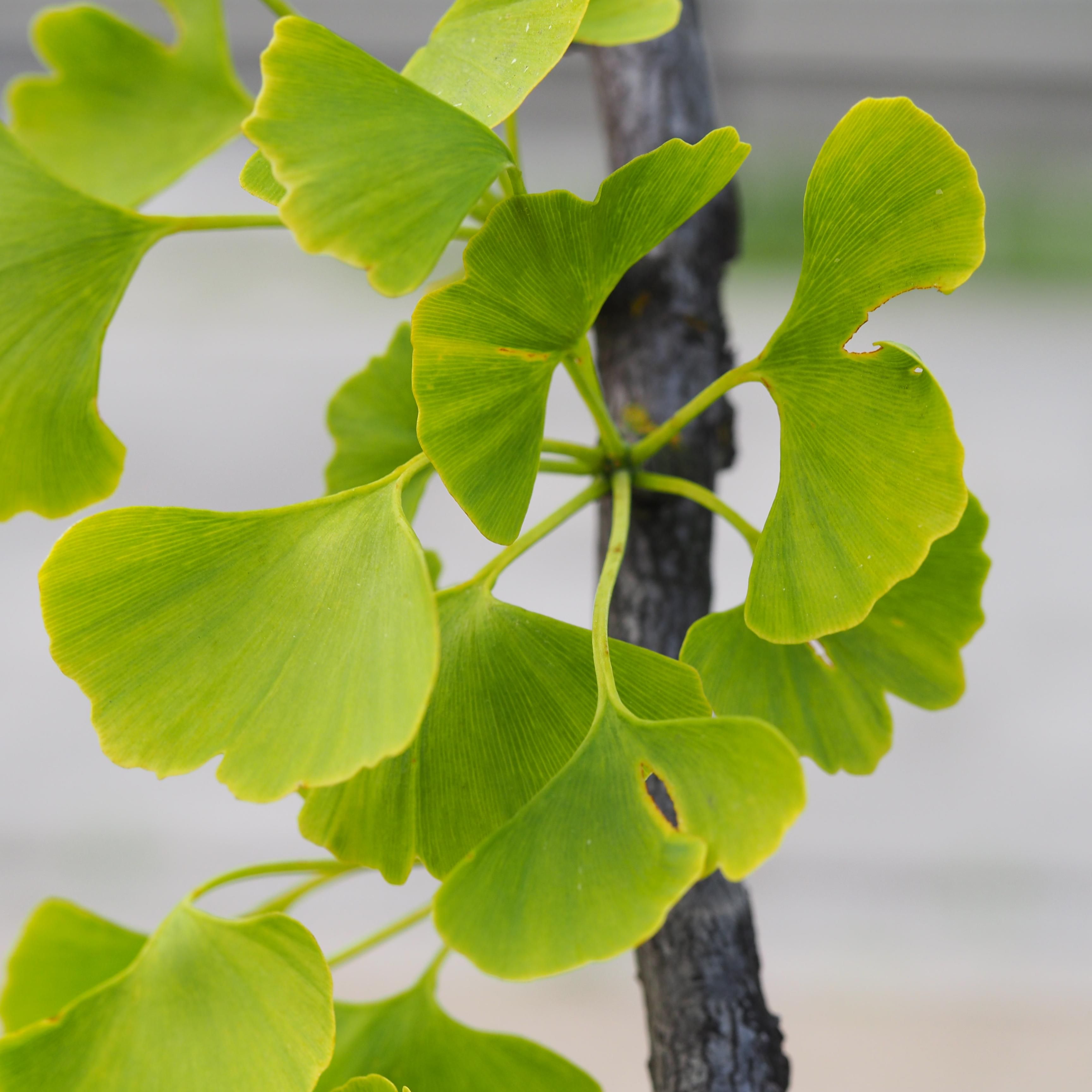
The gingko is unmistakable with its distinctive fan-shaped leaves. It is a rather slender deciduous tree and can grow up to 40 m tall.
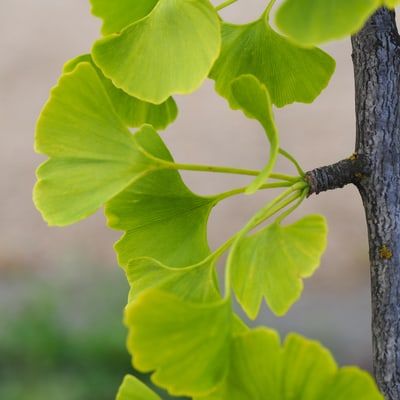
The fan-shaped leaves are generally arranged in clusters or spirals. Their centres are moderately to deeply lobed.
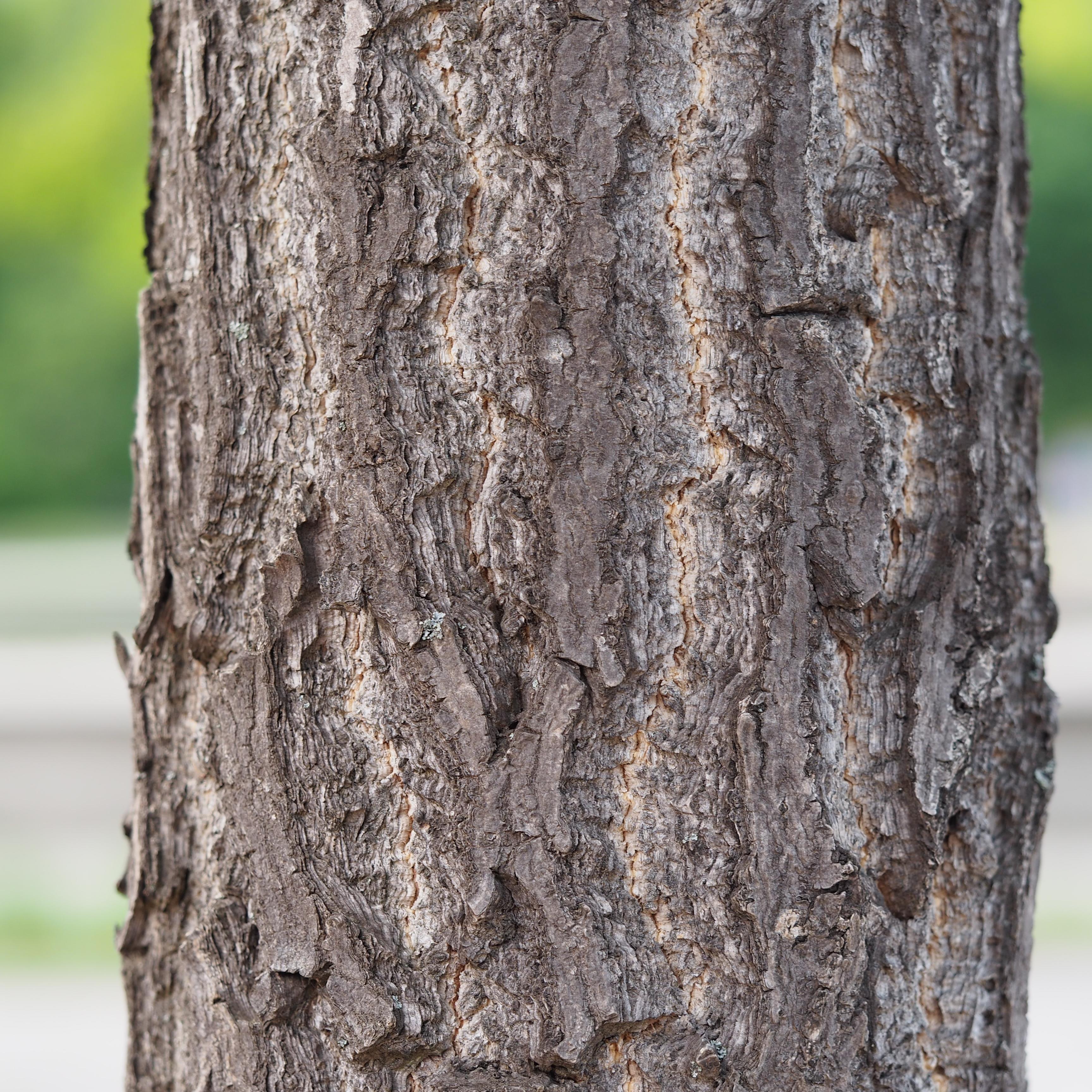
The bark is brown-grey with cork-like light-brown fissures that become more pronounced with age.
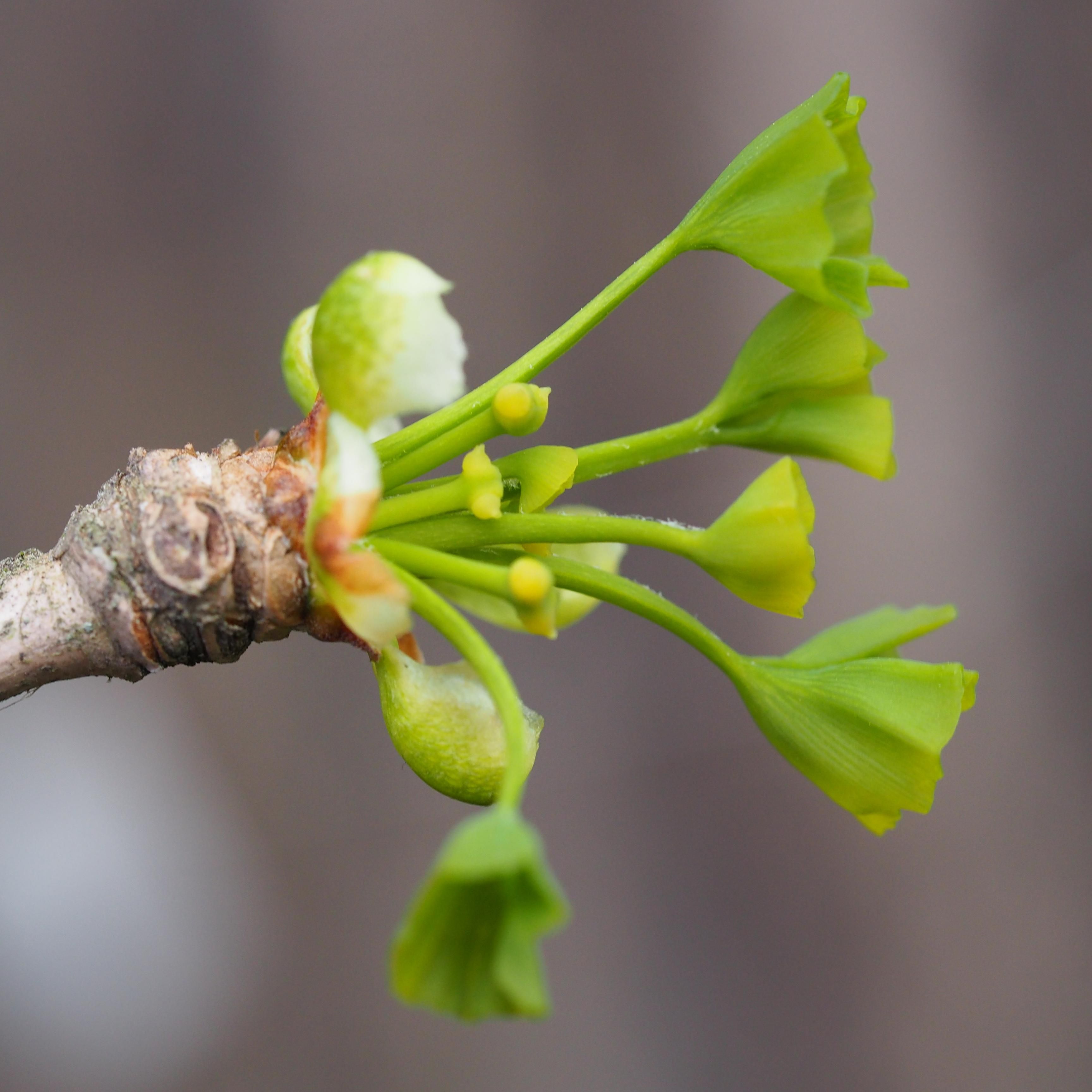
There are male and female trees (dioecious). The male flowers are brown-greenish and droop in catkins. The female flowers are green and inconspicuous.
The tree does not produce fruits, but seeds encapsulated with a fleshy yellow seed coat (sarcotesta). Ripe seeds of female trees contain butyric acid and smell unpleasantly like rancid butter or vomit.
Features
Ginkgo
Ginkgo biloba
fan-shaped leaves
round yellow seeds
strong smell of female trees
In the city
Ginkgos are popular in parks or as ornamental trees. It is common practice to plant male trees, as female ones emit an unpleasant smell when their fruits are ripening. Gingkos prefer airy, damp deciduous forests.
Fun Facts
The gingko is a living fossil because it is the only extant example of an independent division of plants closely related to conifers.
In autumn, the smell of female trees can be experienced in Berlin in Jebenstrasse. Several female trees grow there.
It flowers from March to June.
Seeds ripen in October to November.
Some seed parts are used as food in Asia.
- Endangerment level Germany: not evaluated
- Usage:
The leaves have a stimulating effect on blood flow. They can be used pharmaceutically.
Natural populations are only found in southwestern China. However, humans have introduced gingkos across the globe. It is a non-native plant (neophyte).
The fleshy seed coats irritate skin and can cause allergic reactions.
Sources
Blatt, Alice Kracht, CC BY-SA 4.0, https://offene-naturfuehrer.de/web/Datei:Ginkgo_biloba_2.JPG

weibliche Blüte, Alice Kracht, CC BY-SA 4.0, https://offene-naturfuehrer.de/web/Datei:Ginkgo_biloba_(7).JPG
.JPG)
Rinde, Alice Kracht, CC BY-SA 4.0, https://offene-naturfuehrer.de/web/Datei:Ginkgo_biloba_(11).JPG
.JPG)
Mitchell, A. (1975) Die Wald- und Parkbäume Europas. Ein Bestimmungsbuch, Hamburg und Berlin: Verlag Paul Parey.
Roloff, A. (2013) Bäume in der Stadt. Besonderheiten - Funktion - Nutzen - Arten - Risiken, Stuttgart: Verlag Eugen Ulmer.
Roth, L., Daunderer, M. & Kormann, K. (2008) Giftpflanzen - Pflanzengifte. Vorkommen, Wirkung, Therapie. Allergische und phototoxische Reaktionen, Hamburg: Nikol Verlag.
Page „Ginkgo“. : Wikipedia, The Free Encyclopedia. Date of last revision: 04.04.2016, 21:50 UTC. URL: https://de.wikipedia.org/w/index.php?title=Ginkgo&oldid=153175575 (Accessed: 15.04.2016).