
Short Description
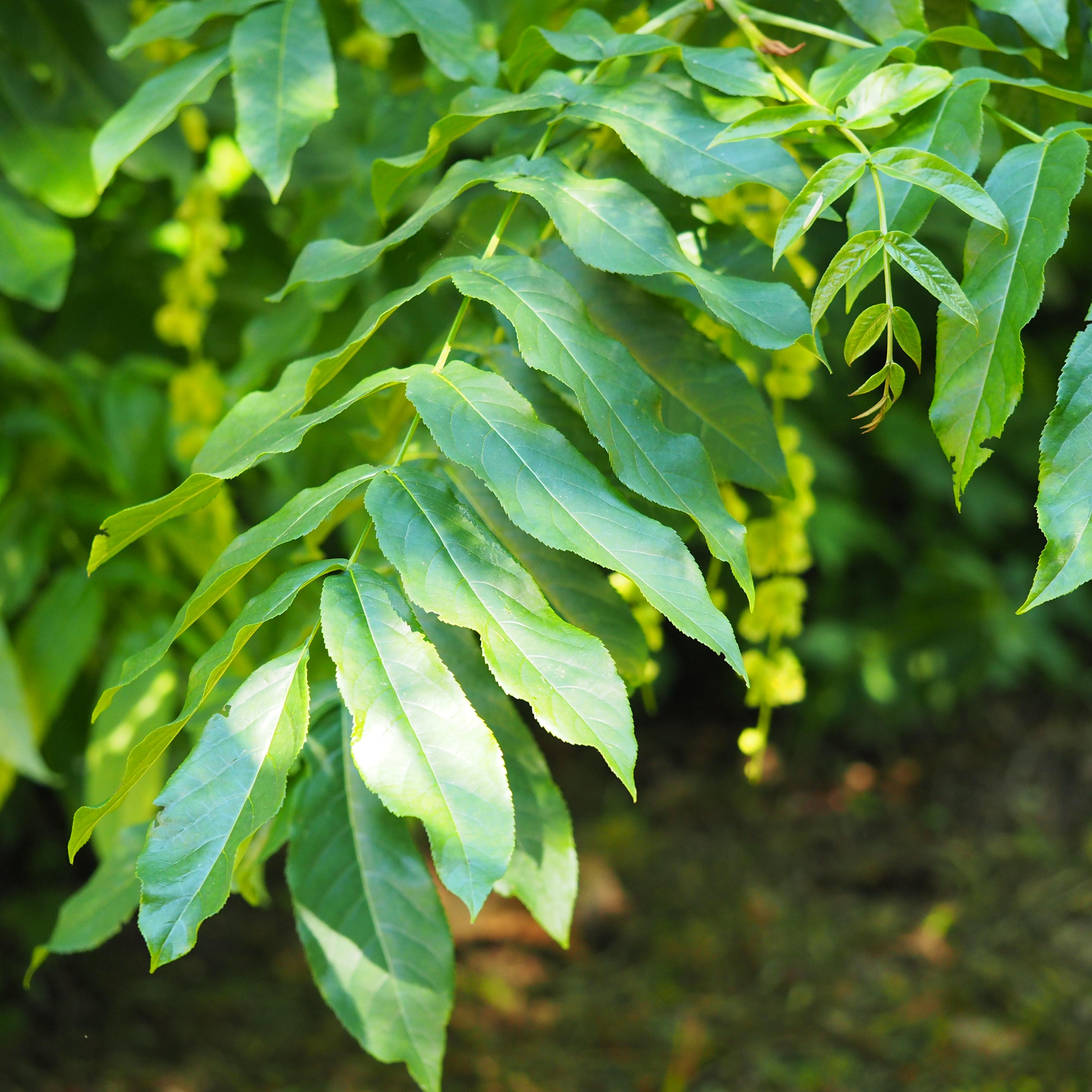
The Caucasian wingnut is generally multi-stemmed, densely leaved and can grow up to 30 m tall.
The very large leaves consist of 11-25 leaflets. These leaflets are elongated to lance-shaped and pointed with a finely serrated margin. They have no stalk and finish with a terminal leaflet (unequally pinnate).
The bark is black-grey with vertical fissures.
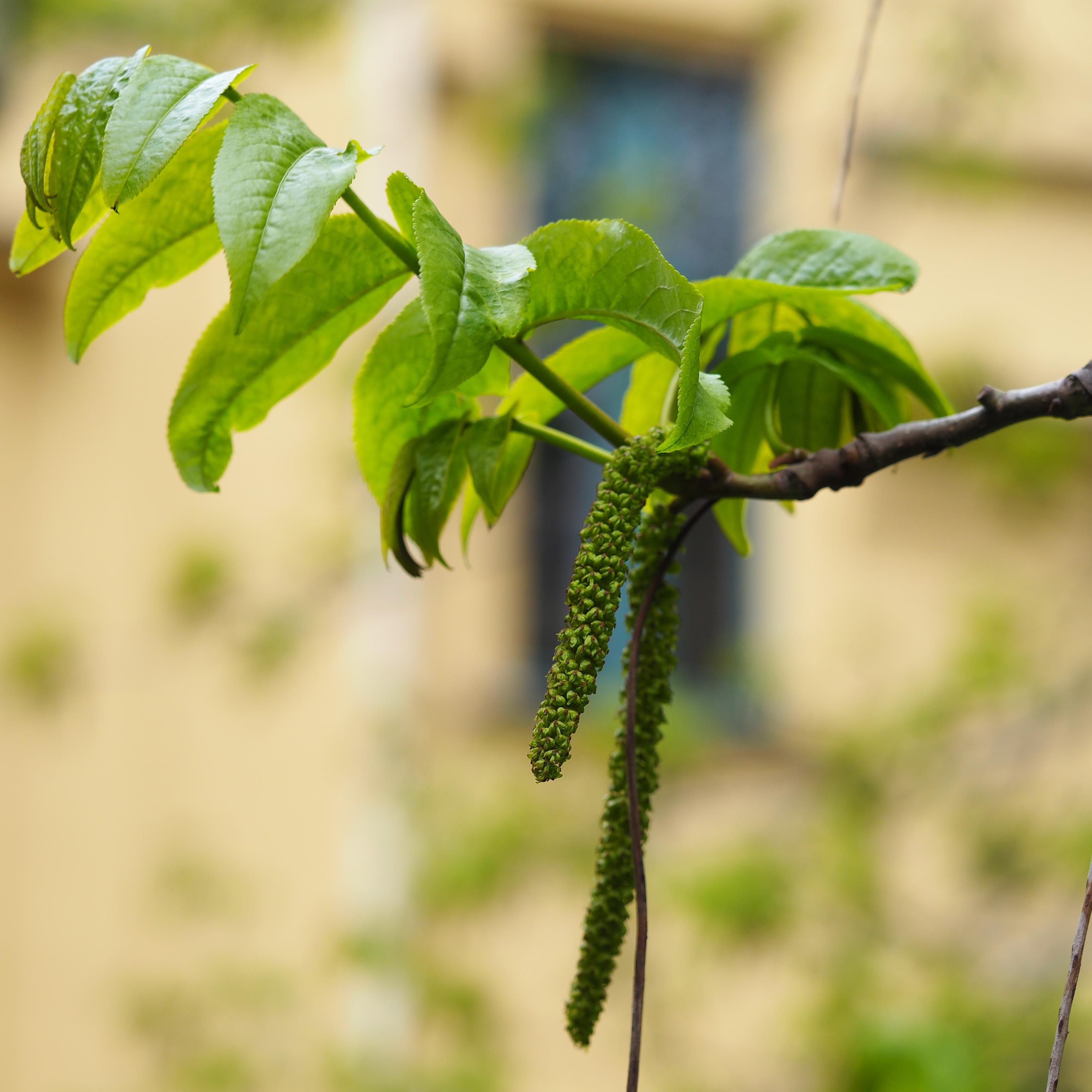
The flowers are yellowish-greenish and hang in long “catkins” (flower heads).
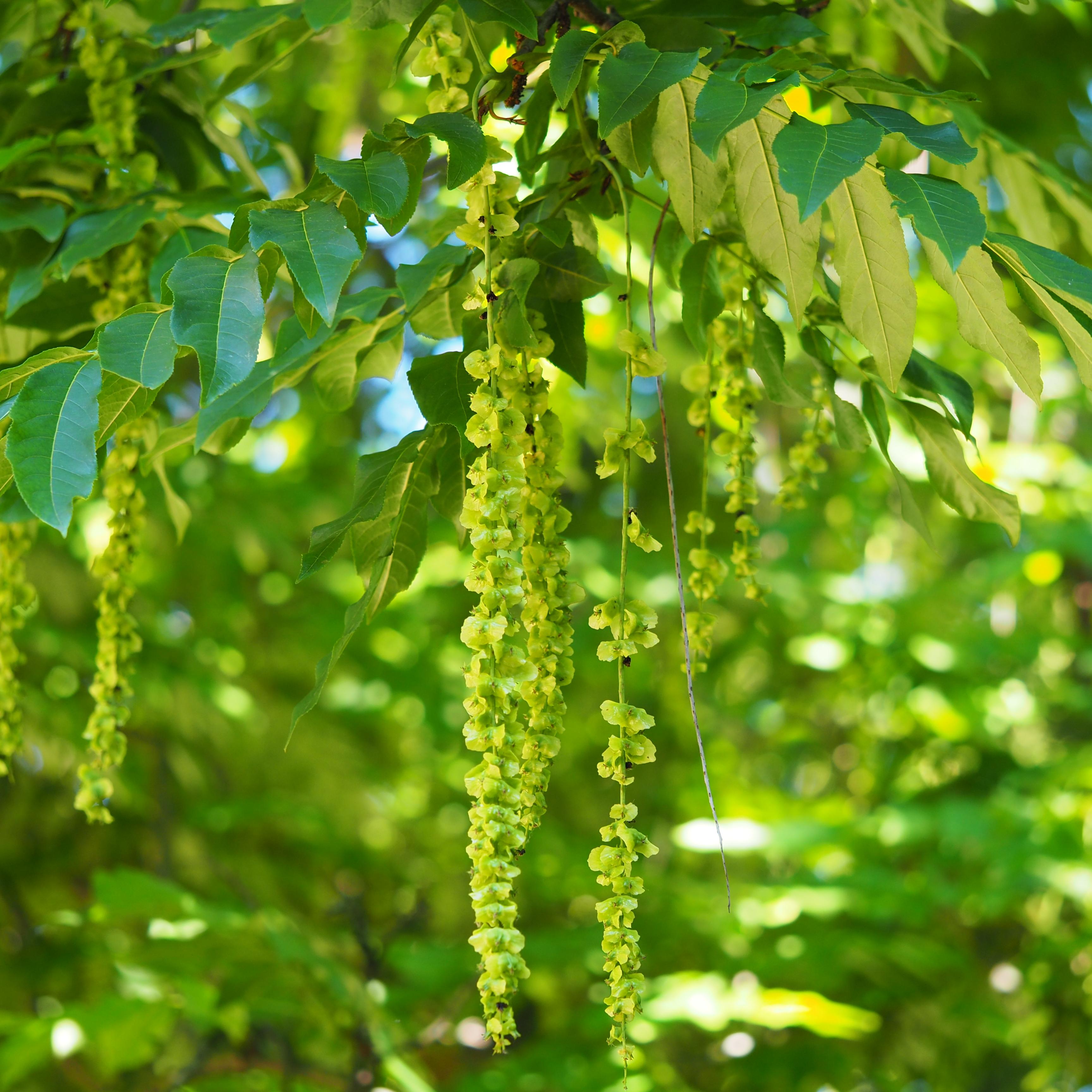
The fruits are light-green winged nuts clustered in seed heads.
Features
Caucasian wingnut
Pterocarya fraxinifolia
very large pinnate leaves
long, greenish, drooping seed heads
In the city
Caucasian wingnuts are popular ornamental trees in parks. They are mainly found close to bodies of water.
Fun Facts
It flowers from April to May.
The fruit ripening season is in October.
- Endangerment level Germany: not evaluated
- Usage:
The wood of the Caucasian wingnut is used in veneering.
It is a non-native plant (neophyte).
Rubbing the leaves releases a substance poisonous to fish. This is used in fishing.
Sources
Blatt, A, CC BY-SA 4.0, https://commons.wikimedia.org/wiki/File:Pterocarya_fraxinifolia.JPG

weibliche Blüte, A, CC BY-SA 4.0, https://commons.wikimedia.org/wiki/File:Pterocarya_fraxinifolia_(1).JPG
.JPG)
Fruchtstand, A, CC BY-SA 4.0, https://commons.wikimedia.org/wiki/File:Pterocarya_fraxinifolia_(4).JPG
.JPG)
Aas, G. & Riedmiller, A. (2002) Laubbäume. Bestimmen – Kennenlernen – Schützen, Bindlach: Gondrom Verlag.
Böhlmann, D. (2015) Laubbäume temperierter Klimate mit ihrer Artenvielfalt, Berlin: Patzer Verlag.
Page „Kaukasische Flügelnuss“. : Wikipedia, The Free Encyclopedia. Date of last revision: 15.12.2013, 14:46 UTC. URL: https://de.wikipedia.org/w/index.php?title=Kaukasische_Fl%C3%BCgelnuss&oldid=125465445 (Accessed: 21.04.2016).