
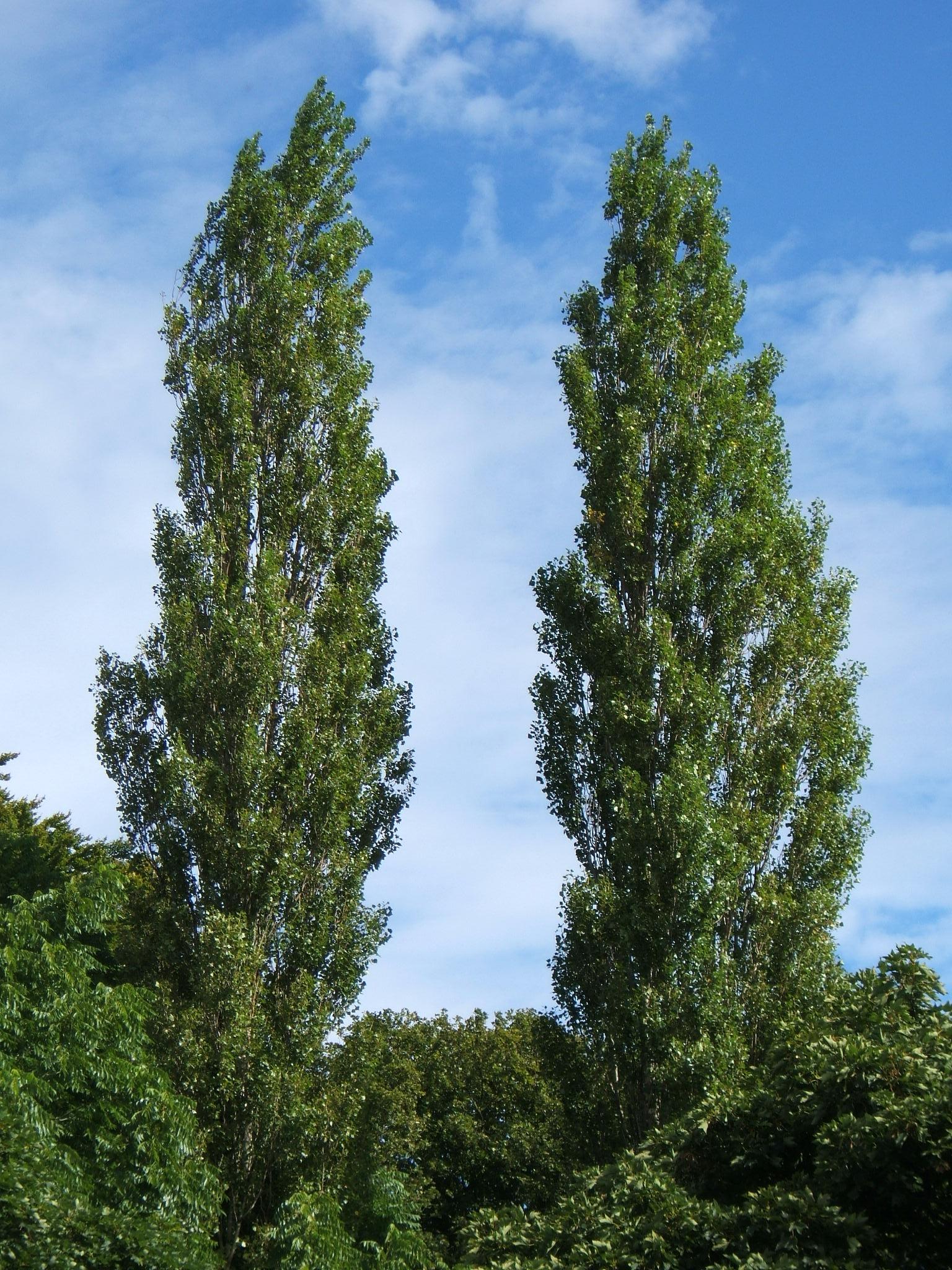
Short Description
The black poplar can grow up to 30 m tall and reach a trunk diameter of over one metre.
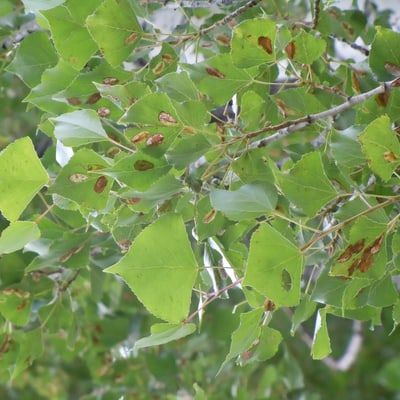
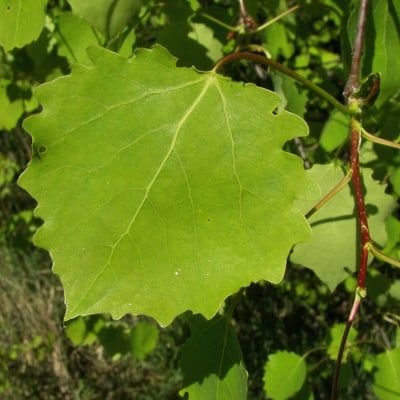
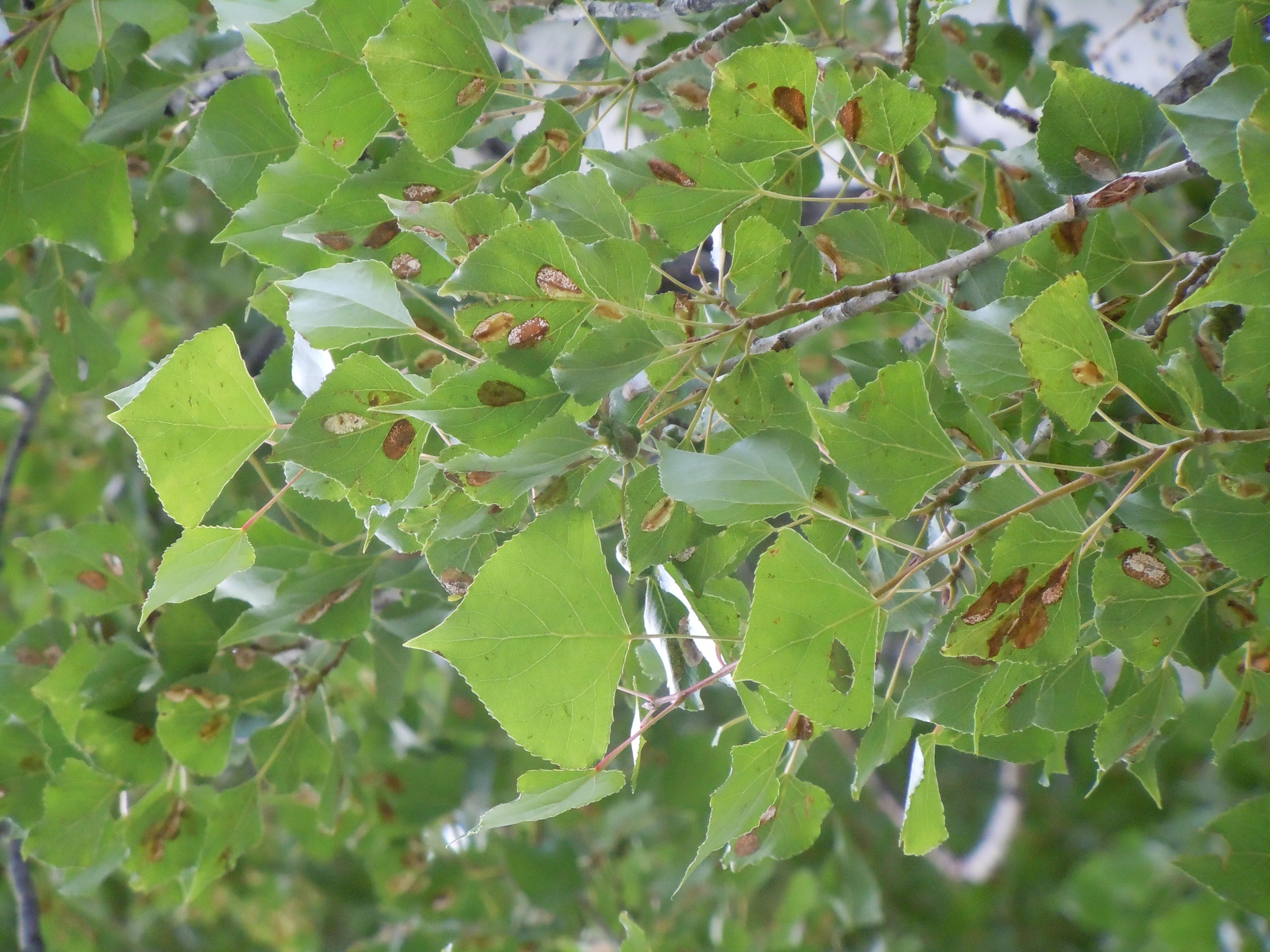
The leaves of the black poplar vary greatly in shape. They have a long stalk. They are triangular to oval and the leaf edge is serrated to smooth.
The trunk is often gnarled and has furrowed, black-grey bark and cork bulges. The tree crown is spreading and irregularly shaped.
There are male and female trees. The numerous inconspicuous flowers stand together in hanging inflorescences ("catkins"). The male catkins are reddish-brown and the female ones greenish-yellow.
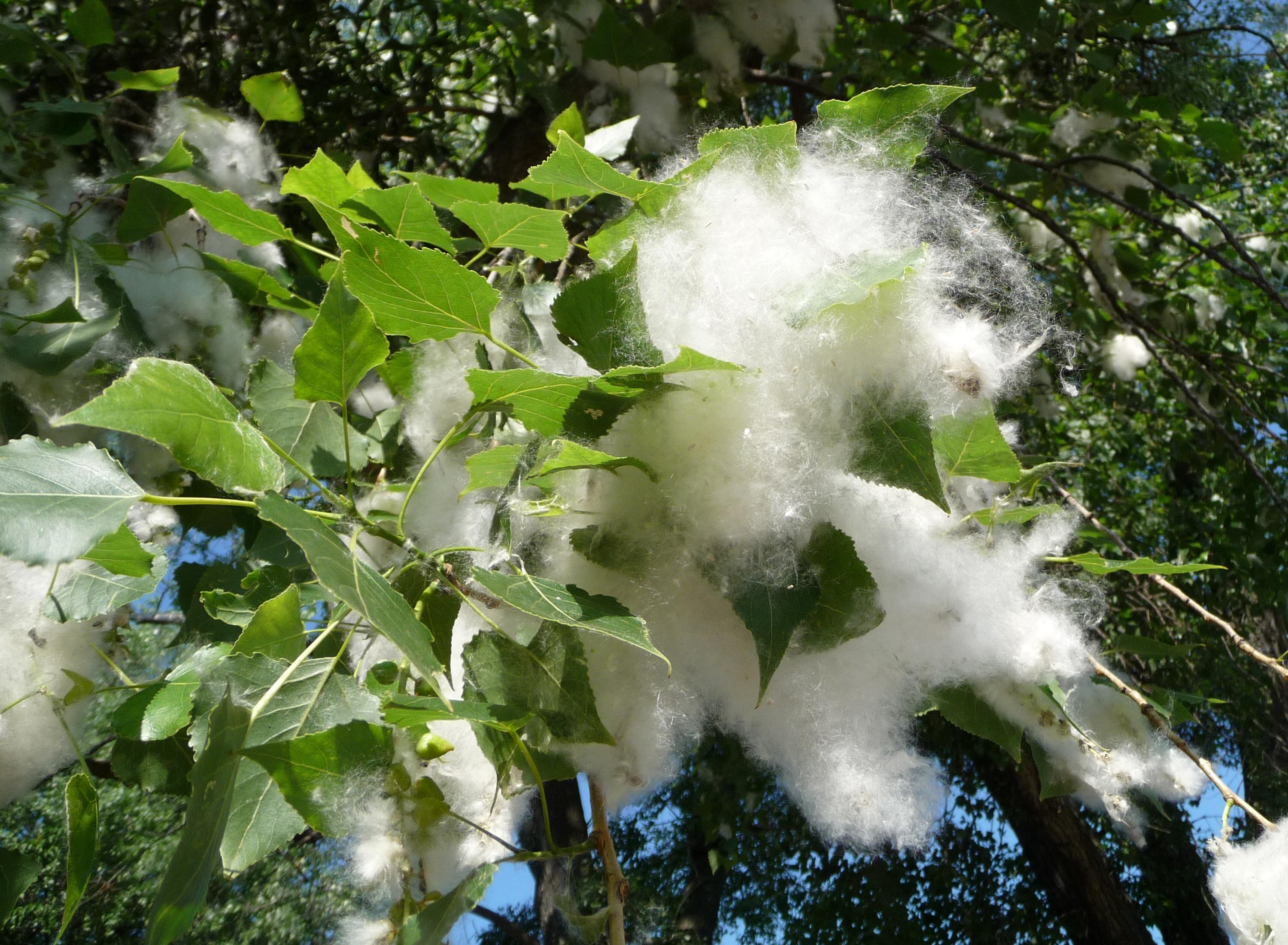
The fruits are small green, later brownish capsules. They contain many flighty seeds that have long white hairs.
Features
Black poplar
Populus nigra
Leaves with long stalk
Flowers in long "catkins
In the city
In the city, black poplars are mainly found along water bodies and in parks. They prefer moist and nutrient-rich habitats.
Fun Facts
It flowers from March to April.
The wood of the black poplar is particularly light compared to other native tree species.
- Endangerment level Germany: endangered
The wood of the poplar is used in furniture and pulp production.
Sources
Habitus, MPF, CC BY-SA 3.0, https://commons.wikimedia.org/wiki/File:Populus_nigra_Plantierensis1.jpg

Blatt, Matt Lavin, CC BY-SA 2.0, https://commons.wikimedia.org/wiki/File:Populus_nigra_(4998507297).jpg
.jpg)
Fruchtstand, George Chernilevsky, PD, https://commons.wikimedia.org/wiki/File:Poplar_seed_tufts_2009_G1.jpg

Page „Schwarz-Pappel“. : Wikipedia, The Free Encyclopedia. Date of last revision: 11.02.2017, 21:16 UTC. URL: https://de.wikipedia.org/w/index.php?title=Schwarz-Pappel&oldid=162545574 (Accessed: 02.05.2017).