
Short Description
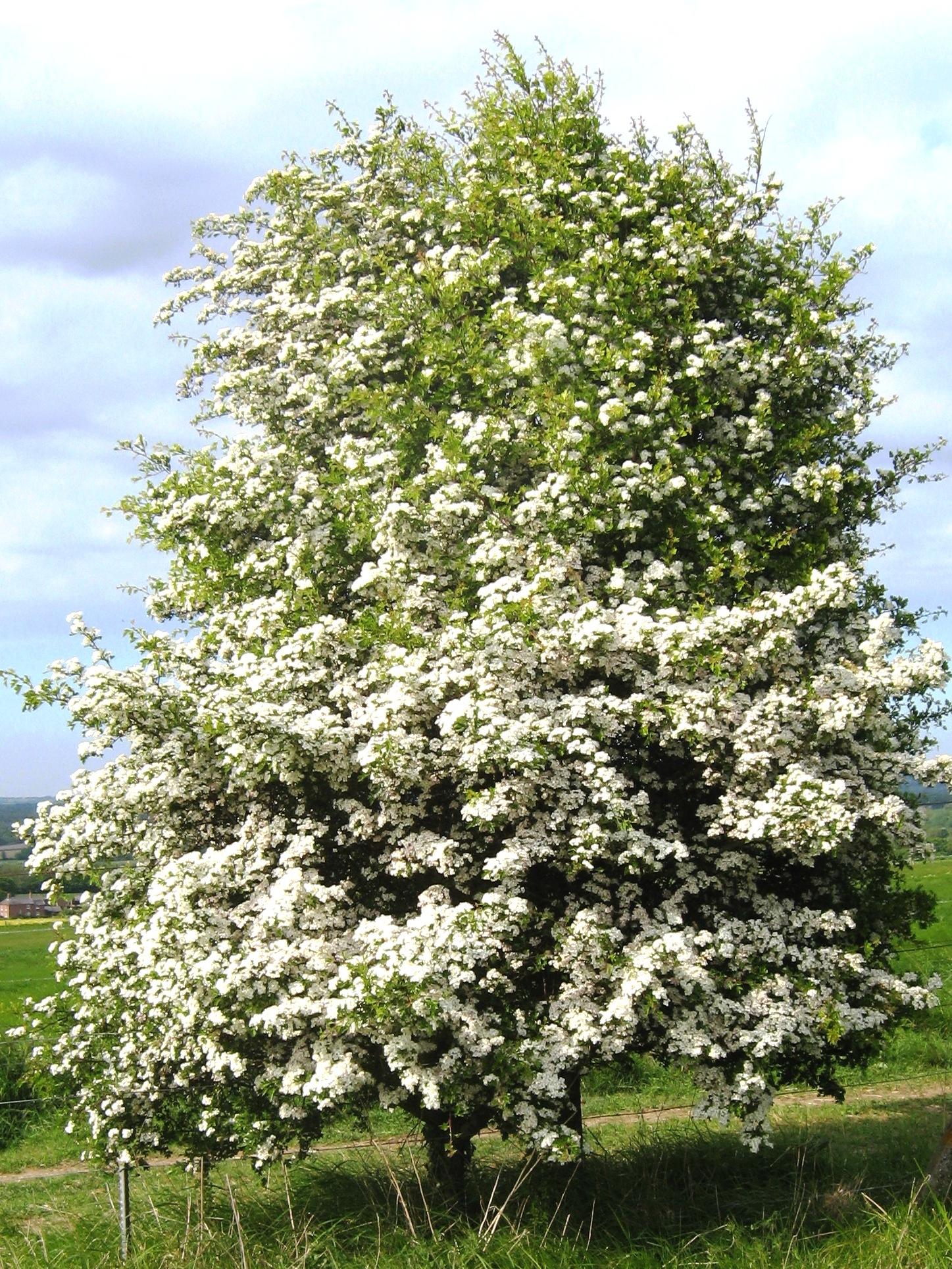
The common hawthorn exists both as a tree and as a shrub. As a tree, it has a broad, deeply drooping crown.
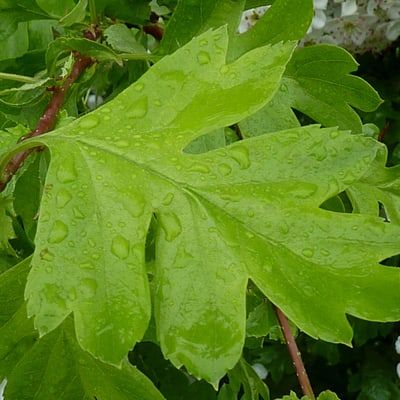
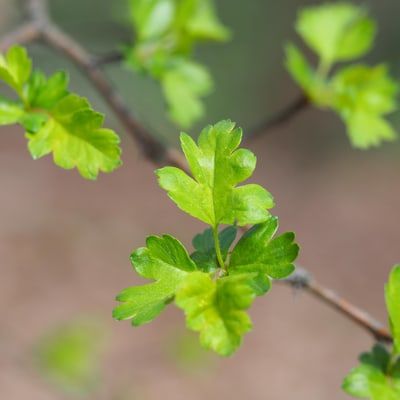
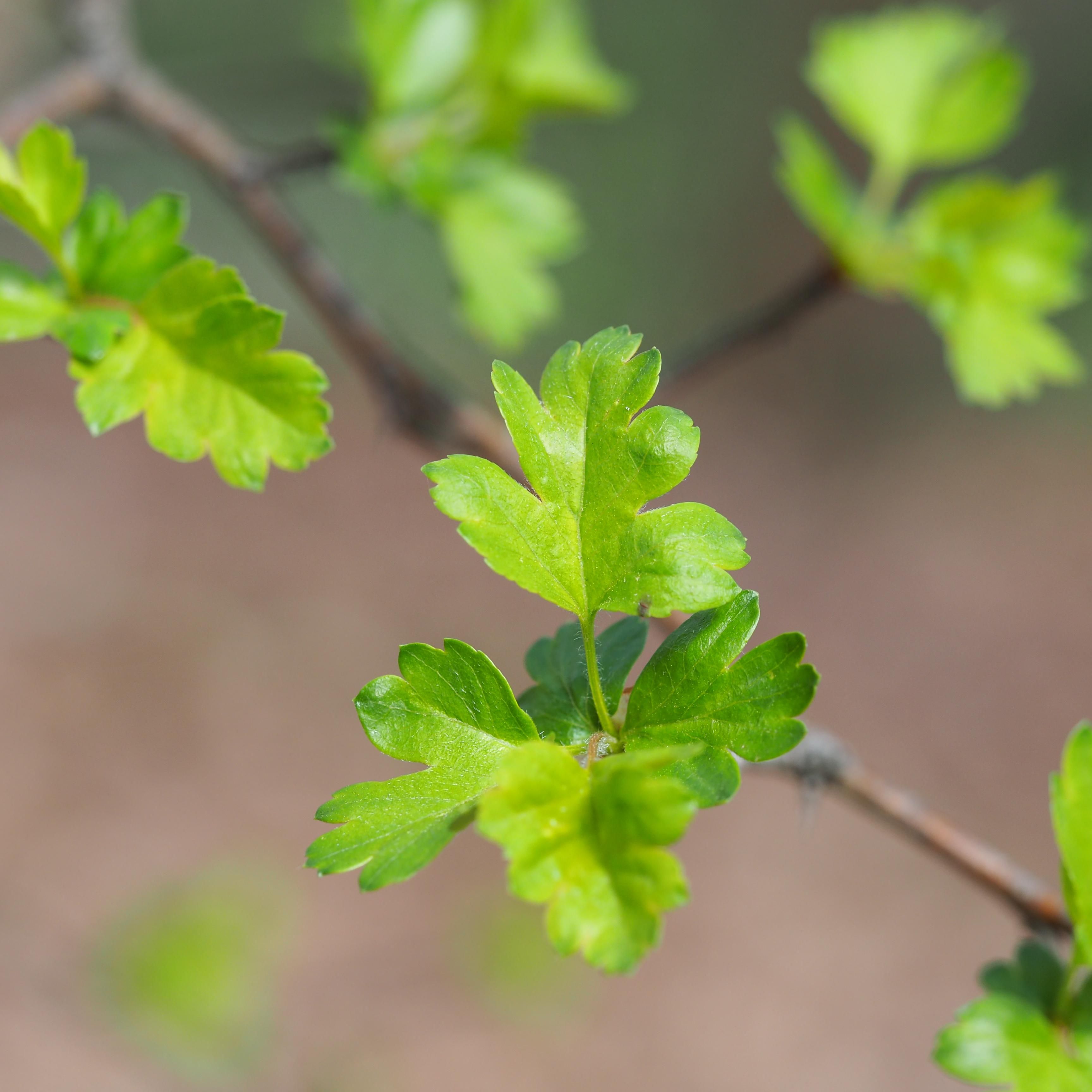
The leaves vary widely in appearance. They are generally deeply lobed with five to seven pointed lobes. The leaf margins are irregularly doubly serrated.
The tree is comparatively small with an irregular stem cross-section. The bark is red-brown with vertical furrows. The branches bear long thorns.
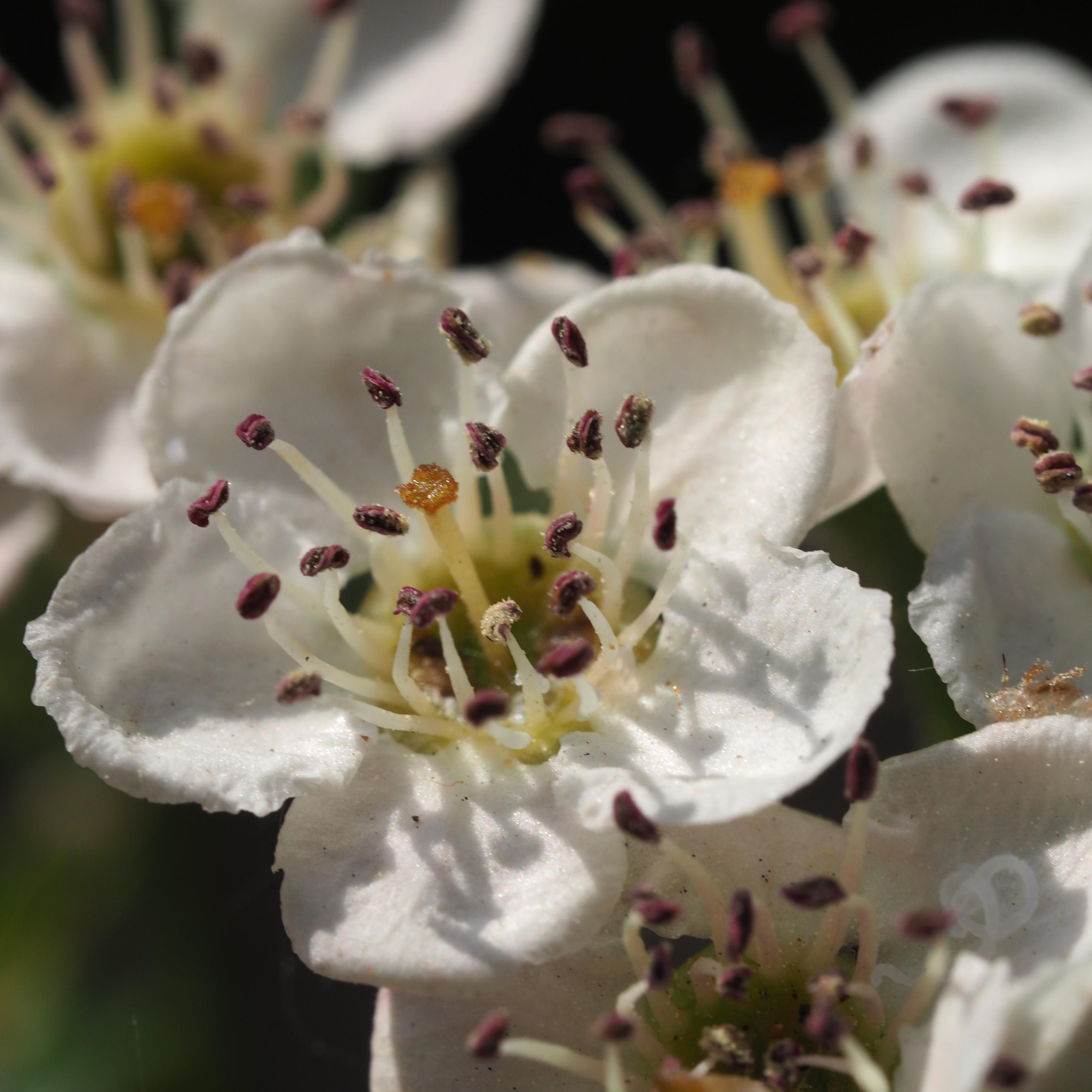
The flowers are white with red anthers at the centre. Numerous individual florets are arranged in clusters of flowers (cymes) and exude an unpleasant smell.
The small apple-like fruits (pomes) are oval and dark red when ripe.
Features
Common hawthorn
Crataegus monogyna
irregular lobed and deeply incised leaves
flowers with a single pistil
In the city
In an urban environment, hawthorn is often planted in hedges. However, the occasional tree may be found in parks. The common hawthorn is quite drought resistant and winter hardy; for that reason, it is quite suited to being planted in urban settings. Hawthorns also provide habitats to a number of butterflies, thus making an important ecological contribution towards urban butterfly variety.
Fun Facts
In landscape planning, hawthorns are popular ornamental plants thanks to their beautiful leaves and abundant flowers. There are many cultivated varieties with red (pink hawthorn) or filled flowers.
It flowers from May to June.
The fruit ripening season is in September to October.
- Endangerment level Germany: not endangered
- Usage:
In herbal medicine, its branches and fruits are used to strengthen the cardiovascular system.
In mythology, hawthorns are a dwelling place of elves and are said to ward off evil spirits and bewitchment.
The scientific name refers to the hard wood of the tree.
The fruits are edible and can be made into jam or syrup.
Sources
Habitus, Ptelea, CC BY-SA 3.0, https://commons.wikimedia.org/wiki/File:Crataegus_monogyna,_Ports_Down.jpg

Blüte, Alice Kracht, CC BY-SA 4.0, https://offene-naturfuehrer.de/web/Datei:Crataegus_monogyna_(34).JPG
.JPG)
Blatt, Alice Kracht, CC BY-SA 4.0, https://species-id.net/openmedia/File:Crataegus_laevigata_(4).JPG
.JPG)
Amann, G. & Richter, P. (1962) Bäume und Sträucher des Waldes, Melsungen: Verlag J. Neumann – Neudamm.
Mitchell, A. (1975) Die Wald- und Parkbäume Europas. Ein Bestimmungsbuch, Hamburg und Berlin: Verlag Paul Parey.
Page „Eingriffeliger Weißdorn“. : Wikipedia, The Free Encyclopedia. Date of last revision: 05.11.2015, 16:20 UTC. URL: https://de.wikipedia.org/w/index.php?title=Eingriffeliger_Wei%C3%9Fdorn&oldid=147739286 (Accessed: 11.05.2016).