
Short Description
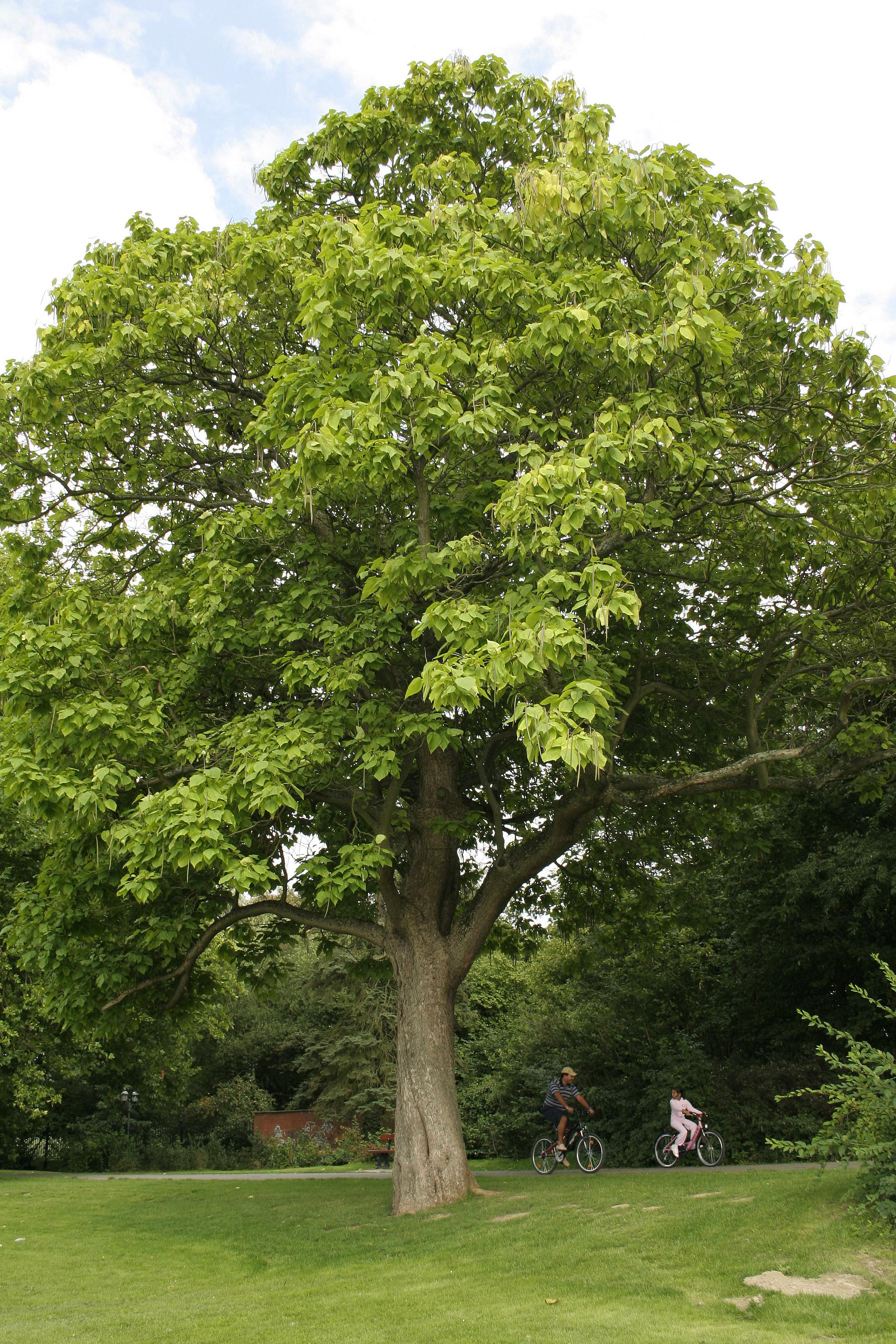
The cigartree is up to 20 m tall and deciduous.
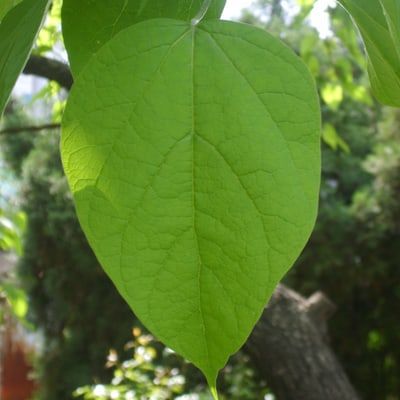
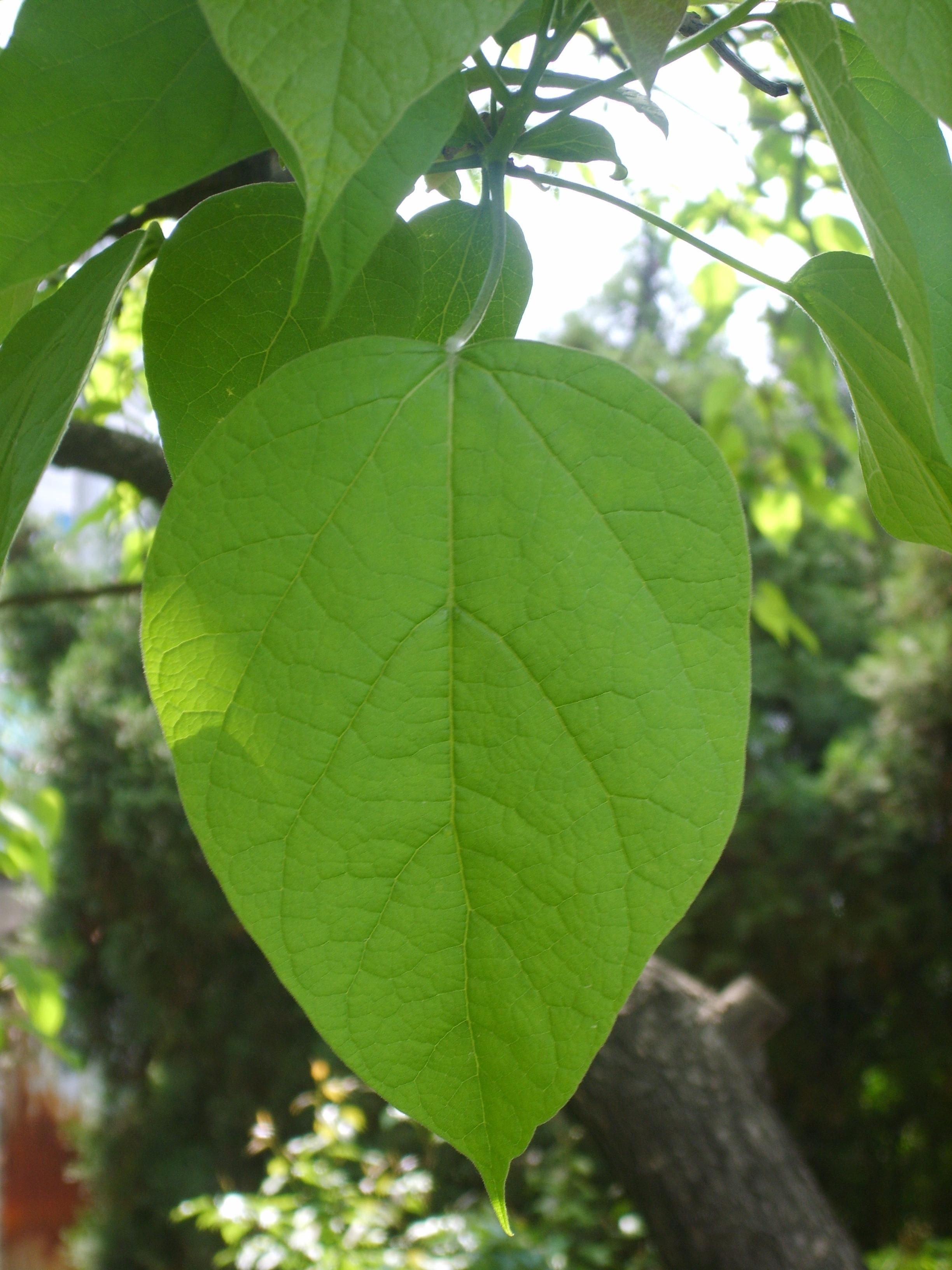
The leaf is heart-shaped and very large with a smooth, wavy leaf margin. The underside of the leaf is softly hairy.
The trunk is short and thick with a broad, spreading, irregular crown. The bark is light brown, thin and longitudinally cracked.
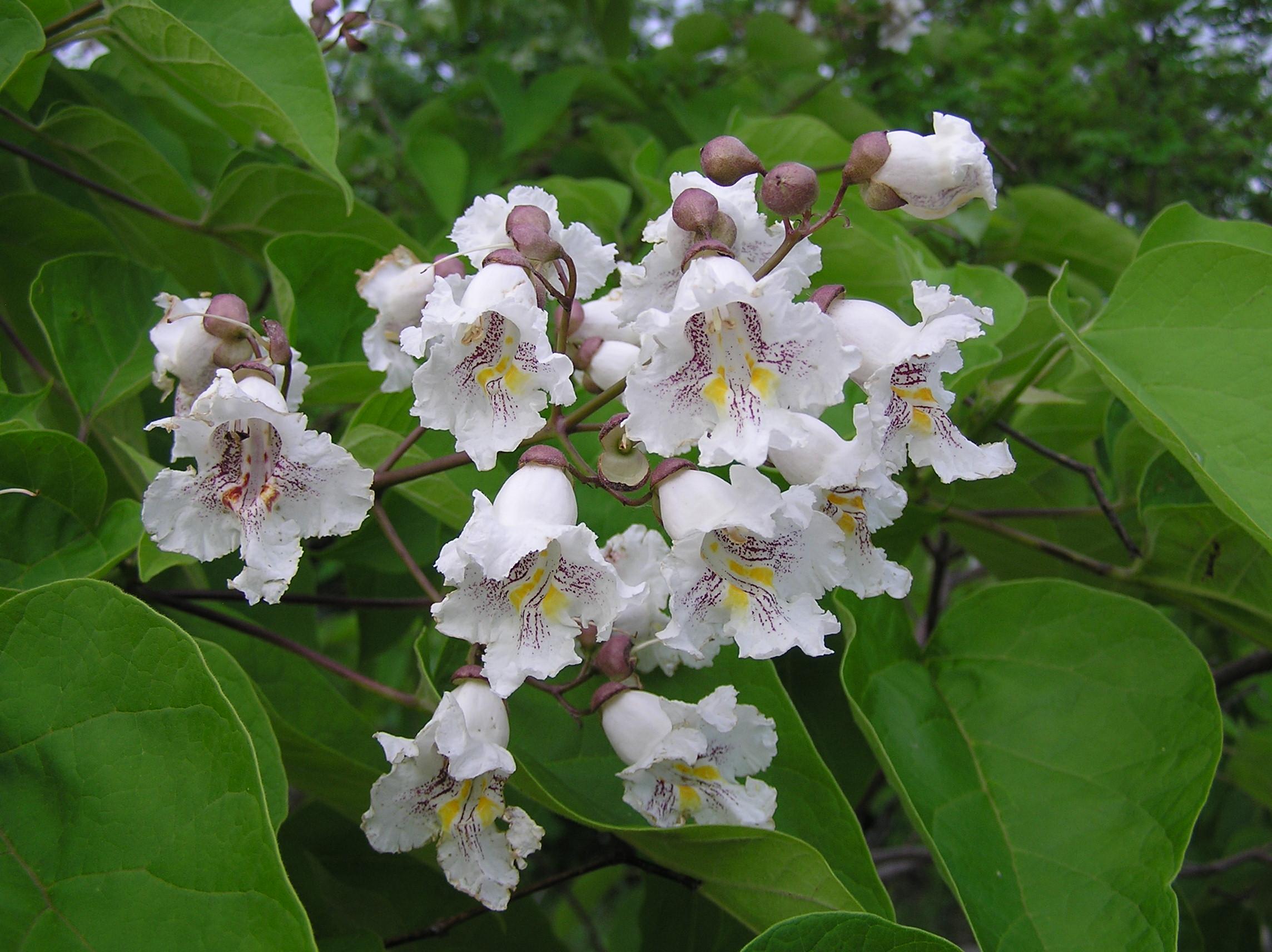
The flowers are white and bell-shaped. There are yellow and purple flower stigmas in the flower throat. They are numerous in many-flowered clusters.
The fruits are very long and narrow capsules. They contain numerous flattened seeds.
Features
Southern catalpa
Catalpa bignonioides
large, bell-shaped flowers
very narrow and long fruits
In the city
It was introduced to Europe in the 18th century as an ornamental tree and is often found in parks and gardens. It prefers sunny and nutrient-rich sites with sandy soils.
Fun Facts
It flowers from June to July.
The flowers attract numerous insects, especially bees.
- Endangerment level Germany: not evaluated
It belongs to the non-native plants (neophytes).
The whole plant is slightly poisonous.
Sources
Habitus, Jean-Pol GRANDMONT, CC BY-SA 3.0, https://commons.wikimedia.org/wiki/File:Catalpa_bignonioides_JPG5Aa.jpg

Blütenstand, Le.Loup.Gris, CC BY-SA 3.0, https://commons.wikimedia.org/wiki/File:Catalpa_bignonioides_inflorescence.jpg

Blatt, Dalgial, CC BY-SA 3.0, https://commons.wikimedia.org/wiki/File:Catalpa_bignonioides%27s_leaf_in_Korea.JPG

Page „Gewöhnlicher Trompetenbaum“. : Wikipedia, The Free Encyclopedia. Date of last revision: 06.12.2016, 16:56 UTC. URL: https://de.wikipedia.org/w/index.php?title=Gew%C3%B6hnlicher_Trompetenbaum&oldid=160401942 (Accessed: 02.05.2017).