
Short Description
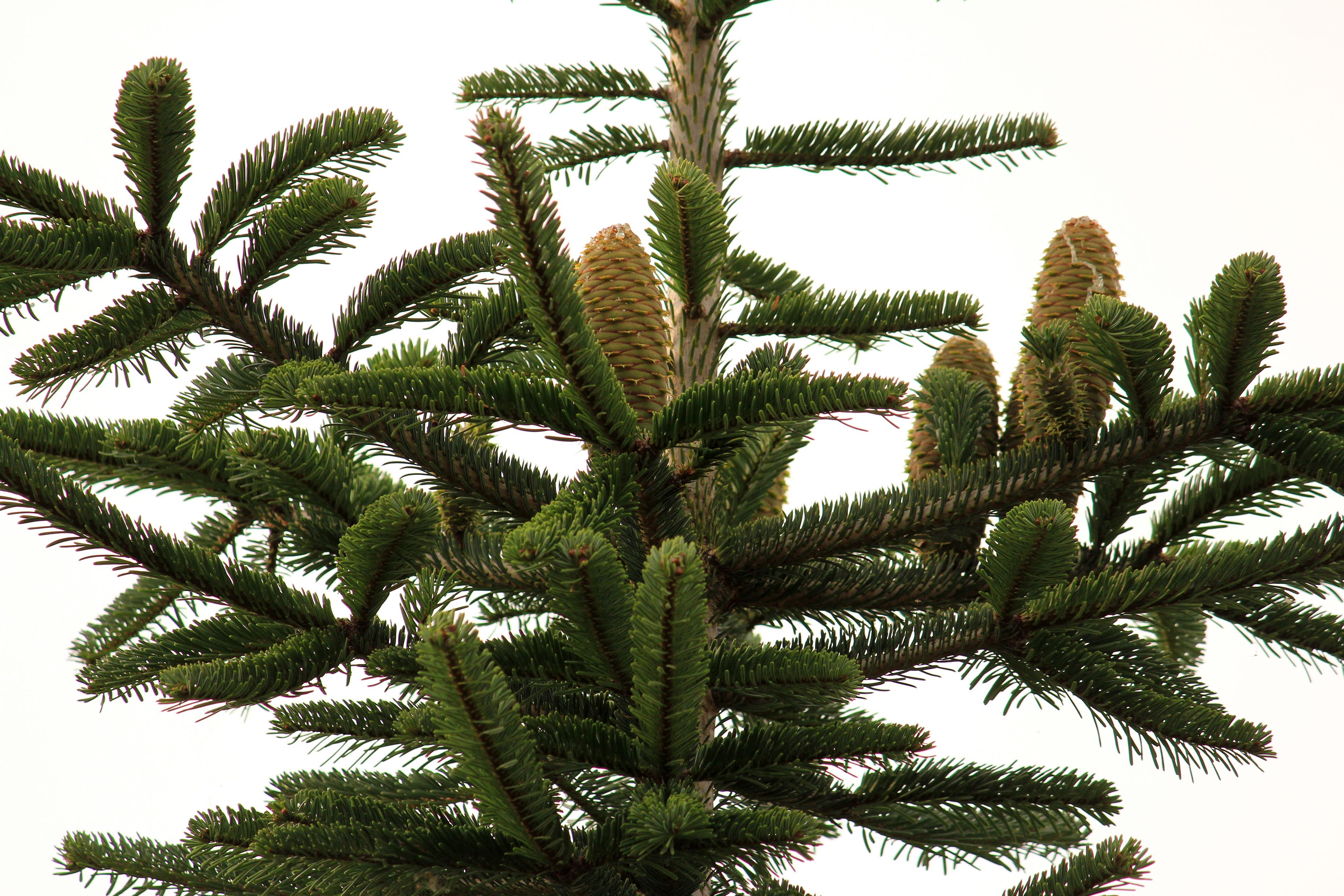
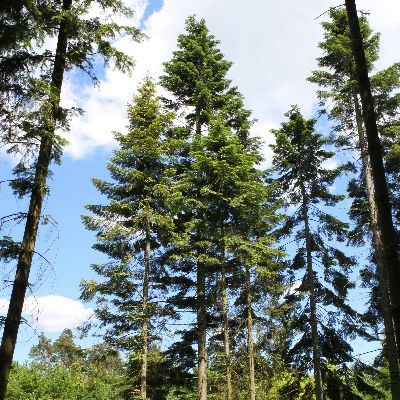
The silver fir is an evergreen conifer that can grow up to 50 metres high.
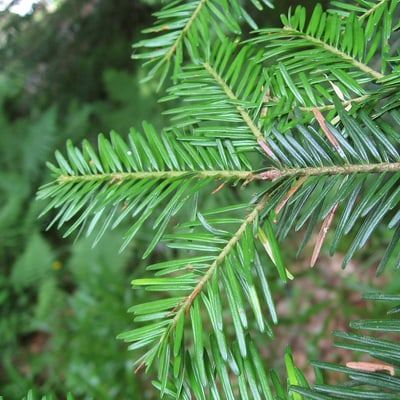
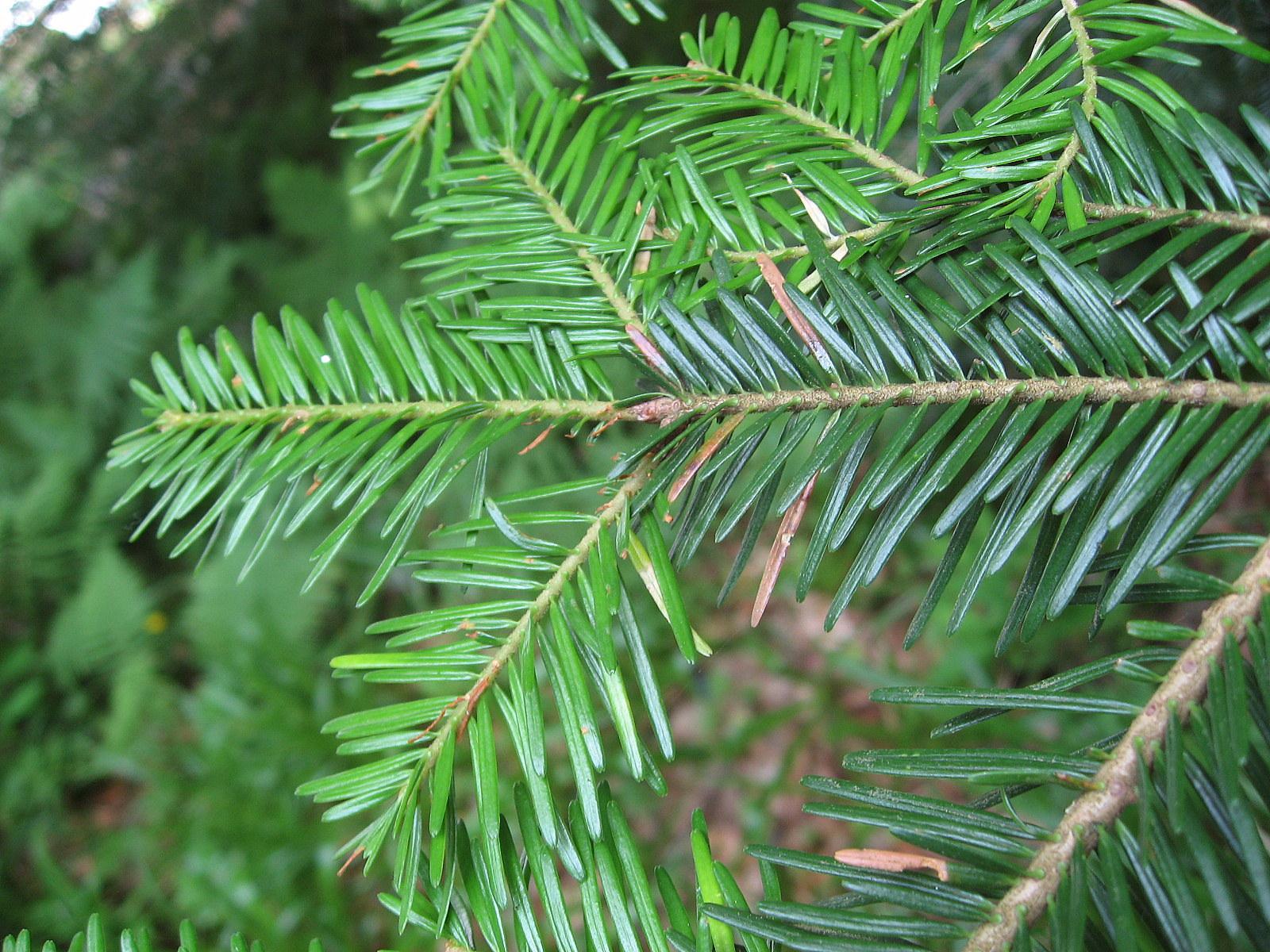
The dark green needles have two white stripes on the underside. They are flexible.
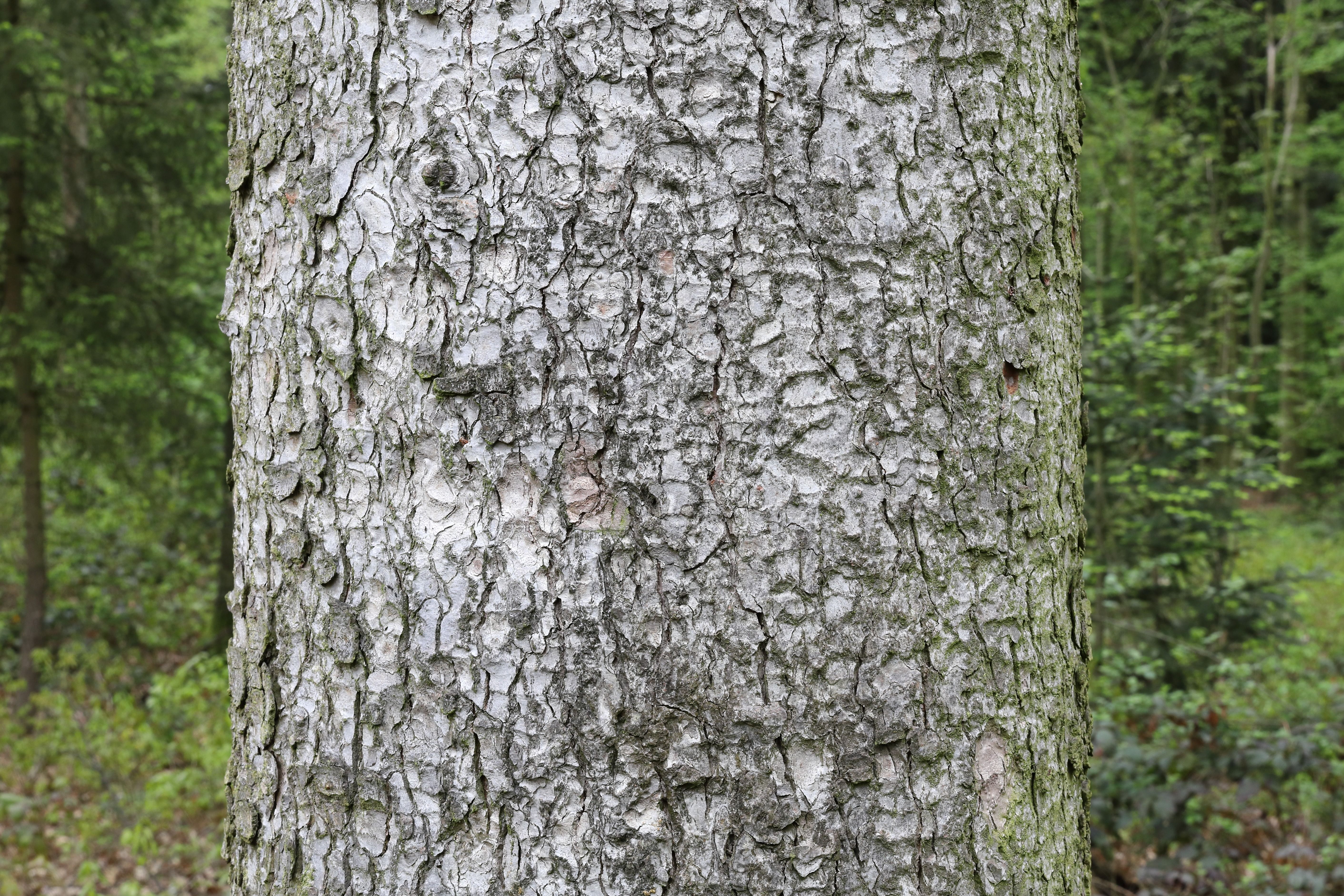
The bark is smooth and light grey in the first decades. With age it becomes brownish to dark grey and cracked.
There are male and female flower cones. The male flower cones are spherical and light yellow at flowering time. The female cones are elongated, light green and stand upright on the twigs.
The mature cones are light brown and stand upright. When the seeds ripen, individual scales detach from the cones and fall to the ground. The central stem of the cone remains on the branch for years.
Features
European silver fir
Abies alba
two white stripes on the underside of the needle
empty central stem of the cone remains on the tree
Similar species
Grand fir
Abies grandis
In the city
The silver fir has few demands on its habitat. However, due to pest infestation, browsing by game and overexploitation, its population is in decline in natural habitats and as a commercial forest tree. In the city, it is occasionally planted as a park and ornamental tree.
Due to current developments in climate change, the silver fir is becoming more important again in forestry, as it can withstand drought and higher temperatures comparatively well.
Fun Facts
The flowering period is April to June.
The seeds have wings and are spread by the wind.
Since the scales already fall off the cone while its still on the tree, you will never find a ripe "fir cone" on the ground.
Its essential oils are used in medicinal products such as cough drops and in room sprays or bath oils.
Silver firs can live up to 600 years.
- Endangerment level Germany: not endangered
Sources
Zapfen, Mars 2002, CC BY-SA 3.0, https://upload.wikimedia.org/wikipedia/commons/1/16/Abies-alba_Zapfen-1526.jpg
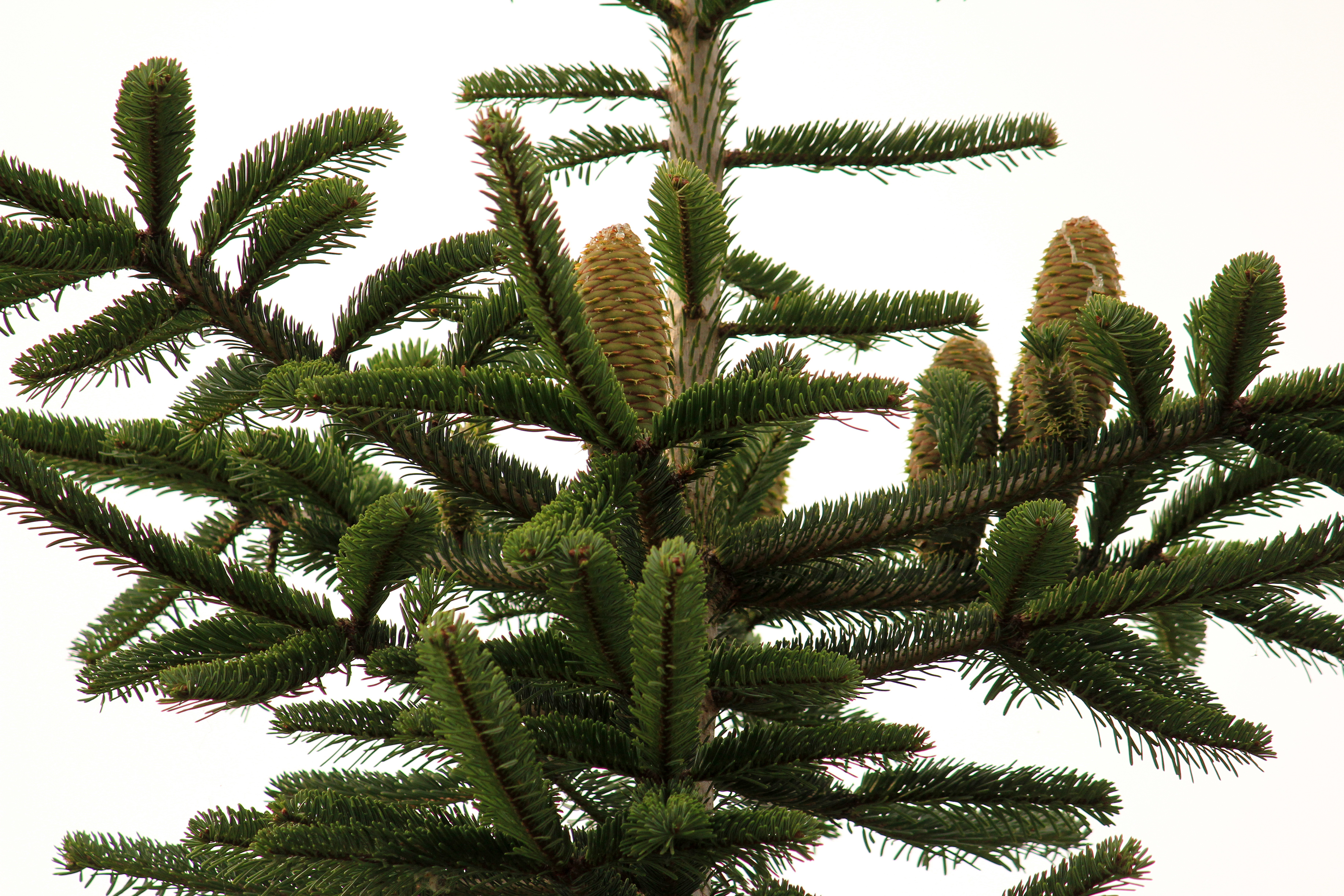
Nadeln, Pastilletes on Flickr, CC BY-SA 2.0, https://de.wikipedia.org/wiki/Datei:Abies_alba_foliage.jpg

Rinde, T. Kebert, CC BY-SA 4.0, https://upload.wikimedia.org/wikipedia/commons/1/18/Abies_alba_bark_TK_2021-05-15_1.jpg

Farjon, A. (2017) Abies alba. The IUCN Red List of Threatened Species 2017. URL: https://dx.doi.org/10.2305/IUCN.UK.2017-2.RLTS.T42270A83978869.en (Accessed: 20.09.2021).
Page „Weiß-Tanne“. : Wikipedia, The Free Encyclopedia. Date of last revision: 16.08.2021, 11:40 UTC. URL: https://de.wikipedia.org/w/index.php?title=Wei%C3%9F-Tanne&oldid=214806714 (Accessed: 20.09.2021).
Bachofer, M. & Mayer, J. (2015) Der Kosmos Baumführer. 370 Bäume und Sträucher Mitteleuropas. Stuttgart: Franckh-Kosmos Verlags-GmbH & Co. KG.
Lüder, R. (2019) Bäume bestimmen. Knospen, Blüten, Blätter, Früchte. Bern: Haupt Verlag.
Baumkunde.de (2004-2021) Weiß-Tanne (Abies alba), URL: https://www.baumkunde.de/Abies_alba/ (Accessed: 20.09.2021).